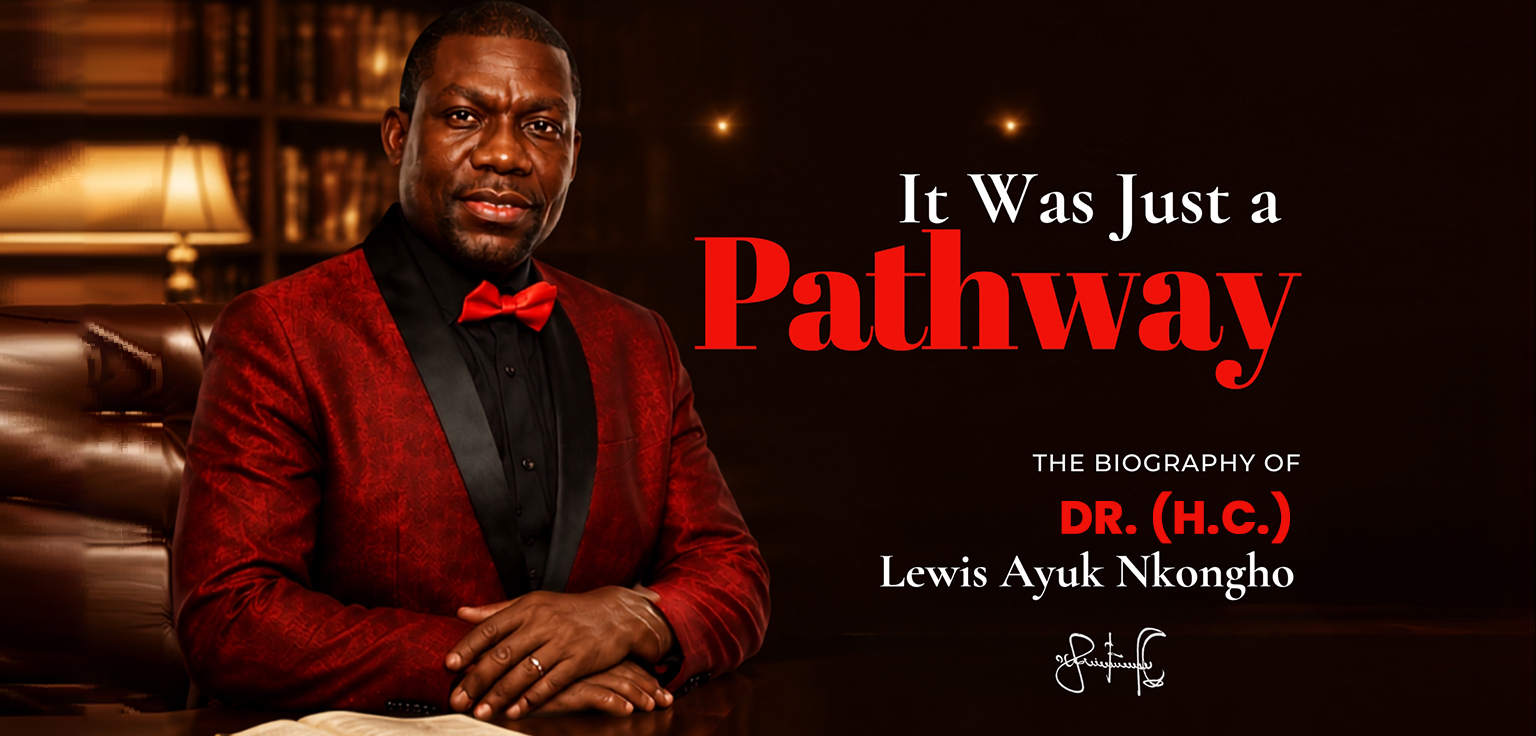
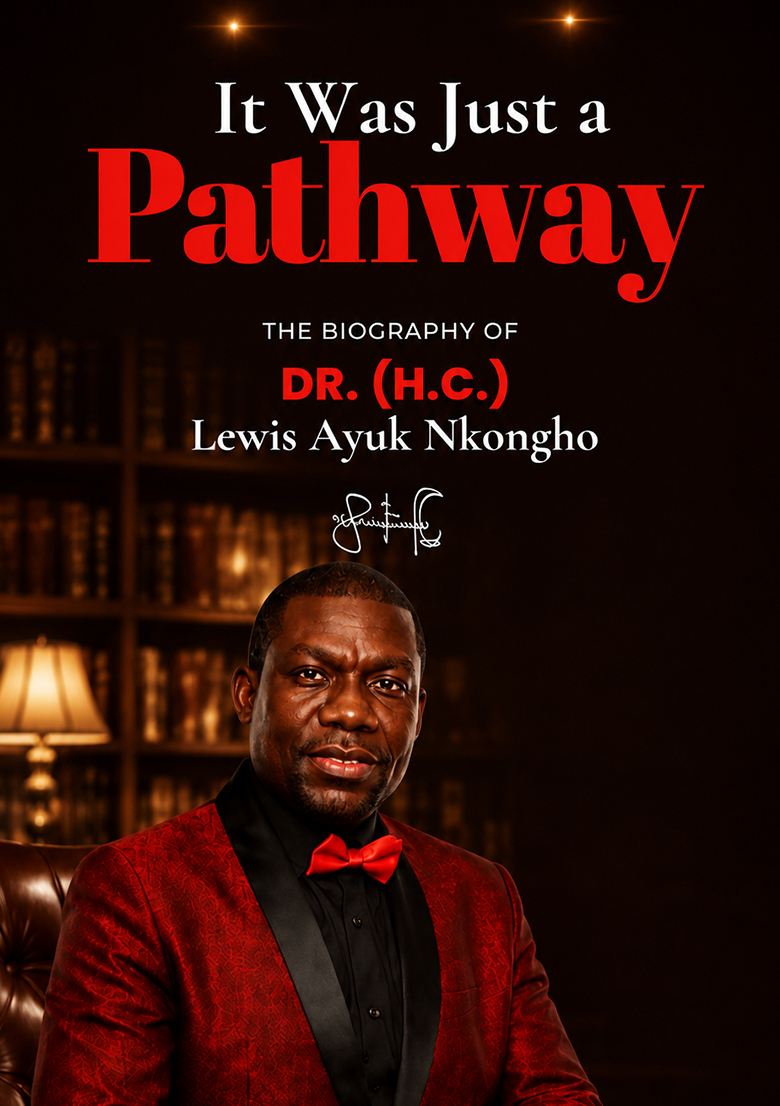
“Life does not always open doors, but it always gives a path. Even in delay, loss, and struggle, I have learned to keep moving forward with faith and purpose.”
Introduction
Dr. Lewis Ayuk was born on 30 October 1975 in Mamfe, in the Southwest Province of Cameroon, and his story begins there. He came into a family that carried both warmth and responsibility. He was the third born among eight siblings, though one sibling later passed on. His father, Mr. Mboh-Nkongho Joseph, was a teacher with the Presbyterian mission, and later he a government contract teacher and his mother, Lydia Bessong Nkongho, remained an important part of the family story. From the very beginning, his life was shaped by movement, discipline and the realities of a household where education mattered, but comfort was not always guaranteed.
His childhood was not simple. Because his father worked as a teacher in remote areas, Dr. Lewis Ayuk often accompanied him from place to place. That experience separated him in some ways from his siblings and even from the ordinary closeness of family life. Yet it also exposed him early to responsibility, adjustment, and endurance. He learned that life could change without warning and that strength often develops quietly in children who are asked to grow faster than expected.
Education became one of the strongest threads of his early journey. He attended Government High School Mamfe, where he obtained his Ordinary Levels in 1994. He later moved to Mbengwi in the Northwest Province of Cameroon and studied at Government Bilingual High School Mbengwi, where he obtained his Advanced Level in 1996. These achievements carried weight because his road was not smooth. In 1995, his father passed away. With that loss came emotional pain and a serious interruption in his educational plans. There was no one available to push him directly into university, and for two years he could not continue his studies due to lack of sponsorship.
Rather than surrender to circumstance, he worked. In 1997, he served as a bar attendant in an off licence where beer and liquor were sold. The work was not the dream, but it became a pathway. For eleven months, he saved what he earned so that he could prepare himself for university. That period revealed something essential about him. He was willing to do humble work for a greater purpose. He did not wait for life to become easy before moving forward.
In 1998, he was admitted to the University of Buea in the Department of Geography, but he made a decision that showed his practical understanding of opportunity. He declined that admission because he felt Geography would not give him the future he wanted. He then applied to the University of Yaoundé II in Soa, where he studied law and specialised in English Private Law. Between 1998 and 2001, he completed his degree. That choice reflected ambition but also survival. He believed that with a law degree, he could create a professional path for himself.
The years that followed were difficult. Between 2001 and 2005 he was trying to get a steady job and trying exams related to public service. He did not succeed in those efforts, and the experience brought him face to face with the limits of qualification when opportunity is not easily accessible. Still, he did not stop seeking a wider future. In 2005, he applied to study in Belgium, hoping that further education in governance and development would open doors toward international work. He was admitted and later completed an advanced master’s degree in Governance and Development. Although financial reasons prevented him from continuing to a PhD at that time, the achievement itself became another important mark of his persistence.
“I grew up learning that life can change your direction early, so you must learn how to adjust quickly.”
Phase 1: Growing Up in Mamfe
Dr. Lewis Ayuk was born on 30th October 1975 in Mamfe Town, South West Province, Cameroon. Here, the first layers of his character began to form. His story did not begin in comfort, ease or certainty. It started in a family with love and responsibility, where children learned that survival and discipline went together and that education was important when there was little to be had.
He was born into a large family and stood as the third child among eight siblings. Later, one sibling passed on, leaving seven of them, but his position in the family remained the same. This place within the family gave him a particular kind of awareness. He was neither the first to carry the earliest expectations nor the youngest to receive the softest shelter. He stood somewhere in the middle, close enough to responsibility to understand it, and close enough to childhood to still feel the weight of what was being asked of him.
His father, Mr. Mboh-Nkongho Joseph, was a teacher under the Presbyterian mission. He was later employed as a contract teacher by the government, and this it meant that his work often took him to remote areas. Teaching was not only his profession. It became one of the strongest forces shaping the atmosphere around his children.
Through him, Dr. Lewis Ayuk saw the importance of learning, not as a luxury, but as a duty and a doorway. His mother, Lydia Besong Nkongho, remained an important part of his family story and later came to live with him in Canada. The presence of both parents, though shaped by different circumstances, gave his early life a foundation of identity, memory and belonging.
His childhood, however, was not simple. When he looked back on it during the interview, he described it as tough and rough. That description carries the feeling of a child who did not grow up in one settled rhythm. Because his father was frequently transferred to teach in remote areas, he was often the one asked to accompany him. As a young child, he did not always understand or accept this easily. He admitted that he was a little stubborn and did not like being taken away from the ordinary closeness of his siblings. Yet, as life later proved, those movements gave him an early education that no classroom could fully provide.
To move with his father meant learning adjustment before he could even name it. It meant entering unfamiliar places, accepting changing routines and understanding that family life could be stretched by duty. It also meant watching his father serve through teaching, even when that service required discomfort and distance. These experiences inextricably influenced his later understanding of work, sacrifice and responsibility. Long before he entered professional life, he had already seen that meaningful duties sometimes require a person to go where they are needed, not only where they are comfortable.
“School was not just education for me, it was the only place where I could see a different future.”
Phase 2 : First Shape of Ambition

For Dr. Lewis, education was never just about formal processes. This was the first clear path towards his thinking about a different future. From his early days in Mamfe to his later schooling in Mbengwi, when life around him was not always stable, his learning was a thread that kept his hopes alive. His education was no journey of luxury or comfort. It developed through movement, discipline and a constant effort to keep going.
He grew up in Mamfe, and it was there that he began to build his early academic foundation. He went to Enonchong Menorial college, then to Presbytarian High School, Besongabang, and then to Government High School, Mamfe, where he pursued his secondary education and passed his Ordinary Levels in 1994. The significance of this went beyond the certificate. It said something about the seriousness with which he took learning, even as a young man from a background where every step forward had to be earned. For him, school wasn’t just a place of lessons, it was a place of possibility.
He first got his identity from Mamfe, but his education did not stop there. He later transferred to Mbengwi in the Northwest Province of Cameroon, where he finished his education at Government Bilingual High School Mbengwi. This movement from one region to another reflected a pattern already present in his childhood. He was familiar with change. He had already known what it meant to move because of his father’s work. Yet this time, the movement was tied directly to his own growth and future.
At Government Bilingual High School Mbengwi, he obtained his Advanced Level in 1996. That stage marked another important step in his academic life. By then, he’d already shown his ability to acclimatize in different environments and stay committed to his studies. He was not simply passing through school. He was gathering the tools he believed could open doors for him.
His educational path also shows the quiet ambition that lived within him. He did not speak of ambition as pride. Rather, it appeared in his decisions, his willingness to move, and his understanding that education could become a way out of limitation. Coming from a family where his father was a teacher, he had seen the value of learning not only as personal advancement, but as something connected to dignity and usefulness. Education had shaped his father’s life, and it was beginning to shape his own.
“I had to learn how to stand again when the strongest support in my life was gone.”
Phase 3 : The Courage to Begin Again

Just when the road toward higher education seemed ready to open, life brought Dr. Lewis into one of the most painful and defining seasons of his youth. In 1995, his father, Mr. Mboh-Nkongho Joseph, passed away. The loss was not only emotional. It changed the structure of support around him. His father had been a teacher, a figure of discipline, movement and educational value. When he died, something larger than presence was taken from the family. For Dr. Lewis, it meant that the person who could have pushed him toward university was no longer there.
This moment became a serious interruption in his plans. After completing his Advanced Level in 1996, he could not proceed directly to university because there was no sponsor to support him. For two years, his education stood still. It was not because he lacked desire. It was not because he had lost interest in learning. It was because the financial support needed for the next stage was not available. That difference matters. His dream was not dead, but it was delayed.
Such a delay can easily change the heart of a young person. It can bring shame, frustration and fear. It can make a person look at others moving ahead and wonder whether his own chance has disappeared. Dr. Lewis faced that reality. He had the qualifications to continue, but qualification alone could not pay the cost. He had the will to study, but will alone could not solve every practical need. This period placed him directly in front of the hard truth that life sometimes asks a person to work for the opportunity to work on his dream.
Instead of allowing the interruption to become the end of his journey, he chose work. In 1997, he took a job as a bar attendant in an off licence where beer and liquor were sold. It was not the kind of work that represented the future he imagined for himself, but he understood its purpose. He later explained that it was a pathway. That word is important. He did not romanticise the job. He did not present it as something grand. He understood it as a necessary road toward university.
For eleven months, he worked and saved what he earned. Each month, he received about 25,000 to 30,000 CFA, which he described as around 60 Canadian dollars or about 50 US dollars. The amount was modest, but to him it carried purpose. It was not only money. It was a contribution toward his education, a personal effort to return to the path that had been interrupted. Every month of work became part of his preparation.
This period reveals one of the strongest qualities in Dr. Lewis. He did not wait for perfect conditions. He did not sit still because life had become unfair. He did not allow the absence of a sponsor to erase his ambition. Instead, he entered humble work with a clear goal. He worked so that he could study. He accepted temporary hardship because he was looking toward a larger future.
Note of Thanks
This biography is written with deep gratitude to Almighty God, the constant source of His grace, protection and guidance throughout the life of Dr. Lewis Ayuk Nkongho. Every stage of his journey carries evidence of strength given in difficult times, direction given in moments of uncertainty, and hope preserved when the road ahead was not easy.
Heartfelt thanks are offered to his beloved family, whose presence has brought meaning, support and emotional strength to his life. His wife Ernestine Eyongeta has stood as a companion through the journey of building a home and life in Canada. His children, Louisa, Jon and Jerry, remain close to his heart and continue to give deeper purpose to his sacrifices, prayers and service. He also thanks his mother Lydia Besong Nkongho who has a place in his life linking his present to his roots, family history and early foundations.
This note of thanks is also a tribute to all those who supported Dr. Lewis Ayuk along the way. No life is built alone, and his journey reflects the value of people who gave help, encouragement, kindness and opportunity at different moments. Their contributions, whether seen or unseen, became part of the path that helped him keep moving.
Special thanks is also given to Aimlay, which is acknowledged for providing him the opportunity to move further toward the goals and aspirations that he has. With this support, Dr. Lewis Ayuk could continue moving forward toward his purpose in both his personal and professional life, allowing him to go beyond limitations and discover new possibilities on his journey.
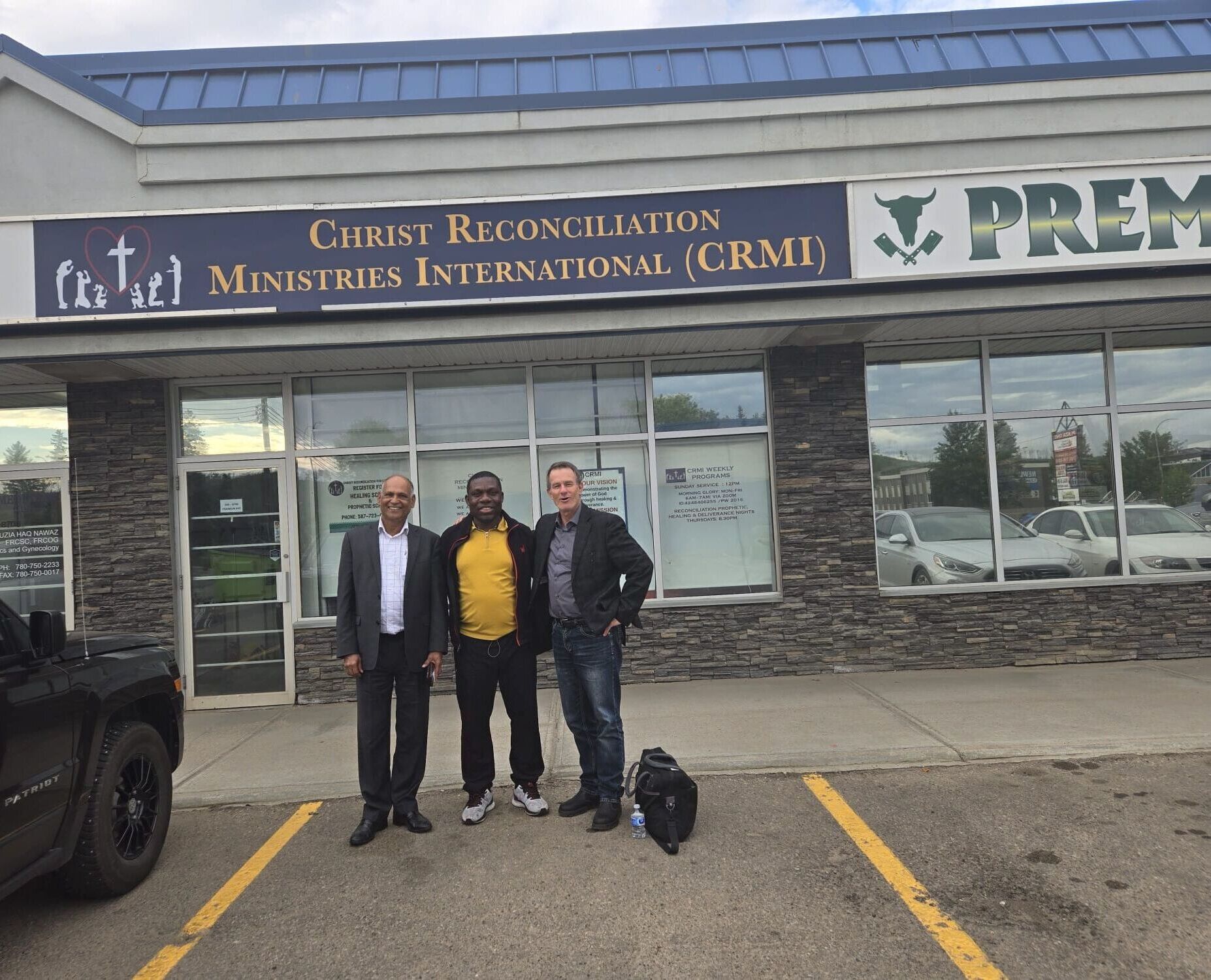
Finally, sincere gratitude is offered to the CRMI family, the Christ Reconciliation Ministry family, where his faith, service and leadership are still expressed. This spiritual family is an important part of his life because of their common belief, fellowship and purpose.
thanks,
– Dr. (H.C.) Lewis Ayuk Nkongho