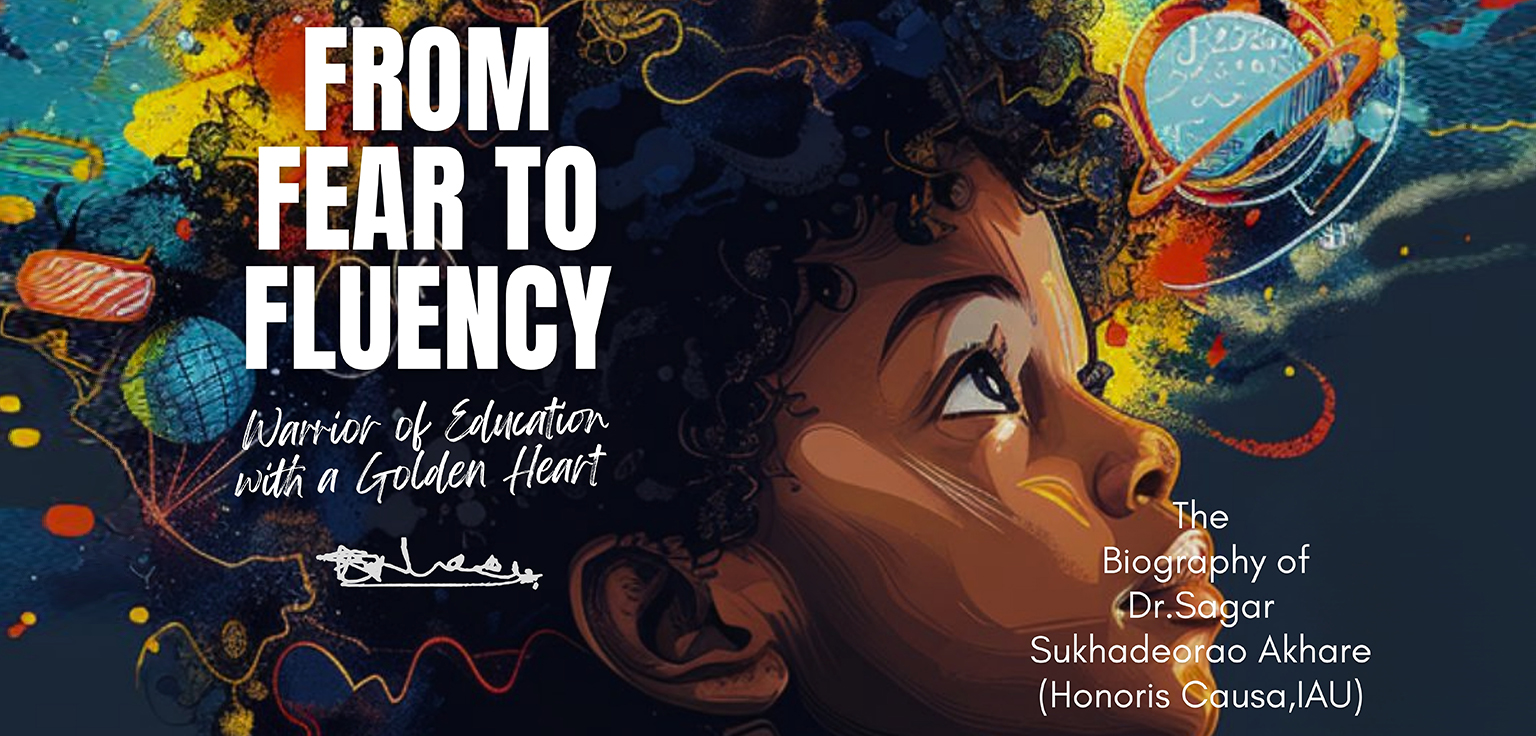

“Education extends beyond knowledge; it awakens confidence, inspires courage, and shapes the way people believe in themselves.”
Introduction
The story of Dr. Sagar Sukhadeorao Akhare is one of determination, vision, and an unwavering commitment to transform lives through education. Raised in a home where resources were limited but values were abundant, he learned from his father that hard work and integrity build lasting success, and from his mother that patience and belief are as vital as knowledge. These early influences shaped a life defined not by circumstance, but by purpose.
Education became both a personal pursuit and a calling. The shift to an unfamiliar language brought challenges, yet he faced them with curiosity and resolve. He learnt not only to master the language himself but also to understand the fears and hesitations of those who faced similar obstacles. This empathy became the foundation of his teaching philosophy, allowing him to transform students’ apprehension into confidence and curiosity into achievement.
As an educator, he consistently sought to bridge the gap between potential and opportunity. His early career saw him balancing rigorous government teaching responsibilities with evening classes for students eager to improve their English and communication skills. He recognised that education is not solely about academic success but about building confidence, discipline, and character. He dedicated himself to creating a nurturing environment where students could thrive regardless of financial or social constraints, laying the groundwork for what would later become the Akhare and Mandlapure Career Foundation (AMCF).
With a visionary approach, Dr. Sagar expanded his impact beyond language instruction, integrating competitive preparation, holistic learning, and personal mentorship. He observed students struggling to compete in examinations despite strong academic records and realised that early, structured guidance could transform outcomes. His creation of foundation courses from the sixth standard onwards exemplifies his philosophy that strong roots produce lasting fruits, and that every student deserves the chance to achieve their potential.
The journey of Dr. Sagar Sukhadeorao Akhare is marked by resilience, innovation, and compassion. It is a story of a young boy who transformed his own struggles into a mission for others, building an institution that embodies opportunity, equity, and excellence. This biography captures not only his achievements but the principles, sacrifices, and vision that continue to inspire generations of learners, illustrating the profound impact one individual can have when dedication and empathy guide every action.
“Strength is not inherited; it is quietly nurtured in the rhythm of daily challenges and the lessons we absorb from those who guide us.”
Phase 1: Roots of Resilience : A Childhood Shaped by Struggle, Values and Dreams
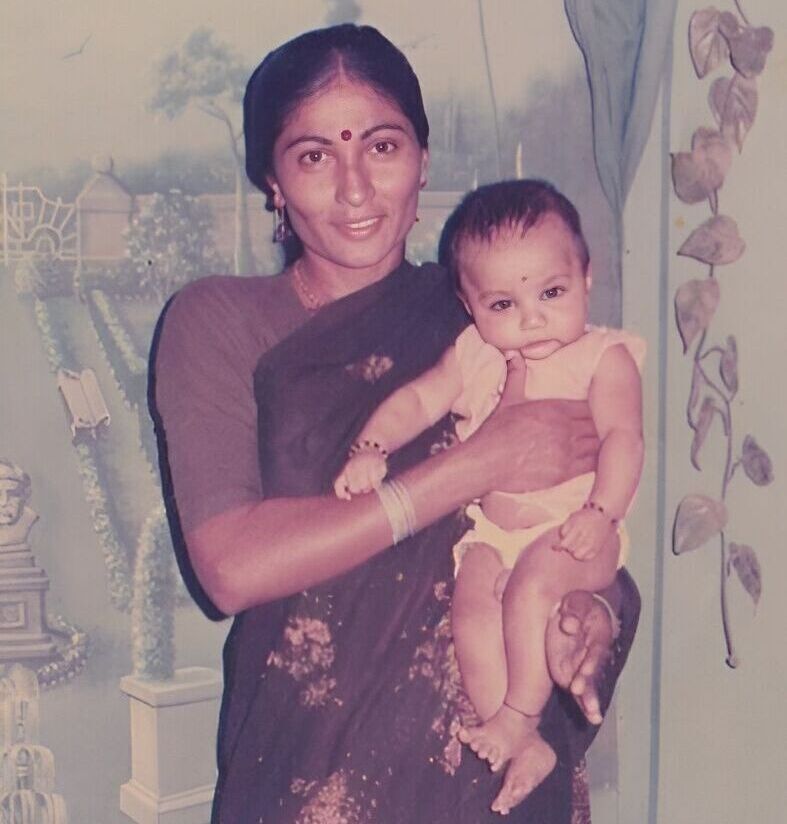
Dr. Sagar Sukhadeorao Akhare was born in the modest town of Murtizapur in Maharashtra, into a family whose life had been shaped by perseverance and quiet determination. His father, Sukhadeorao Akhare, had grown up in a household where every resource was earned through effort, and discipline was as natural as breathing. He witnessed the resilience of his father from the earliest days, observing how a life of hardship was transformed into opportunity through hard work, punctuality, and an unwavering sense of responsibility. His mother, Vanmala Akhare, complemented this foundation with patience, care, and devotion, fostering an environment where curiosity was nurtured and dreams were quietly encouraged. The values instilled in him during these formative years would become the compass guiding every decision in his life.
The family’s beginnings were humble. They lived in a small clay house in a village called Rajura Sarode, where space was limited and comforts were few. The walls of that home held stories of perseverance, of long days spent labouring and learning the importance of resourcefulness. Later, the family moved closer to the town of Murtizapur, seeking better opportunities. In a rented home with a roof of iron sheets, a single room served as kitchen, bedroom, and hall. The modest income of his father, barely enough to sustain daily needs, was supplemented by sheer determination and creativity. Dr. Sagar often reflects on those early years not with bitterness, but with gratitude for the lessons in contentment, humility, and adjustment. He learnt that happiness could be nurtured even when comforts were minimal and that perseverance was not a concept to be taught but a way of life to be observed and practised.
From the earliest schooldays, Dr. Sagar demonstrated curiosity and a desire to learn, even amidst challenges. His initial education was in Marathi medium schools, where he navigated the demands of early learning with limited resources. Travelling between homes and schools often meant walking long distances or relying on the solitary auto-rickshaw driver in the area, an experience that strengthened his self-reliance and patience. His childhood journeys were marked by a sense of responsibility unusual for someone of his age, as he moved through streets and lanes, balancing safety, punctuality, and learning. These experiences shaped a young mind that would later understand deeply the struggles of others, particularly students who faced obstacles similar to those he had once confronted.
The transition from Marathi to English medium education became a turning point in his formative years. The unfamiliarity of English, the challenge of reading, understanding, and memorising new words, and the frustration of struggling with concepts that seemed so distant tested his resolve. Dr. Sagar approached these difficulties with curiosity rather than resignation, observing television anchors and advertisements, imitating voices, and practising tirelessly. This process of adaptation and self-motivation taught him that learning was not simply a matter of talent but of persistence, observation, and methodical effort.
Even as a child, he displayed an ability to internalise lessons from everyday life. Observing his parents navigate financial strain with dignity, witnessing his father’s punctuality, and understanding his mother’s quiet resilience, he absorbed principles that would later inform his teaching philosophy and leadership style. The simplicity of early meals, the improvisation of household routines, and the collective effort of family members instilled in him a profound sense of empathy, patience, and the value of hard work.
The environment of his childhood, though humble, was rich with lessons. It taught him to observe closely, adapt creatively, and appreciate the smallest opportunities. It was here, amidst the modest clay walls and iron-sheet roofs, that the seeds of curiosity, resilience, and responsibility were planted. Each morning’s journey to school, each moment of learning a new word, each observation of his parents’ struggles and triumphs contributed to a vision of life that valued effort over comfort, purpose over ease, and transformation over stagnation.
“Every word we struggle to understand becomes a doorway to mastery when curiosity meets persistence.”
Phase 2 : From Language Barriers to a Lifelong Calling
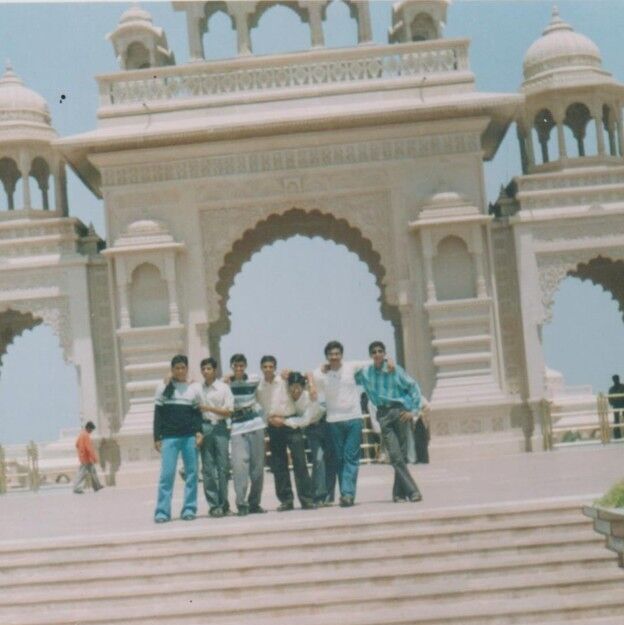
As Dr. Sagar Sukhadeorao Akhare grew older, he encountered a challenge that would shape the course of his life and the lives of countless students to come. English, a language that represented both opportunity and fear, became his greatest struggle and eventually his greatest passion. Having begun his education in the Marathi medium, he excelled in foundational learning but soon realised that a command of English was essential to navigate the world beyond his small town. Each new word, each sentence, each lesson felt like a mountain to climb, yet he approached them with curiosity and determination. He would imitate the voices of news anchors and advertisement presenters, practising intonation and pronunciation, turning observation into action, and slowly mastering the language that had once seemed impenetrable.
The challenge of English revealed the resilience he had absorbed from his parents. Sukhadeorao Akhare had instilled in him the understanding that perseverance, focus, and repeated effort were more powerful than raw talent alone. His mother, Vanmala Akhare, encouraged his curiosity, nurturing an environment where patience and faith in learning became natural. Together, these influences gave him the
courage to persist, to confront failure without fear, and to recognise that every struggle contained the seed of future mastery. He discovered that the difficulty of learning was not an obstacle but a teacher in itself, instilling empathy for those who would one day stand where he had struggled.
In school, the transition to English-medium learning was gradual but formidable. The unfamiliarity of words, the challenge of comprehension, and the constant practice required tested his patience. Yet, he did not surrender to frustration. Every book, every lesson, every conversation became an exercise in persistence. He began to notice patterns, to internalise rules of grammar and structure, and to convert hesitation into comprehension. With every small victory, he built not just skill but confidence, understanding that knowledge gained through effort was anchored deeper than knowledge given without struggle.
By the time he reached the higher grades, Dr. Sagar had developed a method of approaching learning that went beyond memorisation. He began to analyse, to question, to explore the mechanics of language itself. The fear that had once accompanied English faded, replaced by a fascination with how words connected to thought and communication. This transformation became the cornerstone of his teaching philosophy, a philosophy rooted in patience, empathy, and the belief that anyone could overcome barriers if guided carefully and encouraged consistently.
The insight gained from his own struggles became the compass for his future. He understood intimately what it meant to confront a challenge that seemed insurmountable, and he vowed to ensure that others would not face the same frustration without support. The empathy he cultivated during these years became his guiding principle as a mentor, a teacher, and eventually a visionary in education.
“Confidence does not come from being told you are right; it comes from being understood when you are wrong.”
Phase 3 : The Teacher Who Understood Learners : Transforming Fear into Confidence
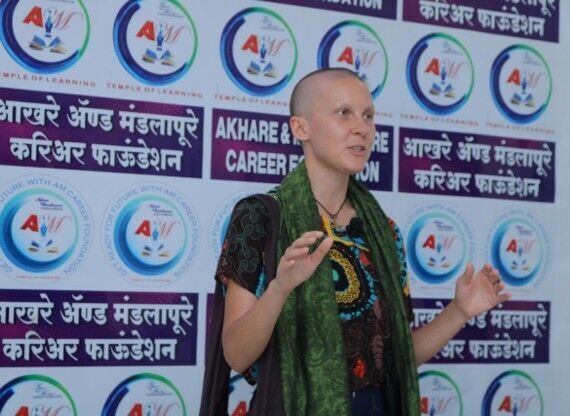
When Dr. Sagar Sukhadeorao Akhare first stood before his students, he recognised himself in their uncertainty. Many of the children who came to him struggled with English as he once had, hesitant to speak, unsure of themselves, and limited by fear. He remembered the difficulty of facing new words, the anxiety of mispronunciation, and the frustration of translating thoughts from Marathi to English. With that memory, he approached each student not as a passive recipient of knowledge, but as an individual whose potential was waiting to be unlocked.
In the small classrooms of his early teaching days, he began with what he considered the simplest and most powerful tool: vocabulary rooted in the familiar. Objects from the students’ daily lives became lessons. A rolling pin, a water pot, or a simple kitchen utensil was transformed into a doorway to English. Every day, children would return with questions about words they had observed, and he patiently guided them, explaining meanings and encouraging repeated practice. Over time, words that once intimidated them became part of their daily conversations, and the hesitation that had constrained them gradually melted into curiosity.
While teaching, Dr. Sagar noticed that some children faced deeper challenges. Letters such as B and D were often confused, and a few exhibited signs of dyslexia. Rather than dismissing these struggles, he approached them with the same careful observation he had used in his own learning. He studied child psychology to understand the roots of these difficulties, believing firmly that if the cause could be addressed, the results would flourish naturally. He worked patiently to strengthen their foundations, addressing reading challenges and pronunciation, and teaching them the mechanics of language in a way that empowered rather than intimidated.
This understanding led to the creation of his Structural Speaking approach, a method that gave students the confidence to form sentences independently, express desires clearly, and communicate without the constant need to translate. Simple sentences like “I want to drink water” or “I want to eat an ice cream” became the framework through which children learned to speak naturally, gradually progressing to more complex expressions. With every success, the students’ curiosity grew, and their questions became more sophisticated, allowing them to internalise the language rather than memorise it mechanically.
Dr. Sagar also recognised the importance of motivation and encouragement in the classroom. Students who had been criticised or discouraged elsewhere regained confidence in his care. One child, who had been marginalised by teachers for not joining private tuitions, thrived under his guidance and went on to become a research scholar. Another, who would later achieve top marks at national examinations, began to see English not as a barrier, but as a bridge to opportunity. Each success reinforced his belief that education extends far beyond the curriculum; it is about nurturing confidence, self-belief, and a sense of possibility.
Even within limited spaces, he created an environment where learning could flourish. His classroom was a place of inquiry, experimentation, and discovery. Children were encouraged to ask questions, make mistakes, and revisit their understanding without fear. The lessons extended beyond English, teaching them observation, patience, and the value of effort. Dr. Sagar’s own struggles became a living example, showing students that challenges could be transformed into tools for growth when met with persistence and care.
Note of Thanks
Dr. Sagar Sukhadeorao Akhare extends his heartfelt gratitude to the many people who have played a pivotal role in supporting his efforts and vision. He is deeply thankful to his father, Sukhadeorao Akhare, whose steadfast commitment and hard work set a standard of dedication and integrity. His mother, Vanmala Akhare, has been a constant source of encouragement and care, offering guidance and reassurance through every challenge.
A special and profound mention goes to his wife, Swati Akhare, whose unwavering faith became his biggest pillar of strength when he decided to leave his secure government job. Her reassuring words—”Even if the classes don’t work out, my job is there; you don’t need to worry”—gave him the immense courage and peace of mind to take that leap of faith and pursue his true mission.
He expresses a deeply emotional and special gratitude to his cousin sister, Vaishu (his maternal aunt’s daughter), who has always nurtured and cared for him. She has been a constant guiding light, showering selfless love and standing by him in every joy and sorrow. Her strength was most deeply felt during critical life trials—especially when he was diagnosed with COVID-19 and during times of hospitalization—where she stood rock-solid by his side. Her presence in his life is nothing short of a divine blessing by Sant.Shree Gajanan Maharaj
He extends a heartfelt thank you to the entire Mandlapure family for their belief in him and this project. He expresses special gratitude to Dr. Tanvi Mandlapure (Dr. Mandlapure’s daughter), whose initial initiative sparked the inception of this institute and brought Dr. Rajendra Mandlapure Sir into this journey. Dr. Tanvi is truly the Lakshmi of this foundation, through whose auspicious presence Goddess Saraswati now resides at AMCF. He also sincerely thanks Dr. Mohini Mandlapure (Dr. Mandlapure Sir’s wife) and Dr. Atharva Mandlapure (Dr. Mandlapure Sir’s son) for their constant support and positivity. Just as Dr. Mandlapure Sir stands firmly by his side, the entire Mandlapure family has embraced this mission as their own, putting their utmost trust in his vision.
thanks,
– Dr. Sagar Sukhadeorao Akhare