"What remains is never the path that was walked, only the meaning it left behind."
Introduction
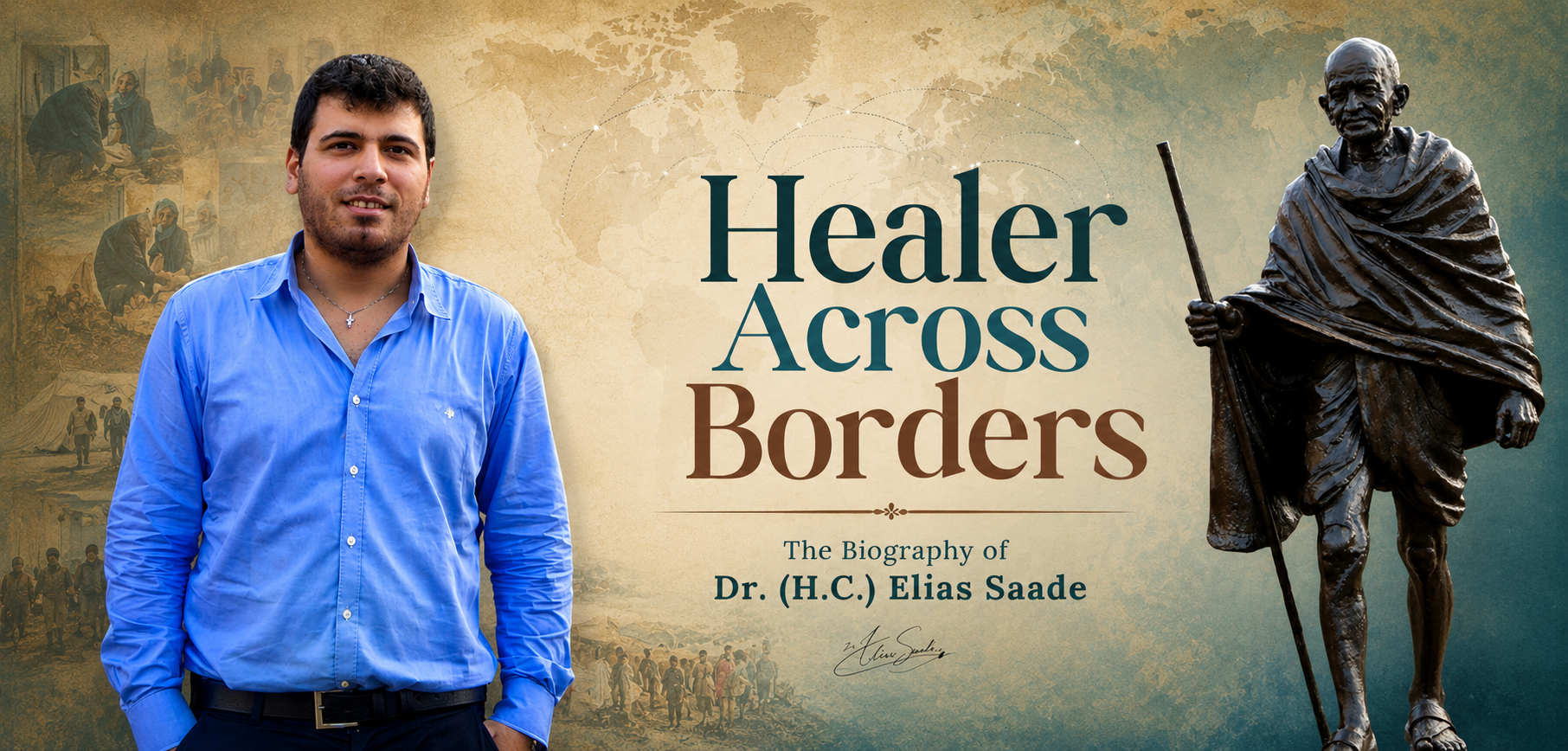
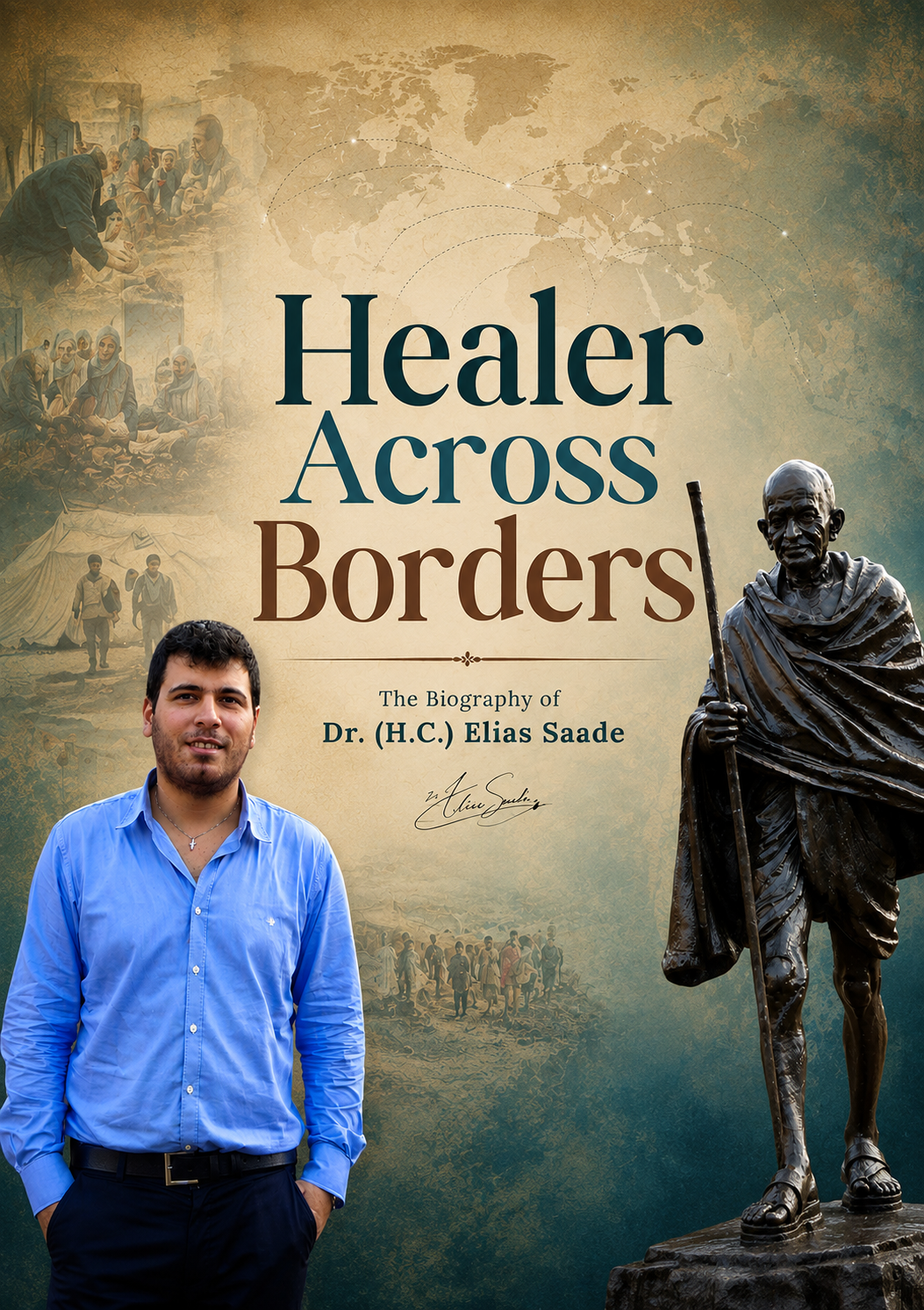
The life of Dr. Elias Saade reflects the quiet yet remarkable evolution of a physician whose journey expanded from clinical medicine and frontline emergency care into humanitarian leadership, global health practice, health systems strengthening, research, education, and mentoring. His story is not simply one of academic achievement or professional advancement. It is the story of a humanitarian whose experiences transformed personal conviction into a lifelong commitment to serving others, allowing compassion, knowledge, and purpose to shape every step of his journey.
Within his formative years, he witnessed experiences that profoundly influenced the direction of his life, strengthening his determination to pursue medicine not as a means of personal achievement but as a way to relieve suffering and preserve human dignity. Coming from a country shaped by complex humanitarian realities also deepened his appreciation for dialogue, coexistence, resilience, and peace-oriented leadership, gradually shaping his belief that healthcare and humanitarian action can build bridges between communities and contribute to dialogue, solidarity, and peaceful coexistence.
That purpose became the foundation upon which every chapter of his journey was built. His years of medical education demanded discipline, perseverance, and unwavering commitment. Yet even as his clinical knowledge expanded, his vision extended far beyond hospital walls. He believed that healthcare should reach people wherever they were, especially those whose circumstances placed them beyond the reach of ordinary systems. This conviction gradually guided him towards humanitarian and global health practice, where clinical knowledge, population health thinking, and compassion met in their most practical form.
Stepping into international humanitarian work opened a world far different from anything he had previously known. Every new mission introduced unfamiliar cultures, challenging environments, and communities living through conflict, displacement, disasters, and uncertainty. Rather than viewing these experiences as obstacles, Dr. Elias embraced them as opportunities to learn, adapt, and serve with humility. Working alongside professionals from many different nations expanded not only his technical expertise but also his understanding of humanity itself. It strengthened his belief that genuine service knows no borders and that every culture has something valuable to teach.
As responsibilities grew, so did the scale of his contribution. His work gradually evolved from providing emergency and humanitarian medical care to strengthening primary healthcare, supporting integrated health service delivery in fragile environments, advancing public health approaches during emergencies, and contributing to the governance and quality improvement of complex health programmes. He became increasingly involved in coordinating humanitarian initiatives, mentoring multidisciplinary teams, facilitating collaboration among institutions and professional stakeholders, and contributing to long-term organisational and health-system resilience.
This evolution marked an important transition from responding primarily to immediate medical needs towards strengthening the teams, structures, and systems capable of creating sustainable impact. Throughout these transitions, one principle remained unchanged: every decision should ultimately protect human dignity and improve the lives of those facing vulnerability. Within this broader path, his work has included specialised contributions in health in detention, disaster medicine, emergency preparedness, humanitarian ethics, and healthcare delivery in complex environments.
"The mountains may offer beauty, yet they also teach the heart how to stand firm when childhood meets uncertainty too soon."
Phase 1: A Boy of the Mountains, A Child of Resilience
Dr. Elias Saade was born on 14 November 1981 in Mayrouba, Lebanon, a place where the mountains carried both beauty and memory. His childhood was rooted in the green landscapes, the open ground, the cedars, and the simple freedom of a generation that still found joy in nature after school. He often looked back on those early years as a time when children did not need much to feel alive. The earth itself became their playground, the mountains became part of their identity, and the natural world offered a kind of richness that modern life often forgets.
He belonged to a generation that experienced a childhood closely connected to nature, community, simplicity, and a strong sense of belonging. That closeness to nature shaped his early spirit in quiet ways. It gave him simplicity, patience, and an instinctive love for life beyond material comfort. The boy who played in the ground after school was not growing in luxury, yet he was growing with something deeply valuable around him: the sight of green hills, the feeling of belonging to the mountains, and the early awareness that life could be beautiful even when circumstances were not easy.
Yet childhood in Lebanon during those years was never untouched by fear. The country was passing through the painful atmosphere of civil war, and for a child, war was not an idea discussed from a distance. It was something that felt close to home. Dr. Elias grew up carrying the difficult contradiction of being a child who wanted to play, learn, and grow, while also knowing what it meant to run for shelter and witness danger around him. He later understood this as the dilemma of a child of war, a child trying to keep the innocence of childhood alive while being surrounded by realities that no child should have to face.
Those years taught him that happiness and hardship can exist side by side. One part of life held the laughter of childhood, school, friends, and the freshness of the mountains. Another part carried the uncertainty of conflict, the need to protect oneself, and the emotional weight of seeing instability around the family and the country. This mixture did not make him lose direction. Instead, it slowly built in him a kind of inner strength. He learnt early that life does not always wait for perfect conditions. A person must continue learning, growing, and hoping even when the world outside feels uncertain.
Education became a serious part of that conviction. His parents, Youssef Saade and Maguy Assaker, played a central role in giving their children the chance to learn despite the limitations around them. The family was not wealthy, and there were real economic challenges, but they still managed to place him in a good school. For them, education was not a luxury. It was a way forward, a way to protect their children from being defeated by the circumstances around them. In that environment, he learned that opportunity must be respected and that when a family sacrifices for a child’s future, the child carries a responsibility to honour that sacrifice.
As a student, Dr. Elias worked hard to remain among the advanced pupils. He showed strong ability in languages, especially French and Arabic, and he had a natural connection with Arabic literature and poetry. At the same time, he was drawn towards biology and natural sciences. This combination was important because it showed two sides of his early mind. One side loved expression, words, language, and the beauty of thought. The other side was fascinated by science, the body, life, and the natural world. He was not limited to one direction. He had interests that could have led him towards writing, poetry, agriculture, science, or medicine.
"Some callings are not chosen in comfort; they are born in the silence of pain, where the soul decides that suffering must never be ignored."
Phase 2 : The Road to Medicine and the First Meaning of Service
For Dr. Elias Saade, medicine was a demanding road shaped by limited opportunities, personal discipline, and the understanding that education could become a bridge between hardship and service. By the time he reached the threshold of university life, he already knew that his family’s circumstances would not allow him the comfort of unlimited options. Private universities, including institutions that carried prestige and high expense, were beyond what his family could afford. There was no easy alternative waiting for him. The road was clear in its difficulty: he had to earn his place at the Lebanese University, or he would have to stop his studies and begin working.
That reality did not discourage him. It sharpened his focus. Dr. Elias understood that the public university represented more than an academic institution. It was his opening, his chance, and perhaps the only formal path through which he could pursue medicine without placing an impossible burden on his family. The opportunity carried pressure, but it also carried dignity. It asked him to prove himself, not through privilege, but through effort.
The first year of medical school was intense and highly competitive. At Lebanese University, students entered through a demanding merit-based selection process, where only a limited number could continue after the first year. Thousands began the journey with similar aspirations, yet only eighty students were selected to progress further. The scale of the challenge was enormous. For a young student coming from a family with modest means, this was not merely an examination. It was a defining test of future direction.
He entered that year with prayer, discipline, and a willingness to give everything he could. There was no guarantee waiting for him, only the responsibility to try. When the results came, he was ranked number twenty two among the eighty selected students. He would later speak of this without exaggeration, acknowledging that he was not the first, yet recognising the significance of being among those who made it through. That result officially opened the door to the second year of medical school and marked the beginning of his formal journey into medicine.
Studying medicine required complete dedication. It demanded time, concentration, and physical as well as mental endurance. Dr. Elias knew that he could not treat this path lightly. His family had already done what they could to support him, and he carried that trust with seriousness. His father encouraged him not to worry about the money, telling him to focus on his studies and assuring him that the family would manage. Those words stayed with him because they represented sacrifice spoken with quiet strength. At the same time, he tried to support himself where he could, giving lessons in subjects such as mathematics and biology to high school students for some additional income. It was not the centre of his life, but it helped him continue while staying committed to his studies.
The years at Lebanese University formed him not only as a student of medicine but also as someone learning to carry responsibility under pressure. He moved through a demanding medical programme where science, discipline, and clinical exposure slowly shaped his professional identity. The work was long and exacting, but it matched the purpose he had already begun to feel within himself. He was not studying medicine simply to obtain a title. He was preparing for a life in which knowledge would have to be useful to others.
"In the emergency room, courage is not loud; it appears in steady hands, clear judgement, and the calm required when life waits for care."
Phase 3 : Learning to Stand Steady in the Emergency Room
After graduating in 2008, Dr. Elias Saade stepped into the early working years of medicine with the awareness that a degree alone did not instantly make the world open its doors. Like many young physicians, he had to begin carefully, proving himself through practice, patience, and the willingness to learn from every opportunity available. He understood that experience had to be earned, and that the confidence required in medicine could only develop through direct contact with patients, emergencies, and the demanding rhythm of clinical responsibility.
In Beirut, those first professional steps were shaped by both ambition and reality. As a junior doctor, he knew that institutions often hesitated to trust a newly graduated physician with major responsibilities. He therefore began through connections that allowed him to train and practise at an initial level in private clinical settings. These opportunities helped him enter the world of practical medicine, where every patient encounter added something to his understanding and every day demanded greater seriousness. He gradually moved from observation and early practice into more structured responsibilities, eventually finding space within hospital environments where his abilities could continue to develop.
His early medical work placed him in some of the most demanding spaces of healthcare: emergency departments. These were not quiet places of routine. They were environments where each moment mattered, where hesitation could cost time, and where a physician had to remain present even when situations were unpredictable. For Dr. Elias, emergency medicine became a school of discipline, speed, judgment, and composure. It taught him to think clearly while others were frightened, to act with precision while circumstances were tense, and to remember that behind every urgent case was a human being depending on care.
From March 2009 to January 2015, Dr. Elias served part-time as an Emergency Room Medical Doctor at Haddad Hospital for the Rosary Sisters in Gemayze, Lebanon. From July 2009 to January 2015, he simultaneously worked part-time in the emergency department of Hôpital Hayek in Sin El Fil, Lebanon. Across these two major urban hospitals, he undertook senior resident responsibilities and gained sustained exposure to the intensity of frontline medical care. He managed category one and category two presentations and responded to serious medical emergencies requiring rapid assessment, sound judgement, and immediate clinical intervention.
The work demanded clinical competence as well as emotional steadiness. Dr. Elias managed cardiorespiratory arrests and performed critical interventions, including intubation and resuscitation. These responsibilities tested both his medical knowledge and his ability to remain composed under pressure. Such moments were never merely technical. A patient fighting for life, a family waiting anxiously, a team requiring direction, and junior doctors learning in real time all depended upon calm and coordinated action. In the emergency room, he learned that knowing what to do was only part of the responsibility. The true test was applying that knowledge accurately when the environment was tense and every second carried significance.
His responsibilities also included supervising junior doctors, marking an early progression from individual clinical practice towards guidance and leadership. Even before assuming larger humanitarian roles, Dr. Elias was learning how to support colleagues in demanding medical environments. Supervision required patience, clarity, professional judgement, and the ability to strengthen the confidence of younger doctors without compromising patient safety. Through this responsibility, he began to understand that a physician’s contribution extends beyond the treatment of patients. It also includes developing the people and teams who will continue carrying that responsibility forward.
Note of Thanks
Gratitude has quietly accompanied every step of Dr. Elias Saade throughout his journey. Looking back, he recognises that no meaningful path is ever travelled alone. Every experience, every lesson, and every opportunity to serve has been shaped by the support, trust, and encouragement of people who believed in him and walked beside him in different seasons of life.
His deepest appreciation belongs to his parents, Youssef Saade and Maguy Assaker, whose sacrifices made education possible even during difficult times. Their resilience, faith, and unwavering belief in the value of learning gave him the foundation upon which he built both his character and his career. He also carries profound admiration for his sister, Rita, whose fierce determination to rise above immense personal struggles was one of the first and most lasting influences on his life. Watching her confront change with bravery, keep learning, and piece her life back together after setbacks taught him early on what true resilience looks like. It defined how he views human strength and the capacity to rebuild, no matter the circumstances.
Throughout his professional journey, Dr. Elias has remained thankful to the colleagues, mentors, professors, humanitarian workers, and healthcare professionals who shared their knowledge, experience, and friendship. Working alongside people from different countries and cultures enriched not only his professional abilities but also his understanding of humanity, reminding him that compassion grows stronger when people unite around a common purpose.
Based in Atlanta, Georgia, Dr. Joseph Barr stood by him early on. When Dr. Elias was still a medical student, Dr. Barr helped arrange an occupational medicine elective at DeKalb Medical at Hillandale Occupational Medicine, which became his first real taste of international experience. That opportunity opened his eyes to the wider world of humanitarian medicine and set him on a path he had not fully imagined before.
He also remembers with warmth the people who stood with him along the way, including Dr. Flavio, Nathalie Mbafumoya, Dr. Lina Echeverry, Alessandra Menegon, and Robert Patterson. Their encouragement, partnership, and friendship sustained him through different phases of his career. For Dr. Elias, these were never just professional ties. They stood for trust, mutual growth, and the genuine human connections forged over years of shared effort.
He is equally grateful to the academic institutions that supported his learning and professional development throughout his journey, including Lebanese University, University of Minnesota, University of Balamand, Université Saint-Joseph (USJ), Université Paris-Dauphine, Université Paris 1 Panthéon-Sorbonne, Università del Piemonte Orientale (UPO), Vrije Universiteit Brussel (VUB), Universität Luzern, and International American University, Los Angeles (IAU).
He also extends his sincere appreciation to the humanitarian organisations that provided opportunities for service, learning, and contribution, including Médecins Sans Frontières (MSF), War Child Holland, and the International Committee of the Red Cross (ICRC).
Dr. Elias also wishes to acknowledge Pierre Krähenbühl for his leadership as Director-General of ICRC. Although they did not have a personal relationship, Dr. Elias respected the responsibility involved in leading a humanitarian institution dedicated to assisting people affected by conflict, crisis, and hardship. His recognition reflects appreciation for the commitment required to uphold the ICRC’s humanitarian mission across complex environments.
He also extends his sincere appreciation to the professional organisations and knowledge communities that contributed to his continued learning, professional growth, and engagement with global humanitarian dialogue. These include the Lebanese Order of Physicians (LOP), World Medical Association (WMA), World Association for Disaster and Emergency Medicine (WADEM), International Committee of Military Medicine (ICMM), WHO Emergency Medical Teams (EMT) Secretariat, European Lifestyle Medicine Organization (ELMO), Society for Disaster Medicine and Public Health (SDMPH), Centre of Competence on Humanitarian Negotiation (CCHN), Frontiers in Public Health, and The Inspiring Company led by Dr. Feena May. Through these professional communities, he exchanged knowledge, contributed to discussions on medical ethics, emergency care, disaster medicine, and humanitarian practice, and remained connected to a wider network of professionals committed to improving health and human well being. These experiences reaffirmed a simple truth: humanitarian health is never the work of one person. It thrives on collaboration, shared wisdom, and a mutual sense of responsibility.
Above all, Dr. Elias Saade remains thankful to God, whose guidance and strength have sustained him through moments of uncertainty, challenge, and hope. His journey continues with humility, carrying the belief that every opportunity to serve is a privilege, every meaningful relationship is a blessing, and every act of compassion has the power to make the world a little better than it was before.
thanks,
– Dr. Elias Saade