
“He didn’t lead with commands; he led with questions. And in the silence of listening, he found the answers that changed lives.”
Introduction
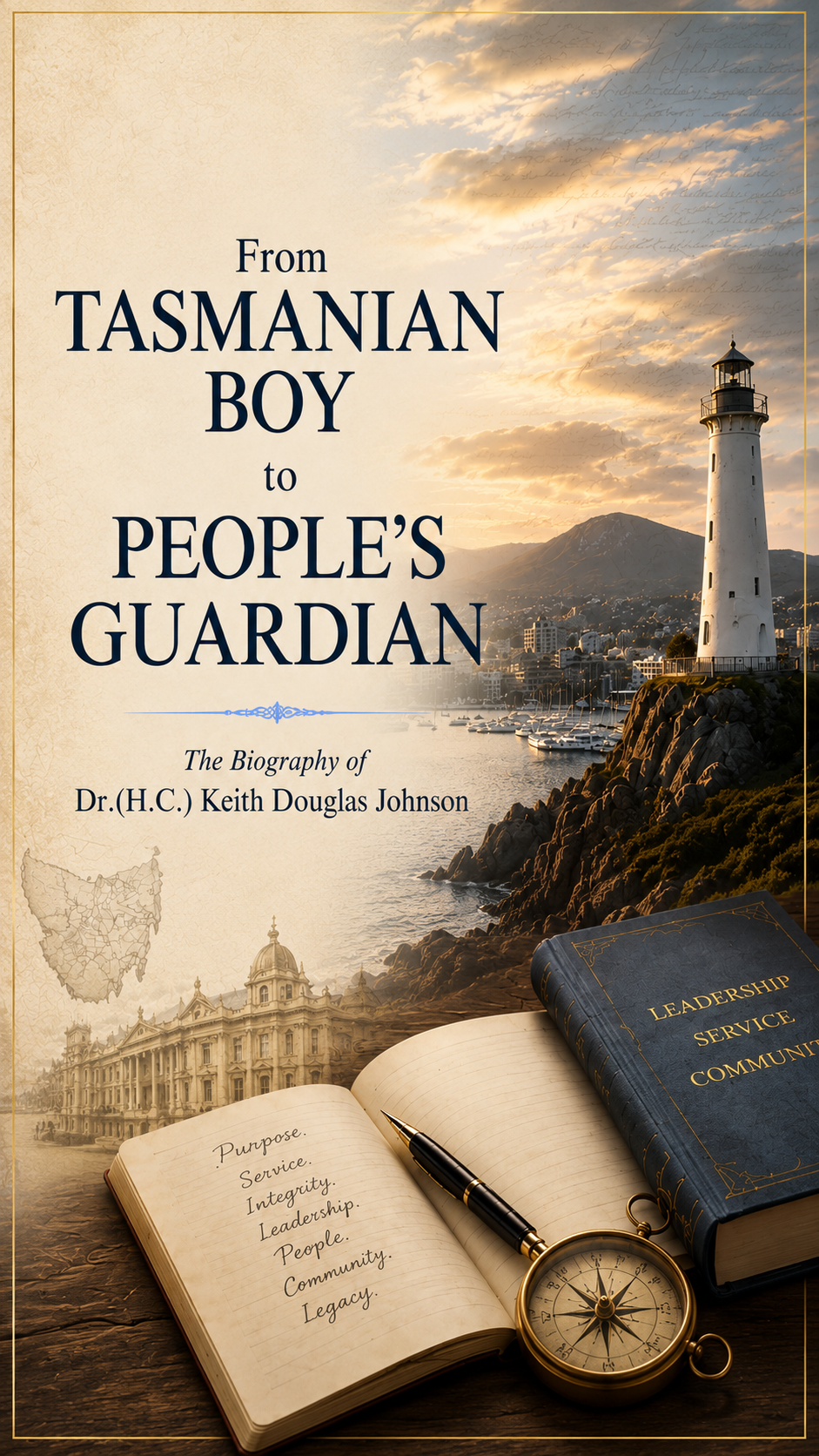
The story of Dr. Keith Douglas Johnson is one of transformation, resilience, and a lifelong commitment to improving the lives of others; from a small Tasmanian community to positions of responsibility across the military, mining, construction, education, and safety sectors.
Dr. Keith was raised in New Norfolk, a small town northwest of Hobart, after being born in Hobart, Tasmania, in 1972. He first became interested in service at St. Virgil’s College in Hobart, where he was exposed to military discipline and structure through school cadets. He enlisted in the Army Reserve at the age of 17, and he joined the Australian Regular Army at the age of 18 years and 8 days shortly after completing Year 12.
The military became a defining chapter. Beginning in artillery, he learned teamwork, precision, and accountability, before a long-standing interest in policing led him to the Military Police, where investigation, decision-making, and leadership became his focus. One of the most meaningful stages of his career came as a recruit instructor at the First Recruit Training Battalion, where over three years he helped train thousands of recruits, an experience that set the foundation for a lifelong passion for teaching and mentoring.
In safety leadership, Dr. Keith went on to work across mining, retail, construction, and asphalt operations with Leighton Contractors, HSE Mining, Woolworths, Fulton Hogan, and Boral, always focused on understanding the reasons behind problems rather than just their symptoms.
At the heart of his journey is one belief: listen before speaking. It has shaped how he mentors colleagues, develops professionals, and approaches challenges, through every transition, from military service to safety leadership, Dr. Keith has remained committed to growth, responsibility, and making workplaces safer for the people within them.
The story of Dr. Keith Douglas Johnson is ultimately a story of a person who chose to learn continuously, lead thoughtfully, and leave a positive influence wherever his path has taken him.
“The places where we begin shape the values we carry forward, teaching us lessons about resilience, responsibility, and the people we become.”
Phase 1: Roots of Character
Before the leadership roles and professional achievements, there was a boy growing up in the quiet surrounds of Tasmania. Born in Hobart in 1972, Dr. Keith Douglas Johnson spent his childhood in New Norfolk, a town of around 6,000 people some 36 kilometres northwest of Hobart, built around a main hospital and a newspaper printing mill. It was the kind of town where people knew one another and where everyday life was tied to the people who kept it running.
He completed primary school in New Norfolk to Year 6, then moved to Hobart to attend St. Virgil’s College, an all-boys Catholic school, through to Year 12. It was there, through school cadets, that he found his first real connection to the discipline, structure, and sense of service that would come to define military life and recognised, while others were still weighing their options, an environment where he felt he could contribute.
While still in Hobart, he enlisted in the Army Reserve at the age of 17. He served with the Royal Australian Corps of Transport and experienced the demands of the military for the first time by operating trucks. Then, just after finishing Year 12, at the age of 18 years and 8 days, he left Tasmania to enlist in the Australian Regular Army and start formal training. This was a significant change that required discipline and flexibility right away.
The lessons from New Norfolk, St. Virgil’s College, and those first steps into military life would stay with him, the foundation for a journey that eventually led to service, safety, leadership, education, and mentorship.
“The discipline learned through service becomes a foundation for every challenge that follows, because true growth begins when a person learns to carry responsibility for something greater than themselves.”
Phase 2 : The Forge of Discipline
Dr. Keith Douglas Johnson left Tasmania at the age of 18 to enlist in the Australian Army, entering a setting that valued service, discipline, and teamwork. Recruit training in Wagga Wagga, New South Wales, and initial employment training in Sydney marked the beginning of his army career.
His early posting was to artillery, where he became a gun number with the 1st Field Regiment, 105th Field Battery in Brisbane, direct experience of teamwork under pressure. For four and a half years he served in the Artillery Corps, but an earlier, unfulfilled ambition to join the Tasmania Police (which hadn’t come off, given how competitive recruitment was at the time) stayed with him.
In 1995 he volunteered to become a Military Police officer, completing a three-month course in Sydney before returning to Brisbane to serve with the First Military Police Battalion. It brought him closer to the investigative work he’d always wanted, attention to detail, fairness, and the discipline to handle difficult situations professionally. One of the standout postings of this period saw him return to Wagga Wagga as a recruit instructor, this time as a corporal responsible for training others, rather than a recruit himself.
Over roughly three years at the First Recruit Training Battalion, he helped train around 3,000 recruits, teaching everything from wearing a uniform correctly to marching and developing core military skills. It became one of the most meaningful chapters of his military career and revealed a quality that would define the rest of his professional life: a genuine drive to help people grow.
While instructing, he also completed an investigator’s course as a Military Police Investigator, broadly equivalent to detective training in civilian policing, and was posted to the Royal Military College, Duntroon in Canberra, for around two years as a corporal investigator. There he handled cases involving theft, assault, and drug-related and other disciplinary matters, learning to examine circumstances carefully before drawing conclusions.
Later, he worked as a Sergeant Investigator in Albury Wodonga, where he oversaw corporals in addition to his investigative duties. This was his first experience managing a team as opposed to just finishing his own cases. Dr. Keith learned accountability, communication, and how to maintain composure under pressure from the Army during these postings; skills that he would use in his future work in health and safety.
“Understanding the truth behind a situation requires patience, fairness, and the willingness to look beyond what is immediately visible.”
Phase 3 : The Pursuit of Justice
Dr. Keith Douglas Johnson’s transition from artillery to the Military Police in 1995 fulfilled a long-held ambition. His motivation arose not from the uniform or the authority associated with the role, but from the opportunity to investigate, understand complex situations, and contribute to fairness. The position required careful observation and decisions grounded in evidence rather than assumptions. This disciplined mindset remained central throughout the rest of his career.
After serving as an instructor for recruits at Wagga Wagga and completing his investigators’ course, Dr. Keith was posted to the Royal Military College, Duntroon, as a corporal investigator.
Around 1999, following the completion of this posting, he participated in Operation Relex, a joint deployment involving the Australian Navy and Army north of Darwin. The operation focused on intercepting vessels attempting to enter Australia unlawfully from Indonesia and required effective inter-service cooperation, sound judgement, and composure under pressure.
He subsequently advanced to the rank of sergeant and served as a Military Police investigator in Albury Wodonga. In this capacity, he managed his own investigations while supervising a team of corporals and undertaking responsibilities that included mobile police radar duties. He later returned to Canberra, where he spent approximately twelve months with the Inspector-General’s Office, examining more serious matters at a higher level within the military justice system. This experience strengthened his understanding of accountability, integrity, and due process within large organisations.
His final posting was at the Australian Defence Force Academy in Canberra, where he served as an instructor to future officers from the Army, Navy, and Air Force. This role brought him back to the work he valued most: developing people and modelling the professional standards he hoped they would carry forward throughout their careers.
His investigative experience taught Dr. Keith to seek understanding before reaching a judgement. The instinct to listen carefully, analyse evidence, and identify the underlying causes of a problem rather than merely addressing its symptoms later guided his transition into occupational health and safety.
Note of Thanks
The story of Dr. Keith Douglas Johnson has been shaped by countless individuals, experiences, and relationships that contributed to his growth as a leader, professional, and mentor. This biography represents not only his personal journey but also the influence of the many people who supported, challenged, and guided him throughout the years.
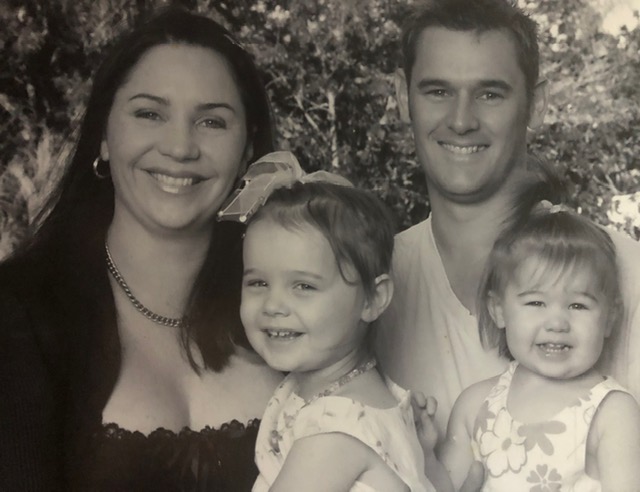
He extends his deepest appreciation to his family, especially Jodie Johnson, whose support and partnership remained a constant source of strength through the many transitions of military life, career changes, and personal milestones. He is equally grateful for the opportunity to watch his daughters, Makayla and Jesika, grow and pursue their own paths, bringing meaning and purpose to his role as a father.
Dr. Keith Johnson acknowledges the mentors and colleagues who shaped his understanding of leadership and professional responsibility, including Captain Nicholas Rose, Matt King, and Richard Pearson. Their guidance, trust, and examples of leadership contributed valuable lessons that influenced the way he supports and develops others.
He also recognises the many recruits, students, colleagues, and professionals he has encountered throughout his career. From the Australian Army to workplaces across mining, construction, safety, and education, every interaction provided an opportunity to learn, contribute, and make a difference.
Special appreciation is extended to those who encouraged his commitment to continuous learning, teaching, and sharing knowledge. His experiences as a lecturer, mentor, public speaker, and safety professional have been strengthened by the people who welcomed his contribution and allowed him to support their growth.
Above all, Dr. Keith Douglas Johnson remains thankful for the journey itself, the challenges that created opportunities to grow, and the relationships that made each chapter meaningful. His story is a reflection of shared experiences, collective support, and the belief that lasting impact is created through service to others.
thanks,
– Dr. Keith Douglas Johnson