“A life becomes meaningful when it touches people with kindness, strengthens the systems around them, and leaves dignity behind in every place it serves.”
Introduction
The life journey of Dr. Thomas Kavinadathu Cherian is a meaningful story of responsibility, learning, field experience, public service, and human understanding. His path reflects the life of a person who did not build his identity only through academic qualifications or professional designations but through years of direct engagement with people, communities, institutions, and difficult realities. His story begins in Bhopal, where he was born and brought up in a modest family environment that taught him the quiet values of discipline, simplicity, and responsibility.
His academic journey further developed through commerce and then management as he pursued an MBA with a specialization in Personnel and Marketing Management. This phase helped him strengthen his understanding of people, systems, administration, and decision-making. At one point, his selection for UPSC and his close observation of administrative life made him reflect deeply on the kind of role he wished to play. He chose a path where management knowledge and public service could come together.
His professional journey gradually opened into the field of development work, where early responsibilities introduced him to organized service, community programs, and people-centered systems. Through this experience, Dr. Thomas began to understand that development cannot be shaped only by office planning. It has to be seen closely, understood patiently, and carried forward with respect for the people it is meant to serve. His exposure to villages, field institutions, and difficult working conditions gave him lessons that formal education alone could never have offered.
Over the years, his journey moved into public health, women empowerment, reproductive health, family counseling, institutional reform, disaster relief, livelihood development, social accountability, rehabilitation, resettlement, and social impact assessment. He worked with government systems, health departments, international development organizations, field teams, Panchayat representatives, Anganwadi workers, community leaders, and district administrations. He learned that meaningful work requires not only planning but also patience, courage, communication, and the ability to make decisions at the right time.
One of the most powerful aspects of his journey is his decision to continue serving within India. While many from his community and background chose opportunities abroad, he felt that India itself had enough work, enough challenges, and enough scope for meaningful contribution. This belief became a quiet force behind his choices. Whether he was working in tribal areas, health projects, flood relief operations, women-centered initiatives, or infrastructure-linked rehabilitation, his purpose remained connected to people.
This biography presents the journey of Dr. Thomas Kavinadathu Cherian as a life shaped by service, field wisdom, management thinking, and deep human sensitivity. It is not only the story of a professional career; it is the story of a man who learned from villages, administrators, communities, crises, and systems and who continued to believe that real contribution is made when knowledge is used for the betterment of people.
“Roots become stronger when a person learns simplicity, family values, and responsibility before the world teaches ambition.”
Phase 1: Bhopal Roots and the Quiet Formation of Character
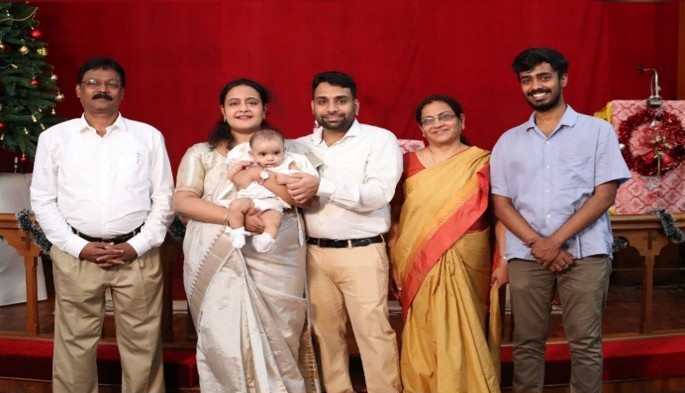
The story of Dr. Thomas Kavinadathu Cherian begins in Bhopal, a city that became much more than a place of birth for him. It became the soil of his upbringing, the background of his childhood, the center of his early learning, and the first world through which he understood family, effort, language, simplicity, and responsibility. He was born and brought up in Bhopal, and the city played a key role in shaping his character. In his memories, childhood was not described through luxury or ease, but through a modest life where people grew slowly, learned quietly, and carried their responsibilities without making much noise about them.
His father, K. T. Cherian, came to Bhopal in 1960. A few years later, after his marriage in 1965, the family began building its life in the city. The household did not come from a position of great comfort. It was a simple family background, and like many families of that time, there was no grand plan laid out for each child’s future.
Yet there was one clear belief that stayed firm inside the home: the children had to study. Education may not have been surrounded by elaborate vision or long discussions, but it was treated with seriousness. His parents insisted that learning mattered, and that insistence quietly shaped the discipline of the children.
From that environment, Dr. Thomas learned that life does not always begin with clear roads. Sometimes, it begins with ordinary days, shared spaces, limited means, and the steady push of family values. His parents gave him and his siblings a foundation that was practical, grounded, and sincere. They may not have spoken of ambition in large words, but they created an atmosphere where education was expected and responsibility was understood. That became one of the earliest strengths of his life.
He grew up with two sisters, and the bond among the children carried the warmth of shared routines. They studied in the same school and would often walk together because the school was within walking distance. There was no dependence on two-wheelers or four-wheelers for daily school life. The simple act of walking to school together became part of the rhythm of childhood. It reflected a time when children grew through companionship, movement, and familiar roads. Those walks were not only journeys from home to school; they were small experiences of togetherness, discipline, and belonging.
The family also carried the nature of a joint household, where relationships formed a strong part of daily life. In such an atmosphere, children learned to adjust, observe, listen, and remain connected to one another. Dr. Thomas grew up seeing life closely through family ties and shared living. These early impressions stayed with him and helped build a personality that later became comfortable with people from different backgrounds, communities, and places. Long before he entered villages, field programs, institutions, and public systems, he had already learned the importance of living with people, understanding spaces, and respecting relationships.
His mother, Annamma K. Cherian, remained an important emotional presence in his life. His father passed away in 2023, while his mother continued to be part of the family’s living bond. The values that came from both parents were not presented as formal teachings, but they were visible through the life they created for their children. In that household, growth happened gradually. There was no sudden rise, no dramatic privilege, and no easy ladder placed before him. What existed was effort, family pressure in the right direction, and a belief that children should move ahead through education.
“Learning becomes meaningful when a student continues to move forward even while the city around him carries uncertainty.”
Phase 2 : Learning Under the Shadow of a Changing City
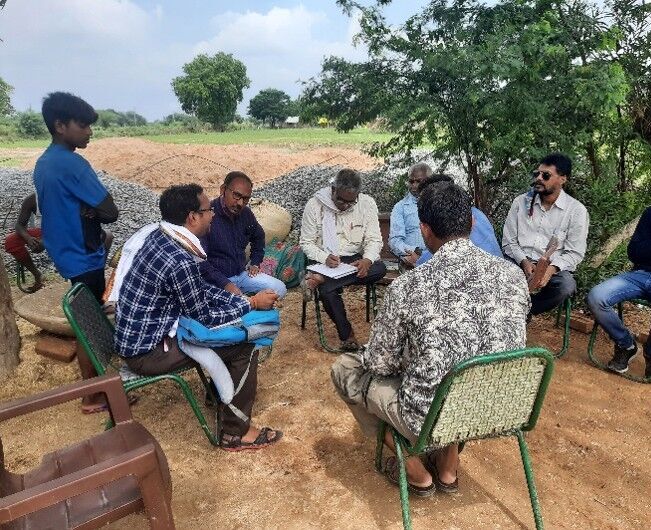
The educational journey of Dr. Thomas Kavinadathu Cherian was shaped in a city that was growing, changing, and carrying its own memories. Bhopal was not only the place where he studied; it was the environment that quietly influenced the way he observed people, responded to situations, and understood life beyond books. His early education gave him discipline, but the circumstances around him gave him awareness. He was not raised in a world where learning was separate from reality. From the beginning, studies, family expectations, city life, and social experiences remained closely connected.
His school years also carried the memory of one of the most painful events connected with Bhopal. During the period of the Bhopal gas tragedy, he was in his higher secondary years. For students of that time, education was touched by uncertainty. There was an expectation among many that perhaps all students would be passed because of the circumstances that had affected the city so deeply. However, that did not happen in the way it was hoped for. For Dr. Thomas, this remained an unforgettable part of his student life. It was not merely an incident mentioned in the background; it was a moment that showed him how life could change suddenly and how students too had to continue facing their responsibilities even when the world around them was disturbed.
The educational journey of Dr. Thomas Kavinadathu Cherian was shaped in a city that was growing, changing, and carrying its own memories. Bhopal was not only the place where he studied; it was the environment that quietly influenced the way he observed people, responded to situations, and understood life beyond books. His early education gave him discipline, but the circumstances around him gave him awareness. He was not raised in a world where learning was separate from reality. From the beginning, studies, family expectations, city life, and social experiences remained closely connected.
His school years also carried the memory of one of the most painful events connected with Bhopal. During the period of the Bhopal gas tragedy, he was in his higher secondary years. For students of that time, education was touched by uncertainty. There was an expectation among many that perhaps all students would be passed because of the circumstances that had affected the city so deeply. However, that did not happen in the way it was hoped for. For Dr. Thomas, this remained an unforgettable part of his student life. It was not merely an incident mentioned in the background; it was a moment that showed him how life could change suddenly and how students too had to continue facing their responsibilities even when the world around them was disturbed.
The Higher Secondary School Certificate Examination in 1986 became one of the early academic milestones in his journey. His subjects included Physics and Chemistry, and he passed the examination. This stage was important because it came during a difficult period and still became part of his forward movement. The young student who was trying to find his academic direction had already begun learning that progress often does not happen in perfect conditions. Sometimes, one continues while carrying uncertainty, pressure, and memories that do not easily fade.
After school, his educational direction moved toward commerce. He pursued a B.Com. through Barkatullah University, with his academic connection to Hamidia Arts and Commerce College, Bhopal. This transition from science subjects at the school level to commerce at the graduation level reflected a widening of his learning path. It also showed that he was gradually moving closer to the world of administration, management, systems, and practical work. Commerce gave him a different kind of academic base, one that later connected well with his professional responsibilities.
“A small opportunity can open a wider life when courage answers before certainty arrives.”
Phase 3 : The Post Box That Opened a Larger World
The first real turn in the working life of Dr. Thomas Kavinadathu Cherian came quietly, without any dramatic announcement. It came through an advertisement that did not reveal everything at once. The notice carried a post box number and invited applications for the position of an office assistant in an international organization. There was no clear name, no detailed explanation, and no grand promise attached to it. It simply asked interested candidates to apply with a recent photograph. For a young man standing at the beginning of his career, it was one of those moments where life offered a door before explaining where it would lead.
He sent his application without knowing the full identity of the organization. At that time, he did not know that the opportunity was connected with CARE, an American organization that would later be known widely as CARE International. The response did not come immediately. Nearly three months passed before he received a letter inviting him for an interview. Only then did he come to know more clearly where his application had reached. Out of twenty-five people, he was selected. That selection became one of the earliest moments of professional affirmation in his life.
His work began in an office environment connected with computers and typewriters. It was a different kind of beginning from the later image of him walking through villages, crossing difficult routes, meeting field teams, and dealing with public systems. In those early days, the nature of work was more administrative. It involved learning discipline, systems, communication, and the basic rhythm of an organization. The computer-related beginning also mattered because it placed him close to structured work at a time when technology was not as common and accessible as it is today.
The first salary he earned carried a meaning far greater than its amount. His first earning was 800 rupees. For him, it was a proud moment, not because the sum was large, but because it represented independence. It showed that he had stepped into responsibility with his own effort. Later, that amount increased to 1200 rupees, and by the end of the year it reached 1800 rupees. These figures stayed in his memory because they belonged to the earliest stage of self-reliance. They marked the beginning of a life where work, commitment, and progress would move together.
As time passed, his role began to change. After completing his graduation, he was promoted and moved toward field-based responsibilities. This shift altered the entire direction of his professional life. The young man who had started with office work was now entering the world outside files, desks, and machines. He was stepping into programs that required travel, observation, coordination, and direct contact with communities. That change did not merely modify his job profile; it introduced him to the realities that would shape his thinking for years.
His early field assignment was connected with food support and monitoring. CARE supplied food through programs linked with schools, Anganwadi centers, health, education, women, and children. His responsibility was to visit these places and see whether the food was being used according to the required norms. It was not enough to check records from a distance. He had to go to the locations, see the distribution, observe the process, and understand whether the intended beneficiaries were actually receiving the support.
Note of Thanks
A journey like that of Dr. Thomas Kavinadathu Cherian is never shaped by one person alone. It carries the strength of family, the guidance of institutions, the lessons of the field, and the trust of people who became part of his life at different stages. With deep humility, this note of thanks reflects the gratitude connected with every hand that supported him, every responsibility that shaped him, and every experience that helped him grow.
Dr. Thomas remains grateful to his parents, K. T. Cherian and Annamma K. Cherian, whose simple and sincere family values gave him the foundation to move forward with discipline and purpose. He also acknowledges the warmth of his siblings and family, whose presence remained part of his personal strength through the changing phases of his journey.
He expresses heartfelt gratitude to the organizations, departments, officers, colleagues, field workers, and community representatives who gave him opportunities to learn, serve, and contribute. His years with CARE International, the Health Department, development organizations, government systems, and rural institutions helped him understand life from many angles. The guidance and exposure he received while working with administrators, district officials, health professionals, Panchayat representatives, Anganwadi workers, and field teams played an important role in shaping his professional outlook.
The biography of Dr. Thomas Kavinadathu Cherian is, in many ways, a gesture of gratitude to everyone who walked with him, challenged him, trusted him, and helped him continue his work with meaning, courage, and human understanding.
Thanks,
– Dr. Thomas Kavinadathu Cherian