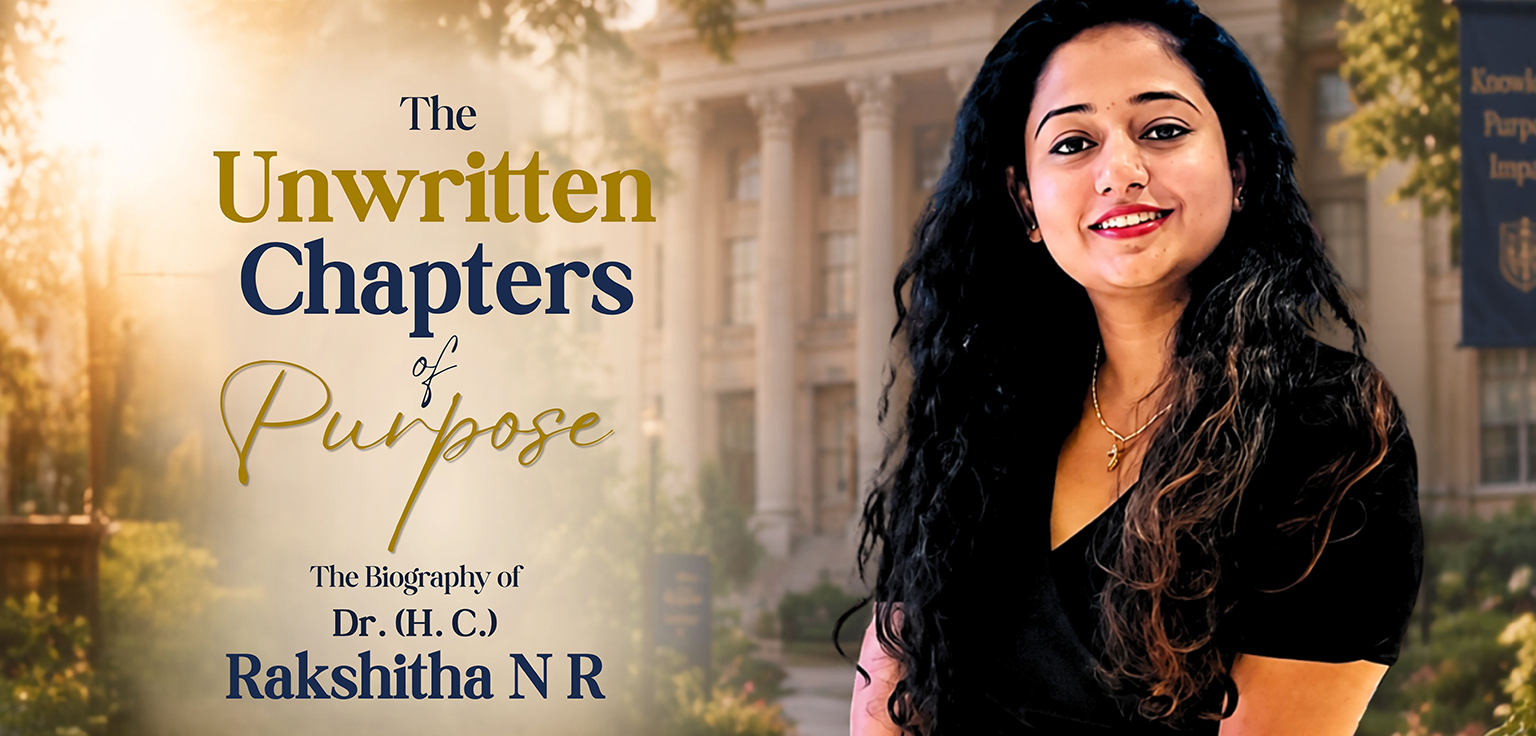
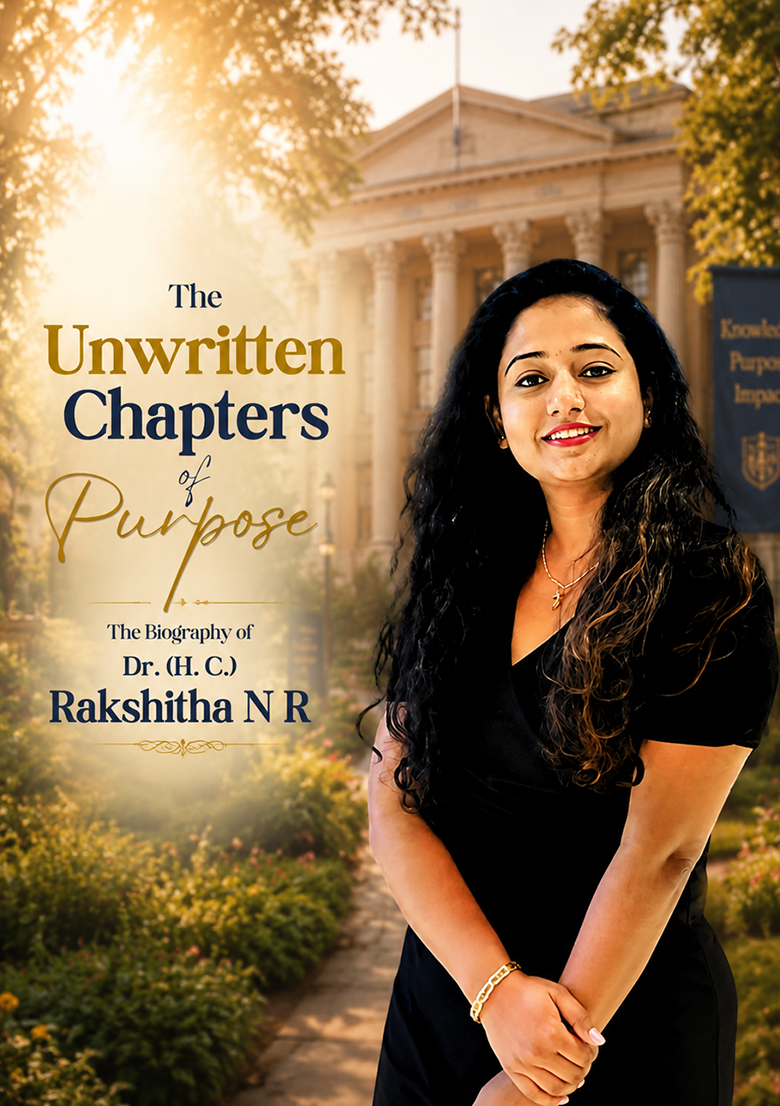
“I did not become a healer by accident. I became one by walking through my own darkness, by choosing growth over comfort, and by refusing to let my past define my future. Every life I touch today carries the strength of every battle I fought yesterday.”
Introduction
The life of Dr. Rakshitha N R cannot be captured through a single profession or a handful of achievements. Her journey is a beautiful weave of creativity, technology, emotional awareness, independence, and service. Each phase of her life has left its mark on the way she now understands people and approaches her responsibilities. She did not arrive at her present calling through a direct or predictable route. Instead, she learned through different environments, discovered her abilities gradually, and allowed experience to gently guide her towards work that felt truly meaningful.
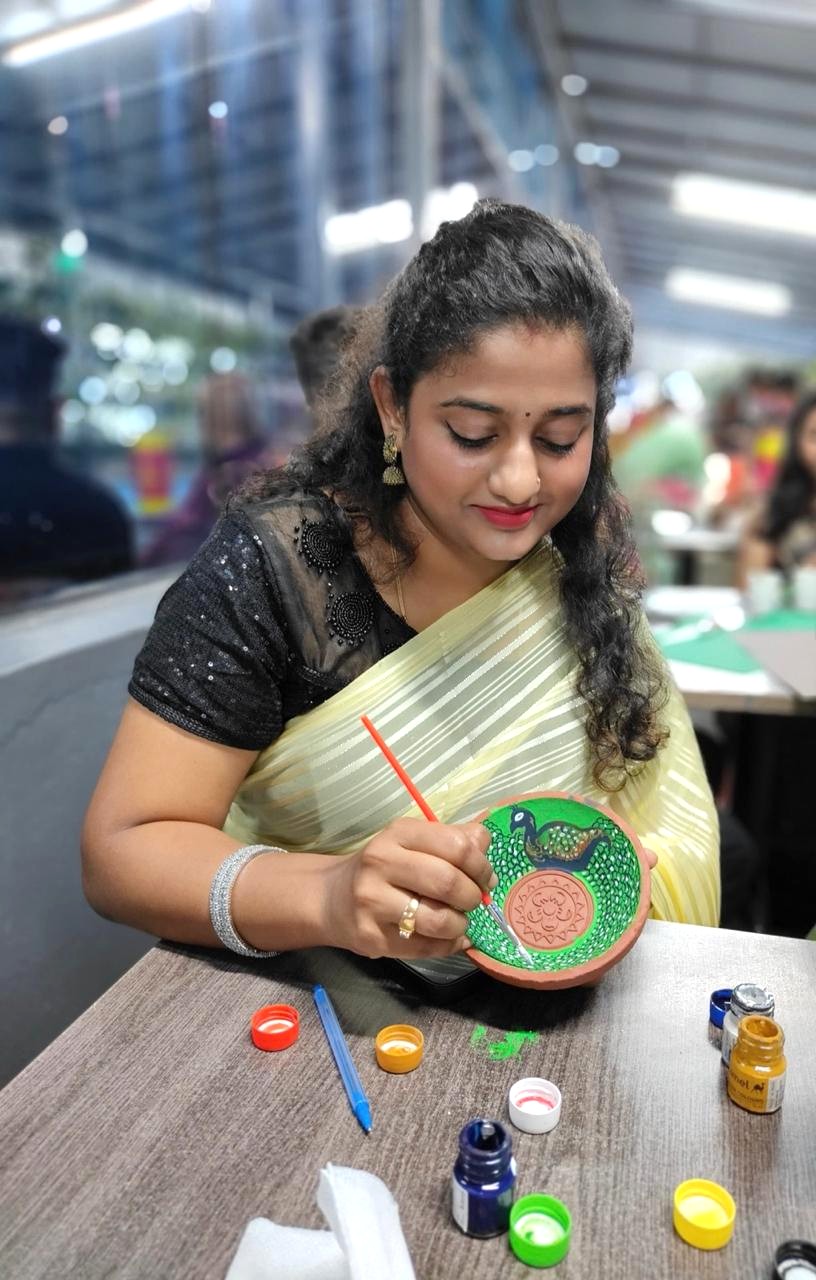
Creativity was present in her world long before psychology became her profession. Drawing, painting, personalised gift making, designing, stitching, cooking, and event-related work gave her different ways to express ideas and emotions. These interests were never separate from her personality. They reflected patience, observation, attention to detail, and a deep desire to create something personal for others. Her creative instinct later found another beautiful outlet through her gift page, Raksh_Gifts, where imagination and effort came together in handmade and personalised work.
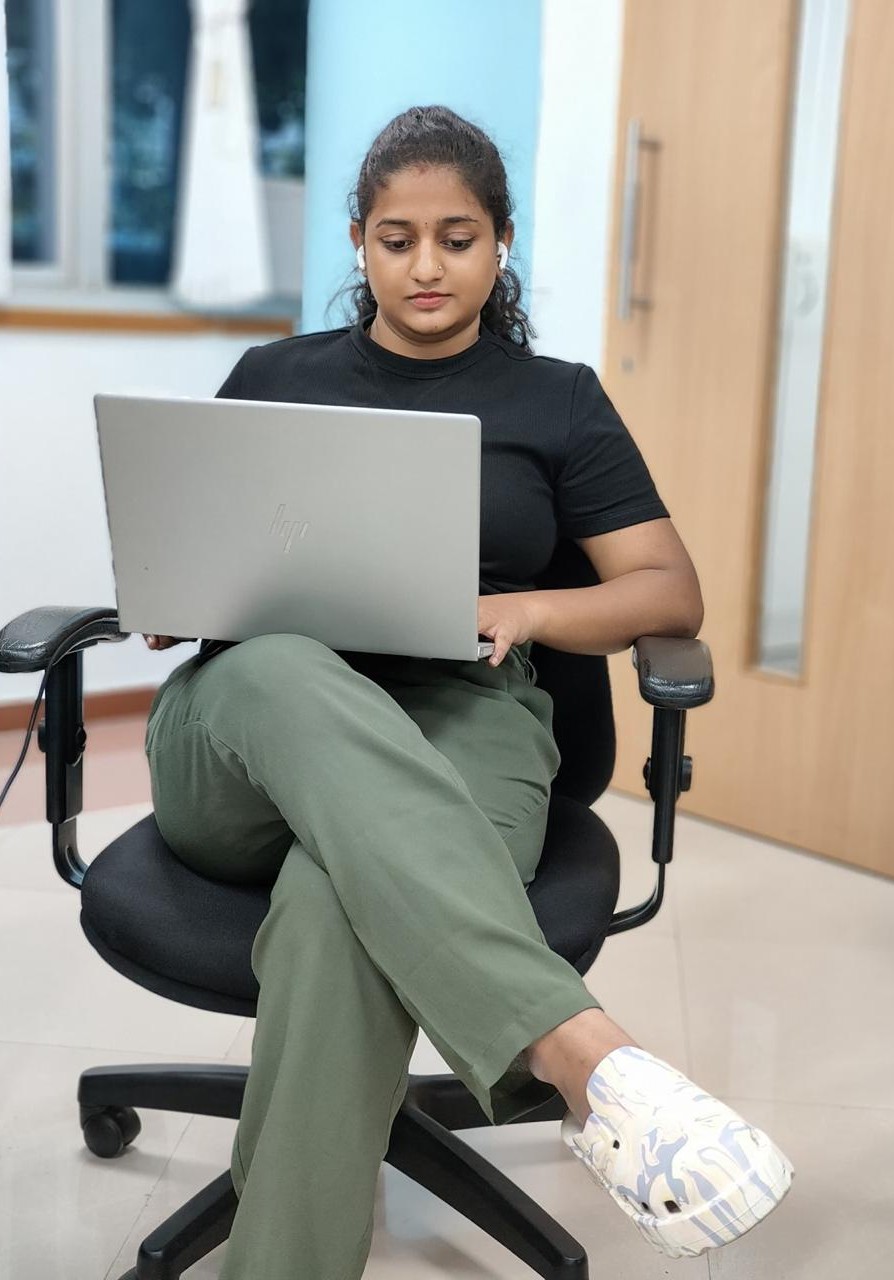
Her academic direction initially rested in science and technology. Mathematics and Science fascinated her during her school years, eventually leading her towards Electronics and Communication Engineering. The field required logical thinking, technical discipline, and the ability to solve problems with clarity. Through engineering projects, internships, and technical workshops, she developed practical skills and became “Dr. Rakshitha N R during her professional journey, embracing learning and growth through technology.” comfortable with learning unfamiliar systems.
Her professional exposure later expanded through coding, customer support, technical advisory work, and data analysis. Working across different roles taught her how quickly professional environments could change. As a coding teacher, she had to explain technical ideas in a way that others could easily grasp. As a technical advisor, she dealt with users who needed clear guidance and patient support. Her experience in data analysis demanded precision and organised thinking. These positions may have belonged to the technology sector, yet they strengthened qualities that later became invaluable in her psychological work. Communication, careful listening, problem-solving, adaptability, and the ability to respond calmly were already becoming part of her professional character.
At the same time, another interest was developing more deeply within her. She had long felt drawn towards work that could help people, though the form of that service was not immediately clear. Psychology gave that intention a direction. It showed her that emotional struggles were not matters to be ignored or dismissed. They required sensitivity, knowledge, patience, and a space in which a person could speak honestly.
Her understanding of emotional well-being was never limited to academic theory. She recognised how easily pain could remain hidden behind silence, routine, or an outward appearance of strength. She also understood that people often needed more than advice. They needed to feel heard without judgement. This awareness became central to the way she viewed counselling and healing. For her, listening was not a passive act. It was a responsibility that required attention, empathy, and deep respect for another person’s experience.
Her decision to study psychology therefore represented more than a change of career. It was a conscious movement towards a field that matched both her personal understanding and her desire to support others. The transition required her to balance employment with further education, enter a new discipline, and build professional capability step by step. She approached that change with the same willingness to learn that had guided her through technology.
Clinical exposure placed her in situations where knowledge had to be applied with care. Interacting with patients, studying case histories, observing psychiatric conditions, and taking part in follow-up work strengthened her awareness of the seriousness of mental health practice. It also showed her that every individual carried a different history and that responsible support could never be based on assumptions. Each person had to be understood within the truth of his or her own experience.
Her professional development continued through training in therapeutic methods that addressed varied emotional and relational needs. Couple and family therapy, art therapy, inner child healing, hypnosis, suicide prevention, support for children with special needs, and techniques drawn from established therapeutic approaches expanded her ability to work with people facing different concerns. This continued learning reflected her belief that a practitioner must remain prepared, informed, and open to growth.
Through Cherish Minds, she began shaping a professional space centred on emotional support, counselling, and practical healing. The work represented the meeting point of many parts of her journey. Her technical discipline gave structure to her responsibilities. Her creativity helped her recognise different forms of expression. Her psychological education gave her professional direction. Her own observations of emotional life gave depth to the way she listened.
Beyond professional roles, she remains connected to the responsibilities and relationships that matter deeply to her. She values honest communication, emotional security, self-respect, independence, and a supportive environment. She believes that emotions should not be suppressed and that people must be encouraged to express what they are carrying within themselves. Her outlook is rooted in the conviction that difficulties can teach, learning must continue, and progress becomes possible when a person refuses to remain confined by earlier limitations.
This biography follows the journey of a woman who explored more than one path before recognising where her abilities could serve others most meaningfully. It reflects the growth of an engineer who entered the world of technology, a creative individual who continued to build through her hands and imagination, and a psychologist who chose to make emotional understanding the centre of her work. Above all, it is the story of someone who kept learning until knowledge became purpose and purpose became service.
“She carried forward the spirit of those who came before her, knowing that strength and artistry could live in the same hands.”
Phase 1: An Artistic Legacy and the Strength of Family Roots
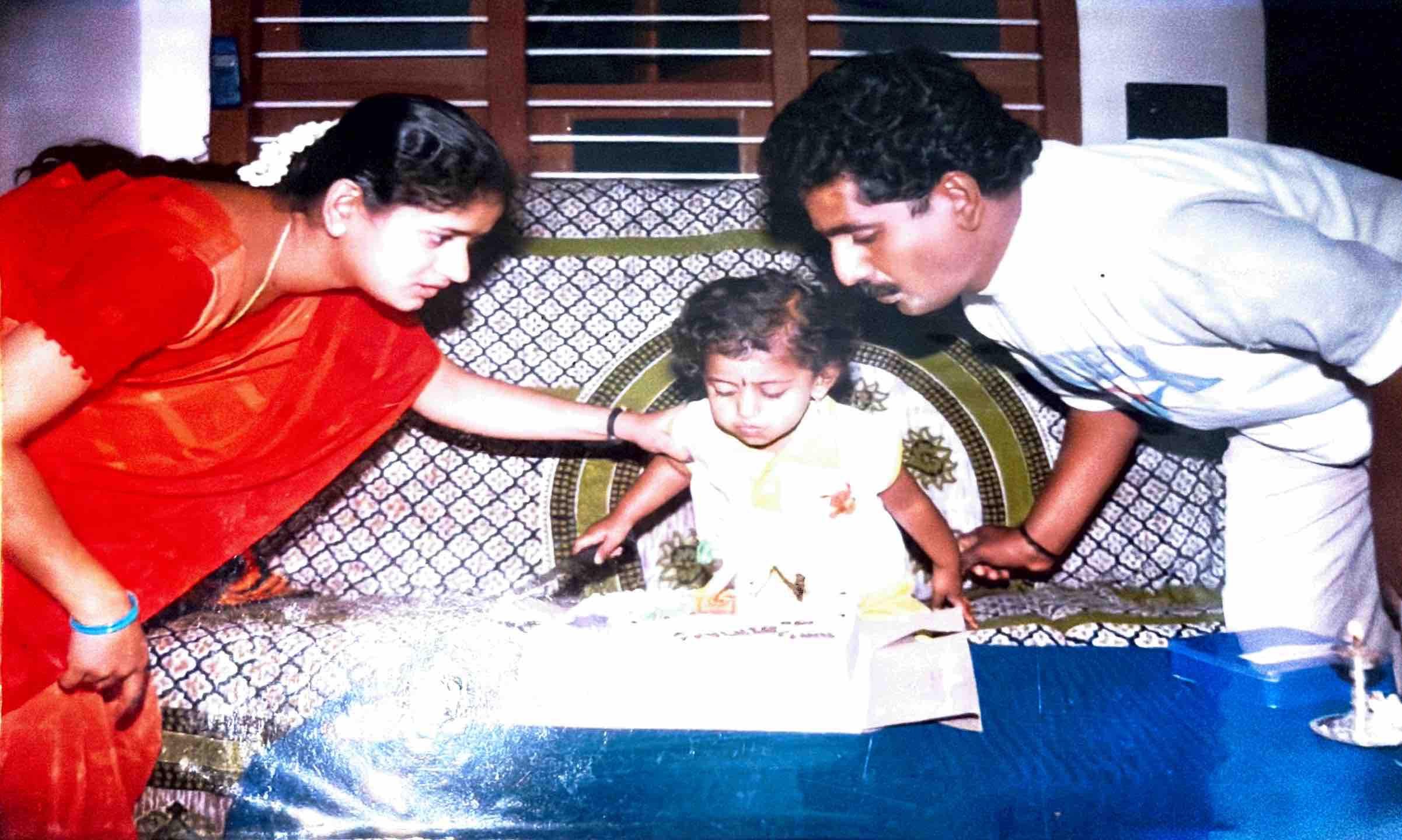
Born in 1997, Dr. Rakshitha N R entered a family where hard work, creativity, and personal discipline were already deeply valued. Her father, Ravi Kumar N. V., built his professional life in business, while her mother, Shashi Rekha, brought her own understanding of colour, creativity, and human expression through her work as a certified colour therapist. Their different strengths formed part of the environment in which their daughter began observing life, relationships, and responsibility.
Among the people who shaped her earliest understanding of strength, no one held a more powerful place than her grandfather, Sri Pailwan Venkatachar NC. She did not view him only as an elder within the family. To her, he was an idol, an example of what it meant to meet life with courage and remain grounded through changing circumstances. His personality brought together qualities that might appear different at first, yet existed naturally within him. He was physically strong, artistically gifted, disciplined in his approach, and capable of looking for something positive even when circumstances were difficult.
His identity as a wrestler reflected determination, endurance, and control. His work as a sculptor revealed patience, precision, and imagination. These were not merely occupations or accomplishments listed beside his name. They represented the two sides of a life built through both physical effort and creative expression. The recognition he received, the Rajya Prashasti, acknowledged his contribution, though the influence he carried within his family reached far beyond public honour. For his granddaughter, his greatest achievement was the example he left through the way he lived.
She grew up recognising that strength did not have to appear harsh and that creativity did not belong only to moments of leisure. In her grandfather’s life, both became forms of commitment. A sculptor had to remain patient with every detail. A wrestler had to respect training, discipline, and persistence. His life quietly demonstrated that meaningful results demanded repeated effort and that the hands capable of creating beauty could also possess remarkable strength.
This artistic inheritance found a natural place within Dr. Rakshitha’s own personality. Drawing and painting attracted her from an early age. She enjoyed working with colour, form, and personal ideas, and creativity gradually became one of the clearest ways through which she expressed herself.
Rather than treating art as something distant from ordinary life, she found ways to connect it with people. She created small items, explored personalised work, and experienced the satisfaction of making something that carried individual thought and care.
The family’s connection with sculpture also influenced the kind of creativity that interested her. She was not limited to drawing on paper. During her younger years, she made small Ganesha idols and shared them with others. Such acts may have appeared simple, yet they revealed qualities that would remain present throughout 04 her life. She enjoyed using her hands with patience, giving shape to an idea, and turning creative effort into something that could bring happiness to another person.
Her mother’s association with colour therapy gave another dimension to the atmosphere surrounding creativity. Colour was not understood only as decoration. It could carry feeling, mood, and expression. This connection between colour and emotion would later seem especially meaningful in a life that eventually moved towards psychology. During those early years, however, it was simply part of the world she was observing, absorbing, and gradually making her own.
Her father’s business background presented a different kind of influence. It introduced the importance of professional responsibility, practical thinking, and the effort required to build and sustain work. As she grew, she would explore several areas that reflected both sides of her family environment. Her path would include technical education and employment, alongside drawing, gift making, designing, stitching, cooking, and event related activities. The beginnings of that combination could already be traced to the household in which she was raised.
Family, for her, was therefore not merely the setting of her childhood. It was the first place where she encountered different ways of meeting the world. From one direction came enterprise and practical responsibility. From another came colour, creative understanding, and artistic sensitivity. At the centre of her admiration stood a grandfather whose life carried discipline, gratitude, craftsmanship, and resilience.
She remembered particularly his ability to find something worthy of appreciation even during difficult periods. That quality made a deep impression on her. Gratitude, in his example, did not mean denying hardship. It meant refusing to allow hardship to erase every reason for hope. This way of looking at life later became relevant to her own journey, especially when she had to move through uncertainty, make independent choices, and search for a professional direction that genuinely suited her.
The importance she gave to him also reflected the emotional place he occupied within the family. He represented continuity. His work, values, and public recognition became part of a legacy carried by those who came after him. She did not inherit his exact path, nor did she attempt to reproduce his achievements. Instead, she carried forward the spirit behind them. His discipline encouraged seriousness. His creativity encouraged expression. His strength encouraged perseverance. His positive outlook offered a way of facing difficulty without surrendering to it.
These early influences did not immediately reveal where Dr. Rakshitha’s life would lead. There was no single moment in childhood that announced the professions she would later enter or the responsibilities she would eventually accept. What existed first were the foundations: an observant nature, a love for creativity, respect for disciplined effort, and admiration for someone who had joined strength with artistry.
Her family roots also help explain why she would later resist being confined to one identity. She could be logical and creative, technically trained and emotionally perceptive, professionally disciplined and deeply expressive. These qualities did not emerge suddenly when she became an adult. Their earliest traces belonged to the environment that had shaped her long before she entered engineering, technology, or psychology.
The legacy of Sri Pailwan Venkatachar NC remained especially close to her because it represented more than family pride. It gave her a personal measure of character. Titles and honours mattered, yet the values behind them mattered more. She admired the person who had earned recognition while remaining an enduring source of strength within the family. His influence continued through memory, through the stories associated with his life, and through the standards she carried for herself.
Before Dr. Rakshitha became an engineer, an IT professional, a psychologist, an entrepreneur, a wife, or a mother, she was a child learning from the people around her. She was watching how effort shaped a life, how creativity could pass through generations, and how one individual’s character could remain present long after particular moments had passed. In those family roots lay the first quiet formation of the woman she would become.
“She understood early that being heard was not the same as being cared for. And so she began searching for a voice that could speak her truth.”
Phase 2 : A Childhood Lived Within Boundaries
The early years of Dr. Rakshitha N R were shaped by protection, discipline, and clearly defined limits. She grew up in an environment where her movements, friendships, and social interactions were closely watched. The intention was to keep her safe, yet the same protection often left little room for her to explore life independently. Activities that appeared ordinary to other children, such as spending time with friends, joining outings, or moving freely beyond familiar surroundings, were not always easily available to her.
As a child, she did not necessarily possess the language to explain what those restrictions meant to her. She understood that rules had to be followed, though she also felt the quiet weight of being unable to experience the world as openly as she wished. There were moments when she wanted companionship, freedom, and the simple comfort of sharing her thoughts with someone who would understand without immediately judging or correcting her.
The difference between being cared for and feeling understood became increasingly clear to her. A family could provide protection and still remain unaware of the emotions a child carried privately. She experienced that distinction closely. She learned that practical care did not always create emotional closeness and that a person could be surrounded by others while still searching for someone with whom she could speak honestly.
When words felt difficult to share, she often turned towards God. Prayer became a private space where she could express what remained unspoken elsewhere. She felt that God could hear the feelings she was unable to communicate freely and understand the questions that stayed within her. This connection did not remove the restrictions around her, though it gave her an inner place of comfort. In those moments, she could be truthful about what she felt without fearing that her emotions would be dismissed.
Her habit of seeking comfort through faith also revealed an early desire to make sense of emotional experiences rather than simply ignore them. She did not yet know that understanding feelings could become a professional field. She only knew that being heard mattered. The need for emotional recognition was not abstract to her. It was something she experienced personally, particularly when she felt that the people around her could see her actions more easily than they could understand the feelings behind them.
Her protected upbringing also affected the way she approached relationships. Limited interaction outside familiar settings meant that she had fewer opportunities to learn about different personalities and social situations through direct experience. The world beyond home and school appeared broader, less predictable, and sometimes difficult to interpret. She wanted to understand people, though much of that understanding had to develop gradually as her environment expanded.
“She discovered that leadership did not require a loud voice. It could begin with sincerity, consistency, and the courage to do what was right.”
Phase 3 : Leadership, Honesty and Creativity in the Classroom
School became one of the first places where Dr. Rakshitha N R began discovering abilities that were not always visible within the protected environment of her childhood. At Cambridge School, she entered a structured world of lessons, classmates, teachers, responsibilities, and creative activities. The classroom gave her opportunities to observe how people interacted beyond the family setting. It also allowed parts of her personality to emerge through participation, learning, and the trust placed in her by others.
Her school years were not defined by a single interest. She was drawn towards academics, especially subjects that encouraged logical thought and careful understanding. Mathematics and Science held her attention because they required clarity, concentration, and the ability to work towards an answer. She enjoyed the sense of order within these subjects. A problem could be studied, broken into smaller parts, and understood through patience. This way of thinking would later support her academic movement towards a technical field, though during school it simply reflected her natural willingness to learn.
Alongside academics, creativity continued to hold an important place in her student life. Painting gave her a means of expressing thoughts that did not always need to be spoken. Through colour and visual form, she could work independently, focus closely, and turn an idea into something visible. Her involvement in painting was recognised through certificates, giving her encouragement to continue developing an ability that already felt personal to her.
These certificates mattered not merely because they acknowledged the final artwork. They reflected the discipline behind the process. A painting required her to sit with an idea, choose how to present it, and remain attentive until the work felt complete. Every completed piece carried something of her own judgement. There was freedom in deciding how colours would meet and how an image would take shape, particularly for a child whose choices in other parts of life were often closely guided.
Art also gave her a different experience of confidence. Academic answers were often judged as correct or incorrect, while creativity allowed room for individual interpretation. She could make choices that belonged to her and see those choices take form before her. Recognition from the school assured her that her creative ability had value. It encouraged her to respect her own imagination rather than treating it as a passing childhood interest.
Her school life also introduced her to responsibility through her position as Deputy Leader. The role placed her in a setting where she was expected to be dependable and support the order of the classroom. Leadership at that age did not involve authority in the professional sense. It was expressed through smaller actions, such as behaving responsibly, helping when required, following instructions, and setting an example among fellow students.
“She understood that emotional trust was never ordinary. It was something entrusted to her, and it deserved to be handled with complete care.”
Phase 4 : From Academic Knowledge to Clinical Responsibility
Completing her education in psychology gave Dr. Rakshitha N R the academic foundation she had been seeking, though the next stage required more than understanding concepts through study. Psychology dealt with people whose concerns could not be approached only through definitions, theories, or written assessments. Real practice demanded attentiveness, ethical awareness, emotional steadiness, and respect for the trust placed in a professional. Her training at Spandana Nursing Home became an important step in that transition from academic knowledge to practical responsibility.
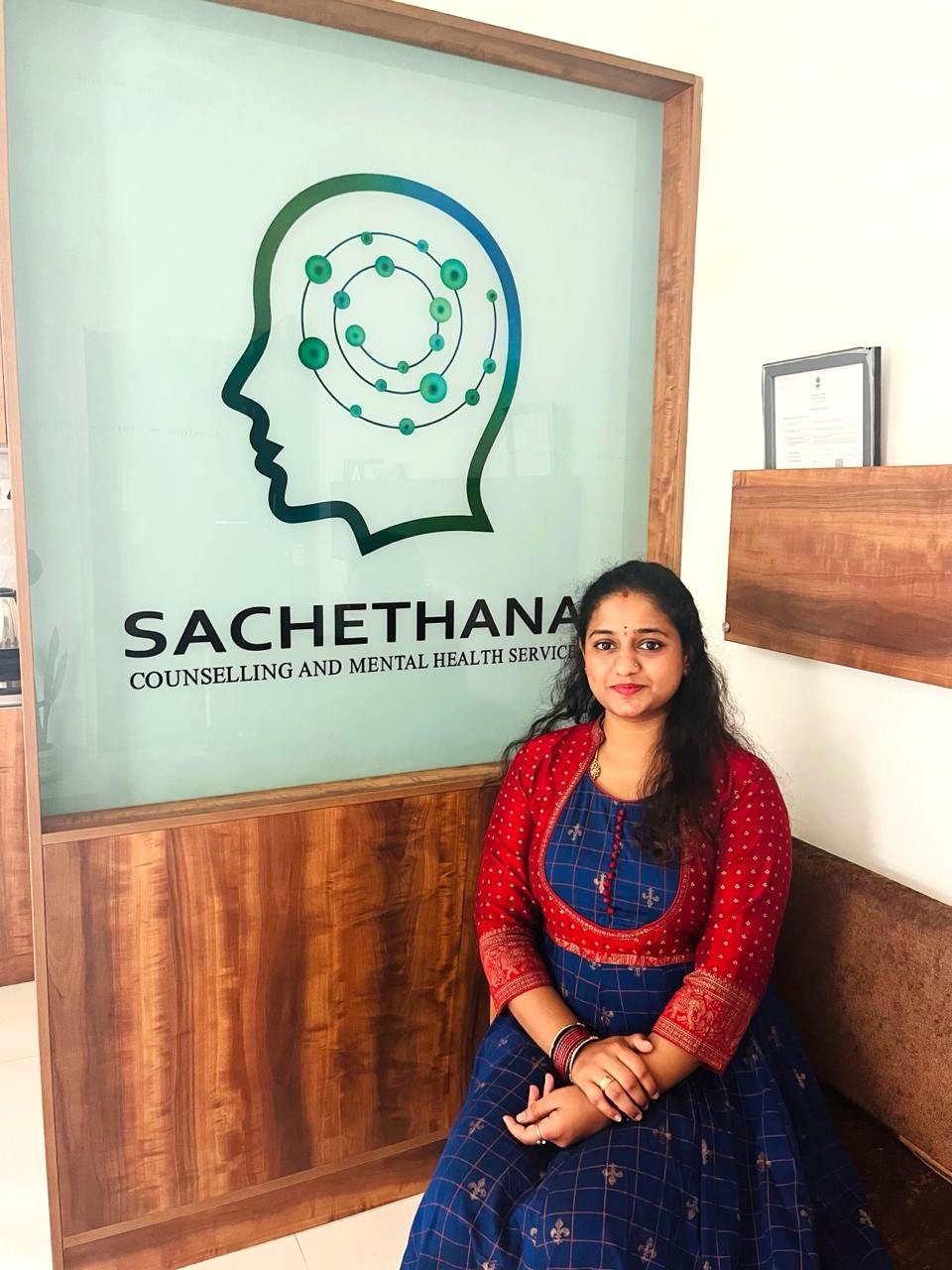
After gaining foundational clinical exposure at Spandana Nursing Home, she further strengthened her professional experience through her association with Sachethana Counselling and Mental Health Services, where she worked as a Counselling Psychologist from November 2023 to December 2024. This experience brought her closer to the practical responsibilities of psychological care, as she conducted counselling sessions with individuals, groups, and families while maintaining professional ethics and confidentiality. She developed a deeper understanding of client concerns through detailed case histories and worked towards providing appropriate psychological support through evidence-based interventions. Alongside counselling practice, she actively contributed to a research study on emotional regulation, participating in data collection and analysis. This combination of counselling practice and research exposure further strengthened her ability to integrate psychological knowledge with practical human understanding.
Entering the nursing home as a trainee psychologist placed her closer to the realities of psychological care. Until then, much of her learning had involved understanding behaviour, emotions, relationships, and mental processes through structured academic material. Practical exposure brought those subjects into a setting where individuals carried their own histories, concerns, and ways of expressing distress. The experience reminded her that no person could be understood through theory alone.
The environment required her to observe carefully and remain open to learning. She could not approach people with fixed conclusions or assume that one method would suit every situation. Each individual had a distinct emotional background, level of comfort, and capacity to speak about personal experiences. Some concerns might be shared directly, while others could take time to emerge. She began to appreciate that psychological support often started by allowing a person to feel heard without pressure.
Her academic training had introduced her to the importance of listening. Clinical exposure gave that principle a deeper meaning. Listening was not simply remaining silent while another person spoke. It required full attention, patience, and the ability to avoid turning the conversation towards personal opinions. A trainee had to notice what was being communicated while remaining careful not to impose an interpretation too quickly.
This demanded discipline. A person seeking support could speak from a place of fear, uncertainty, emotional pain, or confusion. Their words might not arrive in an orderly sequence. They might hesitate, return to the same concern, or struggle to explain what they were feeling. She had to understand that such moments were not interruptions to the process. They were part of the person’s effort to communicate something difficult.
The training also strengthened her awareness of professional boundaries. Her desire to help others had guided her towards psychology, though practical work made clear that compassion had to be supported by responsibility. A psychologist could not allow personal emotion to replace professional judgement. Care required warmth, yet it also required clarity about one’s role, limitations, and obligations.
She began to see that supporting someone was different from solving a technical concern. A technical issue could often be identified and addressed through a defined process. Emotional difficulties might not have an immediate answer. A person could require time to understand their own thoughts, recognise recurring patterns, or become comfortable enough to discuss a painful experience. Progress could not always be measured through a visible result.
This understanding changed the way she viewed professional effectiveness. In psychological care, meaningful work could begin through a conversation in which a person felt safe enough to speak honestly. The absence of a quick solution did not mean that nothing valuable had occurred. Creating a respectful space, listening without judgement, and helping someone approach an experience with greater awareness could itself be significant.
Her exposure at Spandana Nursing Home also helped her recognise the seriousness of confidentiality and trust. People seeking psychological support might share experiences they had not discussed elsewhere. The professional receiving that information carried a responsibility to treat it with sensitivity. Trust could not be demanded. It had to be earned through consistency, respect, and appropriate conduct.
For her, this responsibility was closely connected with the honesty that had shaped her character since her school years. In a clinical environment, honesty included recognising what she knew, what required further learning, and where guidance was necessary. A trainee could not pretend to possess complete understanding. Professional growth required humility and the willingness to learn from supervision, observation, and experience.
This humility helped her approach training with seriousness. She did not view academic qualification as proof that learning had ended. Psychology was a field in which continued development was essential because human experiences were varied and often complex. Every interaction could reveal the need for greater knowledge, improved communication, or a more thoughtful approach.
Her practical exposure also showed her that psychological concerns could appear in many forms. Emotional distress did not always present itself openly. A person might speak about relationships, family pressures, personal uncertainty, or difficulty managing thoughts and feelings. The visible concern could be only one part of a broader inner experience. She learned to remain attentive without assuming that she already understood the complete picture.
The ability to observe without judgement became especially important. People could make choices that seemed difficult to understand from the outside. Psychology required attention to the circumstances, beliefs, fears, and experiences influencing those choices. Dr. Rakshitha’s responsibility was not to decide whether a person’s feelings were acceptable. It was to understand how those feelings were affecting the individual and how appropriate support could be offered.
This stage also tested her emotional steadiness. Listening to another person’s difficulties required empathy, though empathy did not mean carrying every concern as her own. She had to remain present while maintaining the professional balance necessary to think clearly. Learning this distinction was important for both the person seeking support and the practitioner providing it.
The training environment strengthened her confidence gradually. Academic study had given her terminology and theoretical understanding. Practical exposure helped her become more comfortable with the human presence behind that knowledge. She was no longer considering behaviour only as a subject of study. She was beginning to understand how psychological knowledge could be applied with care in real interactions.
Her preparation did not remain limited to the Master’s programme and trainee experience. Dr. Rakshitha continued strengthening her professional foundation through specialised certifications. Her training included Cognitive Behavioural Therapy, Couple and Family Therapy, Art Therapy, Inner Child Healing, Suicide Prevention, Hypnosis, and the early identification of children with special needs.
Continuing her journey of understanding human emotions and healing, she also pursued learning in Akashic Records, expanding her perspective on inner awareness, emotional patterns, and personal transformation. Through this practice, she explored another approach to understanding the experiences individuals carry within themselves. Her learning further supported her interest in helping people gain clarity, recognise emotional blocks, and move towards greater self-awareness and healing. For her, every approach that encouraged understanding, reflection, and emotional growth became another way of supporting individuals on their personal journeys.
“A meaningful practice is built not only by helping those who seek support, but also by preparing others to carry that responsibility with confidence and care .”
Phase 5 : Building Cherish Minds and Preparing Future Practitioners

For Dr. Rakshitha N R, establishing Cherish Minds marked the point at which years of education, professional change, clinical exposure, and personal conviction came together in a space of her own. Located in Vijayanagar, Bangalore, the clinic became the professional expression of the direction she had worked steadily to create. It allowed her to conduct counselling sessions, provide family therapy, support clients through their emotional concerns, and offer practical internships to psychology students.
The clinic did not emerge from an immediate or effortless beginning. Even before she formally entered psychology, friends and relatives often felt comfortable speaking with her. They trusted her enough to share their emotions and personal difficulties. At that stage, her responses came from concern and a natural desire to offer strength. She would listen, reassure them, and help them consider their situations with greater hope.
Once she began studying psychology, people continued approaching her. Her growing knowledge gave greater structure to qualities that had already been present in her interactions. During the course of her education, she did not charge people for the support she provided. Her priority was to learn, understand the responsibility involved, and gain experience while remaining within the limits of her developing knowledge.
After completing her studies, she moved gradually into professional practice. Before establishing herself independently, she gained experience in a clinical setting and began working on a freelance basis. She attended clinics and hospitals, conducted sessions, and continued developing her practical understanding. This arrangement required flexibility, as she moved between external professional settings and her own growing practice.
The early financial stages were modest. She initially charged a comparatively small amount for her sessions. She was still building professional confidence, establishing trust, and allowing her work to speak through the experiences of those who came to her. Over time, the value of her sessions became increasingly recognised, and she began receiving a more appropriate professional fee for the work she provided.
For her, this growth represented more than an increase in earnings. It reflected the distance she had travelled from learning about psychology for the first time to being trusted with the emotional concerns of others. She had built her professional foundation through her own decisions, effort, education, and willingness to keep working even when the outcome was not immediately visible.
The name Cherish Minds carried a meaning that suited the purpose of the clinic. The work centred upon recognising that every mind held experiences deserving attention rather than dismissal. People came carrying different forms of emotional difficulty, including grief, childhood experiences, family conflict, anxiety, and concerns within relationships. Many had lived with these struggles without knowing where to seek appropriate support.
Within her clinic, Dr. Rakshitha provided counselling and family therapy while drawing upon the specialised training she had completed. Her role required her to understand that every person arrived with a different story. Similar concerns could carry entirely different meanings depending upon an individual’s experiences and circumstances. She therefore avoided treating clients as examples of a general problem. Each person had to be heard within the context of their own life.
Through her counselling and healing sessions at Cherish Minds, she created a supportive environment where individuals could openly express their emotions, concerns, and personal experiences without fear of judgement. Her approach focused on understanding each person’s unique journey and helping them recognise their own emotional patterns, challenges, and strengths. She worked with individuals and families by encouraging honest communication, emotional awareness, and healthier ways of approaching difficulties. For her, every session was not only about addressing a concern but also about helping people reconnect with themselves, develop clarity, and move towards emotional balance.
Her work showed her the importance of listening without becoming absorbed by every emotion shared during a session. Clients could speak for an hour or longer about experiences filled with grief, fear, anxiety, or painful memories.
Dr. Rakshitha remained present during that time, offering the attention and guidance required. Afterward, she consciously separated herself from the emotional weight of the session so that she could continue working with clarity.
This balance protected both her professional effectiveness and emotional wellbeing. Compassion did not require her to carry every client’s pain into her personal life. She could care deeply during a session while recognising the need to release the emotional intensity afterward. This understanding helped her remain available to each new person without allowing the experiences of one client to influence the next.
The progress of those who sought her help gave meaning to the responsibility she had accepted. Some clients arrived during periods of significant emotional distress and gradually found relief through the sessions. Their happiness and gratitude confirmed that psychological support could create a meaningful difference, even when the work remained private and could not be publicly recognised.
Dr. Rakshitha understood that many clients would not provide written reviews or openly discuss their experiences because doing so could reveal deeply personal information. She respected that silence. The absence of public recognition did not reduce the value of the outcome. For her, the client’s improvement mattered more than visible praise.
Alongside her counselling work, one of the most distinctive aspects of Cherish Minds became its internship opportunities for psychology students. She recognised a difficulty faced by many aspiring practitioners. Organisations often preferred candidates who already possessed experience, yet students could not gain that experience unless someone first trusted them with an opportunity to learn. She chose not to continue that cycle.
Students were allowed to approach the clinic even when they had no previous practical experience. She believed that interest, commitment, and a willingness to learn could provide a genuine starting point. Rather than rejecting beginners because they lacked exposure, she accepted the responsibility of training them.
Her approach was grounded in confidence in her own ability to guide. She knew that an inexperienced student could not be placed immediately into professional responsibility without preparation. They needed instruction, supervision, practical understanding, and the opportunity to observe how psychological knowledge operated beyond academic material.
At Cherish Minds, students could therefore move closer to real practice. They were not expected to arrive already prepared. Dr. Rakshitha worked to help them develop from their existing level. Her belief was straightforward: when a person had sincere interest, learning was possible.
This approach reflected her understanding of what students often needed most. Academic qualifications could introduce theories and concepts, though many young psychology professionals still felt uncertain when facing practical situations. Their hesitation did not always indicate a lack of ability. Frequently, it came from the absence of guided experience.
Dr. Rakshitha wanted the clinic to become a place where that gap could be addressed responsibly. Her training was not based upon offering empty encouragement. She wished to help students understand the seriousness of client interaction, the value of listening, the importance of confidentiality, and the need to examine concerns from more than one perspective.
Note of Thanks
Dr. Rakshitha N R carries deep gratitude for the people whose presence has supported and strengthened her journey. Behind every achievement, every decision, and every new beginning, there have been individuals who encouraged her to continue learning, remain confident, and move forward with purpose.
She expresses her heartfelt gratitude to her husband, Vinod K., whose constant support, understanding, and encouragement have been an important part of her journey. His belief in her dreams and his willingness to stand beside her through every transition gave her the confidence to continue learning, exploring new opportunities, and pursuing the path that aligned with her purpose. His companionship and encouragement have remained a source of strength throughout both her personal and professional growth.
She also extends her appreciation to her parents, Ravi Kumar N. V. and Shashi Rekha, whose values, care, and guidance formed the foundation of her life. Their influence helped shape her discipline, creativity, and understanding of responsibility. The environment they created allowed her to develop her interests, pursue education, and gradually discover the direction that truly reflected her abilities.
She also extends her sincere gratitude to Dr. Rajagopalan, who played a meaningful role as both a mentor and a friend. His guidance encouraged her to explore the fields of law and psychology and supported her during important decisions in her professional journey. His belief in her potential became a source of motivation as she continued building her path.
She remains thankful for the support and encouragement she received from her family, especially during the transitions that shaped her personal and professional life. The understanding of her loved ones gave her the strength to take new steps, embrace change, and continue growing through every experience.
She acknowledges every teacher, mentor, colleague, student, and individual who contributed to her learning and development. Each interaction brought a lesson, a perspective, or a moment of encouragement that became part of her growth.
This gratitude extends to everyone who trusted her, shared their experiences with her, and allowed her to understand the importance of listening, empathy, and care. Their faith strengthened her commitment towards psychology and reinforced her belief that meaningful work begins with genuine human connection.
With humility, Dr. Rakshitha recognises that her journey has been shaped not only by her own efforts, but also by the kindness, guidance, and support of those who walked alongside her. Their contributions remain an inseparable part of the story she continues to write.
thanks,
– Dr. Rakshitha N R