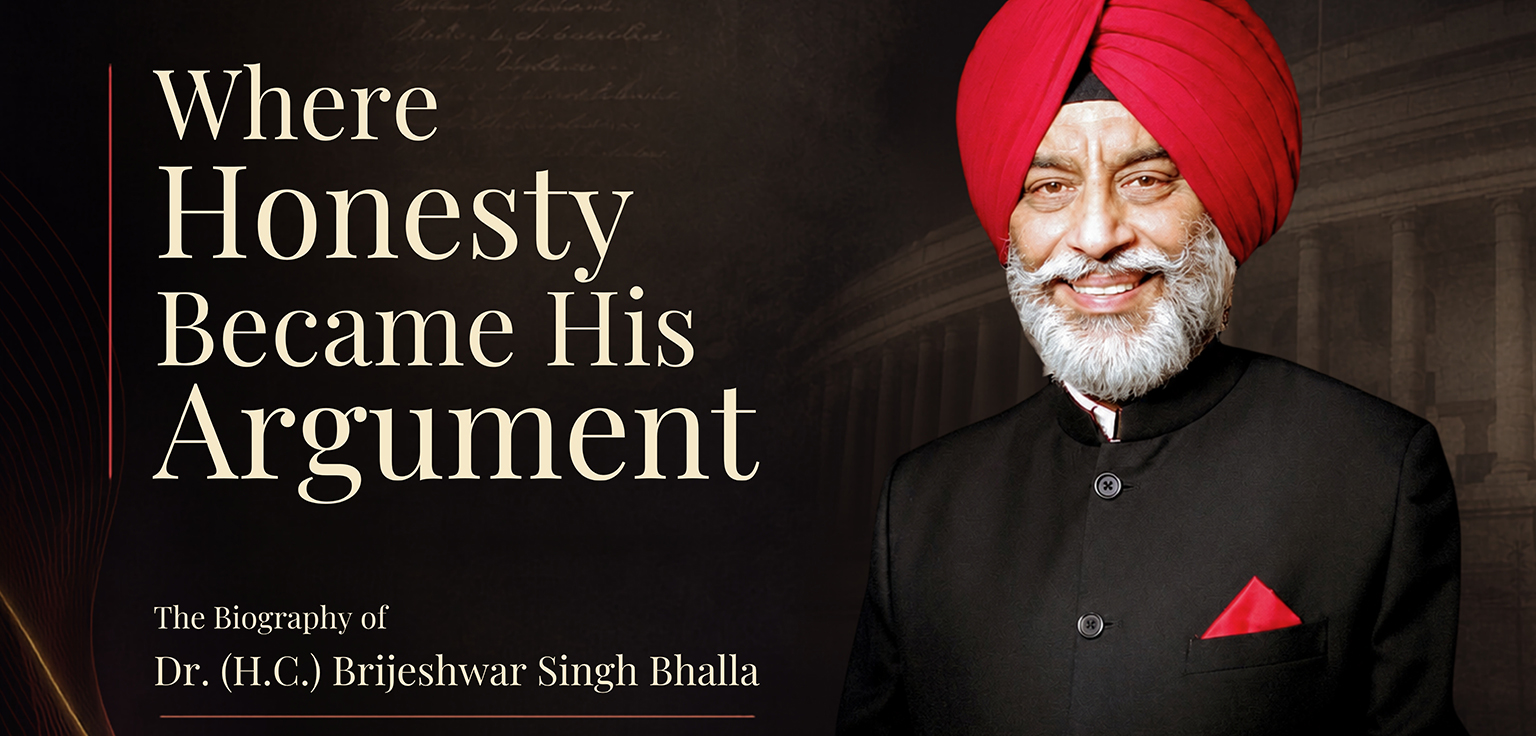

“Stay honest with your work, patient with people, and true to the choices you make. In the end, sincere effort has its own way of finding meaning and success.”
Introduction
The life of Dr. Brijeshwar Singh Bhalla cannot be understood only through the number of years he has spent in law or the positions he has held. His journey carries the imprint of a disciplined upbringing, an unexpected academic awakening, uncertain beginnings, demanding professional years, difficult choices, and a gradual understanding of what it means to stand beside people when they are facing some of the most complicated moments of their lives.
His childhood was shaped by strict parental discipline, particularly from his father. He was quiet and introverted rather than mischievous, and the structure of home life gave him an early familiarity with responsibility and restraint. His younger years also carried the simple enthusiasm of cricket, a sport he enjoyed passionately before education and professional commitments gradually occupied more of his attention.
Living away from home introduced him to a different environment and, unexpectedly, to competition. Watching another student study seriously pushed him to challenge himself. The change was remarkable. His graduation years became a period of academic achievement, and he completed his Bachelor of Arts from Panjab University before moving towards legal education.
Law was not a childhood ambition carefully planned over many years. The decision came through circumstances that he himself remembers with simplicity. In the profession that followed, he discovered a space where he could think independently, express his understanding of a matter, and present an argument in his own way.
His entry into practice brought none of the advantages of an established legal family. He was building from the beginning. The early years demanded patience with uncertainty, limited finances, and the reality that young lawyers are not immediately trusted with important work. Those years were also filled with experiences that gradually taught him how a courtroom actually functions, how confidence is earned, and how professional identity develops through repeated exposure rather than instant success.
Over time, his practice widened considerably. His career came to include institutional representation, government assignments, public bodies, criminal litigation, civil matters, service disputes, revenue cases, and appearances connected with organisations whose work extended beyond Chandigarh. His professional journey also took him into positions carrying wider responsibility, including service as Additional Central Government Standing Counsel, election as Secretary of the Punjab and Haryana High Court Bar Association, and appointment as Additional Advocate General, Punjab.
“The earliest lessons are often quiet ones. They teach us how to stand firm long before life asks us to prove it.”
Phase 1: Where Discipline Shaped His First World
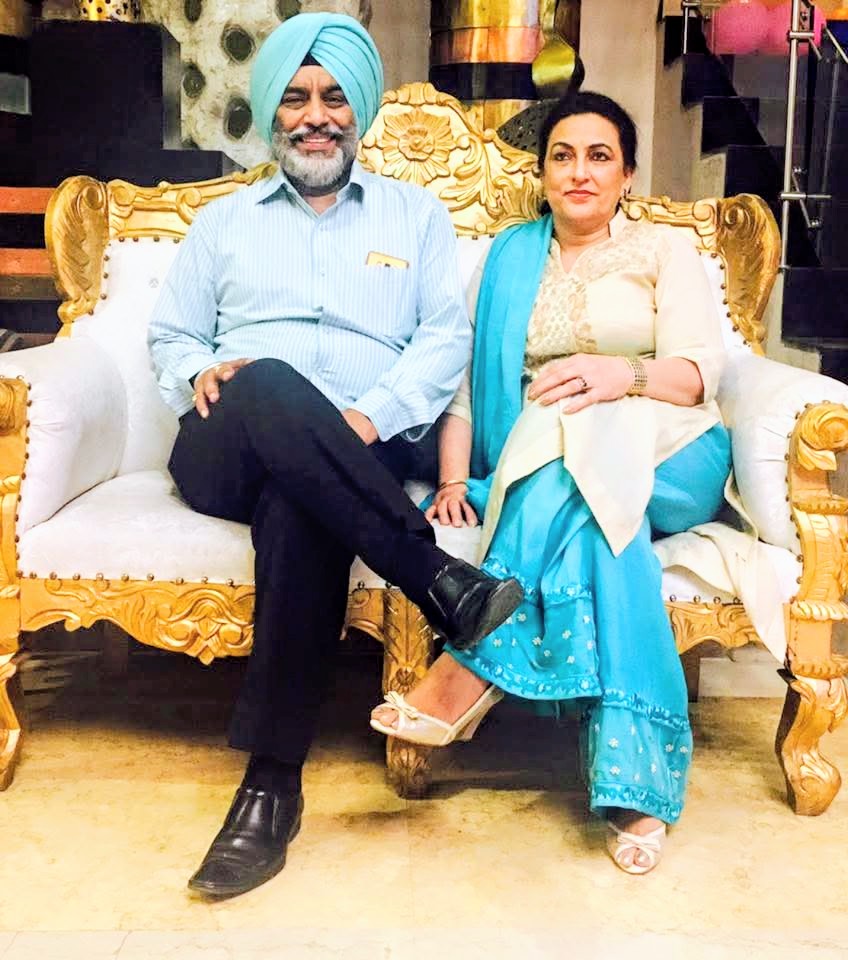
The earliest years of Dr. Brijeshwar Singh Bhalla were shaped not by extraordinary circumstances, but by a home where discipline had a strong presence and expectations were clearly understood. Born on 17 May 1964 in Ludhiana, Punjab, with his family belonging to Moga, he grew up as the only child in a joint family. He remembers his childhood as normal in many ways, yet there was one feature that remained unmistakable throughout those years: his parents were strict, and his father, Bawa Kuldip Singh Bhalla, believed deeply in discipline.
Being the only child did not translate into excessive freedom. If anything, the attention on him was greater. His parents watched him closely and wanted to ensure that he remained on the right path. Their concern was expressed through structure rather than indulgence. In the environment in which he grew up, discipline was not something discussed occasionally. It was part of daily life.
His father, in particular, had a strong personality. Dr. Brijeshwar remembers being so conscious of his presence that if his father entered one room, he would sometimes quietly move into another. The memory says much about the relationship without needing embellishment. As a child, he was not rebellious or troublesome. He describes himself as an introvert, someone who generally stayed within the boundaries established at home. Mischief was not a defining part of his childhood. There was a natural restraint in him, strengthened by the atmosphere in which he was raised.
That strictness may have felt imposing to a young boy, but the lessons behind it remained long after childhood ended. His father repeatedly impressed upon him the importance of honesty. The instruction was simple: remain honest and do not run after money.
At that age, the full meaning of such advice could not yet have been tested by life, but the words stayed with him. Years later, when professional decisions became more complicated and financial opportunities more tempting, the same lesson would continue to guide his thinking.
His early schooling took place at Saint Thomas School. During those years, he did not see himself as an exceptional student. Looking back, he describes his academic performance until the higher secondary stage as very normal. There was no early declaration that he would one day distinguish himself academically or build a demanding professional career. His life was still unfolding quietly, within the familiar boundaries of school, family, and the discipline established at home.
There was, however, another side to the reserved child. He loved cricket. He remembers playing it extensively and speaks of his enthusiasm for the game with an openness that contrasts with the seriousness of his childhood personality. Cricket gave him something different from the ordered rhythm of home. He could play, compete, and lose himself in an activity he genuinely enjoyed. He describes himself as almost mad about the sport during those years.
“Sometimes another person’s effort does not make us feel smaller; it awakens the part of us that had not yet discovered its own strength.”
Phase 2 : When Chandigarh Awakened the Competitor in Him
Moving to Chandigarh marked a quiet but decisive change in the life of Dr. Brijeshwar Singh Bhalla. Until that point, he had regarded himself as an ordinary student. There had been no remarkable academic record that made him think of himself as someone destined to stand at the top of his class. He studied, moved through school in the usual way, and did not attach any extraordinary meaning to his performance. Chandigarh changed that understanding of himself.
After completing his earlier schooling, he joined Government College for Boys, Sector 40, Chandigarh, for his Bachelor of Arts. Living away from the familiar rhythm of home brought him into a different environment. He had taken a room on rent, and the landlord’s son happened to be pursuing the same course. It was an ordinary arrangement that could easily have remained nothing more than a matter of accommodation. Instead, it became one of the most important influences on his student life.
Dr. Brijeshwar began noticing how seriously the landlord’s son approached his studies. He saw him spending long hours with his books and preparing with a level of concentration that caught his attention. There was no formal competition announced between them, nor did anyone need to tell him that he should improve. Watching another student work hard was enough. Something within him responded to it.
He later described that moment simply: a competitive spirit entered his life.
Once awakened, that spirit did not remain casual. Dr. Brijeshwar began applying himself to his studies with an intensity he had not previously shown. The student who had once considered his academic life very normal began producing results that surprised even him. During the first year of his B.A., he stood first in the college, while the landlord’s son stood second.
“A path may begin by chance, but it becomes a calling when a person discovers that it gives meaning to who he is.”
Phase 3 : How Law Became His Chosen Voice
For Dr. Brijeshwar Singh Bhalla, the decision to study law did not emerge from a childhood ambition or a family tradition. No one at home had practised law before him, and there was no established professional path waiting to be inherited. His entry into the field came through a much simpler influence. A neighbour’s son had joined an LL.B. course in Chandigarh, and seeing someone close to him choose that direction encouraged him to consider the same path. He often remembered this beginning with humour, comparing it to the familiar tendency of people to notice what those around them are doing and feel inclined to try something similar themselves.
In 1985, he entered the Department of Laws, Panjab University, Chandigarh. At that point, he could not have known how completely the profession would eventually become part of his identity. What had started as a choice influenced by another person gradually became something deeply personal. He completed his LL.B. in 1988, but the greater change was not contained in the qualification itself. During those years, he began understanding what attracted him to legal practice.
Law offered him a freedom that he came to value greatly. In court, an advocate could understand the facts, develop a position, and express that position with conviction. There were limits because an argument had to remain relevant to the point involved in the case, but within those limits a lawyer still had room to think independently. Dr. Brijeshwar found that independence appealing. He enjoyed being able to place his views before the court and argue a matter according to the understanding he had developed through preparation.
The lawyers practising before the Punjab and Haryana High Court also left a strong impression on him. Watching experienced advocates work gave him a sense of what the profession looked like beyond books and classrooms. Legal education could introduce principles and procedure, but the courtroom demanded something more. It required clarity, presence of mind, preparation, and the ability to communicate a legal position before a judge. The practising lawyers he observed made that world real for him.
There was, however, an important difference between admiring the profession and entering it oneself. Dr. Brijeshwar was going to become a first generation lawyer. He had no father or close family member in practice who could hand him an established chamber, introduce him to clients, or guide him through every practical uncertainty of court life. Whatever professional identity he developed would have to be built from the beginning.
Even during his law studies, this reality was understood with humour. He remembered one lecturer who would jokingly advise the women students to marry the son of a lawyer rather than a lawyer who was himself starting from the first generation. Behind the joke was a practical observation. A lawyer’s son might already have access to a developed practice and greater financial stability, while a young lawyer beginning without that background could face years of uncertainty, limited income, and little free time. Dr. Brijeshwar would eventually experience enough of professional life to understand why that humorous remark had stayed in his memory.
Note of Thanks
At the close of this journey, Dr. Brijeshwar Singh Bhalla carries a sense of gratitude for the people whose presence, guidance, trust, and companionship became part of the life he built over the years.
His thoughts begin with his family. The influence of his father, Bawa Kuldip Singh Bhalla, remained closely connected with the values he carried into professional life. His mother, Balwinder Kaur, was part of the family environment that shaped his formative years and gave him the grounding from which he eventually stepped into a demanding professional world.
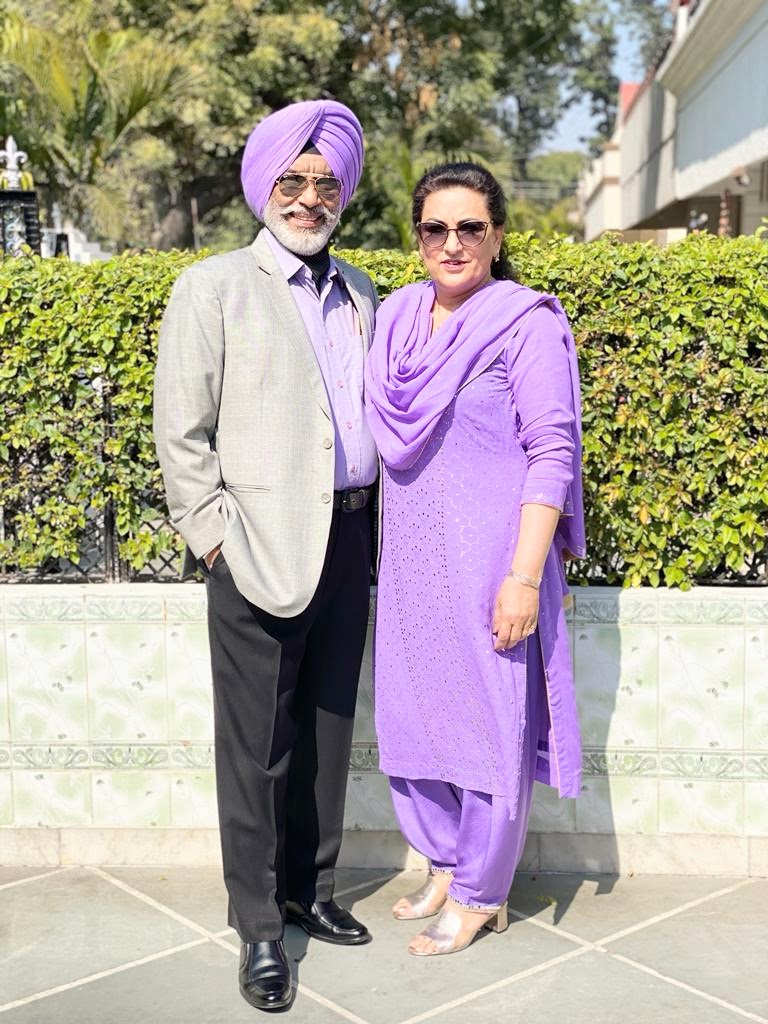
A particularly meaningful place belongs to his wife, Rupinder Bhalla. Her role in his journey goes beyond encouragement at one particular moment. She remained beside him through a career that demanded long working days, sustained concentration, and years of considerable professional commitment.
There is also quiet appreciation for the clients who entrusted him with their difficulties and for the lawyers who became part of his team as his practice grew. Each responsibility added experience, and every professional relationship contributed something to the journey.
For Dr. Brijeshwar, gratitude is ultimately not about counting contributions. It is about recognising that even an independent professional journey is never lived entirely alone. The people who trusted him, stood with him, worked alongside him, and remained part of his personal world all hold a place in the story he carries forward.
thanks,
– Dr. Brijeshwar Singh Bhalla