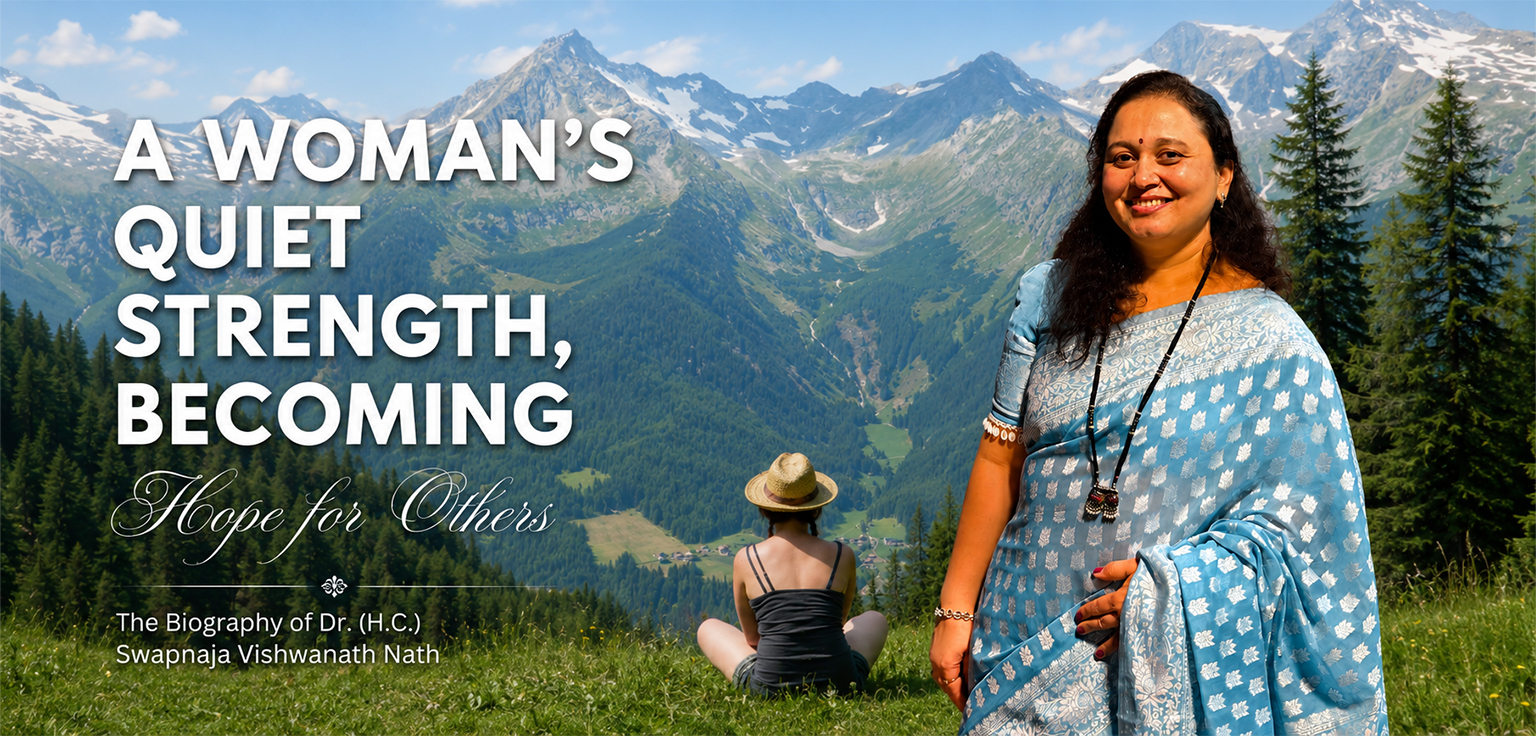
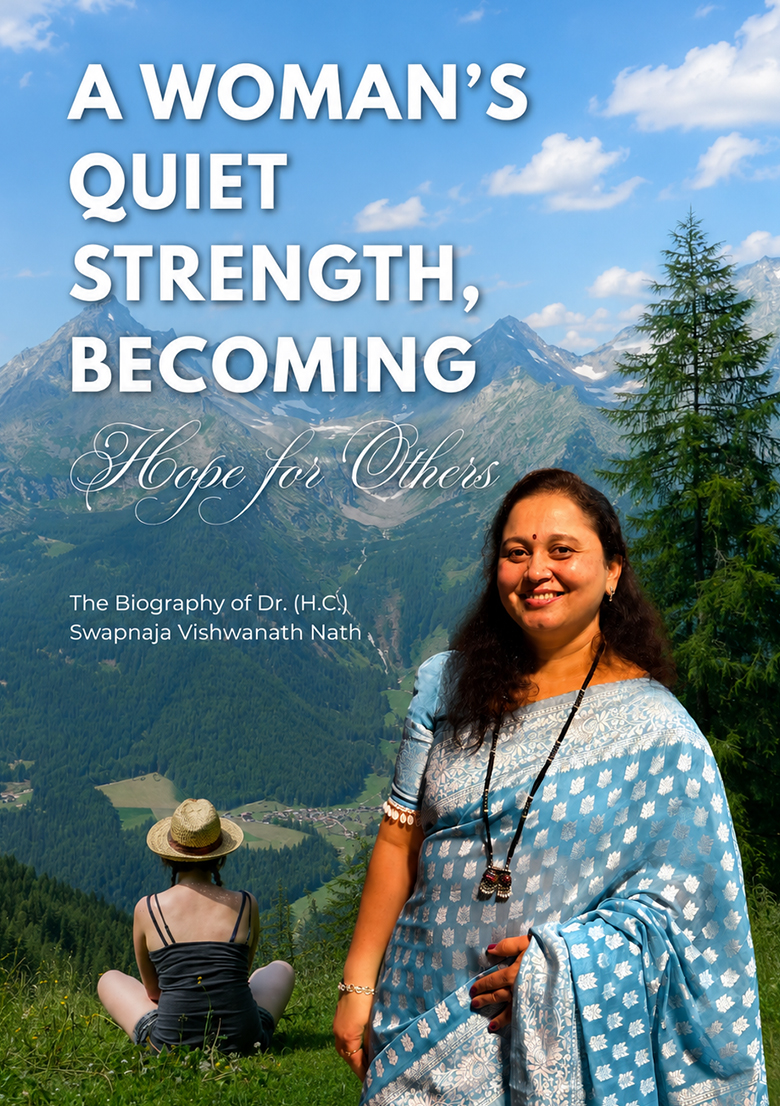
"The greatest achievement in life is not only reaching personal goals but also becoming a source of support, care, and encouragement for others."
Introduction
The life of Dr. Swapnaja Vishwanath Nath is shaped by responsibility, learning, family, faith, and service. Her journey did not unfold through a single dramatic turning point. It grew steadily through the choices she made at different stages of life, first as the eldest daughter in a close joint family, then as a wife and mother, later as a learner returning to education, and eventually as a woman committed to helping those who needed support.
Born in Jat in Sangli district, she spent her early years in a home where affection and discipline existed together. As the eldest among four sisters and one brother, she became familiar with responsibility at a young age. Helping her mother, caring for younger siblings, and carrying herself with maturity became natural parts of her childhood. Her parents, Balasaheb Ramchandra Jadhav and Sharyu Balasaheb Jadhav, treated every child equally and taught them never to ignore another person’s difficulty. Those early lessons later became the moral centre of her life.
Her school years strengthened her interest in language, reading, music, and practical learning. Marathi, poetry, grammar, and geography held her attention, while sports and singing allowed her to express another side of her personality. Teachers such as Maladkar Bai, Kamre Bai, and Kate Bai encouraged her not only to study, but also to understand people, circumstances, trust, and courage. Their guidance remained with her far beyond the classroom.
After completing her education up to Class 10, her life entered a new chapter through marriage to Dr. Vishwanath Babunath Nath in Parbhani. Motherhood soon followed, bringing new responsibilities and a different rhythm to her days. Yet the desire to continue learning remained alive. With encouragement from her husband and support from family members, she resumed her studies through Yashwantrao Chavan Maharashtra Open University. Completing graduation while managing the household, caring for children, attending to elders, and supporting the wider family became one of the clearest expressions of her determination.
As her daughters grew, her attention gradually widened beyond the boundaries of home. Inspired by her husband’s involvement in community work, she began contributing to educational assistance, women’s welfare, self-employment support, social programmes, spiritual activities, and efforts for economically weaker families. Her work reached children who wished to study, women facing abuse, unemployed women seeking independence, and families struggling to arrange marriages. She believed that help should be practical, respectful, and offered with dignity.
Her personal life also tested her deeply. Her husband’s liver transplant brought fear, uncertainty, emotional strain, and financial pressure. During that period, the support of her daughters, nephews, and close family became a source of strength. Her faith in Kuldevta Lord Jyotiba, helped her endure one of the most difficult chapters of her life.
"Extraordinary moments are rare. What truly shapes a life is the ordinary, the daily choices we make in the privacy of our own silence."
Phase 1: The Eldest Daughter of a Value-Centered Home
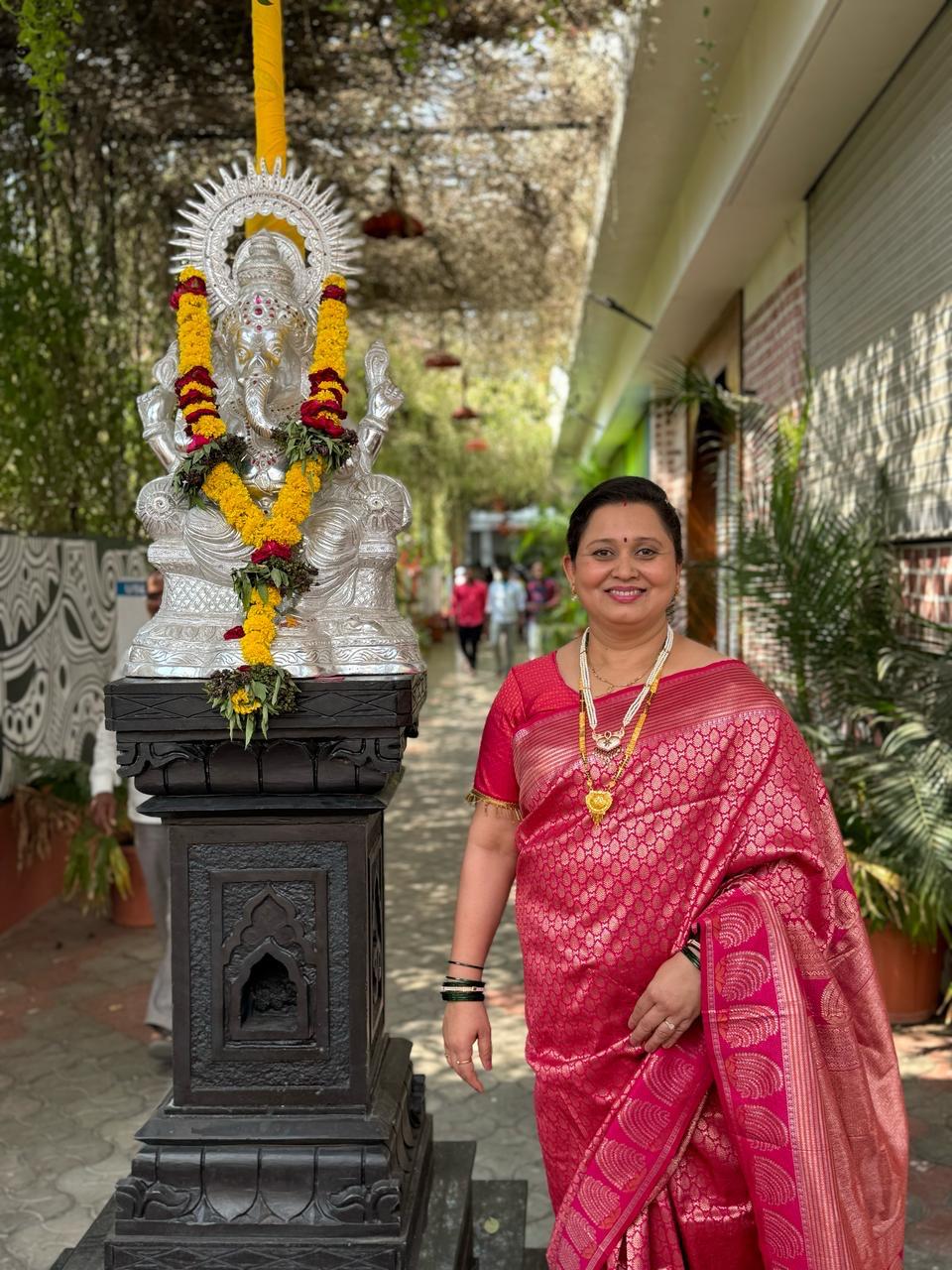
The earliest years of Dr. Swapnaja Vishwanath Nath were spent in Jat, in Sangli district, where she grew up surrounded by the warmth and closeness of a joint family. Her childhood was not marked by distance or isolation. It unfolded in a home filled with people, shared responsibilities, affection, guidance, and the everyday presence of elders and younger family members. Looking back, she remembered those years with gratitude because she received love not from one person alone, but from everyone around her. Each relationship gave her something to carry forward. From one person came discipline, from another came tenderness, and from the family as a whole came the values that shaped her understanding of life.
She was born into the family of Balasaheb Ramchandra Jadhav and Sharyu Balasaheb Jadhav. They were parents who supported their children openly and allowed them to grow without placing unnecessary restrictions on their thinking. Their home had four daughters and one son, yet no child was made to feel more important because of gender. The daughters were not treated as less capable, and the son was not placed above his sisters. Every child received the same consideration, affection, and opportunity within the family. For Dr. Swapnaja, that equality became one of the first meaningful lessons of childhood. Long before she began working for women and children, she had already experienced what fairness looked like inside a home.
Being the eldest among five siblings gave her childhood a distinct character. She did not grow up as a mischievous child who constantly needed correction. Responsibility entered her life early because there were younger brothers and sisters who required care and a mother who could use her help. She learned to assist with small household duties, watch over the younger children, and remain aware of what needed to be done around her. These responsibilities did not make her feel deprived of childhood. Instead, they slowly formed the dependable side of her personality. She became someone who noticed other people’s needs and stepped forward without waiting to be asked repeatedly.
That sense of maturity was also reflected in her conduct outside the home. Throughout her school years, no complaint about her behaviour reached her parents. There was never a need for them to visit the school because of indiscipline or mischief. Her academic progress remained good, and she carried herself in a manner that showed the seriousness she had developed at home. She understood that her actions reflected not only on herself but also on the upbringing she had received. Even at a young age, she seemed to recognise the value of trust. When parents trust a child, that child carries a quiet responsibility not to misuse it.
The most lasting lesson given by her parents was simple in expression but demanding in practice. They taught their children that if another person was going through difficulty, help should be offered in whatever way possible. Wealth, status, or personal success should never become reasons to forget those who were struggling. A person might progress greatly in life, but true growth meant remaining aware of others. Dr. Swapnaja absorbed this message deeply. It was not introduced as a grand philosophy. It was part of ordinary family teaching, repeated through words, conduct, and the way people were treated at home.
"The strongest hearts are not those that never struggle, but those that continue to choose kindness despite every reason to stop."
Phase 2 : Classrooms That Taught More Than Lessons
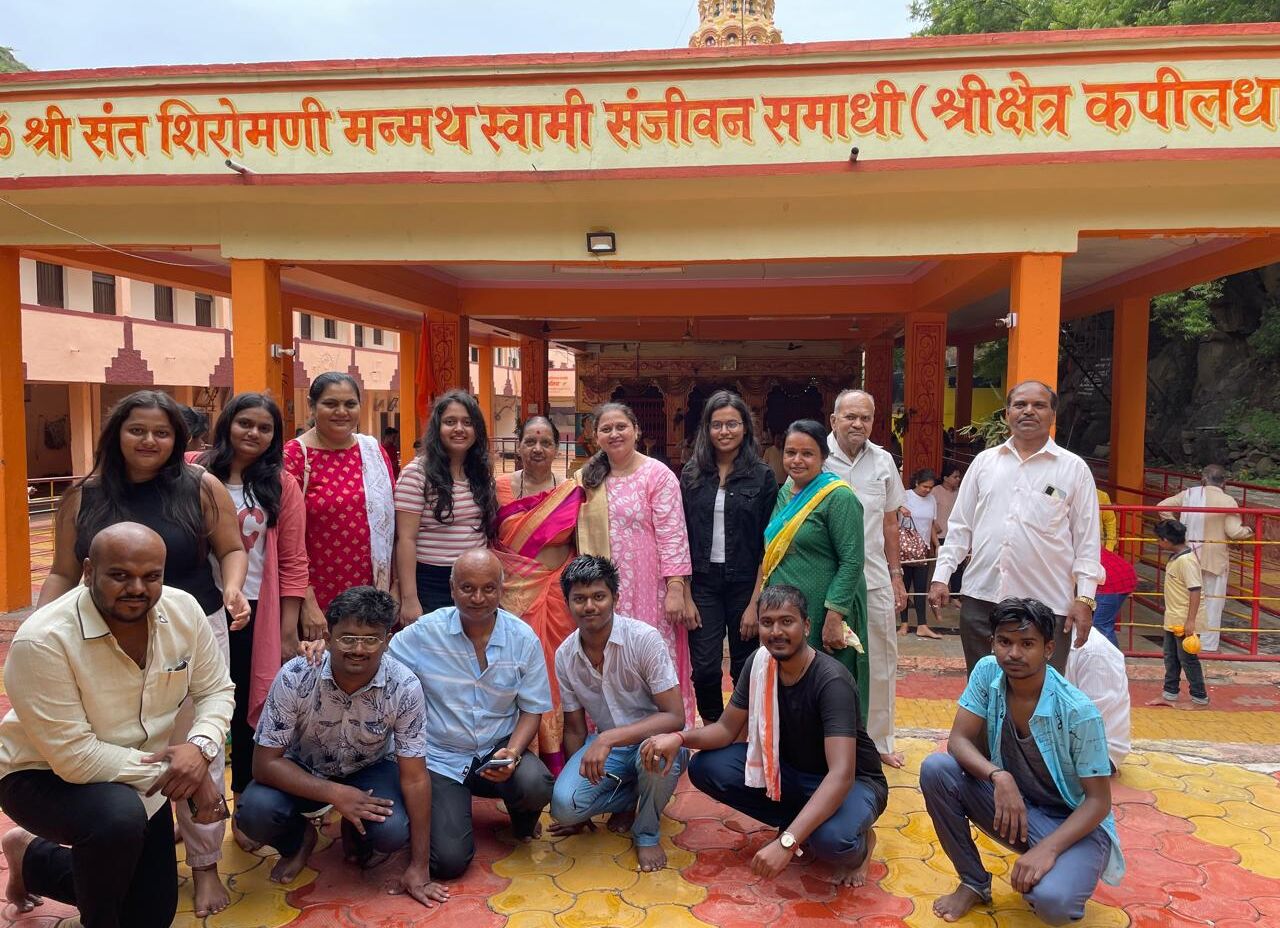
For Dr. Swapnaja Vishwanath Nath, education began as more than a routine of attending school, completing lessons, and moving from one class to another. Her years in a Marathi-medium girls’ school became an important part of how she learned to think, observe, and understand life. The classroom gave her knowledge, but the people within it gave her direction. Long after specific lessons faded, the voices of her teachers remained alive in her memory because they had taught her how to face the world beyond school.
She completed her schooling up to Class 10 in Jat. Her school days were steady and disciplined. She was not known for mischief, nor did she attract complaints. Her parents never had to visit the school because of poor conduct. She maintained good academic progress and approached her studies with the same sense of responsibility that had already become part of her nature. She did not seek attention through noise or disruption. Instead, she found satisfaction in learning and in meeting the expectations placed upon her.
Among the subjects she studied, Marathi held a special place in her heart. She enjoyed the language itself, especially its poems and grammar. Poetry offered rhythm and meaning, while grammar appealed to her interest in structure and expression. She liked the way words could carry feeling and thought at the same time. Her attachment to Marathi was not casual. It remained connected to the way she understood learning during those formative years.
Geography was another subject she enjoyed. The study of places, regions, landscapes, and the wider world captured her attention. It allowed her to look beyond the immediate boundaries of her surroundings and imagine how people lived in different places. Although she did not describe her school years through competition or ambition, her choice of favourite subjects revealed a mind drawn both to language and to the world outside her own environment.
Her school experience was also shaped by teachers who left a lasting impression. Maladkar Bai and Kamre Bai were among the educators she remembered with deep respect. They taught at the girls’ school she attended and encouraged the students from the earliest standards. Their teaching was not limited to textbooks. They repeatedly reminded the girls that they must continue learning, move forward, become capable, and remain willing to help others.
At a time when young students could easily view education as something limited to examinations, these teachers gave it a broader meaning. They wanted the girls to understand that learning could prepare them for life. Their words encouraged confidence without encouraging pride. They taught their students to dream of progress while remaining conscious of their duties toward others.
The school principal, Kate Bai, also influenced Dr. Swapnaja’s thinking. She was remembered not only as the head of the school but as someone who spoke about practical life. Alongside academic lessons, she taught students how to respond when circumstances became difficult. She explained that challenges were unavoidable, but a person could learn how to handle them. She encouraged the girls to think about the people they might meet, the situations they might encounter, and the judgment they would need as they grew older.
"The heart learns a different kind of courage when it chooses responsibility without letting go of hope."
Phase 3 : Marriage, Motherhood and an Interrupted Dream
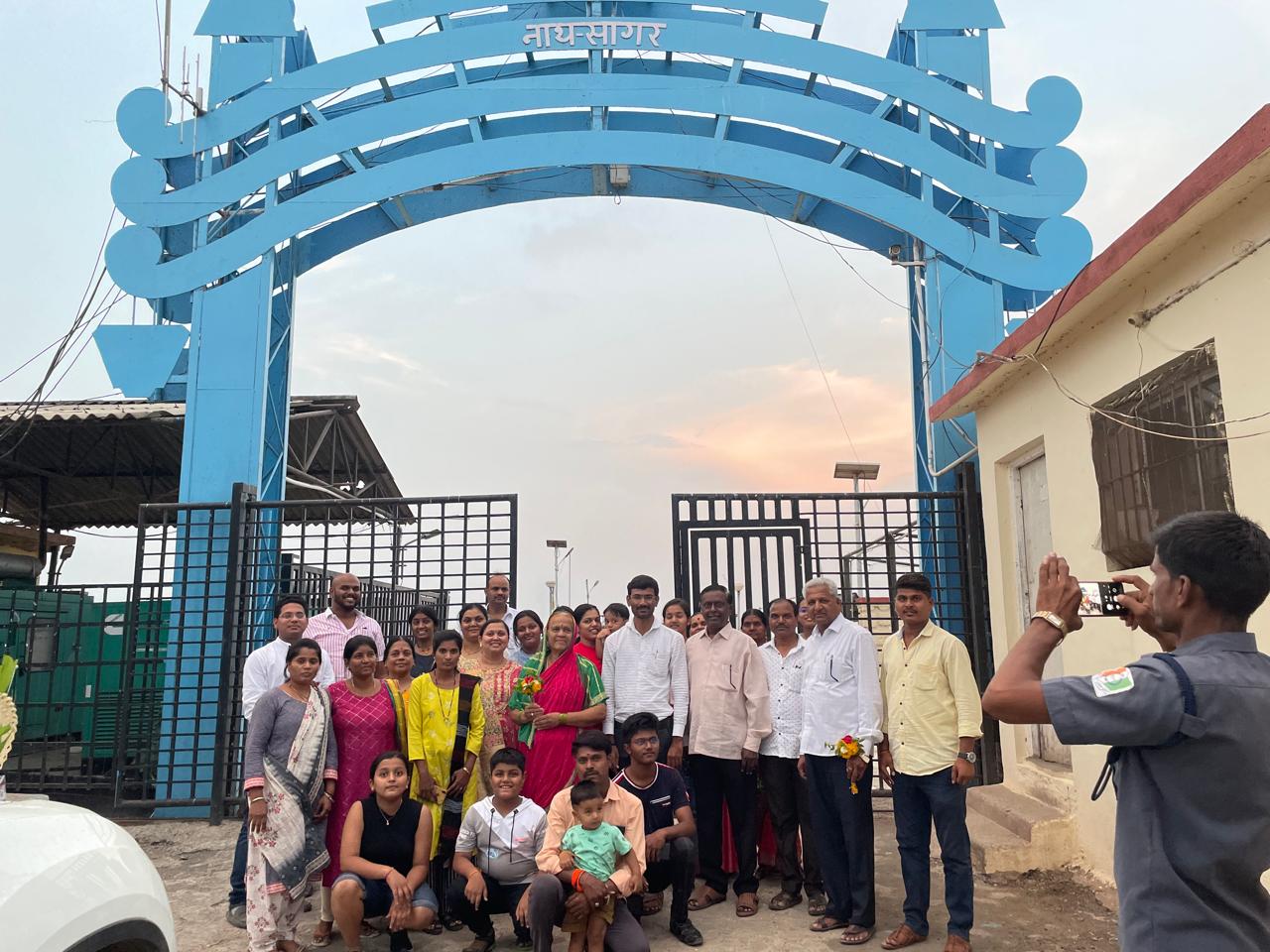
After completing her education up to Class 10, Dr. Swapnaja Vishwanath Nath entered a new stage of life through her marriage to Dr. Vishwanath Babunath Nath in Parbhani, who is a Civil Engineer and working as a professor in well known engineering colleges at Mumbai. The transition carried her from the familiar world of her parental home into another joint family, where relationships, responsibilities, and expectations had to be understood gradually. She was no longer only the eldest daughter who had helped care for younger siblings. She was now a wife, a daughter-in-law, and soon, a mother.
Marriage changed the rhythm of her days. A new household came with people of different generations, established customs, and duties that could not be postponed. She had grown up learning how to adjust within a large family, yet every home has its own way of functioning. She had to understand the needs of the people around her while finding her own place among them. The habits formed during childhood helped her through this transition. She already knew how to share responsibility, listen to elders, and place family needs before personal comfort.
Her husband became an important source of support in this new life. His understanding did not remove every challenge, but it gave her emotional steadiness. She found in him someone who respected her abilities and did not believe that marriage should bring an end to her personal growth. Even before she could return to her unfinished education, his encouragement kept the possibility alive. He saw that the young woman managing the home still carried a desire to learn, and he did not allow that desire to be dismissed as impractical.
In 2000, Dr. Swapnaja became a mother for the first time. The birth of her eldest daughter Neha, brought joy, but it also brought a deeper level of responsibility. Motherhood required constant presence. A child depended on her for care, comfort, protection, and every small need that filled the day. Her attention naturally moved toward raising her daughter and learning the demands of this new role.
The experience of becoming a mother changed the way she understood strength. It was no longer expressed only through discipline or the ability to complete a task. It appeared in sleepless attention, patience, and the willingness to place another life before her own plans. Motherhood asked her to be alert even when tired, calm even when uncertain, and available even when she needed rest.
Her responsibilities did not stop with her own child. Because she lived in a joint family, the home included the needs of several people. Household work, care for elders, and the daily coordination of family life became part of her routine. There was rarely a single duty to complete. One responsibility often led immediately into another, leaving little uninterrupted time for herself.
Note of Thanks
As Dr. Swapnaja Vishwanath Nath reflects on her journey, she expresses deep gratitude to those who supported her through every phase of life. She carries immense respect for her parents, Balasaheb Ramchandra Jadhav and Sharyu Balasaheb Jadhav, whose values shaped her compassion, resilience, and understanding of relationships.
She extends heartfelt thanks to her Mother-in-law Shantabai and Dr. Vishwanath Babunath Nath, whose encouragement supported her education, strengthened her confidence, and inspired her path toward social contribution. His trust and guidance remained an important part of her journey.
She remains grateful to her daughters for their love, understanding, and strength during challenging times, and to her nephews for their affection and support when the family needed emotional courage. She also acknowledges her in-laws, including her mother-in-law, brothers-in-law, and sisters-in-law, whose support helped her balance family responsibilities with personal growth.
Her gratitude extends to the teachers who shaped her thinking, community elders who guided her social efforts, and every child, woman, and family who trusted her support. Their courage and progress gave deeper meaning to her service.
Above all, she offers gratitude to Kuldevta Lord Jyotiba, whose presence remained a source of faith through joyful and difficult moments. Her journey continues to be enriched by every person, prayer, and experience that contributed to her purpose of serving others with sincerity.
thanks,
– Dr. Swapnaja Vishwanath Nath