“Every problem is not a wall—it’s a door waiting for courage to open it.”
Introduction
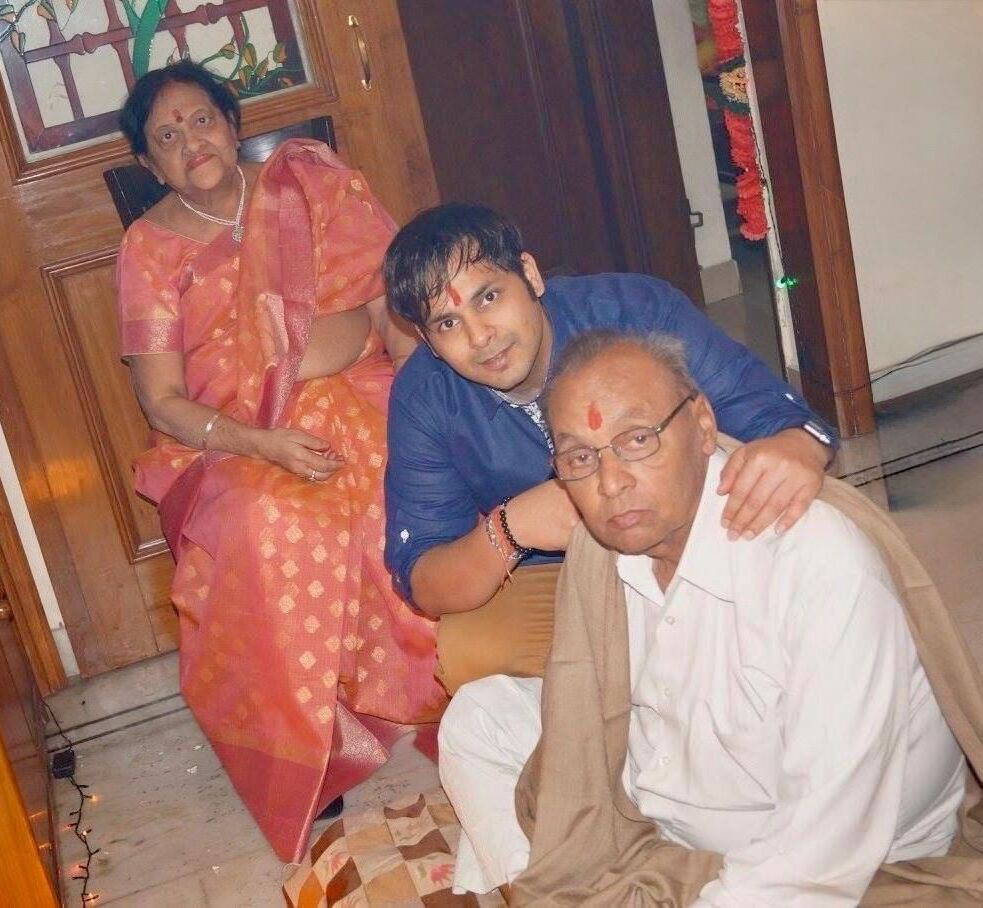
Some lives shine quietly, not with big events, but with consistency. Dr. Mayank Gupta serves as an example of this: a story of determination, purpose, and growth. He was born on November 6, 1985, to Lt. Sh. Padam Chand Gupta and Lt. Smt. Sneh Gupta. He grew up in Delhi in a home that valued honesty, humility, and learning. He learnt about honesty and discipline from his father and kindness and calm strength from his mother. These early influences became the hidden structure of his future: strong, steady, and deeply rooted in human values.
Dr. Gupta first used technology when his school got a computer lab when he was in school. The flickering screen, the sound of a dial-up modem, and the magic of connecting to something you couldn’t see sparked a lasting interest. Most kids played outside, but he liked figuring out how the glowing monitor worked. What started out as curiosity slowly turned into belief. He realised that computers were more than just machines; they were the way he would shape his life.
He was eager to learn when he started working after finishing school, not to make money. His first job at Interra Systems in Noida taught him what dedication really meant. He chose to work for almost two years without pay, not because he had to, but for his love for computers and technology. The experience gave him far more than money could—it taught him resilience, patience, and mastery. While his friends were trying to get quick promotions, he was quietly building a base of skills and confidence. His mentor at Interra insisted that he be paid a stipend for his work, which is when he got the recognition. It wasn’t a lot of money, but for Dr Gupta, it meant something much more: proof that hard work pays off and faith in the future.
Thereafter, his career went like a well-planned experiment. He went from IT support to system architecture, learning about technologies like Solaris, Linux, Networking, security and programming depth. He learnt not only how systems worked but also why they broke. He explored how structures could transform weaknesses into strengths. His desire to learn turned into skill, and he started automating tasks long before the term “DevOps” became popular. He didn’t just want to know what was there; he wanted to find out how to improve things.
He worked in many countries, including India, Poland, the United States, and finally the United Kingdom, where he still makes a name for himself. He learnt something new about work and life in each country he visited. He learnt how to keep going. Poland was more about knowing himself, the US was about self-reliance, and the UK was all about innovation and perseverance. These experiences enriched not only his technical expertise but also his global perspective.
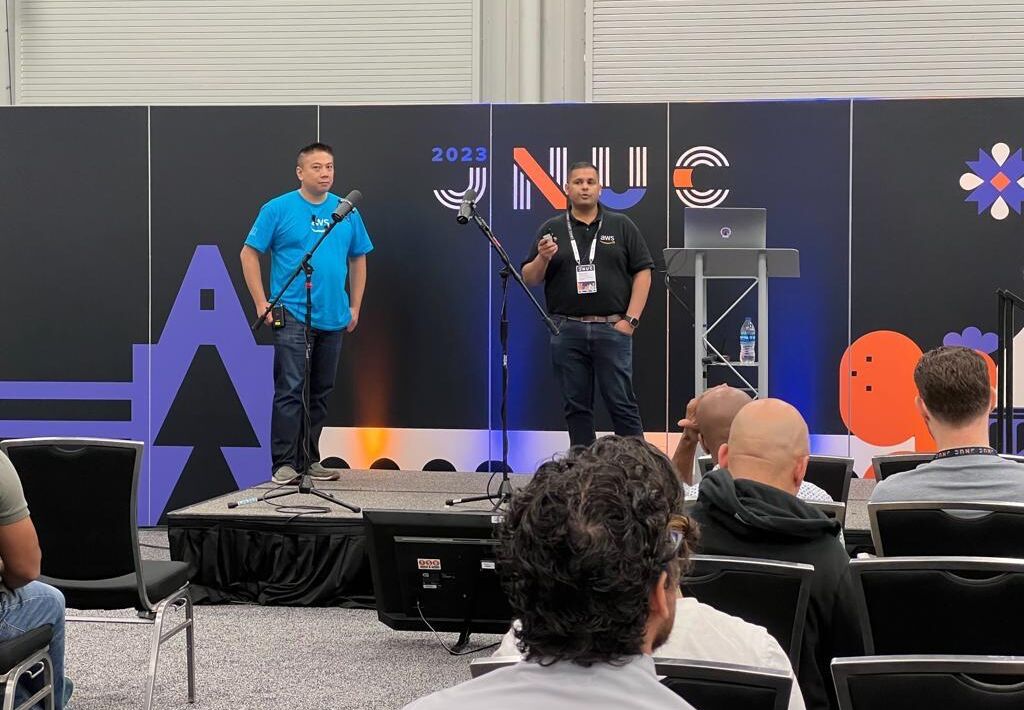
Dr Gupta is a senior specialist in AI/ML at Amazon Web Services (AWS) in Glasgow, UK. He is a bridge between technology and people. His job isn’t just about algorithms or cloud infrastructures; it’s about helping businesses use AI in a safe and smart way. He works directly with C-suite executives, data scientists, researchers and engineers to create AI and ML solutions that can be used in production and are easy to scale. He works with cutting-edge tools like Amazon SageMaker, Amazon Bedrock, High Performance Computing (HPC) infrastructure, ML Frameworks and other tools to help teams make smart systems that are both effective and moral.
“Sometimes the smallest click can open the biggest world.”
Phase 1: The Spark Behind the Screen: Where Curiosity Found Its Code
Every great journey starts with a moment, a small change in the course of a life that happens almost by accident. Dr. Mayank Gupta’s moment didn’t come with loud applause or a sign from fate; it came when a screen flickered in a school computer lab. The sound of a dial-up modem connecting, a nostalgic mix of static and hum, started a lifelong conversation between him and technology. This conversation would shape his identity, career, and outlook on life.
If you grew up in Delhi in the late 1980s and 1990s, you were part of a generation that lived in both the traditional and the digital worlds. Television had just started to change the look of Indian living rooms, and the idea of a “personal computer” seemed like something from the future. Yet for young Mayank, the digital world called to him even before he could name it. He was the kind of kid who would rather take a toy apart to see how it worked than play with it. He was interested in patterns, like how things were connected and how one button could change everything.
School life was normal in a lot of ways, but Mayank was never the type to fade into the background. He often stayed after class to ask questions that went beyond what was in the book because he was curious. Teachers saw in him not just intelligence but also a strong focus. He was never the loudest student, but he was always paying attention. He saw things that other people missed, not because he wanted to win, but because he was so amazed.
Computer Science was first introduced in Class 6. The classroom was filled with machines most students had never seen before—large monitors with curved glass, softly humming CPU towers, and floppy drives waiting to swallow black square discs. It felt new and unfamiliar to many, but for Mayank, it was a revelation. The moment he pressed a key and watched the computer respond, something within him sparked to life. He still remembers the joy of using LOGO programming—typing simple commands to make a turtle draw shapes on the screen. “I think that’s where it all started,” he would say. “The moment I realized I could make something move, appear, or change on the screen—it felt like discovering magic.”
Things were simple at home. Mayank didn’t care that the family didn’t have a personal computer yet. He spent extra time in the school lab, often staying after class to watch other people experiment, memorise commands, and dream about the day he could have one of his own. His interest grew so much that when the family finally got their first computer, a big one with a floppy drive and not much memory, it became his whole world.
Every click was a new thing. He learnt by making mistakes and fixing the system over and over—a habit shaped by his early philosophy that “you can never do anything that will break a computer; everything is repairable.” This belief gave him the freedom to experiment fearlessly and explore without hesitation. The dial-up internet connection, which made a buzzing sound, provided him with access to information he had never thought possible. He would wait patiently for web pages to load, line by line, pixel by pixel, as if the computer were showing him a secret world just for him. While his friends were interested in playing games, Mayank was more interested in how they worked, how the machine reacted to logic, and how data turned into choices.
“The best lessons don’t come with pay cheques—they come with patience.”
Phase 2 : Learning Before Earning : The Foundation Years at Interra
Dr. Mayank Gupta didn’t have any big dreams when he first entered the business world. He just wanted to learn and was ready to start over. It was the early 2000s, when India’s tech industry was starting to find its rhythm. Young engineers like him were drawn to the promise of endless possibilities. This wasn’t just about getting a job for Mayank; it was about getting involved. He wasn’t looking for work; he was looking for someone to understand him.
After finishing his studies, he started working at Interra Systems, a well-known technology company in Noida that specialises in Semiconductor and Digital Media services. The job was humble and almost invisible compared to the glitz of big titles. It was about fixing systems, providing IT support, and making sure that engineers could work without being bothered. But for Mayank, this was a way to get into the world he had always wanted to be a part of. Every workstation he assembled, every system he repaired, and every technical issue he solved was an opportunity to see how theory transformed into function.
What made this experience even more amazing, though, was that Mayank did it for free. He came every day for almost two years, travelled from Delhi to Noida, and spent long hours learning as much as he could—all without getting paid. He didn’t forget; he chose to do it. At first, the company didn’t have a formal job for him, but they let him learn and help out. It wasn’t easy for a young man from a middle-class family to make that choice. It cost money to get to work every day, and the lack of income could have made anyone else give up. But Mayank saw it differently.
Later, he said, “I never thought of it as work without pay. It was an investment of time, energy, and faith in myself.”
Those early months were tough. There were times when he was tired, unsure, and even a little embarrassed when his peers talked about their first pay cheques and he didn’t have one to talk about. Still, he never thought about quitting. His interest in systems, his thirst for knowledge, and his need to be part of something bigger than himself drove him forward. He believed that experience was the currency that mattered most in the beginning, and every hour spent learning was an asset for life.
He learnt about Sun Microsystems at Interra, a company that would have a big impact on his technical identity. He found Solaris, a Unix-based operating system that ran high-end computers used for chip design and business infrastructure. The more he learnt about computers, the more he realised how big the world of computers was and how little he really knew. He wasn’t discouraged by that knowledge; it motivated him. He started working late, reading documentation, testing systems, and figuring out problems that other people didn’t want to deal with.
“When you stop asking how to resolve a problem and start asking why it exists, you begin to grow.”
Phase 3 : From Troubleshooter to Thinker: Building Systems, Not Just Fixing Them

A lot of the time, growth is quiet. It happens when you stay up late to try new things, when deployments fail, and when you choose to think differently instead of working harder. Dr. Mayank Gupta went through a big change during this time in his life. He went from being a hands-on engineer who fixed problems to a systems thinker who started to come up with ways to stop those problems from happening in the first place.
Mayank had already earned something more valuable than money—trust—after almost two years of hard, unpaid work at Interra Systems. He was no longer the newcomer trying to prove himself; he had become the go-to person for solving complex problems. But even though he knew that, he wasn’t happy with just maintenance; he wanted to be the best. He wanted to know not only what he could see of a system, but also how it worked.
As his job grew, he learnt more about different aspects of enterprise computing. His duties changed from putting together machines and managing user workstations to keeping whole networks and production systems running smoothly. This was the first time he had seen scale, and it changed how he thought about things. He started to understand that real engineering wasn’t about working on just one system; it was about understanding how many systems worked together in harmony.
During this time, Mayank became interested in managing applications and designing infrastructure. The company’s ecosystem was built on advanced technologies like Solaris, Linux, WebSphere, and Veritas Volume Manager, and he felt like a seasoned explorer as he moved through them. His job was to find a balance between stability and innovation. He had to keep production systems running while also upgrading them all the time to meet new business needs.
This balance required both patience and accuracy. One wrong setting could take down an entire cluster, and one missed dependency could spread across servers and cause problems for operations around the world. Mayank learnt to think more deeply while moving more slowly. He started keeping track of every step, predicting every outcome, and developing a very careful way of thinking that would become the basis for his later architectural style.
He began writing automation scripts in Bash and Python to get rid of tasks that had to be done over and over. Instead of checking system logs by hand, he made small programmes that would automatically flag problems. Every script was a small step towards greater efficiency. He didn’t want to show off how smart he was; he wanted to save time for the team. Mayank thought that automation was more about people than technology. “Every minute a person spends on a repetitive task is a minute stolen from creativity,” he once said, which sums up his changing philosophy.
Note of Thanks
Dr. Mayank Gupta expresses deep gratitude to those who have helped him grow and find his purpose as he looks back on his journey. He is truly grateful to his late parents, Lt Sh. Padam Chand Gupta and Lt Smt Sneh Gupta, whose values of honesty and kindness guided him for the rest of his life.
He is still truly grateful to his wife, Sakshi Arora, whose patience, strength, and unwavering faith turned problems into opportunities. He also thanks his mentors, coworkers, and friends from all over the world who helped him learn more and pushed him to do better.
He is grateful to his teams at Amazon Web Services and his students, whose curiosity and trust keep his love of learning alive. Dr Gupta wants to thank everyone who believed in him, supported him, or walked with him on this path. Each of them has been a part of his purpose and legacy.
thanks,
– Dr. Mayank Gupta