“The world gave him closed doors. He turned them into windows and looked through them until he found his own path.”
Introduction
The life of Dr. Mohamed Hussain is rooted in the belief that ability must never be measured by circumstance. Born in C.V. Palya in Tumkur District, Karnataka, he entered a world where opportunity was limited, responsibility was shared by many and education could not be taken for granted. He grew up in a large joint family supported by agriculture, with more than fifty people living under one roof. Among the many children in the household, continuing formal education was uncommon. For him, however, learning carried an attraction that hardship could not weaken.
His early years demanded physical endurance as much as academic effort. School stood several kilometers from home, and the journey had to be made on foot. Meals were limited, money for tuition was unavailable and every educational choice was shaped by what the family could afford. Yet he refused to consider himself inferior to anyone. That conviction became one of the strongest forces in his life. He believed he could learn, contribute and stand equal among people from any background. Teachers noticed his memory, confidence and ability to understand lessons quickly. From his earliest classes through higher education, he was repeatedly entrusted with student leadership responsibilities.
His education did not progress through comfort or certainty. He learnt typewriting and shorthand while pursuing his studies, hoping to build practical skills alongside academic knowledge. Financial limitations led him to choose the arts stream rather than science, but the change did not reduce his ambition. At Siddaganga First Grade College, a teacher recognized his potential and helped him secure admission when a large donation might otherwise have closed the door. That act of trust gave him more than a place in a classroom. It confirmed that talent could be seen even when poverty tried to hide it.
Economics became an important foundation in his intellectual growth. He completed his Master of Arts in Economics from Bangalore University in 1980, travelling long distances and continuing despite severe financial strain. The degree strengthened his analytical understanding, but it did not immediately bring employment. He faced rejection, uncertainty and an unsuccessful attempt to pursue doctoral study in Delhi. For a time, he stood between academic achievement and professional direction, carrying qualifications without the security of a stable position.
The turning point came through a newspaper advertisement for a postgraduate program in Urban and Regional Planning at the University of Mysore. He was selected for the scholarship-supported course and entered the Institute of Development Studies, where a new professional world opened before him. Planning brought together the subjects that had gradually shaped his mind: economics, land, communities, infrastructure, environment and development. He completed the degree in 1983, while supporting himself through part-time teaching and temporary research assignments. His study on the development of small towns around Mysore reflected an early interest in balanced regional growth.
That qualification became the beginning of a career that crossed disciplines, institutions and national borders. At the Indian Institute of Management Bangalore, he gained wide research exposure through projects connected with wetlands, land use, industrial estates, adult education and community development. Fieldwork taught him how policies affected real places and real people. Interactions with administrators, planners, researchers and development professionals expanded his understanding of professional responsibility.
“He learnt early that poverty could limit comfort, but it could not decide the reach of a determined mind.”
Phase 1: A Childhood Shaped by Scarcity and Self Belief
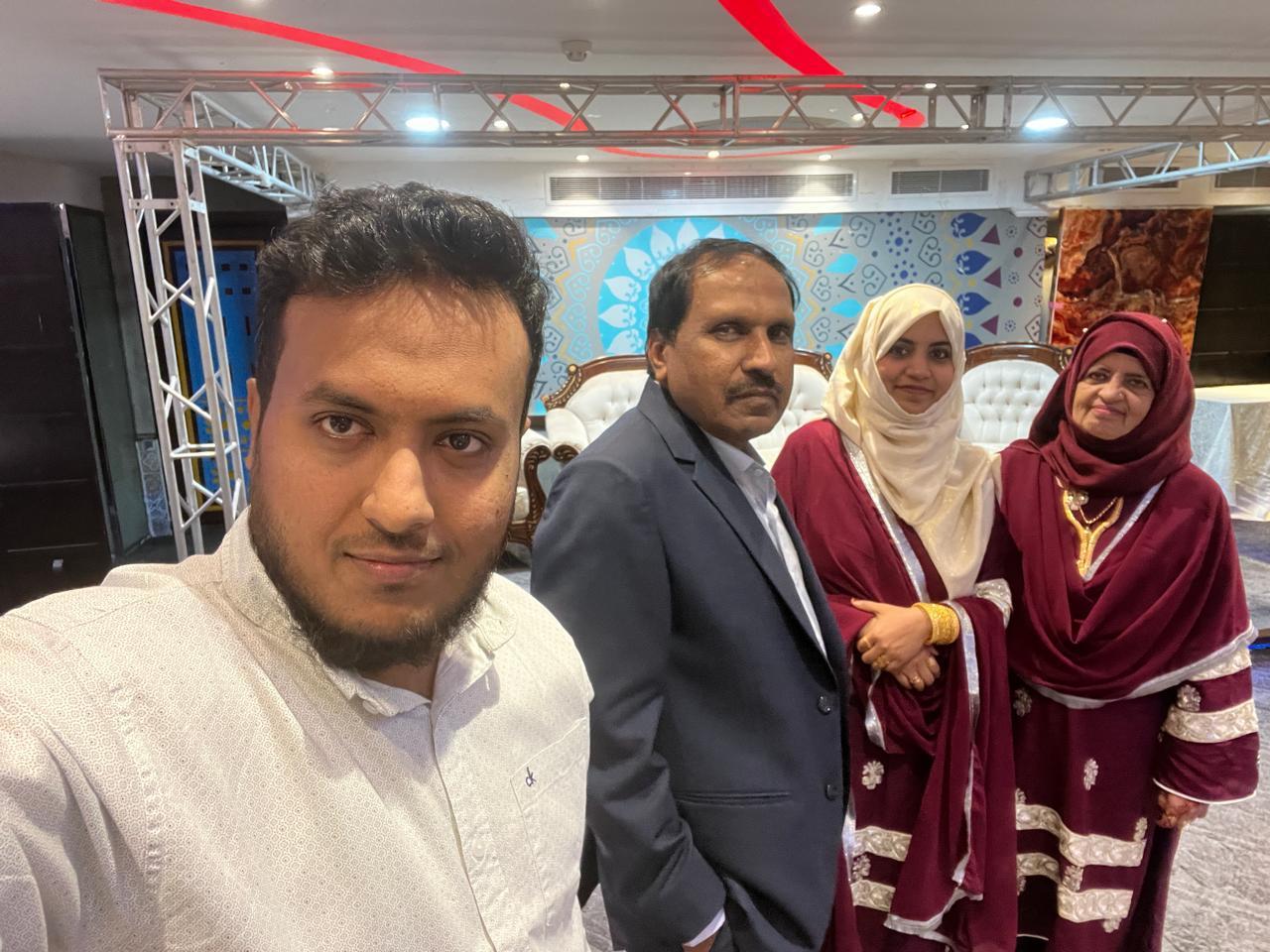
The earliest chapter of Dr. Mohamed Hussain’s life began in C.V. Palya, of Tumkur in Tumkur District, Karnataka, where he was born on 1 June 1957 to Mohamed Hamid and Hayath Bi. His father was an agriculturist, and the family lived with limited financial means. The household was not small or private. It was a large joint family in which his father lived alongside seven brothers, their children and other relatives. More than fifty people shared the same shelter, the same resources and the same daily realities. In such a setting, individual needs rarely stood apart from the needs of the entire family.
The circumstances of his childhood were difficult, yet they became the first ground on which his character took shape. Food was not always available in sufficient quantity, education involved expense, and every opportunity demanded effort. The children of the family grew up surrounded by responsibility, and many left school at an early age to take up small jobs. Among nearly twenty-five children in the household, formal education did not continue for most of them. Economic necessity often made the decision before personal ambition could speak.
Dr. Mohamed experienced the same pressure. He also undertook small work while continuing his schooling, but unlike many others around him, he could not bring himself to leave education behind. Something within him remained strongly 03 drawn to learning. He later described that interest as something he could not fully explain. Whether it was a natural gift or an inner calling, he knew that the classroom mattered to him in a way that went beyond routine attendance.
School itself was approximately five kilometers from his home. Reaching it meant walking the distance regularly, often under conditions that would have discouraged a less determined child. There was no ease in the journey and no assurance that education would lead to immediate change. Yet he continued. The road between home and school became part of his discipline, teaching him consistency long before he would enter professional life.
Inside the classroom, his ability quickly became visible. His memory was unusually strong, and he could retain what the teacher explained, repeat it and summaries the lesson before the class. This was not merely an academic advantage. It gave him confidence in his own capacity at a time when his circumstances might otherwise have made him feel lesser than others. He did not accept the idea that poverty made him intellectually inferior. From a young age, he carried a clear belief that he was equal to anyone and capable of doing whatever another person could do.
That conviction did not grow from pride. It came from the need to survive comparison without surrendering self-respect. He saw children from more comfortable backgrounds, but he refused to measure his future by what they possessed. His challenge to himself was direct: he would not think of himself as less capable. That belief became one of the most enduring principles of his life.
“He could not choose the ease of his circumstances, but he could choose not to surrender the future he believed education might create.”
Phase 2 : Choosing Education When Circumstances Said Otherwise
As Dr. Mohamed Hussain moved beyond his early school years, the struggle to remain in education became more demanding. Childhood determination had carried him into higher classes, but pre-university study required a different level of sacrifice. The distance increased, the expenses grew and the pressure to accept financial reality became harder to ignore. Yet he continued to treat education not as a temporary ambition but as the most dependable path available to him.
The pre-university college was approximately seven kilometers from his home. Each day, he travelled that distance on foot, leaving early in the morning and returning after classes. The journey demanded time and physical effort, but transport was not something he could regularly afford. Walking was not a choice made for discipline or exercise. It was the only practical way to reach the classroom.
His financial condition also shaped the subjects he was able to pursue. He had an interest in continuing his studies, but science education carried expenses that his family could not meet. Many students depended on private tuition to manage the science curriculum, and his father was not in a position to provide such support. Even daily meals were uncertain, making additional educational costs impossible. Faced with this reality, Dr. Mohamed selected the arts stream.
The decision was not a withdrawal from ambition. It was an act of adjustment. He understood that progress sometimes required choosing the route that remained open rather than grieving over the one that had closed. Arts gave him the opportunity to continue his studies, and he accepted it with seriousness. Instead of allowing financial restrictions to weaken his effort, he concentrated on making the most of the education available to him.
During this period, he also tried to acquire practical skills that might support him in the future. He completed junior-level typewriting in English and Kannada and pursued junior shorthand in English. These qualifications were important to him because they offered useful abilities beyond classroom learning. He was interested in progressing further in shorthand and related skills, but once again, the required fees became a barrier. He had to stop before reaching the level he had hoped to complete.
That interruption did not erase the value of what he had learnt. Typewriting and shorthand strengthened his attention, speed and discipline. They also reflected a pattern that would continue throughout his life: when he identified a skill that could improve his usefulness, he tried to learn it. His education was never limited to the pursuit of degrees. He wanted knowledge that could be applied.
“A closed door did not convince him that the journey was over. It taught him to search more carefully for the path that still remained open.”
Phase 3 : Between Qualification and an Uncertain Future
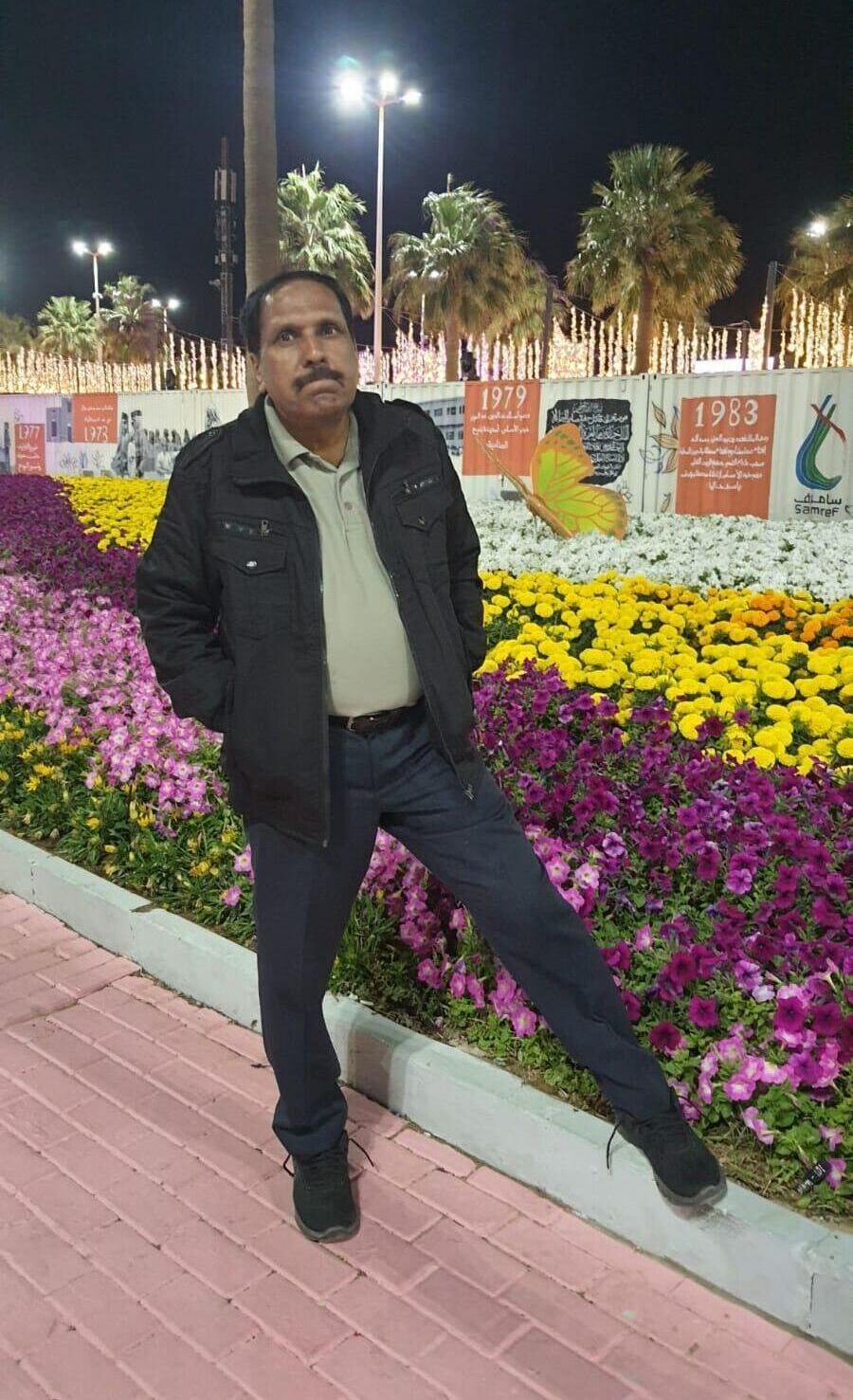
After completing his undergraduate education, Dr. Mohamed Hussain moved towards a deeper study of economics. The subject had already become central to his academic interests, and postgraduate education offered him a chance to strengthen the analytical foundation he had begun building. He secured admission to the Master of Arts in Economics program at Bangalore University, a significant achievement for a young man whose access to higher education had never been assured.
Pursuing the degree demanded more than academic concentration. Bangalore University was nearly eighty kilometers from Tumkur, and the distance added another layer of difficulty to an already demanding life. Travel, accommodation and regular study had to be managed without financial security. He did not possess the comfort of focusing only on lectures and examinations. The condition of his family remained present in his mind, and every academic step carried the awareness that those at home were continuing to struggle.
Still, he remained committed to the program. Economics allowed him to examine how resources were distributed, how livelihoods were formed and how decisions influenced communities. At that stage, he did not yet know how strongly this knowledge would later connect with regional development, economic planning and city forecasting. He was simply trying to complete what he had begun and prepare himself for meaningful employment.
In 1980, he completed his Master of Arts in Economics from Bangalore University. The degree represented the culmination of years of persistence, yet it did not immediately produce the security he needed. For Dr. Mohamed, qualification and opportunity did not arrive together. He had reached a level of education rarely achieved within his family circumstances, but the question before him remained painfully practical: what should he do next?
He returned to the teacher who had guided him through his undergraduate years. By then, his mentor had become the principal of a college. Dr. Mohamed spoke openly about the condition of his home and explained that he needed employment. His father was growing older, the family’s financial position remained weak, and the time had come when he hoped his education would allow him to contribute more directly.
The principal wanted to help and attempted to accommodate him as a lecturer. He knew Dr. Mohamed’s academic ability, understood his difficulties and believed he was capable of teaching. Yet the appointment did not materialise. The institution was influenced by community preferences, and the available opportunity was given to another candidate from within that circle. The disappointment became more painful because the selected person was a former classmate whom Dr. Mohamed himself had helped during their postgraduate studies.
Note of Thanks
Dr. Mohamed Hussain offers his sincere appreciation to every person and institution that contributed to his growth across education, research, planning and public service. His journey was strengthened by individuals who recognized his ability, invited him into meaningful assignments and trusted him with responsibilities that gradually expanded the reach of his profession.
He remains grateful to Shivangi Jha, whose support and encouragement held personal value during his journey. He also acknowledges Professor T. M. Mahesh for their professional standing and willingness to support his continuing academic aspirations. Their association reflects the importance he has always placed on learning from experienced professionals and remaining connected with the academic community.
His thanks extend to the researchers, administrators, engineers, architects, economists and technical specialists with whom he worked in India and Saudi Arabia. Their varied perspectives helped him understand the interdisciplinary nature of urban and regional planning. He especially appreciates the colleagues who collaborated with him across multicultural teams and respected his commitment to careful, honest work.
Dr. Mohamed also expresses gratitude to the institutions that provided space for his abilities to develop, including the Institute of Development Studies, the Indian Institute of Management Bangalore, the Institute of Town Planners, India, and the Royal Commission for Jubail and Yanbu. Each environment added a distinct dimension to his knowledge and professional confidence.
Finally, he thanks the students, unemployed youth, junior professionals and new staff members who allowed him to serve as a teacher, trainer and guide. Their questions gave purpose to his experience and strengthened his belief that knowledge becomes valuable only when it is shared. This biography carries his appreciation for everyone who contributed, directly or quietly, to a life devoted to learning and planning.
thanks,
– Dr. Mohamed Hussain