"She turned learning into strength, responsibility into service, and service into a legacy of hope."
Introduction
The life of Dr. Pallavi Sameer Kulkarni is a journey shaped by learning, courage, responsibility, and a deep desire to create meaningful change where it was most needed. Born and brought up in Mumbai, she received her early education in an environment that gave her confidence, exposure, and discipline. Her schooling at the Indian Education Society’s New English School, Bandra, and later her college education at Chetana’s Hazarimal Somani College of Commerce and Arts gave her a strong academic foundation. She completed her studies in commerce and continued to grow through education, eventually building a path that would move far beyond the boundaries of one subject or one profession.
Her early professional life began in the field of education. At Chetana College, she worked as a lecturer for self-financing courses and also handled administrative responsibilities related to banking, accounting, and finance courses. This phase gave her a practical understanding of people, systems, students, parents, teaching, and institutional functioning. During this period, the guidance of Late Prof. Gulab Wasvani, Dr Shrinivas Surnis and CA Shashikant Desai became important in shaping her confidence. He encouraged her to take up responsibilities even when she did not know how to begin. His belief that she could learn by doing helped her develop the courage to accept unfamiliar tasks. Those early lessons were to prove very useful later, when life tossed her into a very different environment.
After her marriage to Dr. Sameer Kulkarni, an orthopedic surgeon, her life took a major turn. She moved from Mumbai, Bandra, and Kalanagar to a rural taluka of Daund, of Dist Pune in Maharashtra. The change was significant. The surroundings, lifestyle, pace, and needs of the place were very different from the city life she had known. At first, she had to understand where she belonged in this new environment. Gradually, she began taking administrative responsibility in the family’s hospital, and this became the beginning of a larger journey in healthcare service, institutional development, and rural transformation.
Her entry into hospital administration was not easy because she came from a commerce background and had no direct medical training. Even basic hospital terms such as OPD and IPD were new to her in the beginning. Instead of stepping back, she chose to learn. She completed a Postgraduate Diploma in Hospital Management from Savitribai Phule, Pune University, which helped her understand the systems and language of healthcare administration. Her legal education also strengthened her ability to understand institutional responsibilities and legal aspects. Later, she continued her academic growth by completing her LL.M. from O.P. Jindal Global Law School in 2024. For her, education was never limited to personal achievement. It became both a passion to receive and a responsibility to give back.
The hospital became a space where her learning turned into action. Rural patients often approached the hospital with the need for treatment but without the financial ability to afford it. Since it was a private hospital, this created a serious challenge. She began thinking about how such patients could be supported. Through the implementation of government schemes, many people who were earlier deprived of treatment started receiving free and cashless medical care. Contract laborers, many of whom came from outside Maharashtra and were unaware of where to receive treatment despite being insured, also began receiving support through the Employee State Insurance Scheme. This work made healthcare more accessible to people who otherwise may have remained helpless during illness.
“Some journeys begin quietly, in classrooms and homes, where confidence is built before the world ever sees it.”
Phase 1: Mumbai Foundations and the Making of a Learning Mind
The early life of Dr. Pallavi Sameer Kulkarni was rooted in Mumbai, a city known for its movement, discipline, diversity, and endless opportunities for learning. She was born and brought up in this vibrant city, where everyday life naturally exposed her to energy, ambition, and adaptability. Mumbai became more than her birthplace; it became the first environment that shaped her confidence, taught her to observe people closely, and prepared her to move through different spaces with openness and courage. In later years, when life placed her in a completely different setting, these early foundations helped her adjust, learn, and keep moving forward with purpose.
Her schooling took place at Indian Education Society’s New English School, Bandra, an institution that became part of her formative years. School life gave her the first structure of discipline, routine, and learning. It introduced her to the value of education not only as a way to pass examinations but as a way to understand the world more clearly. In those years, she gradually built the habits that would remain with her through many phases of life. Listening skills, patience to learn, and willingness to grow from each experience became part of her personality. These qualities did not appear suddenly in adulthood; they were quietly formed during her early years.
Growing up in Mumbai also meant being surrounded by a culture where education and personal effort mattered deeply. The city offered exposure, but it also demanded responsibility. This balance became important for a young student. She learned how to move with the beat of a busy place, but to stay on her own course. Her surroundings helped her understand that growth does not happen only through comfort. It also comes from observing change, accepting responsibility, and remaining prepared for new challenges. These early impressions later became meaningful when she had to leave the familiarity of city life and step into a rural environment after marriage.
After completing her schooling, she continued her education at Chetana’s Hazarimal Somani College of Commerce and Arts, Bandra. This phase strengthened her academic base and brought her closer to the field of commerce. She pursued her Bachelor of Commerce, where her subjects included Financial Accounting and Auditing and Computer Applications. These subjects were not merely academic choices; they gave her a practical understanding of systems, records, accuracy, and structured thinking. Commerce taught her to look at institutions through details, numbers, responsibilities, and processes. This foundation later supported her in administrative roles, especially when she became involved in managing institutional work.
Her graduation from the University of Mumbai marked an important academic milestone. She completed her B.Com through Chetana’s college, and this achievement became the first strong step in a journey that would remain closely connected with learning. The academic environment of Mumbai gave her not just a degree, but also exposure to organized education, college culture, and the functioning of institutions. She did not stop at graduation. Her desire to continue learning led her further into postgraduate studies, and she completed her M.Com from the same college. This continuity reflected her seriousness toward education and her comfort with academic growth.
“Before leadership becomes visible to others, it is often shaped in the quiet discipline of learning how to guide, support, and give.”
Phase 2 : The First Classroom of Responsibility
After completing her higher studies in commerce, Dr. Pallavi Sameer Kulkarni entered a phase that quietly strengthened her confidence and prepared her for responsibilities that would later become much larger than she could have imagined. Her association with Chetana College did not end only as a student. It continued in a meaningful way when she was appointed as a lecturer for self-financing courses. This opportunity became her first professional platform, where she began understanding not only the academic side of teaching but also the deeper human side of education.
Her role at the college was not limited to standing before students and delivering lessons. She was also involved in administrative activities connected with courses such as banking, accounting, and finance. This combination of teaching and administration gave her early exposure to how an institution functions from within. She learned that education is not only about the classroom. It is also about planning, coordination, discipline, communication, records, student concerns, parent expectations, and the ability to manage different responsibilities at the same time. These experiences became her first training ground in institutional responsibility.
During this period, one of the most important influences in her professional life was Mr. Gulab Wasvani, whom she remembered with deep respect. He was more than a senior or guide. He became a mentor who helped her discover her own ability to take up work even when she did not initially know how to do it. Many a time when she lacked confidence in doing something, he would tell her to go ahead and try, instead of drawing back. His guidance gave her a simple but lasting lesson: one learns by doing, and confidence grows only when a person is willing to begin.
That lesson became very important in her journey. There are many people who wait until they feel fully prepared before accepting responsibility. Her mentor taught her the opposite. He helped her understand that responsibility itself can become a teacher. When a person enters a task with sincerity, patience, and willingness to learn, the path slowly opens. This early encouragement helped her become comfortable with unfamiliar work. It gave her the courage to say yes to duties that required learning, observation, and effort.
At Chetana College, she also learned how to handle students. This was an important part of her growth because teaching is not merely the transfer of information. It requires patience, understanding, and the ability to connect with young minds. Every student comes with a different level of confidence, preparation, and need. A lecturer has to understand these differences and guide students in a way that gives them direction. Through this role, she began understanding how education can influence a student’s confidence and future.
The three years she spent in this role became a valuable foundation. They gave her a practical understanding of people and systems. She was trained not only in teaching but also in giving. The idea of giving knowledge without holding back remained important to her. She learned that when one is in a position to guide, nothing should be retained selfishly. Whatever can help another person grow should be shared sincerely. This belief later became visible in her work with education and institutional development, especially in the way she viewed learning as a path for others to improve their lives.
“Life does not always prepare a person by giving comfort ; sometimes it prepares them by placing them where their purpose is waiting.”
Phase 3 : From City Familiarity to Rural Responsibility
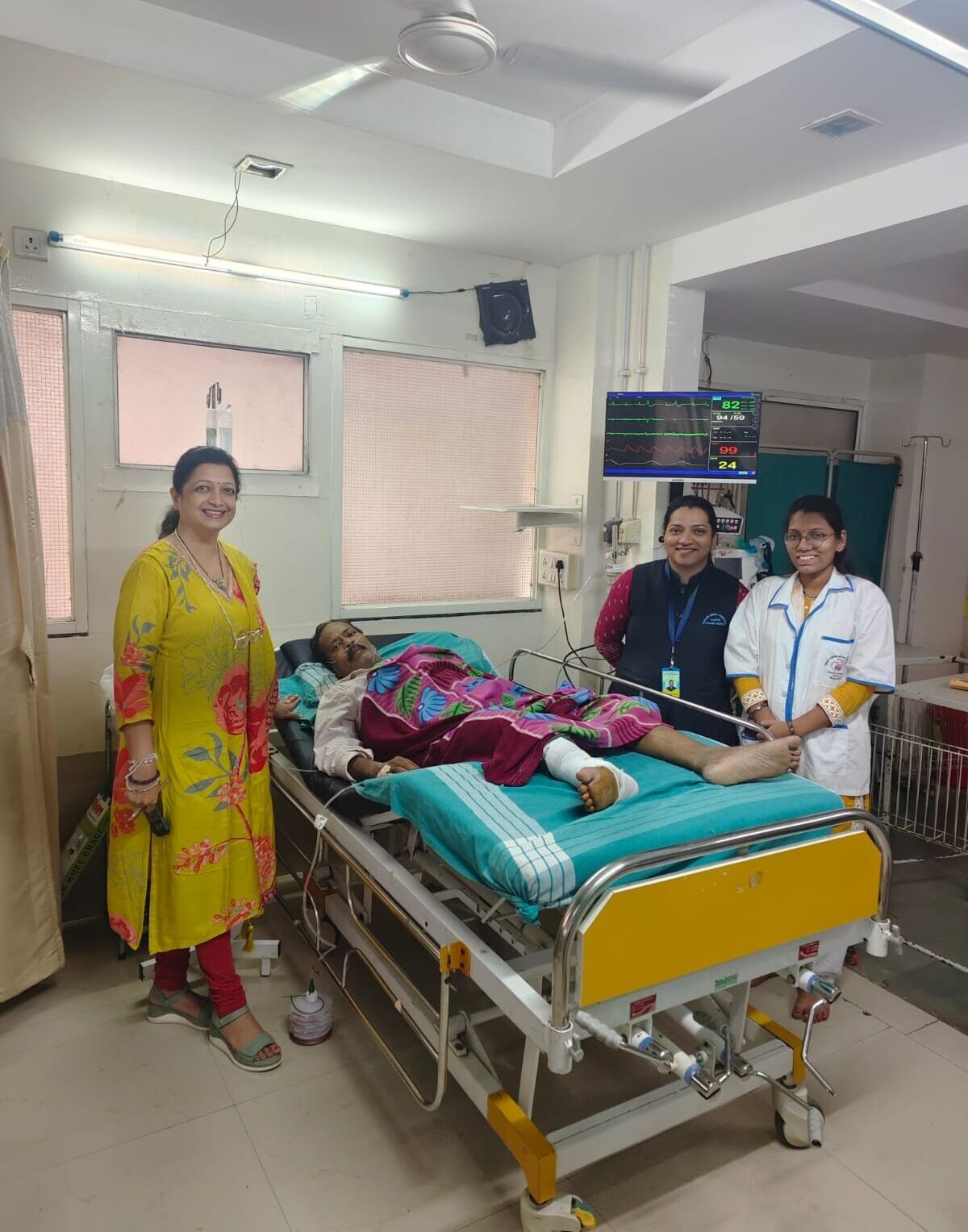
The journey of Dr. Pallavi Sameer Kulkarni took a meaningful turn after her marriage to Dr. Sameer Kulkarni, an orthopedic surgeon. Until then, her life had been closely connected with Mumbai, especially the familiar surroundings of Bandra and Kalanagar. She had grown, studied, and worked in an environment that was known to her. The rhythm of city life, the academic atmosphere, and the comfort of familiar places had shaped her early identity. Marriage, however, brought her into a completely different world. She moved from the urban setting of Mumbai to a rural taluka of Daund in Dist Pune, in Maharashtra, and that transition became one of the most defining chapters of her life.
For someone who had spent her formative years in a city, the shift was not small. It was not merely a change of address or routine. It was a change in lifestyle, surroundings, expectations, and everyday realities. The place she entered after marriage was very different from the environment she had known. The pace was different, the needs were different, and the challenges were far more direct. She is from Mumbai, where naturally exposure and facilities were available. Suddenly, she was in a rural place where even basic access to quality healthcare was not easy for many people.
At first, this new environment brought a natural sense of uncertainty. She had to understand where she belonged and how she could use her time meaningfully. Her husband’s work as an orthopedic surgeon was already connected with healing and patient care, and the family had a hospital in that rural setup. The hospital was not just a professional space; it was a place where the real struggles of people became visible. Patients from rural areas would approach the hospital with pain, need, and hope, but many of them did not have the financial strength to afford treatment. These situations slowly began touching her mind and heart.
In a government setup, people may expect free treatment, but in a private hospital, giving care without payment creates practical difficulties. Yet, the needs of the people could not be ignored. She saw that many patients were not asking for comfort or luxury. They were asking for basic treatment because illness had left them with no other choice. This made her think deeply about what could be done for those who were denied healthcare because they could not afford it.
In the beginning, she did not enter this space as an expert. She came from a commerce background, not from medical education. The hospital environment had its own language, systems, departments, and expectations. Terms that were ordinary for doctors and hospital staff were unfamiliar to her. Even understanding the basic functioning of patient care required learning. She had to observe, ask, understand, and gradually become comfortable with a world that was very different from the one she had been trained in earlier.
Note of Thanks
She expresses deep respect for her father, Mr. Sharad Madhukar Bapat, whose positive thinking taught her to look at every problem as a situation that could be resolved. His guidance helped her develop the courage to face challenges with patience and practical understanding. She also remains grateful to her mother, Mrs. Manjiri Sharad Papat, whose encouragement, artistic spirit, and constant support gave her the freedom to continue her efforts with confidence.
Her heartfelt gratitude goes to her husband, Dr. Sameer Kulkarni, whose support has remained central to her personal and professional journey. His encouragement allowed her to learn, adapt, and contribute meaningfully to healthcare, education, and rural development. In his name, she also acknowledges the quiet strength of the family that supported her responsibilities and growth.
She also extends love and blessings to her daughter, Chinmayee Sameer Kulkarni, whose path in medical education adds joy and meaning to the family’s connection with service.
With humility, she also acknowledges the patients, students, staff members, families, and rural communities who became part of her journey. Their trust, blessings, and needs gave deeper purpose to her work. This biography is therefore a reflection of shared support, shared learning, and the many human connections that made her journey meaningful.
thanks,
– Dr. Pallavi Sameer Kulkarni