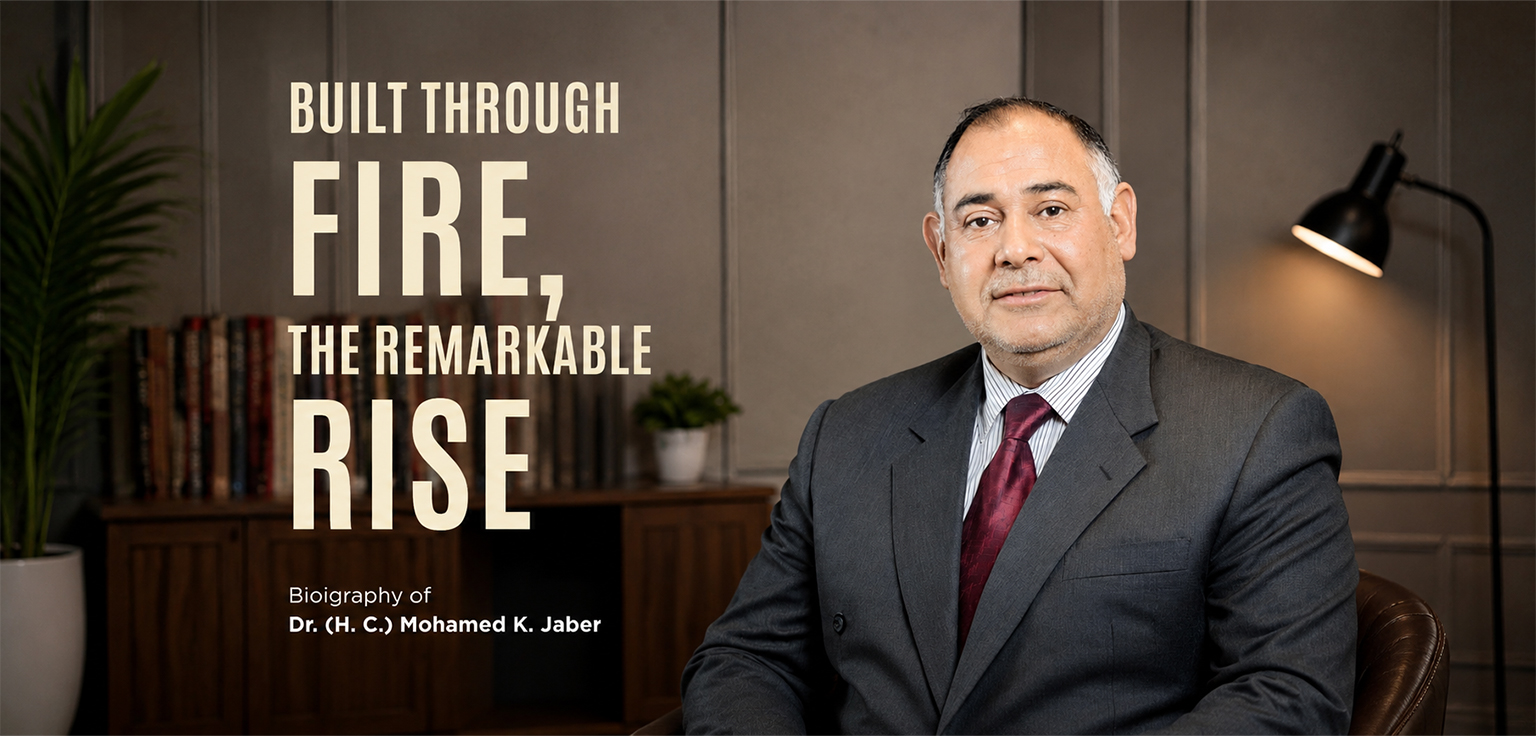
“A life is not shaped by the moments of ease, but by the moments that demand strength—and by the courage to rise every single time.”
Introduction
The life of Dr. Mohamed K. Jaber truly stands as a compelling testament to what becomes possible when deep resilience, focused discipline, and an unwavering sense of purpose beautifully converge within one individual. His story certainly doesn’t begin in privilege or comfort, nor does it follow any kind of straight or predictable path. Instead, it begins in a Lebanon that was touched by both natural beauty and rich culture yet tragically fractured by the dark shadows of civil war. It starts with a young boy who knew the warmth of a large, loving family, was instilled with the core principles of his hard-working parents, and enjoyed the simple innocence of childhood—until the entire world around him violently shifted. What eventually emerged from those early, jarring disruptions was not brokenness or defeat, but the very first shape of a young man who would one day rise to achieve international prominence in engineering and leadership.
Born in 1962, Mohamed grew up in a traditional home deeply filled with the values of strength, sacrifice, and humility. His father, Mr. Kassem, a respected merchant and cloth factory owner, believed profoundly in the dignity of work and the transformative power of education. His mother, Zeinab, embodied pure kindness, selfless devotion, and quiet emotional courage—essential qualities that absolutely grounded him throughout the most turbulent periods of his youth. Together, they thoughtfully shaped a foundation for him built firmly on integrity and perseverance.
However, life tested that foundation far earlier and more severely than expected. When the devastating Lebanese Civil War violently erupted in 1975, his family tragically lost nearly everything—their home, their thriving business, their sense of security, and the familiar, comforting rhythms of their normal life. Forced to immediately leave the eastern sector of Beirut due to escalating religious conflict, they relocated to their ancestral town of Nabatiyeh in the south, carrying with them only their deep faith and firm determination. During those incredibly challenging years, tragedy further deepened the family’s struggle with the heartbreaking loss of Mohamed’s younger brother Suhail, a moment that imprinted a heavy weight on his heart which he carried quietly for years to come.
With his father unable to work and the family’s financial stability completely shattered, Mohamed made a difficult decision driven less by personal choice and more by desperate necessity: he left school at age fourteen. While other boys his age were studying and playing, he walked determinedly from door to door selling women’s clothing and children’s items, simply trying to provide enough money for his family to somehow survive. That intense early exposure to hardship shaped him in profound ways that no classroom ever could. It quickly taught him responsibility, discipline, communication, and the sheer courage necessary to face rejection without ever losing hope. It also awakened in him a powerful entrepreneurial spark that rapidly turned a small door-to-door effort into a busy street-side business, and soon after, into a growing wholesale operation. Within a remarkably short period, he was honestly earning more than most adults around him.
Yet, despite Mohamed’s surprising early success, his father, Mr. Kassem, never lost sight of the life he truly wanted his son to build. Mr. Kassem insisted—firmly, lovingly, and repeatedly—that his son must return to school and pursue a formal education. When Mohamed strongly resisted, arguing that he already earned far more than a future degree could possibly guarantee, his father insisted even harder, delivering what became a prophetic statement: “I do not want you to look back in twenty years with regret. Education will carry you when everything else fails.” Out of deep respect and sheer filial duty, Mohamed ultimately returned to school, willingly turning his back on immediate profit in service of a future he had not yet fully imagined.
“Some childhoods give comfort; mine gave courage—and courage became my greatest inheritance.”
Phase 1: Born Into a Storm: The Child Who Learned Strength Before Safety
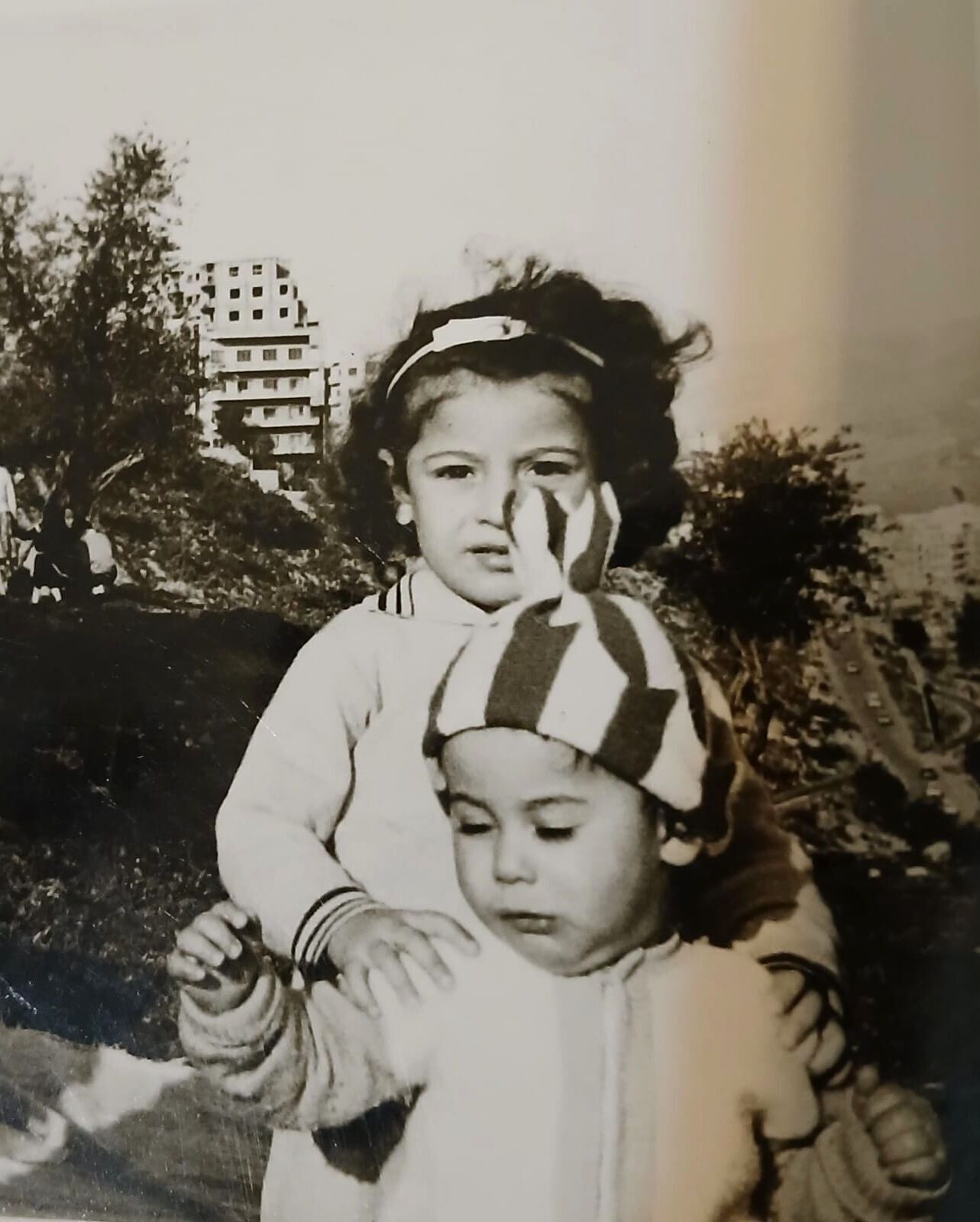
In the winter of 1962, right in the bustling, vibrant heart of Beirut, a child entered the world who would one day carry the weight of nations, industries, and entire engineering legacies on his broad shoulders. That child was Dr. Mohamed K. Jaber—born not into the ease of privilege or comfort, but into a land where natural beauty and palpable chaos lived side by side, where deep faith and relentless conflict ran parallel, and where immense joy and persistent uncertainty intertwined in unpredictable, jarring rhythms. His earliest and most defining memories were not shaped by simple toys and lazy leisure, but by the grounded reality of a home that truly valued hard work, unwavering dignity, honor, and community above all else.
From the very beginning, Mohamed’s life unfolded within a robust family structure that was as intensely demanding as it was deeply nurturing. He was one among nine children, part of a household that constantly pulsed with energy, noise, clear discipline, and profound familial bonds. In such a home, individuality often had to blend seamlessly into collective responsibility, and every child grew up guided by the same quiet, unwavering principles—respect the elders, protect the young, work with absolute integrity, and never, ever forget the dignity of one’s roots.
His father, Mr. Kassem, a dedicated merchant with two cloth factories and successful wholesale businesses, was a man wholly defined by discipline and determination—firm, consistently principled, and utterly unafraid to make necessary difficult decisions. He began every single day before the sun rose, diligently inspecting his factories, meeting with key suppliers, checking complex accounts, and meticulously ensuring that everything under his direct care operated with precise precision. He believed deeply in the transformative power of education and the essential dignity of honest work, and he instilled these foundational values into his children through powerful example rather than through constant speech.
His mother, Zeinab, was unquestionably the emotional heart of their home. Gentle, incredibly patient, and endlessly compassionate, she quietly carried the heavy emotional burdens no one else could easily see. Her comforting presence gave necessary warmth and stability to the entire household, and her voice—soft yet undeniably firm—taught her children the crucial, delicate balance between pure strength and deep kindness. She lovingly nurtured courage without aggression, humility without weakness, and ambition without arrogance. She successfully created an environment where faith was an ever-present guiding force, and where love quietly shaped resilience.
But even in those seemingly peaceful days, Lebanon was fundamentally a land built upon a very delicate balance. Political tensions constantly simmered ominously beneath the surface, and although Mohamed was too young to truly understand the painful complexity of the nation’s deep divisions, he could easily sense the cautious, low tone in adult conversations, the palpable unspoken awareness that life could violently change without any real warning.
“Some childhoods give comfort; mine gave courage—and courage became my greatest inheritance.”
Phase 2 : When the World Fell Apart: War, Loss, and the First Lessons of Survival
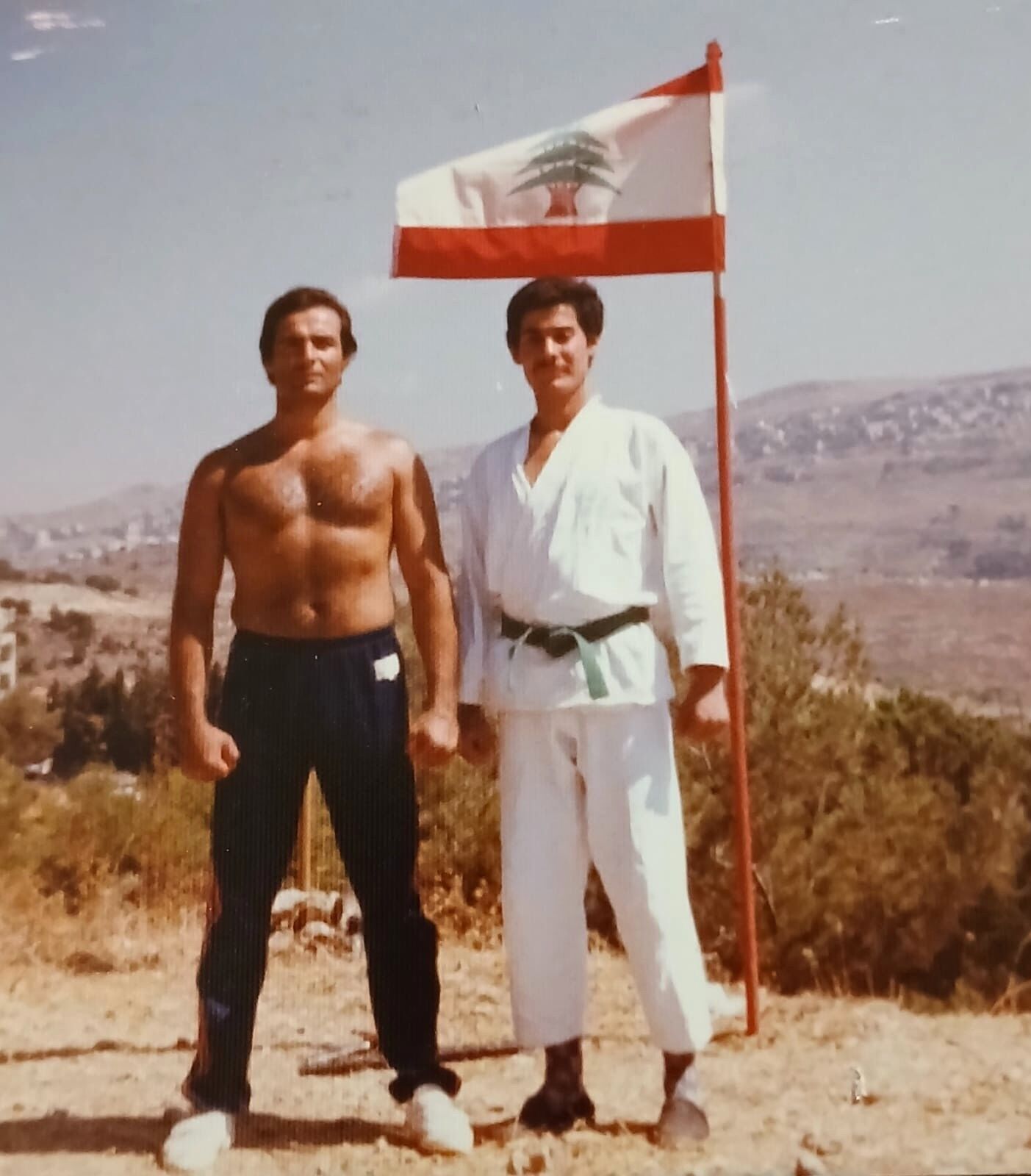
For many children around the world, adolescence is meant to be a gentle transition—a gradual, exciting shift from the ease of innocence to the understanding of complexity, from happy dependence to independent discovery. But for Dr. Mohamed K. Jaber, adolescence arrived not as a quiet season of exploration, but as a harsh, brutal confrontation with a world that was actively dismantling itself. In 1975, when Lebanon violently plunged into the catastrophic chaos of civil war, the fragile bridge between his childhood and his impending adulthood collapsed in a single, devastating sweep of violence. What he was forced to face next would ultimately shape the entire course of the rest of his life.
When the widespread violence reached their very doorstep, his loving parents made a heartbreaking decision no family should ever be forced to make—they quickly gathered what little they could possibly carry and fled. Their treasured home, once warmly filled with the comforting aroma of Zeinab’s cooking and the disciplined order strongly maintained by Mr. Kassem, was tragically abandoned to the uncertainty and destruction of conflict. They instantly became displaced persons within their own native country, tragically joining thousands of others who desperately sought safety wherever it could still be found.
The Jaber family left behind far more than simple walls and furniture. They left behind their sense of security, their established identity, and the stable, financial foundation that Mr. Kassem had spent years painstakingly building. The thriving businesses—the cloth factories, the wholesale operations, the steady customer relationships—fell apart almost instantly. War simply does not negotiate with years of hard work; it sweeps it all away without remorse.
Their destination was Nabatieh, their ancestral town in southern Lebanon. It was thankfully quieter, located far from the immediate, constant fighting, but still sadly not entirely untouched by the wider, brutal unrest. When they finally arrived, they did not arrive as the previously prosperous merchants they had been; they arrived simply as a family stripped of almost everything except the crucial comfort of each other.
For Mohamed, witnessing this quiet, inner devastation was perhaps even more painful and scarring than the physical war outside. He had always deeply seen his father as utterly unshakeable, a man of clear direction and purposeful action. But now, even the strongest, most guiding man in the house was tragically forced into terrible stillness, unable to work, unable to rebuild, and heartbreakingly unable to provide. It was a silent form of suffering that left deep, painful imprints—a quiet, enduring kind of heartbreak.
It was during this time, burdened by economic collapse and displacement, that tragedy struck again, and with a brutality that no child could ever be prepared for. Mohamed’s younger brother, just two years his junior, passed away unexpectedly after months of suffering due to a brain seisure that parallelized him completely. The brain seisure was due to an Israeli air raid that broke the sound barrier directly over his brother’s head while walking in Nabatieh. War had already mercilessly taken their home, their sense of stability, and their livelihood—now it had tragically taken a vital part of their family itself.
“Responsibility doesn’t ask your age. It chooses you, shapes you, and teaches you to rise before you are ready.”
Phase 3 : The Fourteen-Year-Old Provider : A Childhood Traded for Responsibility
There are powerful moments in life when childhood tragically ends not with the gradual increase of age, but with the sudden, crushing weight of duty. For Dr. Mohamed K. Jaber, that transformative moment arrived abruptly—without warning, without proper preparation, and without the simple grace of transition. The relentless civil war had brutally stripped his family of their cherished home, their financial stability, and their entire livelihood. Raw grief had shaken them profoundly with the heartbreaking loss of his younger brother. His father, Mr. Kassem, once a proud, successful, and capable merchant, was understandably momentarily paralyzed by devastating circumstances he simply could not control. And in the fragile, heavy lull that quickly followed these intense storms, a fourteen-year-old boy quietly stepped into a crucial role far beyond his tender years.
He was physically still a child—thin, highly observant, with the natural softness of youth still visibly present in his face. But life had absolutely no room for softness now. Lebanon was fully in the grip of chaos; immediate survival demanded urgent action. And so, at an age when other boys were busy memorizing school lessons and playing innocently in dusty schoolyards, Mohamed began waking up each difficult morning with a completely different, mature set of responsibilities—the kind that rightly belonged to men, not just boys.
His very first vital task was simple in its definition but truly monumental in reality : to provide.
He immediately searched for ways to financially support his family and quickly found work that did not require huge capital investment or pre-existing connections—selling goods door to door. The necessary items were modest: essential women’s clothing, lingerie, baby essentials. They were products families still universally needed, even in those terribly troubled times. And so Mohamed, bravely carrying a heavy bag of merchandise, began walking determinedly through neighborhoods with a palpable courage born not from confidence but from sheer necessity.
He politely knocked on doors, respectfully introduced himself, and sincerely offered his basic products. Some customers bought out of genuine need, others out of simple compassion, and some sadly shut the door without a second thought or kind word. Yet Mohamed absolutely refused to internalize rejection. He quickly learned early on that a definite “no” was not the crushing end of an attempt; it was simply a necessary part of the journey toward a definite “yes.” Every single door he faced became a harsh but vital lesson in human behavior, and every brief interaction was a small, crucial step toward successfully supporting his family.
These early business days were often physically exhausting. He would walk miles, sometimes enduring the harsh glare of the sun, sometimes under the heavy, ominous quiet of a country actively at war. But the emotional weight was undoubtedly far greater. Each sale, each small coin earned, was not simply his personal money—it was a vital contribution toward successfully holding his family together. This intense, early responsibility matured him rapidly. His priorities were no longer shaped by simple childhood curiosity but by a deep, immediate understanding of what his family truly needed to endure.
Note of Thanks
Mohamed extends his deepest gratitude to the people whose presence shaped every milestone of his life’s journey. He remains eternally thankful to his beloved wife, Rima, whose unwavering support, patience, and quiet strength have been the anchor behind every decision, transition, and triumph. Her belief in him carried him through moments when the path ahead seemed uncertain. He also expresses profound appreciation to his late parents, Kassem and Zeinab, whose values of integrity, perseverance, and humility continue to guide him every day. Their sacrifices laid the foundation on which his entire life has been built.
A heartfelt thanks goes to his sons, Dr. Kassem and Dr. Khodr, whose accomplishments bring him endless pride and whose journeys remind him of why hard work and resilience matter.
He also remembers with gratitude his mentor Paul, whose wisdom and guidance shaped his early professional life. To every colleague, friend, and well-wisher who contributed to his growth—Mohamed offers his sincere thanks.
thanks,
– Dr. (H. C.) Mohamed K. Jaber