“Walk with open hands and an open heart: take in all that is kind, true, and beautiful, and leave behind whatever weighs the spirit down.”
Introduction
The story of Dr. Titu Kumar Barua begins in Chattogram, Bangladesh, where his earliest world was shaped by family, discipline, learning, and service. He was born into a household where responsibility was never discussed as a grand idea; it was lived through daily conduct. His father, Ajit Barua, was a doctor by profession, and his grandfather also belonged to that same noble line of healing. Around him stood constant examples of duty, education, and public respect. Naturally, these surroundings shaped his first dream. Like many children who admire the lives closest to them, he once wished to become a doctor.
But his life would not remain tied to that first dream alone. Slowly, it would transform into a story of redirection, patience, and self-made strength. His childhood carried simplicity in its purest form. His primary school was close to home, but later school life demanded more effort, more travel, and more endurance. There were days filled with bus rides, walking distances, limited means, and the kind of routine that quietly teaches a child how to stand on his own feet. He grew up in a large family with sisters and brothers, surrounded by the warmth, noise, affection, and shared responsibilities that come with such a home.
Education entered his life not as a formality, but as a serious commitment. From an early age, he showed a natural liking for Mathematics, along with the patience to help others understand what they found difficult. During school hours, when classmates struggled with subjects like Mathematics, grammar, or Science, they would come to him. He helped them quietly, often without wanting his name mentioned. This small but meaningful habit revealed something lasting about him. Even before professional titles entered his life, there was already a helpful mind, a humble heart, and a young student who found purpose in easing the difficulty of others.
His childhood was also marked by discipline. Prayer formed part of the morning routine. Food was simple. Resources were limited. There was a time when studying happened under an oil lamp, shared among siblings, with each one trying to receive enough light to continue reading. Such moments may appear ordinary from a distance, but in a life story they become deeply important. They show the making of character. They reveal the background from which resilience grows. For him, those early years did not give him luxury, but they gave him endurance, gratitude, and a steady understanding of effort.
Sports, especially football, brought another colour to his young life. He loved the game deeply and played with passion. He took part in tournaments and carried a lively interest in the field. Football was not merely a pastime for him. It excited him and gave him a sense of movement, teamwork, and joy. Even during his working years, that love remained alive, though he later stepped away from pursuing it further as his mother wished. That choice itself reflects one of the strongest features of his personality: respect for family always remained greater than personal desire.
“My father taught me that service is dignity. My mother taught me that love is discipline. Together, they gave me the only wealth that truly matters: character.”
Phase 1: The First Classroom Was Home
The life of Dr. Titu Kumar Barua began in Chattogram, Bangladesh, a place that became far more than his birthplace. It was the first landscape of his identity, the soil from which his values, dreams, and sense of responsibility began to grow. Long before professional designations, business ambitions, or public recognition entered his journey, there was a home filled with expectations, family bonds, discipline, and quiet lessons. His earliest years were not shaped by grand speeches or formal instruction about life. They were shaped by what he saw every day, by the people around him, and by the way duty was carried in the household as naturally as breathing.
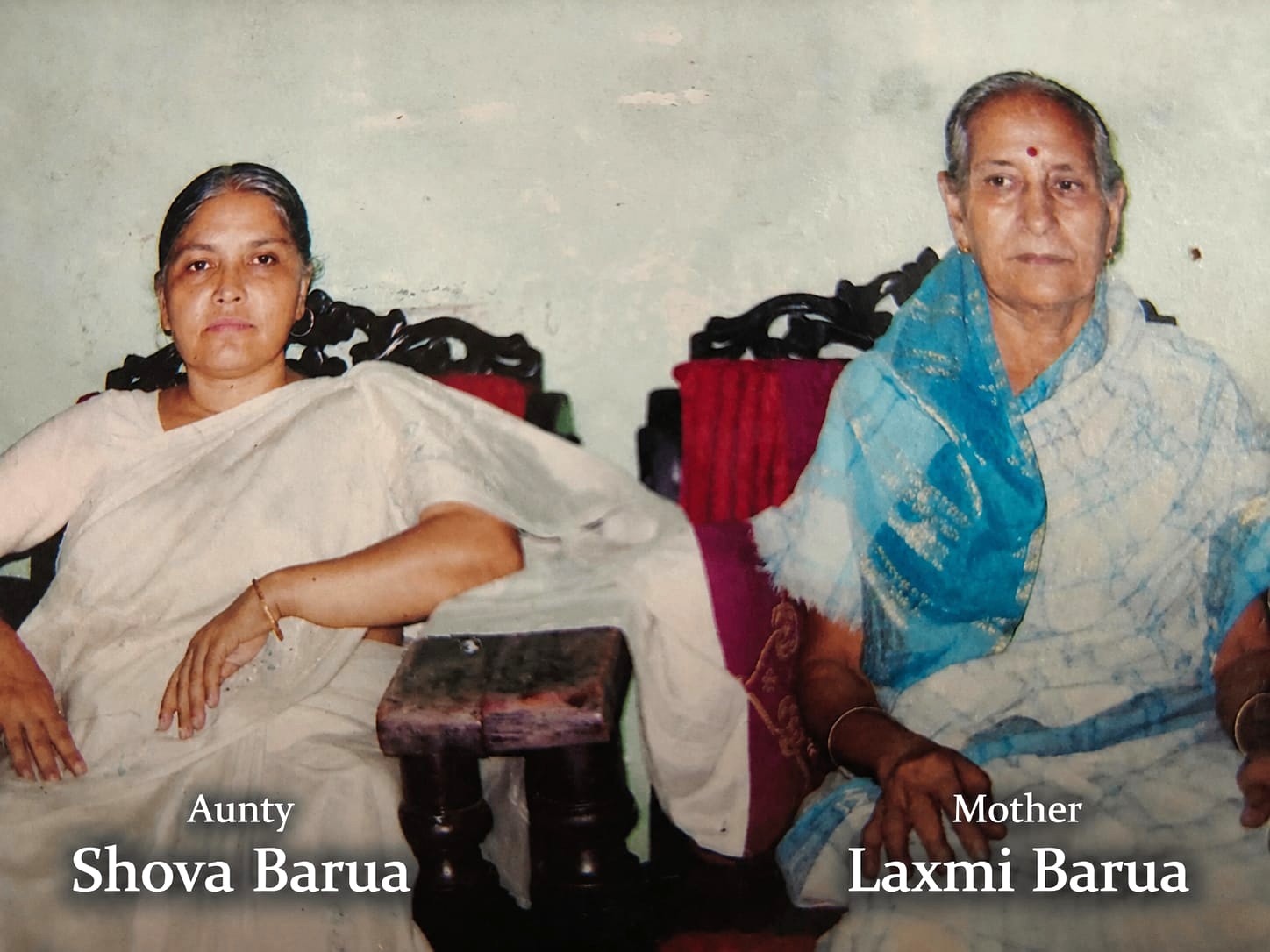
He was born into the family of Ajit Barua and Laxmi Barua, two names that would remain deeply connected to the making of his character. His father, Ajit Barua, was a doctor by profession, and that fact carried a powerful meaning in his young mind. To a child watching closely, a doctor was not merely someone with knowledge or status. A doctor represented trust. A doctor entered people’s lives at moments of pain, uncertainty, and need. In his father’s profession, Dr. Titu saw a form of service that held dignity, respect, and human importance. It was not surprising that his own early dream was to become a doctor. That dream did not rise from imagination alone. It rose from the example standing before him.
The influence of healing and service did not stop with his father. His grandfather, too, was a doctor. This gave the family a certain atmosphere of purpose. There was a lineage of care, a sense that knowledge should be used for the benefit of others, and a belief that a meaningful life required responsibility toward society. For a young Dr. Titu, this background became a silent inheritance. It gave him a sense of direction before he fully understood the meaning of direction. It taught him that respect was not earned by position alone, but by usefulness, service, and conduct.
His mother, Laxmi Barua, gave another dimension to his upbringing. If his father’s life introduced him to service and dignity, his mother’s presence gave him emotional grounding. She represented care, discipline, and the kind of strength that does not always appear in public but holds a family together from within. In the home, she was part of the world that kept values alive through daily action. He grew up understanding that family was not only a place of affection, but also a place where responsibility had to be shared and respected. The lessons he received from his parents became part of him in a quiet, lasting way.
His family was large, and that made his childhood full of movement, relationships, and shared life. He grew up with five sisters and six brothers. Such a family naturally taught him patience, adjustment, and awareness of others. In a large household, one learns early that life does not revolve around one person alone. There are needs to understand, voices to hear, spaces to share, and responsibilities to accept. For him, this environment helped shape his sense of balance. He learned how affection and discipline could exist together. He learned how siblings could become companions, protectors, and examples in different ways.
“I studied under an oil lamp that my siblings and I had to share. That small flame taught me something no classroom ever could : that when resources are scarce, determination becomes your greatest light.”
Phase 2 : Oil Lamps, School Roads and a Young Mind That Loved Numbers
In the early years of Dr. Titu Kumar Barua, education was not surrounded by ease, yet it carried a value that was deeply respected. His primary school was only about five minutes away from home, making the first steps of learning close and familiar. That short distance may have seemed simple, but it marked the beginning of a relationship with education that would later demand much more effort from him. As he grew older and moved into later school years, the road to learning became longer. It involved travel by bus, walking distances, and adjusting to the demands of time, weather, tiredness, and limited means.
His school routine reflected the kind of childhood where small things carried great meaning. There were days when his father would give him one taka for travel. Fifty paisa was used for going, and the remaining fifty paisa was kept for returning. There was no comfortable provision for tiffin or extra food during the school day. This was not a childhood of easy choices. It was a childhood where every coin had a purpose, every journey had to be planned, and every day required quiet discipline. Yet, such circumstances did not make him bitter. They gave him a practical understanding of life, one that stayed with him long after those school roads were left behind.
His school hours usually began in the morning and continued until late afternoon. Like many children, he had a natural hunger for play and freedom, but his mind was equally drawn toward studies. Among all subjects, Mathematics held a special place in his heart. Numbers came to him with a certain ease, and he found satisfaction in solving problems that troubled others. This liking for Mathematics was not merely academic interest. It revealed the organised, patient, and analytical side of his personality, a side that would later connect naturally with his professional journey.
During tiffin periods, when other students spent time in their own ways, he often became a quiet helper. If classmates struggled with Mathematics, Bangla grammar, English grammar, or Science, they came to him. He would explain, solve, and guide them, but with a gentle condition: they should not mention his name. This small detail says much about the child he was. He did not help others for praise. He did not want attention from teachers or recognition from classmates. He simply understood something and used that understanding to make another student’s difficulty lighter.
There was humility in that habit, but there was also confidence. He knew he could help. He knew he had the ability to solve what others found hard. Still, he chose silence over display. In this quiet way, the foundations of his later leadership were already forming. Long before he held professional responsibility, he had learned how to guide without arrogance, how to support without making others feel small, and how to use knowledge as a form of kindness.
The home routine of his childhood was equally disciplined. Mornings began early, around six o’clock. After waking up, he had to brush and pray. Prayer was not treated casually. It was expected. It was part of the structure of the household and part of the moral atmosphere in which he grew up. Before the day moved into school, study, or household duties, there was a spiritual rhythm that taught him steadiness. This early practice gave him an understanding that life needed inner order, not just outward effort.
“I loved football with my whole heart, but I loved my mother’s peace more. Sometimes the greatest strength is not in holding on, but in letting go with grace.”
Phase 3 : Football Dreams, Quiet Sacrifices and the Strength to Look Beyond Pain
In the life of Dr. Titu Kumar Barua, childhood was not shaped by study alone. There was another world that pulled at his heart with equal force: the open field, the rush of movement, the thrill of competition, and the deep joy of football. He was not only a student who loved numbers and learning; he was also a young boy with energy, courage, and a strong sporting spirit. Football gave him something that books could not give in the same way. It gave him freedom, excitement, teamwork, and the feeling of being fully alive.
He was very good at sports and took part in tournaments with genuine enthusiasm. Whenever there was a game, he did not like to miss it. For him, football was not just a way to pass time after school. It became a part of his personality, a place where discipline met passion and where his natural confidence found expression. On the field, he could run, compete, take decisions quickly, and feel the joy of belonging to a team. Those moments gave him a different kind of learning, one that came through action rather than classroom instruction.
His love for football was so strong that it stayed with him even beyond the early school years. Even when he later entered working life, that affection for the game remained alive within him. It was something he could have followed more seriously, and in his own heart, he knew that football could have become a dream of its own. Yet his life was never guided only by personal desire. His mother’s wish carried great importance for him, and because of her, he stepped away from the idea of pursuing football further. This was not a small decision for a person who loved the game so deeply. It was a quiet sacrifice, made out of respect.
That choice says much about the kind of son he was. Many people speak of ambition as if it must always move in the direction of personal passion, but he understood life differently. For him, family mattered. A mother’s concern mattered. Her wish was not something to be ignored in the name of individual excitement. He accepted that responsibility with the same calm seriousness that would later become visible in many other parts of his life. He did not turn his love for football into regret. Instead, he carried its lessons with him.
Football had already taught him movement, patience, and resilience. It had taught him how to continue after falling, how to respond to pressure, and how to belong to something larger than himself. These lessons did not disappear when he stepped away from pursuing the sport as a dream. They remained in his character. Later, in professional settings, in family decisions, and in moments of hardship, the same sporting spirit could be seen in his ability to keep moving, to stay steady, and to understand the value of discipline.
Note of Thanks
Dr. Titu Kumar Barua extends his heartfelt thanks to the people whose support, encouragement, and presence have added meaning to his journey. His life has moved through many stages of responsibility, change, effort, and ambition, but he recognises that no meaningful journey is carried by one person alone. Behind every step forward, there are people who give strength in silence, offer belief in difficult moments, and make the road feel less lonely.
He offers his deepest appreciation to his wife Riga Barua, whose steady companionship has remained one of the most valuable parts of his personal life. As a homemaker who pursued a degree in Political Science, she has stood beside him with patience, understanding, and quiet strength. Her presence has brought balance to his life, especially while he carried the duties of profession, family, and future dreams. Through her support, he found not only comfort at home, but also the emotional steadiness needed to continue working, building, and moving ahead with purpose.
With sincere respect, he also expresses his gratitude to Shobha Barua, his respected aunty, a principal and schoolteacher whose religious nature and encouragement left a lasting impression on him and his wife Riga Barua. During the time he stayed at her house, her guidance became a source of motivation and reassurance. Her words, values, and spiritual influence helped strengthen his belief in discipline, faith, and goodness.
This note of thanks is offered with humility to those who helped him remain grounded while life continued to change. Their support did not always need grand gestures. Occasionally, it appeared as patience, advice, prayer, shelter, belief, or simple presence. For Dr. Titu, such support remains deeply meaningful because it reminded him that success becomes more complete when it is carried with gratitude.
thanks,
– Dr. Titu Kumar Barua