"Education is not the learning of facts, but the training of the mind to think."
Dedication
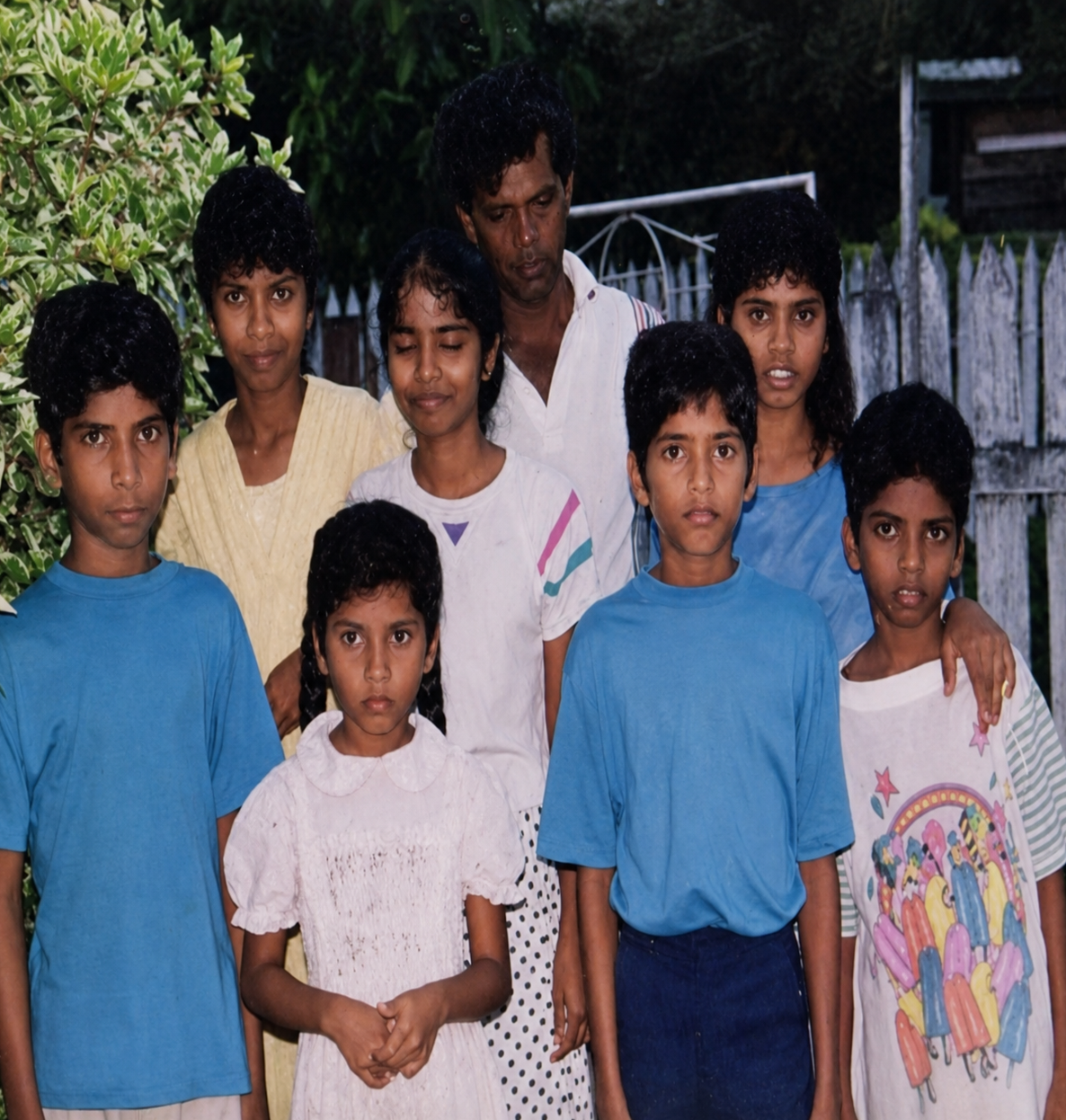
This biography is dedicated to the people who inspired Dr. Seeta Khan’s love of learning: Her extended family, Mom Radha, Dad Pooran Ramkissoon, siblings Vijai Ramkissoon, Geeta Ramkissoon, Kavita Ramkissoon, Vishal Ramkissoon, Vickram Ramkissoon, Ravika Persaud and Marcia Baka, and her immediate family members, William Dobbins her better half, Colin Eric Khan, Ateisha Khan, Shaquille Ramesh and her smart, cute little granddaughter Amaira Ramesh.
She extends a warm gratitude to those, who made her childhood full of laughter, competition, and shared dreams; to every student who has been in her class and reminded her why education is an act of hope; and to every teacher who once believed in her, this book is a tribute.
Dr. Khan wrote this story for the spirit of inquiry, for all the girls who had the courage to study science, and for all the teachers who help kids build their futures through curiosity and kindness. This journey should remind everyone that real learning doesn’t start with books; it starts with the courage to ask why.
“Curiosity is the wick in the candle of learning.”
Phase 1: Foundations of Curiosity and Character
“Why?” is the question that starts every life that shines brightly. That question became the most important thing for Dr. Seeta Khan on her journey. Before the awards, the labs, and the PhD, there was a child on the coast of Demerara looking out at the horizon and wondering how the tides knew when to come back.
She was the second of eight children in a big, lively family. They lived in a warm home, but they didn’t have a lot of money. Her father was a very versatile man. He was a fisherman, a leader in the community, and the secretary of the Fisherman’s Co-operative Society. He worked long hours fixing nets and keeping track of the weather, but he always came home with the same message: education was the real net that would keep them safe in the future. Her mother was a strong woman who stayed at home and took care of her family. She was both nurturing and strict. She ran the house with outstanding care, making sure that each child not only got a plate of food but also a sense of duty and gratitude.
In their little house by the sea, mornings started early. The sound of the sea mixed with the chatter of kids getting ready for school. But the real learning didn’t start until after school. When her father asked, “What did you learn today?” he wanted a clear answer, not a vague one. Dr. Seeta’s mother made her do what she later called “school after school”, which was a nightly routine of going over lessons, solving math problems, and talking about ideas out loud. The family stayed up until a child understood. This pattern of repetition wasn’t punishment; it was a way to teach people how to keep going. It made Dr. Seeta feel that understanding is not given but earned.
Dr. Seeta was very smart from the time she was a little girl in school. She didn’t go to kindergarten at all; instead, she went straight to Grade 1. In just a few years, she moved through the system at a wonderful speed. Teachers noticed that she could think quickly, speak clearly, and connect ideas. At nine years old, she took the National Grade 6 Examination, typically reserved for twelve-year-olds.
Despite being a rare accomplishment, her family didn’t react with surprise; instead, they were both proud and expected it. Her parents had always thought she could do more.
Years later, when someone asked her how she got such early success, she smiled and said, “My parents taught me that excellence is a habit, not an event.” Excellence was the rhythm of her childhood, with early mornings, late-night reviews, and a constant desire to learn.
Living by the sea was both simple and scientific. She learnt about physics by watching her father at sea long before she could name it: how balance keeps a boat steady, how currents change, and how timing affects the catch. These quiet observations were her first experiments. She was just as creative at home. She saw how muddy feet made the stairs dirty after it rained, so she made a small water-storage tank out of old containers and put it by the steps so her family could rinse off before going inside. It was a simple machine, but it was very clever in its purpose: it was useful, worked well, and was based on what it saw. That little thing was her first taste of applied science, and it was a sign of the teacher and inventor she would become.
“Education’s purpose is to replace an empty mind with an open one.”
Phase 2 : The Making of a Scholar
The girl who used to sit by the Demerara coast and watch the tides’ calm logic grew up to be a young woman who wanted to understand the deeper laws that govern nature and human thought. Seeta Khan’s journey from being curious to being a scholar was not by chance; it was the natural result of a mind that was fed by discipline, questioning, and a strong sense of purpose.
By the time she finished high school, she had already made a name for herself as a student who loved science and learning. Her teachers saw in her not only intelligence but also purpose. They could tell that she didn’t see school as a way to advance ahead but as a place to learn about new things. This way of thinking made her want to pursue her first degree in environmental science at the University of Guyana.
This choice was in line with both her love of learning and her connection to the natural world.
The Awakening of a Thinker During College
When Dr.Seeta stepped onto the campus of the University of Guyana, it was a big change in her life. She started to understand the full range of what science could mean here. It was more than just books and experiments; it was a way of thinking that connected all parts of life. It wasn’t easy for her to get through college. There weren’t many resources, the facilities weren’t great, and she had to balance her studies with her family duties. But these very limits made her strong and independent.
Seeta used to do experiments at home on the fly, but now she had to do lab work that required accuracy and patience. She was very good at environmental chemistry and ecology because she was interested in how life could exist in such a fragile balance. For her, studying ecosystems became both a scientific and a spiritual experience, teaching her about balance, diversity, and living together. She started to see the Earth as a living thing, a complex system where even the smallest change could have an effect on the whole thing. This idea later shaped her views on education, where she saw classrooms as living systems that needed to support every student to keep growing as a group.
She met professors who helped her learn more while she was in school. They told her to think of science not as an accumulation of facts but as a process of asking questions that needed both intelligence and humility. This changed Seeta’s life. At the University of Guyana, she learnt how to think critically, question what she thought she knew, and look for proof without being afraid.
She became more dedicated to research when she worked on projects that looked into protecting the environment and making communities more sustainable. She did fieldwork that took her to villages, wetlands, and coastal areas. These experiences helped her connect her scientific theories to real life. She saw how education, or the lack of it, changed how people interacted with their surroundings. She realised that knowledge was the most sustainable resource of all, able to change not only landscapes but also lives.
“A leader is one who knows the way, goes the way, and shows the way.”
Phase 3 : Leadership in Learning
Eventually, every teacher has to deal with the fact that teaching alone isn’t enough. Dr. Seeta Khan became a leader when her curiosity, discipline, and compassion all came together. She learnt everything there was to know about her subject, understood her students, and earned the respect of her coworkers, who saw her as both knowledgeable and helpful. What started as a desire to teach quickly turned into a mission to change classrooms, teachers, and even the way people learn.
Dr. Seeta went back to the Ministry of Education in Georgetown, Demerara, with a new sense of purpose after finishing her postgraduate studies. She was already well-known and trusted by students and staff because she had been a science teacher before, but this time she was ready for a bigger challenge. When she was offered the job of Head of the Science Department, she saw it not as a promotion but as a chance to change how science was taught in her area.
Her appointment put her in the middle of policy and practice. Now, she was responsible for more than just her own students; she was also responsible for a whole generation of students in several schools. She was responsible for putting the curriculum into action, evaluating teachers, and setting up labs. Dr. Seeta had been working on being precise, diplomatic, and visionary all her life, so this job fit her perfectly.
Her coworkers quickly saw that her style was to have high expectations but also be warm. She would come to meetings with piles of lesson plans and reports, but she would also have a quiet smile that made everyone feel important. She often told her team, “We’re not just teaching a subject; we’re teaching a way of thinking.” That phrase became the unofficial motto of her department.
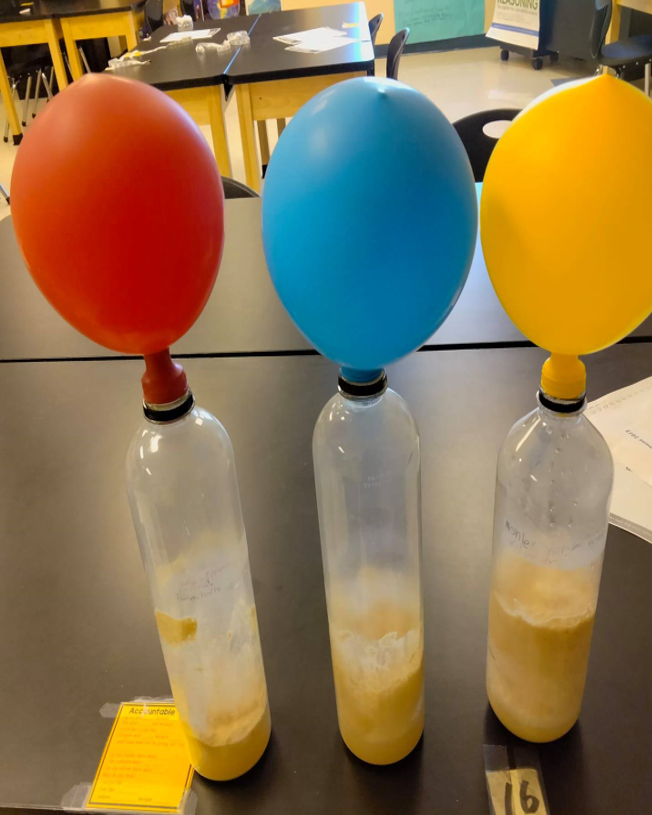
Dr. Khan made the department a great place to work together. She didn’t like the strict hierarchies that made it hard for people to be creative, so she made a learning community for teachers instead. Weekly meetings changed from boring check-ins to lively workshops where teachers shared experiments, looked at student feedback, and thought about how they teach. She discussed peer observation, not as spying, but as a way for everyone to grow together. Teachers went to each other’s classes and gave each other beneficial feedback and borrowed ideas that worked.
Her insistence on constant reflection was like the scientific method: looking, testing, and changing. She considered the classroom a real-life lab. She told teachers to try out new methods, see what works, and improve their plans. She said that mistakes were just “data points on the graph of improvement.”
Note of Thanks
Dr. Seeta Khan has always had gratitude as the quiet rhythm of her life. It is a melody that plays under every success, challenge, and lesson learnt. As she thinks about her journey, she realises that no story is ever written alone.
She wants to thank all of the students who gave her purpose and happiness from the bottom of her heart. Their questions, interest, and bravery were what really showed how well she was doing. They taught her that learning is a two-way street and that every pair of eager eyes has a teacher inside them waiting to come out.
She is very grateful to her coworkers and mentors in both Guyana and the United States. She believed even more in the power of collective growth because of their trust, teamwork, and shared goal of excellence. Every partnership, conversation, and idea exchange led to new ideas and better understanding.
She is especially grateful to the schools and ministries that let her try new things, lead, and turn ideas into actions. Their faith in her abilities gave her the freedom to learn in ways that weren’t normal.
She is most grateful to her family, whose love, patience, and support helped her dreams come true. Their silent sacrifices and unwavering faith helped her stay strong through every stage of life.
Most of all, Dr. Khan thanks God for the light that guided her. To her, every chance, every breakthrough, and every student who came into her life was a blessing. They reminded her that teaching is not just a job but a calling that is holy because it has a purpose.
She said :
“We don’t rise on our own; we rise with the help of many hands along the way.”
thanks,
– Dr. Seeta Khan