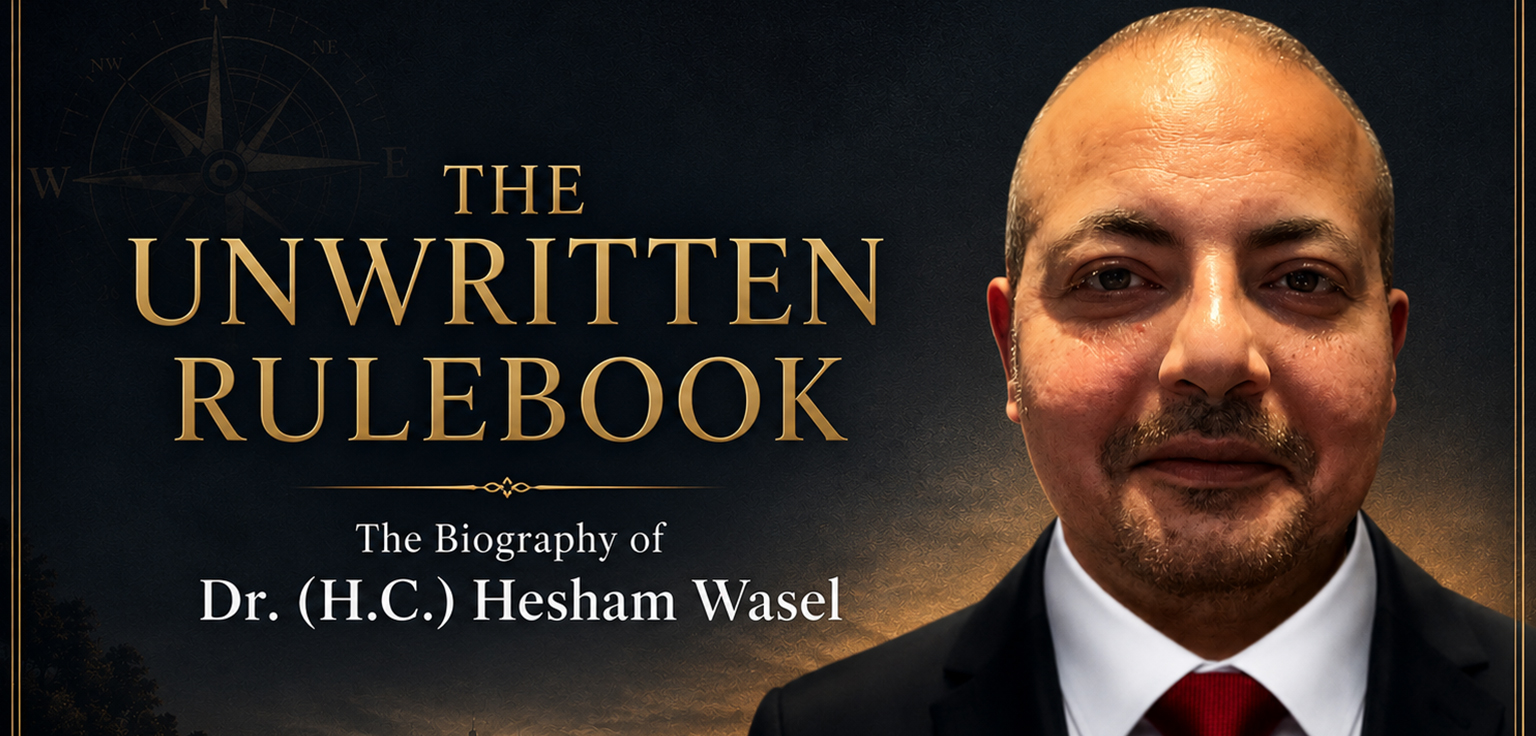
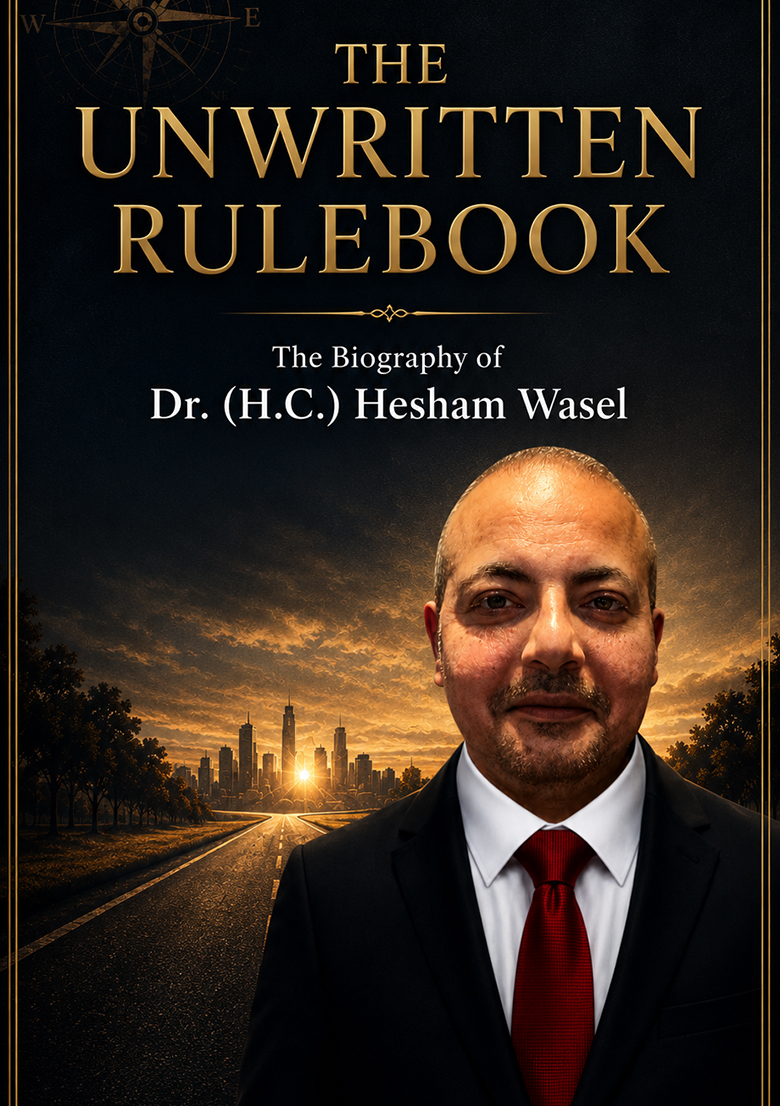
“I was an only child, so I learned early that no one would carry me. I carried myself. Then I learned to carry others. That is the whole story."
Introduction
Some lives follow a straight line. Others resemble a river, changing course, splitting into new streams, yet somehow finding their way to the sea despite every obstacle. The life of Dr. Hesham Wasel belongs firmly to the latter.
He was born on March 6, 1981, in Cairo, an only child to a father who directed a textile factory and a mother who balanced teaching with running her small business ventures. In that early environment, where structure met creativity and discipline met enterprise, the seeds were planted for a life that would take decades to fully unfold.
Cairo gave him his first lessons. He completed his primary and secondary education there before enrolling at Ain Shams University to study Ancient European Civilization, a choice that reflects his natural curiosity about worlds beyond his own. Before completing that path, however, an opportunity arose that would change everything: he passed a scholarship examination for the University of Athens in Greece.
Rather than choose between the two, he did something that would become a defining pattern in his life. He pursued both. Managing two academic systems, two languages, and two cultures simultaneously, he embraced the challenge. From Cairo, he learned the rhythm of open-book discussions and dialogue-led teaching. From Athens, he learned to build knowledge from the ground up, to research rigorously, and to respect the demands
of European scholarship. He earned a Bachelor’s degree in Foreign Languages and Translation Tools from the University of Athens in August 2001, followed by a Bachelor’s degree in Ancient European Civilization from Ain Shams University in June 2006.
Greece offered him more than a degree. It gave him a second home and a second language. But France was calling. He moved first to Paris, then to Metz in eastern France, where he enrolled at the University of Metz in a master’s program in foreign languages and translation. From September 2008 onwards, he obtained an M1-level validation of higher education, an academic milestone that granted access to further study, though it was not a full degree.
"I didn't grow up with siblings, but I never felt alone. I had my parents, their work, their struggles, and their example. Watching them, I understood early that if you want something, you don't wait for it, you build it."
Phase 1: The Only Child of Cairo
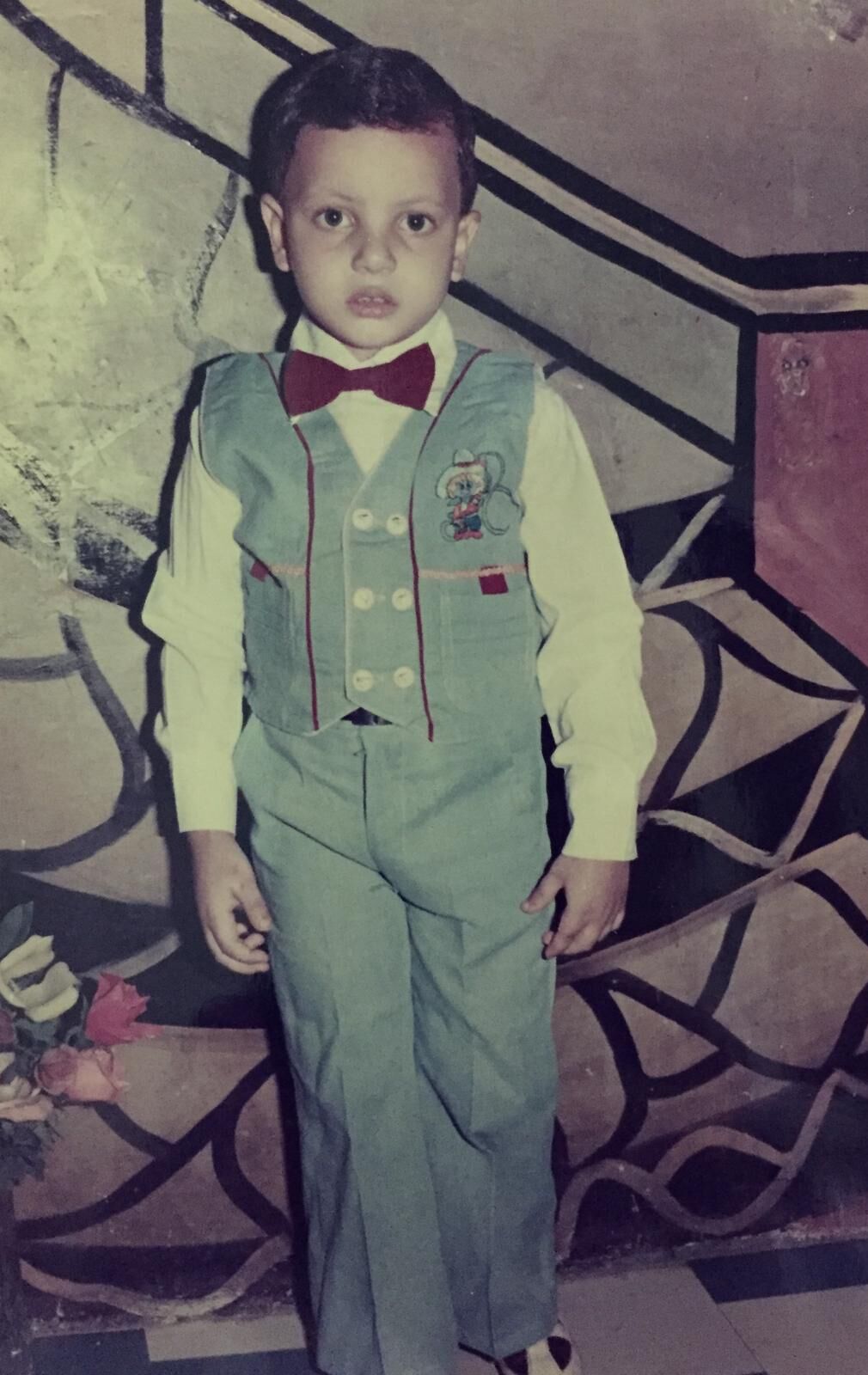
Cairo in the early 1980s was a city of contrasts, where ancient history brushed against modern ambition, where the call to prayer echoed over streets filled with the honk of taxis and the chatter of vendors. It was into this world, on March 6, 1981, that Hesham Wasel was born. He arrived as an only child, a singular presence in a household that would pour all its hopes, lessons, and expectations into him. There would be no siblings to share the weight or divide the attention. Everything his parents gave, they gave to him alone.
His father was a man of industry, a director of a textile factory. The work was not glamorous, but it was substantial. Textiles meant looms and threads, deadlines and deliveries, workers who needed direction and machines that needed maintenance. To run such a place required discipline, order, and the ability to make decisions that affected dozens of families. The father brought Childhood memories in Cairo those qualities home, though not in a harsh or demanding way. He simply lived them. He showed up. He took responsibility. He understood that a factory, like a family, functioned best when everyone knew their role and played it with seriousness.
His mother was a different kind of force. She worked as a school teacher, standing in front of classrooms, shaping young minds and enforcing rules while also inspiring curiosity. But she did not stop there. She was also an entrepreneur, a small businesswoman with her own projects and activities. She moved between the structured world of education and the uncertain world of commerce with an ease that her son would later recognize as remarkable. She was active and restless in the best sense, always searching for the next opportunity to build something. From her, Hesham learned that a person could wear many hats, that security and risk could coexist, and that a woman in Cairo could be both a teacher and a business owner without apologizing for either role.
Growing up as an only child shaped him in ways he would only fully understand years later. Without brothers or sisters, he had no built-in playmates, no rivals for his parents’ attention, and no one to blame when something went wrong. He had to entertain himself, solve his problems, and sit with his own thoughts. That solitude was not loneliness. It was an early education in self-reliance. He learned to observe adults closely because they were his primary companions. He learned to listen because there was no sibling to talk over him. And he learned that his parents’ achievements and struggles were not abstract concepts but daily realities played out at the dinner table.
His father came home from the textile factory with stories of production targets and personnel issues. His mother graded papers at the kitchen table and also made calls about her business ventures. The household was not wealthy, but it was industrious. Work was not a curse to escape but a fact of life to embrace. Hesham absorbed that lesson before he could even name it. He saw that his parents did not wait for opportunities to find them. They created their own paths: his father through steady management. his mother through entrepreneurial risk.
"I never liked choosing between opportunities. When Athens came, I didn't see it as leaving Cairo behind. I saw it as adding another layer to who I was becoming. It was difficult, managing two systems, two languages, two lives, but I knew that if I could handle that, I could handle anything."
Phase 2 : Foundations in Ancient Civilizations and a Scholarship Abroad
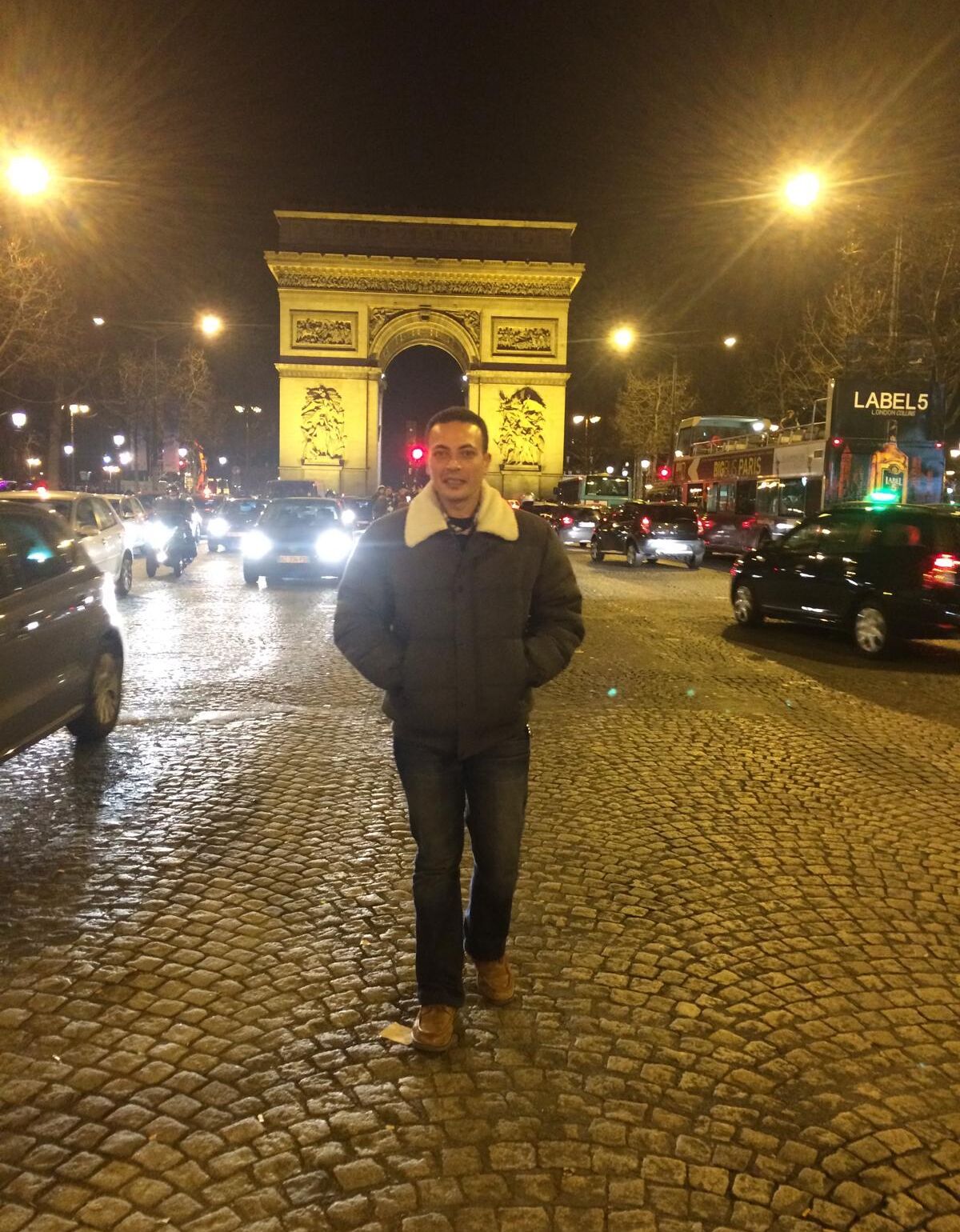
The transition from childhood to young adulthood in Cairo brought with it the usual weight of examinations, career discussions, and the quiet pressure of expectations. For Dr. Hesham Wasel, however, those years were not simply about passing tests. They were about building a foundation that would eventually span continents. He completed his primary and secondary education in Cairo, moving through the Egyptian system with the steady support of his parents, his father the textile factory director and his mother the teacher turned entrepreneur. But the real story of this phase began when he stepped onto the campus of Ain Shams University.
Ain Shams was not just a local institution. It was one of Cairo’s oldest and most respected universities, a place where ancient Egyptian heritage met modern scholarship. Dr. Hesham Wasel enrolled in a program that might have seemed unusual to some of his peers: a Bachelor’s degree in Ancient European Civilization. He was not studying Egyptian history, the obvious choice for a young man from Cairo. He was reaching across the Mediterranean to understand the civilizations of Europe, their philosophies, their wars, their art, and their enduring influence on the modern world. That choice revealed something essential about his character. He was curious about what lay beyond his immediate surroundings. He wanted to understand not just where he came from but where others had come from too.
The program at Ain Shams had its own rhythm and methodology. Students engaged with shaikh doctors, listened to lectures, and participated in open book conversations. Knowledge was presented, discussed, and absorbed. It was a system that valued dialogue and interpretation, where the relationship between teacher and student was personal and direct. Dr. Hesham Wasel thrived in that environment. He appreciated the accessibility of his professors and the emphasis on understanding rather than mere memorization. But even as he progressed through his degree, something else was stirring in the background.
A scholarship examination appeared on his horizon. It was offered by the University of Athens in Greece, a country he had read about in his ancient civilization courses but had never visited. The prospect was both thrilling and intimidating. Greece meant a new language, a new culture, and a new academic system. It meant leaving Cairo, leaving his parents, and leaving everything familiar. But he had been raised by a mother who took risks and a father who managed complexity. He had been an only child who learned to stand alone. He took the examination, and he passed.
The scholarship changed everything. It did not require him to abandon his studies at Ain Shams. Instead, it presented an opportunity that would have seemed impossible to many: he could pursue both degrees simultaneously. He would continue his Bachelor’s in Ancient European Civilization at Ain Shams while also earning a Bachelor’s in Foreign Languages and Translation Tools at the University of Athens. Two universities. Two countries. Two academic systems. Two languages. And a young man who had never lived outside Egypt before.
"Growth doesn't come from comfort. In Athens, I had no choice but to push myself, to search, to understand things on my own. That experience taught me that if you stay committed, you can adapt to anything."
Phase 3 : A New Language, A New System - Learning in Greece
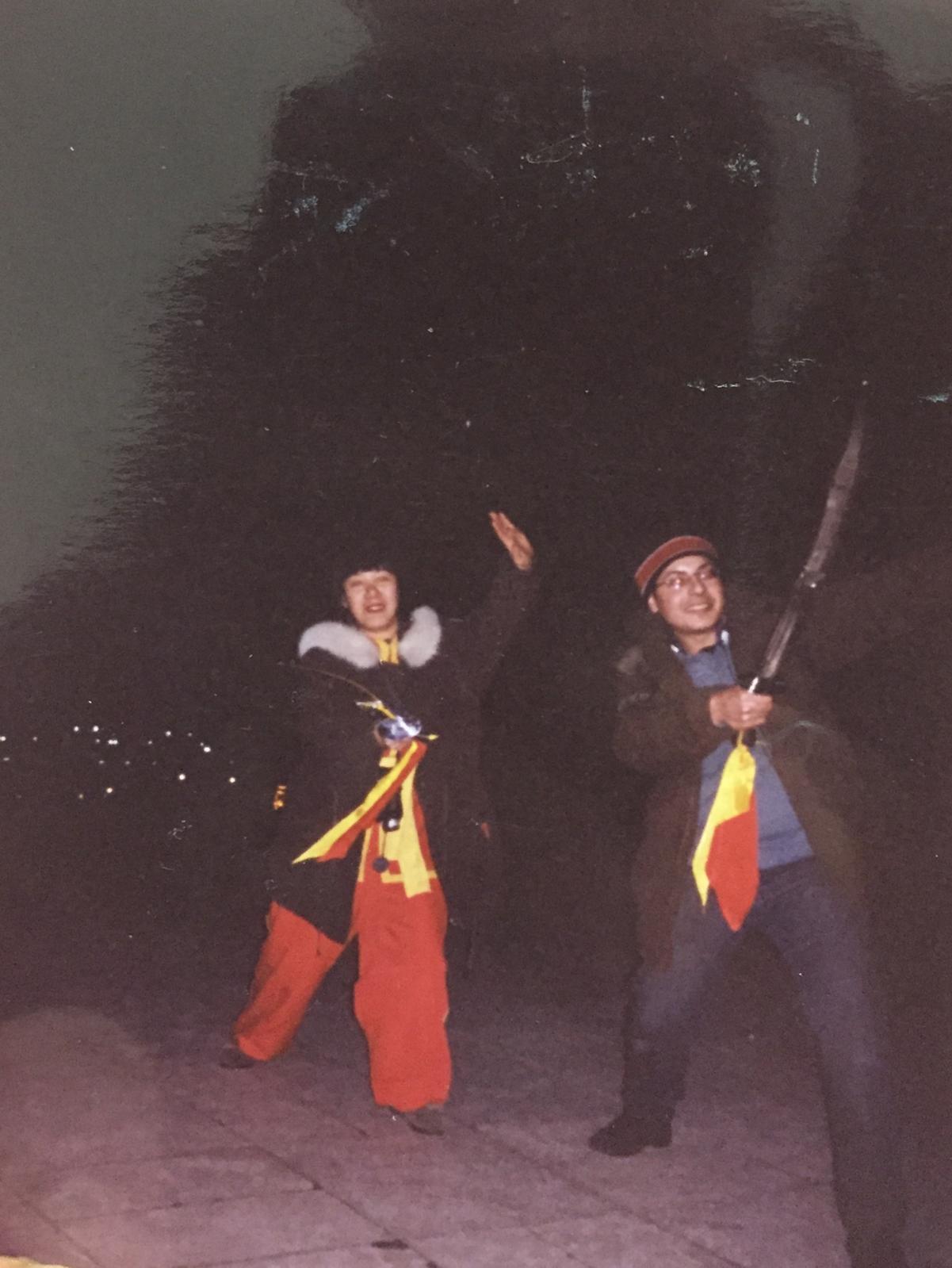
The first time Dr. Hesham Wasel attended a class at the University of Athens, the difference was immediate. The environment felt more distant, more demanding, and far less guided than what he had known in Cairo. At Ain Shams University, learning had been shaped by discussion and interaction. In Athens, independence defined it.
Professors did not deliver conclusions. They directed students toward sources and expected them to build their own understanding. For Dr. Hesham Wasel, this meant developing an entirely new way of working. He learned to locate original texts, verify information, and construct arguments with precision. The process required patience and discipline, replacing familiarity with rigor.
Language added another layer of complexity. Academic Greek in lectures differed sharply from the conversational language spoken outside the classroom. Managing both, while continuing his studies in Cairo, demanded constant adjustment. It was an intense period, but one that strengthened his ability to adapt under pressure.
What defined this phase was not difficulty alone, but transformation. The academic structure in Athens required him to take full ownership of his learning. Research became central, not supplementary. Every idea had to be supported, every conclusion earned. Over time, this approach reshaped how he engaged with knowledge.
The professors, though demanding, provided direction without dependency. Their expectations encouraged precision and self-reliance. Through this, Dr. Hesham Wasel came to appreciate the value of disciplined inquiry alongside the interpretive strengths he had developed in Cairo. Experiencing both systems gave him a broader intellectual foundation than either could have offered alone.
Beyond academics, Greece became a place of personal expansion. Daily life introduced him to new customs, perspectives, and ways of thinking. The culture he had studied began to take on lived meaning, connecting theory with experience in a way that deepened his understanding.
By the time he completed his degree, Dr. Hesham Wasel had developed a lasting approach to learning. He had gained the ability to question, verify, and build knowledge independently. More importantly, he had learned to function effectively in unfamiliar environments, a skill that would shape every stage of his future.
Note of Thanks
The journey of Dr. Hesham Wasel, from the bustling streets of Cairo to leadership roles across France and Greece, is a story shaped not only by his own determination but by the unwavering support of countless individuals who guided, challenged, and inspired him along the way. First and foremost, he expresses profound gratitude to his parents. His father, a textile factory director, and his mother, a schoolteacher and entrepreneur, instilled in him the values of discipline, creativity, and resilience. Their lessons in responsibility, adaptability, and independence laid the foundation upon which he built his life.
He owes special recognition to Frédéric Robert, whose mentorship during his early years at Carrefour Market demonstrated the power of encouragement and trust in developing leadership. Likewise, Madame Abel at Bouchara provided opportunities that allowed him to transition successfully from construction to retail, while Professor Engevin’s guidance and recommendation opened the doors of professional advancement that shaped much of his career. Each of these individuals contributed uniquely, providing both direction and confidence when challenges seemed insurmountable.
Dr. Hesham also acknowledges the countless colleagues and team members who worked alongside him. From the construction sites of the Île-de-France to the retail floors during the turbulence of COVID-19, every person he managed and collaborated with taught him lessons in patience, teamwork, and resilience. The customers who entrusted him with their experiences further shaped his understanding of service, empathy, and human connection.
Finally, he is grateful to the broader community of educators, mentors, and peers across multiple countries who inspired curiosity, guided learning, and nurtured growth. Their collective influence underscores a simple truth he has carried through life: no one achieves success alone. This biography stands as much in tribute to them as it does to Dr. Hesham Wasel himself, a testament to the power of guidance, support, and shared effort in shaping a remarkable life.
thanks,
– Dr. Hesham Wasel