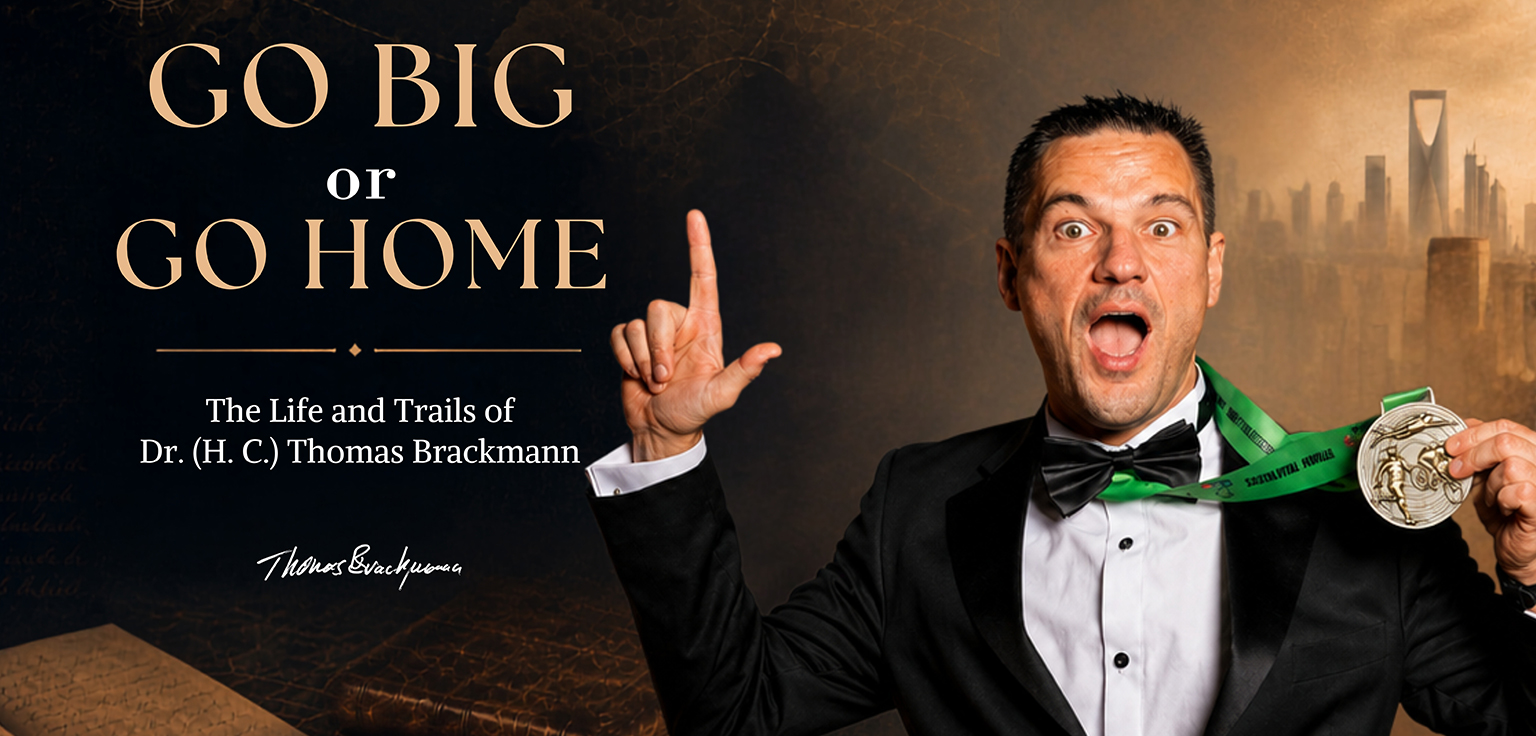
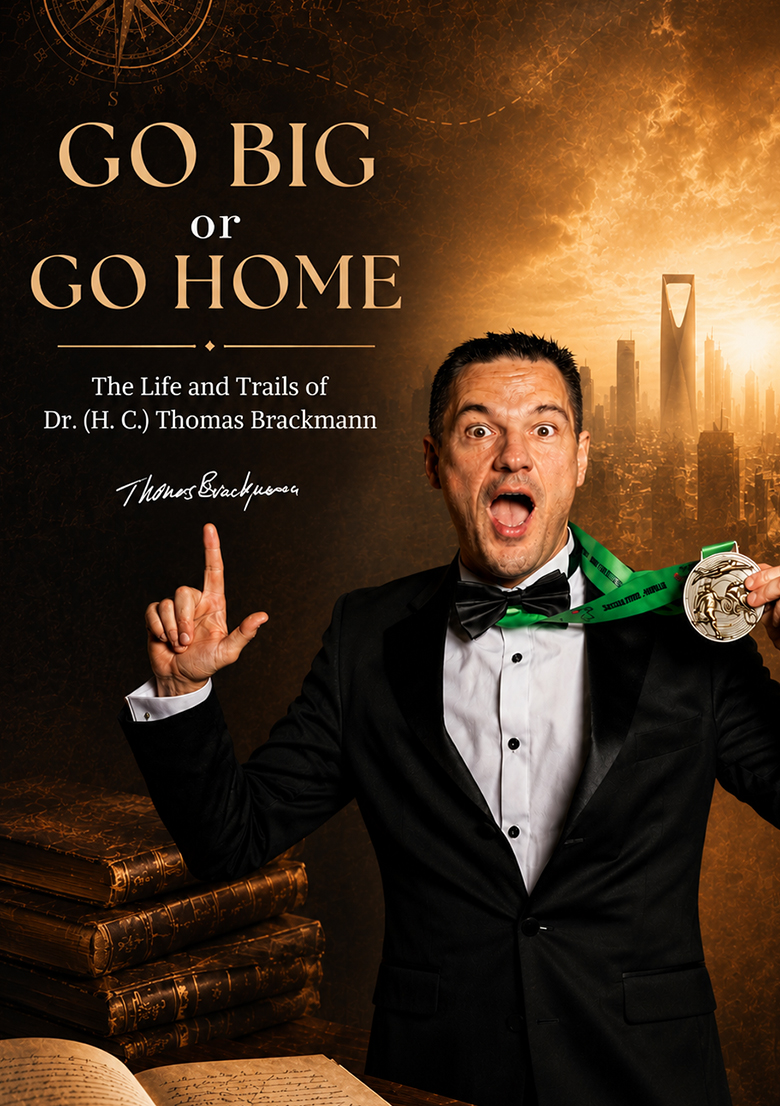
“Do not go where the path may lead, go instead where there is no path and leave a trail.”
Introduction
The life of Dr. Thomas Brackmann is a reflection of discipline, movement, courage, and purposeful ambition. His journey brings together professional growth, authorship, travel, project management, endurance, and service.
Born in Potsdam, East Germany, he grew up during a period of major historical change. His early years introduced him to discipline through education and sport, especially judo, which later became an important part of his confidence, strength, and personal development.
From an early age, his interests revealed the direction of his mind and personality. History and sports became important to him, and both stayed with him over the years. History and politics shaped his understanding of the world, while sport gave him a practical relationship with discipline, endurance, and personal progress. His creative side also began to emerge through reading, writing short stories, and editorial work. These early experiences formed the foundation of a person who would later bring together planning, communication, storytelling, and performance in different areas of life.
After completing grammar school at the age of twenty, he joined the German Army, influenced by his interest in German history and military history. He signed up for a twelve-year officer career and began by training as a tank commander. After three years, he became an officer and led a tank platoon consisting of around fifteen soldiers and three battle tanks. The army taught him the importance of punctuality, organisation, planning, responsibility, and respect for time. Later, he shifted from tank troops to psychological operations, where communication, marketing, public relations, and creativity became more central to his work. This combination of military discipline and creative communication became one of the defining strengths of his professional life.
His educational and professional development continued through formal learning in fields connected with state and social sciences, media, PR, communication, business administration, marketing, and project management. He completed the diploma examination in Staats und Sozialwissenschaften at the Universität der Bundeswehr München in 2004. He later completed a distance learning programme as Geprüfter Medienbetriebswirt through ILS Hamburg and also pursued PR Management modules at UMC Potsdam. These experiences strengthened the professional side of his identity and helped shape his path in communication, media, organisational work, and project management.
Alongside professional growth, Dr. Brackmann built a life of exceptional personal goals. He has published four books, with his favourite being I’m Here to Finish, a work that combines sport, travel, triathlon, personal experience, and encouragement for its readers. His writing reflects his ability to turn lived challenges into meaningful stories. It also shows his desire to share lessons from life, rather than simply keep achievements to himself. His books are connected to the same spirit that runs through much of his journey: the belief that experience becomes more valuable when it can inspire others.
“Discipline is the bridge between goals and accomplishment.”
Phase 1: A Childhood Shaped by Discipline, Curiosity, and Early Ambition
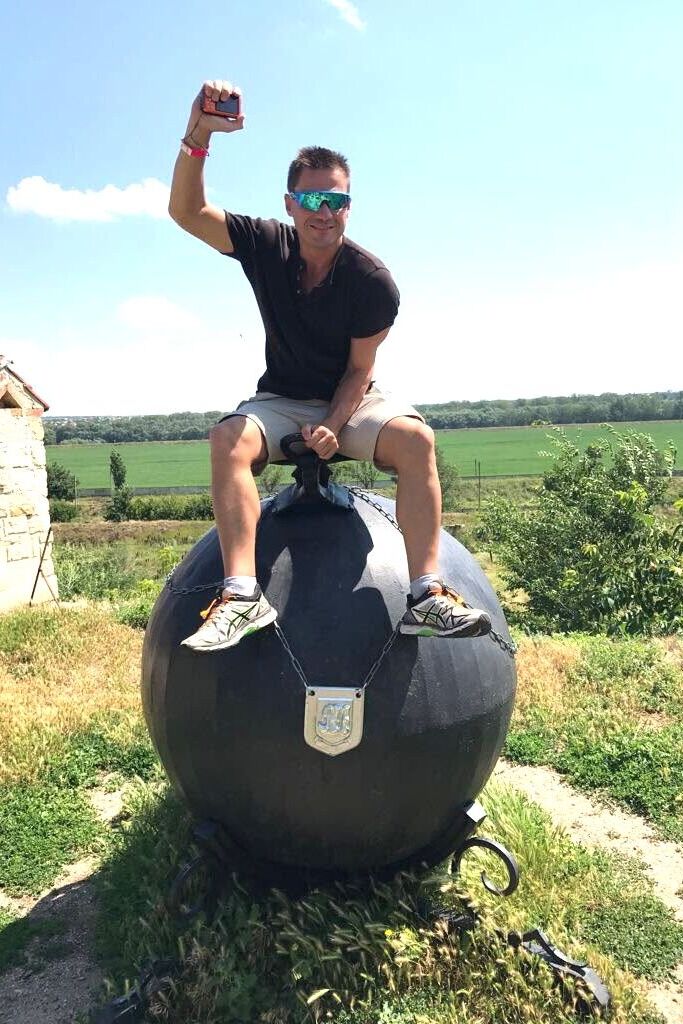
Dr. Thomas Brackmann was born on 2 July 1977 in Potsdam, in what was then East Germany, before the fall of the Berlin Wall and before the unification of Germany in 1990. His early years belonged to a time and place shaped by structure, discipline, and a distinct social environment. He grew up within the setting of the German Democratic Republic, a world that carried its own rhythms, expectations, and formative influence. Though he does not describe his childhood as unusually dramatic or marked by extreme experiences, the simplicity of those years carried within it the quiet foundations of the person he would later become.
Looking back at his childhood, he remembers it as generally normal, yet within that ordinary beginning were two important influences that stood out clearly. One came through education, where he showed ambition and strong academic performance during his first ten years at school. The other came through sport, particularly judo, which entered his life when he was around seven or eight years old. These two influences, learning and discipline through movement, did not remain temporary childhood activities. They became early expressions of qualities that would continue to define him throughout his life.
His introduction to judo came through his mother, Dagmar, who brought him into a judo class because she felt he was small and needed to learn how to protect himself. What began as a practical decision from a caring parent slowly grew into something much more meaningful. Judo did not only teach him self-protection. It introduced him to focus, endurance, competition, and the value of steady progress. For a young boy, stepping onto the mat meant entering a space where effort was visible, improvement had to be earned, and discipline mattered as much as talent.
He soon discovered that he was not merely participating in judo. He was advancing in it. His ambition helped him move quickly through the ranks, and within five or six years, he reached brown belt. This achievement was not accidental. It reflected consistency, competitiveness, and the willingness to train with purpose. Later, he would go on to become a coach and also earn a black belt, but the roots of that journey were planted in these early years. He did not learn the discipline from outside forces alone in childhood. It became something he internalised.
As a child and teenager, he also experienced success in judo competitions. He reached the level of federal state championship, which shows the seriousness with which he approached the sport even at a young age. For him, judo was not only a physical activity. It became a field where ambition could be tested and developed. It showed him that progress was possible when effort was consistent and that confidence could grow through preparation. In many ways, the sport gave him an early model for life. One had to train, one had to face difficulty, and one had to keep moving forward.
At school, he was equally driven. During his first ten years of education, he counted himself among the top classmates. This reflects more than academic ability. It reveals an early desire to perform well, to take his responsibilities seriously, and to hold himself to a high standard. His ambition was visible not only in sport but also in the classroom. He was not a child who moved passively through school. He paid attention, worked hard, and showed signs of the mental discipline that would later support him in demanding professional and personal pursuits.
“The purpose of a storyteller is not to tell you how to think, but to give you questions to think upon.”
Phase 2 : History, Sport, and the First Signs of a Storyteller

During his school years, Dr. Thomas Brackmann began to understand that certain interests were not temporary preferences but steady signs of the life he would eventually build. Two subjects stood out to him with particular strength: history and sports. They were not merely areas in which he performed or participated. They represented two different sides of his personality. History gave him a connection to the past, to nations, decisions, conflict, leadership, and the movement of societies. Sports gave him a physical channel for energy, discipline, competition, and self-improvement. Together, they created a balance between thought and action, between reflection and performance, between the mind that wanted to understand and the body that wanted to test its limits.
As he looks back, he recognises that these two interests have remained with him far beyond the classroom. History and politics remained part of his life, and sports were one of his strongest identities. Even before he entered adulthood, these preferences were already quietly influencing the choices that would follow. They helped him imagine a future where physical strength, mental discipline, and an understanding of larger social and historical forces could exist together. In that sense, his school years were not only about education. They were about direction.
When he completed grammar school at the age of twenty, the connection between his interests and his future path became clearer. His fascination with German history and military history contributed to his decision to join the army. It was not an accidental decision or one made without inner connection. For him, the army offered a space where his interest in politics and sport could come together. It promised a life that required both intellectual seriousness and physical readiness. The role of an officer demanded leadership in the field, and that appealed to the part of him that valued challenge, responsibility, and discipline.
This decision showed that his school interests had already matured into life choices. Many young people enjoy certain subjects and then move away from them, but in his case, the subjects that attracted him began to shape his actions. History did not remain confined to lessons, dates, and books. It opened a path toward service, structure, and leadership. Sport did not remain limited to training and competition. It became part of the physical and mental demands he willingly accepted. At this stage, he was already beginning to create a life from the things that had genuinely held his attention.
Yet there was another side of him developing during those years, one that was quieter but equally important. Alongside history and sport, he discovered a creative part of himself. He liked to write short stories, and this interest revealed a different form of ambition. It was not about physical performance or academic standing. It was about expression. Writing allowed him to shape thoughts, emotions, observations, and imagination into something that he could share. Through writing, he began to explore the power of language and the ability of stories to carry meaning.
“Leadership and learning are indispensable to each other.”
Phase 3 : The Army Years : Leadership, Planning, and Transformation
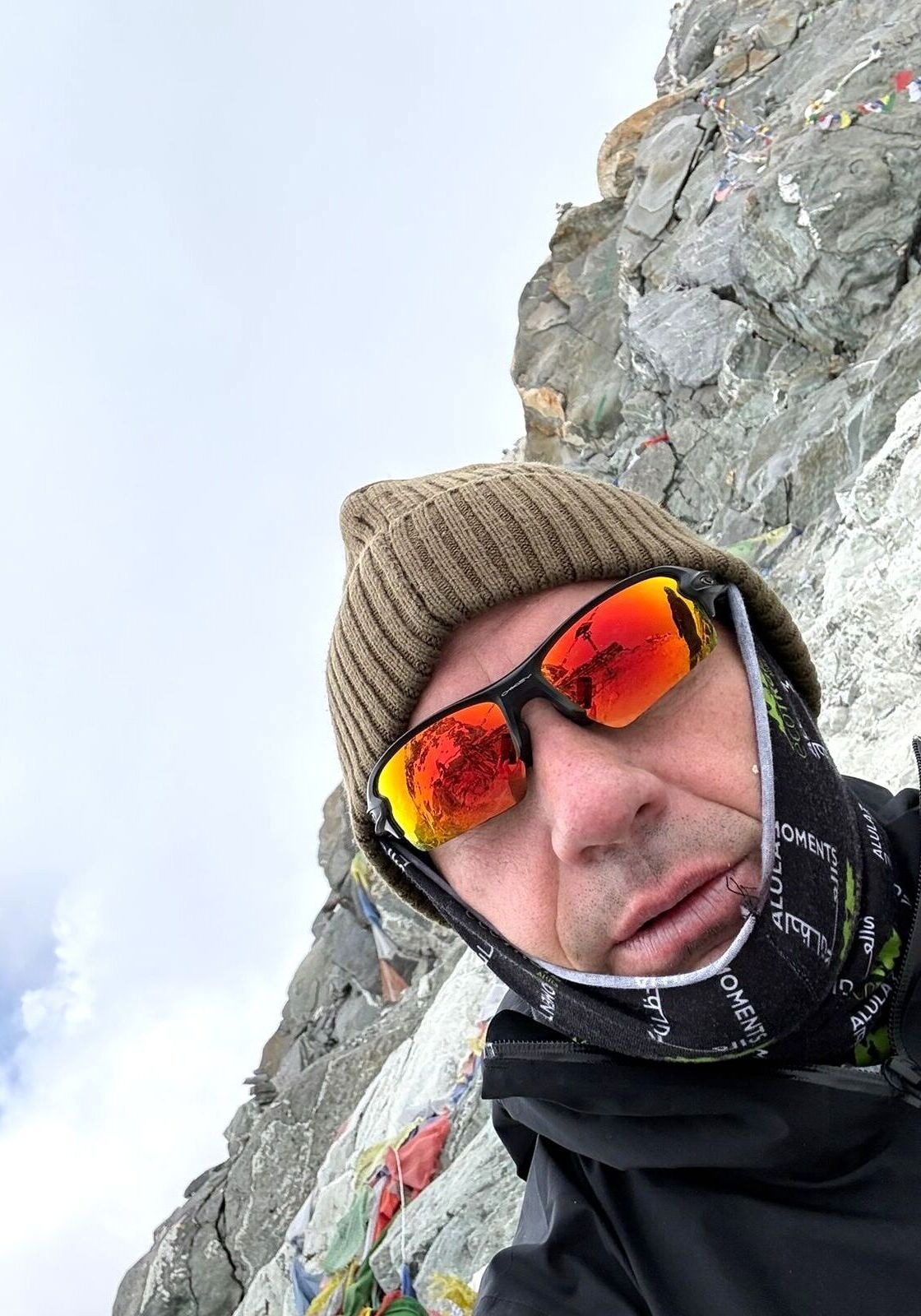
When Dr. Thomas Brackmann entered the German Army, he stepped into a world that would test his physical strength, sharpen his discipline, and shape his understanding of leadership. It was not a casual choice. It came from a place of interest, conviction, and personal alignment. Having long been drawn toward German history and military history, he found in the army a path where thought, action, structure, and responsibility could come together. An officer did not build his life around comfort. It required readiness, punctuality, clear thinking, and the ability to make decisions under pressure. For someone who valued challenge and self-discipline, this environment became a serious and defining stage of growth.
During his military service, he received training as a tank commander and later became an officer in the German Army. He was given command of a tank platoon, where he was responsible for around fifteen soldiers and three battle tanks. This role demanded maturity, precision, and a strong sense of responsibility, as every decision affected people, movement, and outcomes.
The early years as a tank commander shaped him deeply. They taught him the value of planning ahead, staying organised, respecting time, and leading through reliability rather than position alone. In the field, leadership was not just about giving instructions; it was about preparation, clarity, accountability, and the ability to remain focused under pressure. These lessons became part of his personality and continued to guide him long after his uniformed service ended.
Yet his military journey did not remain confined to combat planning and command. In the second half of his army career, an important shift took place. He moved from tank troops to psychological operations, a branch that brought forward another part of his personality. This transition allowed him to apply creativity, communication, marketing, and public relations within a military setting. It was a meaningful change because it connected the disciplined world of the army with his growing interest in storytelling, media, and influence. The shift did not erase what he had learned earlier. Instead, it expanded his capabilities.
In psychological operations, we connected the work more to communication and target audiences. It required understanding how messages are shaped, how people respond to information, and how communication can be planned with purpose. For Dr. Brackmann, this became a bridge between his structured military training and his creative abilities. He was no longer only working within the frame of physical command and planning. He was also engaging with ideas, messages, perception, and influence. This experience helped him understand that communication, when handled carefully, could become a powerful professional tool.
The combination of these two military phases became one of the most important influences in his life. The first phase gave him precision, discipline, and planning. The second gave him space for creativity, communication, and public relations. Together, they formed a rare balance. He learned to think both strategically and imaginatively. He understood how to prepare but also how to adapt. He valued order but also recognised the importance of expression. This balance would later support him in different professional environments, especially in roles that required project management, communication, and creative problem-solving.
Note of Thanks
Dr. Thomas Brackmann expresses sincere gratitude to his parents, Dagmar and Karl Heinz, whose love, guidance, and presence formed the beginning of his life journey. He especially acknowledges his mother, Dagmar, for introducing him to judo at a young age, a decision that helped shape his discipline, confidence, and strength. To both his parents, he offers deep respect and heartfelt thanks for the foundation from which every later experience and achievement unfolded.
thanks,
– Dr. Thomas Brackmann