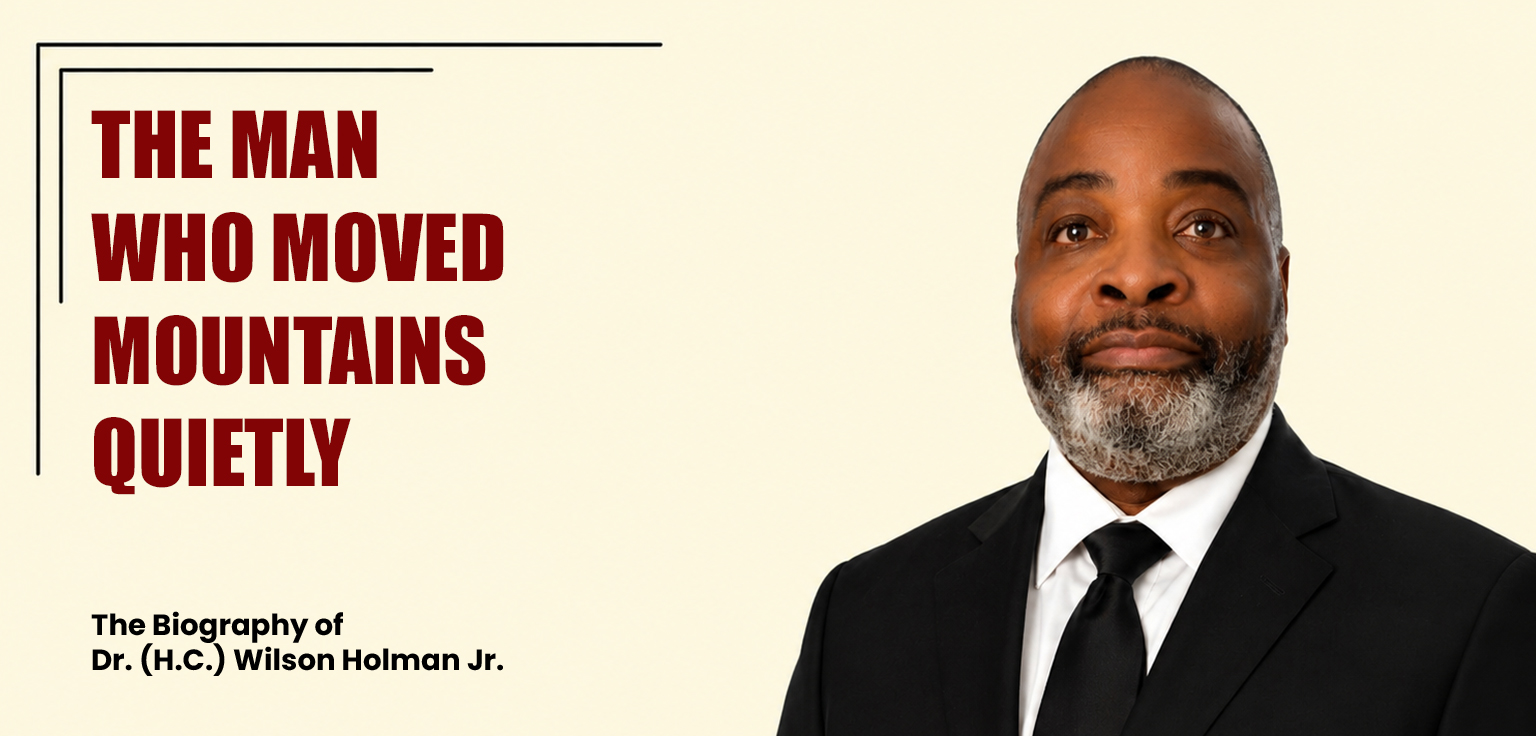
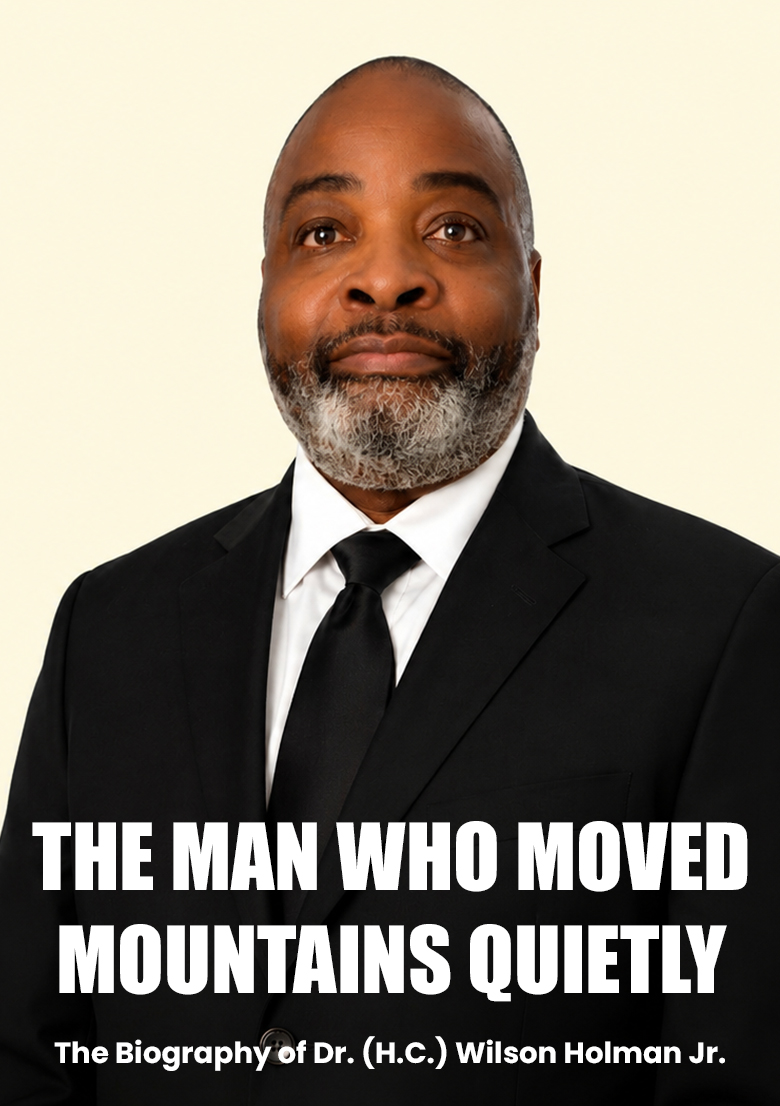
"I didn't set out to move mountains. I just kept showing up, doing the right thing, and helping the person right in front of me. And one day, I looked back and realized that's exactly how mountains get moved."
Introduction
Dr. Wilson Holman Jr. came into the world on August 2, 1959, and from the very beginning, he was surrounded by the kind of values that stick with you for life.
Growing up in a military household, childhood wasn’t exactly calm or predictable. There was travel, rules, and a rhythm that most kids never experience. But what he got from that life was something rare. His dad, Wilson Sr., taught him that your word matters, that showing up counts, and that doing the right thing when nobody’s watching is what separates you from the crowd. And his mom, Mrs. Margaret, was the steady hand who made sure all that discipline didn’t come without warmth. She let him try, fail, and try again, all while making sure he knew he was loved. Between the two of them, they gave him a compass that’s never failed him.
School was its own kind of training ground. Dr. Holman found himself drawn to literature, mostly because he loved how words could capture what people were really thinking. Around the same time, he joined a business club, and that lit a spark; he got curious about how deals worked, how teams pulled together, and why planning mattered. Those lessons stuck. And then there were sports. Track, football, baseball, and basketball. He didn’t just play to win; he played because there’s something about pushing your limits with a team that teaches you things a classroom can’t. Even a little farm work found its way into his childhood, and that gave him a quiet respect for hard, honest labor.
When Dr. Holman decided to join the military, it wasn’t a leap into the unknown. It was walking into a world that fit who he already was. He took on roles in logistics, supply management, and aviation support, starting as a Material Facilities Specialist Helper and working his way up to positions like NCOIC of Sortie Support. But here’s the thing: he never saw those jobs as just moving stuff around. For him, it was about people. He learned that precision matters, yes, but so does trust. He mentored quietly, led without ego, and made sure everyone on his team knew they mattered. That was his real gift: making efficiency and humanity go hand in hand.
Leaving the military and stepping into civilian life wasn’t easy. The structure was gone, and he had to figure out how to translate everything he’d learned into a new world. He took on roles in aviation logistics and ground transportation, managing supply chains and keeping operations running smoothly. But no matter the job, his focus stayed the same: moving people forward. He built training programs, shared what he knew freely, and never let pressure turn him into someone who cut corners. Deadlines came and went, but his ethics never budged.
"My father taught me what a man stands for. My mother taught me what a heart is for. I've been trying to live up to both of them ever since."
Phase 1: The Roots That Held
Dr. Wilson Holman Jr. was born on August 2, 1959, into a home where values weren’t just talked about over dinner. They showed up in how his parents lived every single day.
Life wasn’t ordinary, not by a long shot. Growing up in a military household meant rules and routines were part of the furniture. But here’s the thing. What could have felt like a straitjacket actually became a gift. It taught him resilience. It taught him how to read a room, adjust to new places, and handle change without falling apart. While other kids his age were coasting through predictable routines, Dr. Holman was learning how to pack up, settle in somewhere new, and find his footing, again and again.
His father, Wilson Holman Sr., wasn’t just a dad. He was like a moral anchor. The lessons he handed down were simple but heavy in the best way: keep your word. Show up. Do the right thing, especially when nobody’s watching. Those ideas got under Dr. Holman’s skin early, and they never left. His dad passed away young, which was a devastating loss. But somehow, that voice never went quiet. Every tough decision Dr. Holman made later in life, he could still hear his father’s voice guiding him. Not with big speeches, but with the quiet certainty of someone who’d shown him what a good man looks like.
And then there was his mom, Mrs. Margaret Annette Holman. She was the balance to all that military structure. She kept things warm when the world felt rigid. She let Dr. Holman mess up, learn from it, and try again, all without making him feel small. Her love wasn’t loud, but it was steady. She taught him that strength isn’t just about pushing through; it’s about knowing when to be kind, when to listen, and when to just be there. Because of her, he learned that you can be disciplined and compassionate at the same time.
Dr. Holman’s childhood was a mix of order and freedom. In school, he fell in love with literature. Not because he had to, but because he realized that words could hold everything: anger, joy, confusion, and hope. Reading became his way of understanding people, of stepping into someone else’s shoes. Around the same time, he joined a business club, and something clicked. He got curious about how teams work, how plans come together, and why strategy matters. Small stuff, maybe, but it planted seeds that would grow into something much bigger.
Sports were another classroom. Track, football, baseball, basketball: he played them all. But winning was never the point. What mattered was showing up for your teammates, pushing through when you were tired, and figuring out how to make something work when it wasn’t going your way. Those lessons about collaboration and persistence followed him straight into the military and beyond. And even farm work found its way into his early years. Pitching in with agricultural chores taught him something simple but true: good things come from hard work and patience.
"Books taught me how other people think. The business club showed me how teams work. Sports taught me not to quit. And farm work? That taught me that good things don't come fast. You just have to keep showing up."
Phase 2 : Paying Attention to What Mattered
As Dr. Wilson Holman Jr. moved through his school years, he started realizing that learning wasn’t just about memorizing facts for a test. It was bigger than that.
Literature grabbed him first. Not because he had to read for class, but because books let him climb inside someone else’s life. A character’s fear, joy, regret, hope. It all jumped off the page. Through reading, Dr. Holman got better at understanding people, at seeing where they were coming from even when he didn’t agree. That early habit of slipping into another person’s shoes stuck with him. Years later, when he was leading teams and managing people from all walks of life, that quiet skill became one of his greatest strengths.
Around the same time, he joined a business club at school. Nothing flashy. But something about it clicked for him. He got curious about how people work together to get things done. How do you divide up tasks? How do you plan ahead? How do you know if a decision was the right one? These weren’t just academic questions. They felt real. Dr. Holman started seeing that behind every smooth operation, whether in business or anywhere else, there was thoughtful planning and teamwork. That curiosity never left him. It would grow into a lifelong interest in logistics and organization.
Then there were sports. Track, football, baseball, basketball. He played them all. But winning wasn’t really the point. The point was showing up for your teammates when you were tired. The point was figuring out a new strategy when the old one wasn’t working. The point was not quitting just because things got hard. Sports taught Dr. Holman that resilience isn’t something you read about; it’s something you build, practice after practice, game after game.
He also learned from more practical, hands-on work. Helping out with farm chores taught him that you can’t rush good results. You put in the work, you wait, and if you’re steady and patient, something grows. That connection between effort and reward became a quiet truth he carried with him.
By the end of this phase, Dr. Holman wasn’t just a good student. He was curious, thoughtful, and aware of the people around him in a way that most kids his age weren’t. He had learned to watch carefully, to think things through, and to tackle problems with a mix of patience and energy.
"I started as a helper, just moving supplies. But I learned fast that every box, every schedule, every decision affected real people. The military taught me that leadership isn't about rank. It's about earning trust, staying fair, and never asking someone to do what you wouldn't do yourself."
Phase 3 : Learning to Lead While Following Orders
For Dr. Wilson Holman Jr., joining the military wasn’t just a job decision. It felt like the next natural step, given everything he had learned growing up. The discipline, the responsibility, the curiosity; it all pointed in this direction.
The military world he walked into was nothing if not structured. It demanded focus, attention to detail, and a real respect for the rules. But it also gave him a place to turn those early lessons into actual skills. Right from the start, Dr. Holman knew that success wasn’t just about following orders. It was about watching, listening, thinking ahead, and spotting problems before they turned into disasters.
His first assignments dropped him right into logistics and supply management, fields that would come to define much of his professional life. As a Material Facilities Specialist Helper, he learned quickly that every package, every inventory entry, every item shipped mattered, not just on paper, but to real people whose safety and efficiency depended on things going right. These early jobs taught him that leadership starts with mastering the details. Pay attention to the small things, and the rest follows.
Over time, he moved up through the ranks. He became a Material Facilities Specialist Apprentice, then a Journey, and eventually took on NCOIC roles like NCOIC of Pickup and Delivery, Assistant NCOIC of Stock Control, and finally NCOIC of Sortie Support and Supply Logistics. Each promotion brought more responsibility and more opportunities to influence the people around him. He quickly realized that leadership wasn’t about asserting authority; it was about earning trust. Mentoring, guiding, and training his teammates became central to his work. He approached this with fairness, clarity, and consistency, making sure everyone understood their role and why it mattered.
The military environment also exposed Dr. Holman to diverse cultures, perspectives, and environments. Different backgrounds, beliefs, and ways of seeing the world reinforced what his parents had taught him. Operations only run smoothly when people feel respected, and this principle became the core of his leadership style. Every action had weight, every order had ethical significance, and every decision affected real people. Long deployments, complex planning, and the constant coordination of personnel and resources taught him to balance discipline with empathy.
Note of Thanks
The journey of compiling the life and work of Dr. Wilson Holman Jr. would not have been possible without the guidance, insights, and support of many extraordinary individuals. This biography is a reflection not only of his accomplishments but also of the people who shaped, influenced, and stood beside him throughout his journey.
First, gratitude is owed to Mr. Wilson Holman Sr. and Mrs. Margaret Annette Holman, whose values, patience, and unwavering support created the foundation for a life marked by integrity, resilience, and purpose. Their lessons in discipline, compassion, and character echo throughout every chapter of this story.
Special recognition is also extended to Catharina Maria van Holman, whose steadfast support, encouragement, and partnership made it possible for Dr. Holman to pursue excellence in every aspect of his life. Her role as a confidante, motivator, and anchor ensured that he could meet challenges with courage and focus, knowing that his family remained a source of strength.
This biography also acknowledges the colleagues, mentees, and community members who witnessed, contributed to, and learned from Dr. Holman’s leadership. Their openness, feedback, and shared experiences provided the depth and authenticity necessary to portray his professional and humanitarian journey accurately. Every story, every memory, and every anecdote added nuance and life to this work.
Finally, thanks are due to the readers, whose curiosity and interest bring purpose to this compilation. Through their engagement, the principles, values, and lessons of Dr. Wilson Holman Jr. continue to inspire and guide others, extending the impact of his life far beyond the pages of this book.
To all those who shaped, supported, and celebrated him, this work is a tribute. Your influence, guidance, and trust are reflected on every page, and for that, sincere thanks are extended from the heart.
Thanks,
– Dr. (H.C.) Wilson Holman Jr.