“One must earn greatness, step by step and challenge by challenge. Steeve Dupré’s life reveals how grit and grace can build an enduring legacy.”
Introduction
Dr. Steeve Dupré begins his story in a city whose rhythm blends the hum of loading cranes with the whisper of waves against the quay. Port Louis, his birthplace, has long been the heartbeat of Mauritius—once a French and British colonial outpost, now a modern maritime and financial capital, handling virtually all of the nation’s external trade and contributing around 2% of its GDP.
This is the stage where a quiet boy, born on 24 July 1968—just months after Mauritius declared independence—would learn the power of faith, perseverance, and service. While his early years were unremarkable to most, they laid the foundations of a life that would transform challenges into opportunities and hard work into heartfelt leadership.
From his mother’s modest home, young Steeve absorbed lessons of humility, dignity, and self-reliance—values that stood firm through poverty, limited schooling, and the early loss of his father. Yet it was in these very moments—loops of uncertainty, love, and quiet resilience—that Steeve learnt lessons no exam could teach: endurance in love, strength without ego, and leadership born of empathy.
Mauritius itself was evolving, too. Port Louis, once a sleepy harbour, was reinventing itself with expanded quays, gantry cranes, advanced container systems, and visionary plans for an island container terminal capable of handling 1.5–2.5 million TEUs—all aimed at transforming the port into a regional hub. The port’s modernisation mirrored Steeve’s own transformation—from a store helper in textiles to a key player in global container logistics.
His apprenticeship was practical: fabric rolls in textile warehouses, blades in cutting rooms, pots in hotel kitchens, and pallets in shipping stores. Then came serendipity—the chief cook’s encouragement, the manager’s certificate, and the trainer’s confidence. Soon, Steeve was not just managing inventory—he was navigating operations, mastering international logistics, and earning certifications through Lloyd’s Maritime Academy (UK). Behind every promotion lay not one grand event, but a collection of small but intentional acts: staying late to train a colleague, learning English via correspondence, and volunteering for leadership even when the pay didn’t match the promise.
Years later, at Maersk, his path crossed with world-calibre training locales—from claims handling in Copenhagen to reefer operations in Cape Town. Here, Steeve wasn’t just learning industry protocols—he was absorbing a mindset: global standards, grounded humility, and leadership through service.
“True humility is not thinking less of yourself; it is thinking of yourself less.”
Phase 1: Port-Louis Beginnings: Faith and Family First
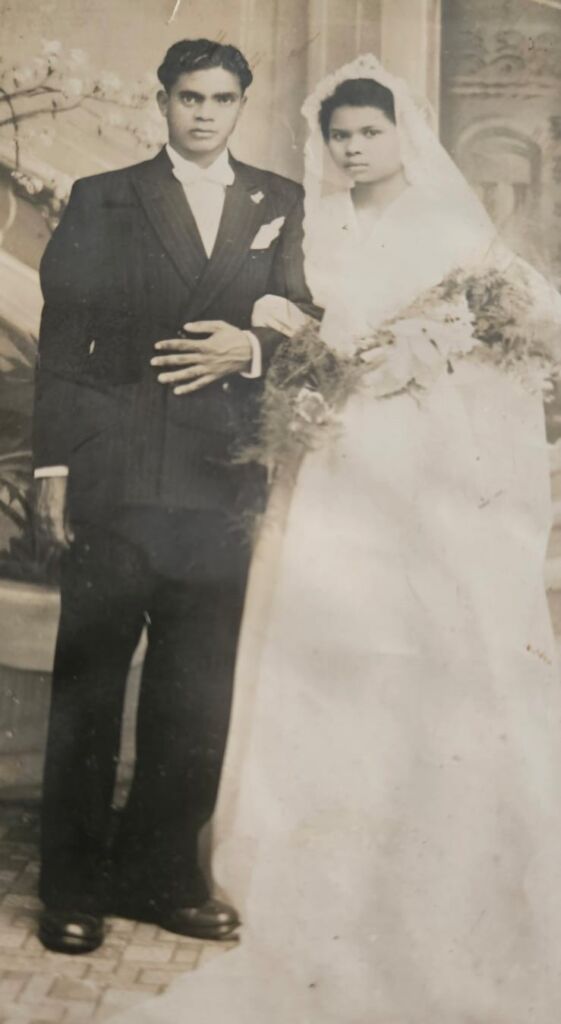
A child born three months before his country shook off colonial chains: such was Dr. Steeve Dupré’s entrance into the world. Born on 24 July 1968, in the storied port city of Port Louis, Mauritius, he was conceived in the hopeful glow of his nation’s October dawn. Just months earlier—on March 12, 1968—Mauritius had claimed independence from the United Kingdom, signalling a fresh start for its people. At that time, the Queen remained the head of state; the shift to a republic would not come until 12 March 1992, when Mauritius sought its own full sovereignty and future.
Yet just as Mauritius balanced between its colonial past and a fledgling republic, so did young Steeve gradually find his grounding amid transition. Port Louis—his cradle—was itself emblematic. Founded in the 1730s by the French governor Mahé de Labourdonnais, who fashioned it into an essential port along the maritime route between Europe and Asia, the city thrived through colonial upheavals and modern expansions. When Steeve was born, Port Louis carried the worn elegance of colonial architecture amid bustling markets, a place where traditions intertwined with the hum of ships and commerce—an ideal setting for a boy whose life would traverse both enduring values and dynamic change.
In this port city, Steeve’s roots were forged. His mother, Marie Renée Dupré, was a figure of steadfast devotion, nurturing faith, and quiet resilience. She shepherded her family—amid modest means and the grief of losing Steeve’s father, Felix Joseph Dupré, when Steeve was only about two and a half—through hardship with unconditional love. Fatherless though he was, Steeve never lacked guidance; his mother’s unwavering support became the gentle anchor that would shape his character, teaching dignity, humility, and faith that flourished without ego.
Surrounded by siblings—Pierrette Minerve, Marie-Ange Joseph, Marie-Anne Bolaram, Pierre Dupré, and Emanuel Dupré—Steeve’s childhood was filled with laughter, spirited whispers in shared beds, and lessons that went far beyond any classroom. Though the family lacked financial luxuries, their bonds were rich: they shared chores and dreams, meals and hopes. In these close-knit environs, Steeve discovered the bedrock of his identity: not in what was taken from him, but in what was shared.
Faith was the unspoken current beneath their household. Though the home was far from grand, it was filled with presence—of whispered prayers, simple songs, and quiet moments of devotion. The Dupré family was rooted in Christian belief, and Steeve, as a born-again believer in Jesus Christ, carried an abiding gratitude for the Lord God “for all His blessings, as He is worthy of all the glory.” This spiritual humility became the thread that bound his beginning to every unfolding chapter of his life.
“Do not despise little beginnings. It’ll all make sense as you’re staring at an opportunity that you realise the difficult moments merely prepared you for.”
Phase 2 : Lessons Beyond the Classroom
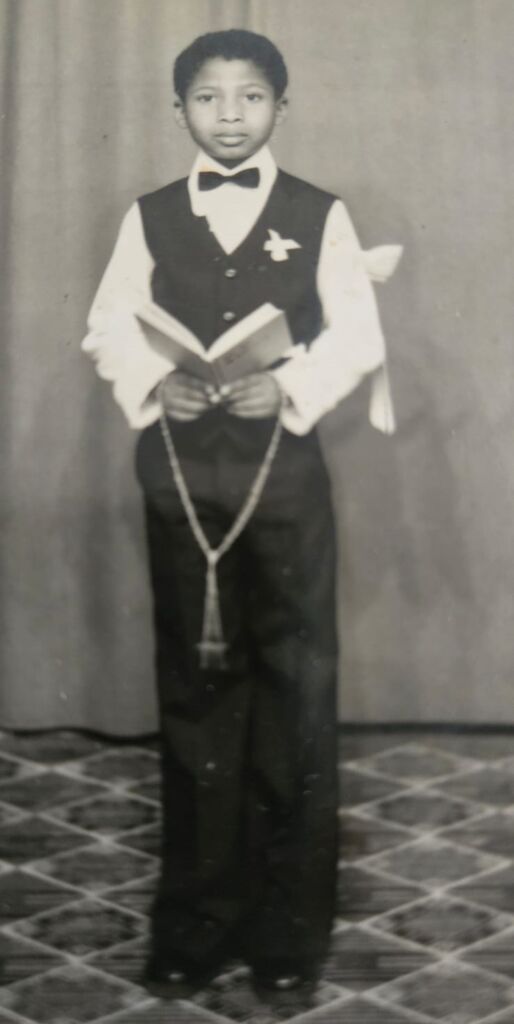
The early chapters of Dr. Steeve Dupré’s life unfold against the backdrop of a nation growing into itself. Education in Mauritius—once the privilege of the few—had become a symbol of independence and progress. When Steeve began his schooling, the island was still adjusting to the promise of universal learning that independence had ushered in. Primary schooling, at least nominally, was free; secondary education was inching towards that horizon, but still edged by social and financial obstacles. The weight of this reality settled on young shoulders like Steeve’s long before he understood its full measure.
From the age of five, Steeve attended primary school in Port-Louis, where children gathered in simple classrooms, books were often worn, and uniforms were creased but cherished. The curriculum focused on fundamental literacies: reading, writing, mathematics, religious knowledge, and civic awareness. English and French were mandatory subjects, a legacy of colonial education, while Mauritian Creole filled the spaces between lessons. For Steeve, schooling was a rich symphony of tongues, cultures, and small victories—as each new sentence learned felt like a bridge into a wider world.
Yet beyond the classroom doors were harsh realities. exams, but as policy promised, education was “free”; however, indirect costs—exam fees, textbooks, stationery, and uniforms—created a real strain. For a family of modest means like the Duprés, every rupee was precious. Steeve’s mother, Marie Renée, managed these burdens with quiet resolve, often sacrificing her comfort to keep her children clothed and hospitable to school. There were weeks when a textbook was shared, when a suit was handed down. Still, Steeve hung on to his lessons. He learned early that the value of education was not in certificates, but in the habit of learning itself.
When Steeve moved on to secondary school—entering Form I at Bhujoharry College in Port-Louis—he stepped into a world of wider possibility and sharper divides. The Cambridge stream beckoned with the School Certificate or the Higher School Certificate as future milestones. For many, these were the keys to scholarships, government positions, or even study abroad. But for Steeve, they were out of reach; the expenses to sit those pivotal examinations were simply unsustainable for his family. Although he attended classes and studied the syllabus, he was unable to complete his registration.
This painful reality could have extinguished his hope. Yet Steeve did not respond with defeat; he responded with determination. He became the student who stayed late after school to practise penmanship, who borrowed textbooks from friends, and who listened to conversations he wasn’t formally allowed to join but absorbed anyway. He offered help to teachers in untangling registers—an act born of gratitude and aspiration. He helped peers understand complex grammar, not for attention, but because kindness, he believed, was itself a kind of unseen education.
“A hero is an ordinary individual who finds the strength to persevere and endure in spite of overwhelming obstacles.”
Phase 3 : Cutting Cargo, Crafting Character
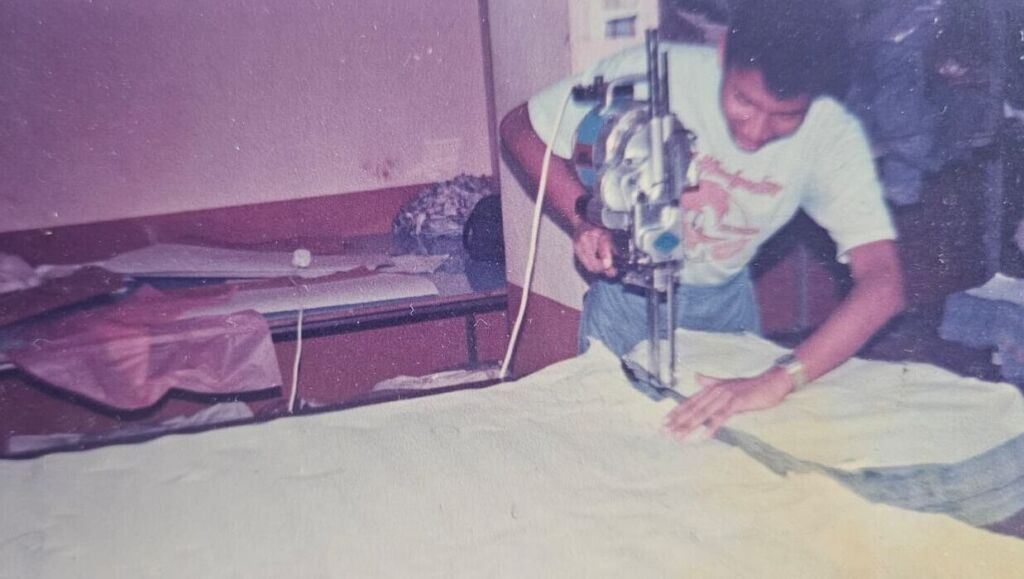
At eighteen, Dr. Steeve Dupré transitioned from imagined destinies to tangible responsibilities. The glow of academic ambition, though undimmed, yielded to the sturdy weight of necessity. His first job was grounded—literally—in the fabric of his nation: he became a store helper in Mauritius’s burgeoning textile industry, a sector that was transforming the island’s economic landscape in the wake of independence.
During the 1980s, Mauritius experienced a remarkable expansion in its textile and clothing sector. The government’s export-orientated strategy had taken firm hold, rooted in the establishment of export processing zones (EPZs) in the early 1970s. These EPZs attracted foreign capital and expertise, especially from Hong Kong, Taiwan, Malaysia, and Singapore, providing duty-free access, tax breaks, and ready-made infrastructure in return for export-led manufacturing.
This environment laid the foundation for rapid growth. By the late 1980s and into the 1990s, textiles accounted for around 80 per cent of EPZ output, and the sector contributed approximately 12 per cent of the national GDP.
Young Steeve discovered in this ecosystem that textbooks did not accurately depict the real world of management. On factory floors, he carried bolts of fabric, restocked cartons, and learnt the rhythm of materials passing from hand to machine. Each day that began with the sunrise was tethered to the practical, mechanical, and relational concerns of running a textile operation. The store was not glamorous, but it was alive with potential—where he met supervisors, noted inefficiencies, absorbed workflows, and glimpsed opportunities to learn and lead.
Soon, he was offered a posting to the cutting department, where fabric falls were spread on tables, and precision, pattern recognition, and spatial thinking mattered more than brute strength. Steeve, young and earnest, soaked up whatever knowledge was around him. Under the guidance of a patient department head, he learnt to navigate the complexities of pattern layouts, fabric behaviour, machine set-ups, and operator communication. He noticed how small errors in alignment could cascade into dollars lost; how teamwork built through shared responsibility mattered more than solitary brilliance.
The local industry benefitted from factors beyond local initiative. The Multi-Fibre Agreement of 1982 limited exports from large producers, giving smaller countries like Mauritius an advantage in Western markets. Meanwhile, geopolitical uncertainties such as Taiwan’s appreciation and Hong Kong’s political transition to Chinese rule encouraged investors to move production to Mauritius. This foreign influx brought not only capital but also machinery, training, and managerial know-how, which local firms gradually absorbed. (turn0search0, turn0search3).
Note of Thanks
At this moment of reflection and gratitude, Dr. Steeve Dupré wishes to extend his heartfelt thanks to all those who have played an integral role in his personal and professional journey. Each achievement and milestone marks not only his own effort but also the collective support and encouragement of family, friends, colleagues, and mentors who believed in him, guided him, and uplifted him through every challenge.
First and foremost, Steeve acknowledges the boundless grace and blessings of the Lord God, whose providence has been the foundation of every success and the anchor amid uncertainty. His faith has been a constant source of strength, guiding his steps and instilling in him humility and perseverance.
He offers deep appreciation to his beloved mother, Marie Renée Dupré, whose lessons in humility, dignity, and love still guide every decision he makes. To his late father, Felix Joseph Dupré, he honours the memory that shaped his family’s unity and resolve. His siblings—Pierrette, Marie-Ange, Marie-Anne, Pierre, and Emanuel—have been steadfast companions, teaching him resilience and the importance of familial bonds.
His wife, Meryamme Dupré, stands at the heart of his gratitude: a partner whose unwavering support, faith, and love have been his constant encouragement through every trial and triumph. Together with their children, Axel and Nick, they form the family where his legacy of values and hope flourishes.
Steeve also thanks his mentors and friends, Jose Lok Ok Choo and Marc de Boucherville Baisac, whose wisdom and companionship have been invaluable beacons along his professional path. Their guidance helped transform challenges into opportunities and fostered his growth both as a leader and as a man.
To colleagues, trainees, and community members who have shared in his vision and supported his endeavours, Steeve is profoundly grateful. Their collaboration and trust have enriched his journey immeasurably.
This letter of gratitude serves as a humble reminder that no one can achieve success on their own. Every step forward is built on the love, faith, and encouragement of others. Dr. Steeve Dupré embraces this legacy of gratitude as he continues to serve, lead, and inspire.
Thanks,
– Dr. Steeve Dupre