
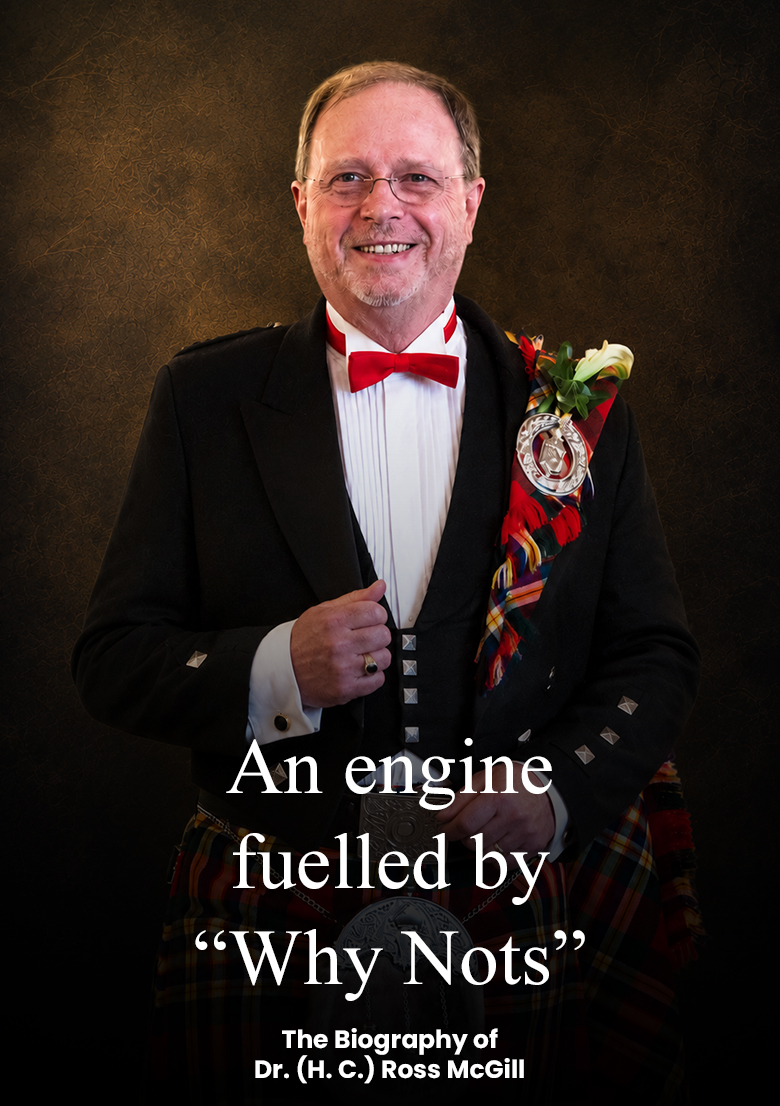
"My parents didn't leave me money. They left me something better. They left me a damn stubborn commitment to honesty. That's been my compass through every failure, every leap, and every quiet victory."
Introduction
This isn’t just a story about professional success. It’s really about the quiet, stubborn kind of resilience that helps people rise above hard times, follow what they care about, and leave a real mark on the world around them. Dr. Ross McGill didn’t take a straight path to where he is today. His journey has been proof that learning, adapting, and being willing to step into the unknown can take you further than any perfect plan ever could.
Dr. Ross McGill was born on September 4th, 1955, in Newcastle-upon-Tyne and grew up in a lower-middle-class family where hard work, honesty, and doing the right thing were simply a way of life. His parents, Geoffrey Edward McGill and Joyce McGill, didn’t have much money, but what they gave him mattered far more. They instilled in him a sense of responsibility and a deep belief in education, even during times when finances were tight. That early foundation shaped how he saw the world. It taught him that character and determination carry more weight than any title ever could.
As a child, he was not the most outgoing. He was naturally introverted, more comfortable with books and studies than with social gatherings. But even then, there was a sharpness in the way he thought and learned. His time at West Jesmond Junior School and later at Heaton Comprehensive School brought both achievement and challenge. He did well academically, yet his school years were not without difficulty. Being bullied was something he experienced, and it left an impression. Still, instead of letting it define him, he turned inward, built resilience, and kept moving forward.
When the time came to choose a path for university, Dr. McGill did not have a fixed vision of what lay ahead. He simply wanted to pursue something that interested him. With guidance from his brothers, Ian and Barry, who were already studying at Bath University, he chose materials technology. It was not a decision driven by long-term planning but by a simple and powerful idea they shared with him: the subject doesn’t matter; university teaches you how to learn. That idea stayed with him for life. While at Bath, he began to stretch beyond his comfort zone. Even as an introvert, he stepped into leadership, including running a sponsored discotheque that turned into a remarkable success. That experience quietly introduced him to business thinking and planted a seed that would grow over time.
After completing his studies, Dr. McGill began his professional journey at Cadbury Schweppes as a senior food chemist. The role was stable and structured, yet something felt missing. It didn’t excite him. That realization led to a bold decision and a serendipitous event. While mulling his future, he was approached by the marketing director of Levi Strauss, the largest apparel manufacturer in the world at that time. With the support of his wife, Kathryn, he chose to move into an entirely different space: marketing. It was not an obvious shift, but it was a necessary one.
"We didn't have much money growing up. But my parents gave me something better. They gave me a spine made of honesty and a head full of curiosity. That's carried me further than any inheritance ever could."
Phase 1: A Boy, a Bully, and a Backbone
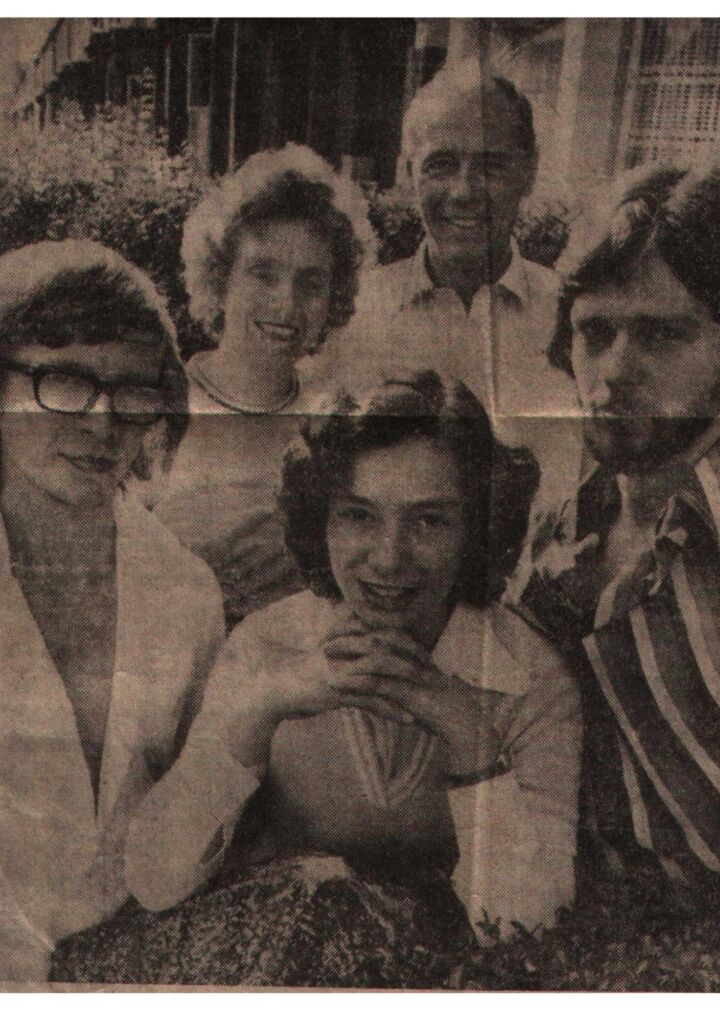
The foundation of Dr. Ross’s life story starts with the values he grew up with. Born on September 4th, 1955, in Newcastle-upon-Tyne, he was raised in a lower-middle-class family where hard work, honesty, and doing the right thing were simply part of everyday life. His parents, Geoffrey Edward McGill and Joyce McGill, didn’t have much in the way of money, but they gave him something just as important: a sense of responsibility and a deep belief in education, even when finances were tight. That early foundation set the stage for everything that followed. It taught him that who you are matters as much as what you achieve.
From a young age, he learned what it meant to be resilient. His early school days at West Jesmond Junior School and later at Heaton Comprehensive School weren’t always easy. He didn’t grow up with privilege or a life of ease. As a child, he was shy and introverted, finding more comfort in books and his studies than in hanging out with other kids. That quiet, thoughtful side of him often meant he didn’t quite fit in with the louder, more outgoing crowd. School had its rough moments, including bullying that left lasting scars. But instead of letting those experiences define him, he used them as fuel. He learned to bounce back. He learned to keep going.
Despite the social struggles, he excelled in the classroom. He had a real gift for understanding complex ideas, and his love for learning was obvious to anyone who knew him. His strong grades didn’t go unnoticed, and his teachers saw a quiet determination in him. But it wasn’t just about the marks. He had a natural curiosity, a real desire to understand the world around him. That thirst for knowledge is what pushed him to move past the pain of those early years and turn his experiences into something positive.
At Heaton Comprehensive, his academic success kept rolling, but this was also where he first started to understand what leadership really meant. Even with his naturally introverted personality, he was appointed head boy. It wasn’t a role he had chased after, but it taught him a lot about responsibility and how to work with others toward a common goal. He began to see that leadership wasn’t about being the loudest person in the room. It was about leading with integrity and understanding.
"I was that quiet kid in the corner, the one nobody expected much from. Then I organized a dance party, cold-emailed Levi Strauss for sponsorship, and suddenly realized that being uncomfortable was exactly where I needed to be."
Phase 2 : The Discotheque That Changed Everything

When Dr. McGill walked into Bath University to study materials science , he didn’t have some grand life plan. He wasn’t one of those people who knew exactly where they were going. He just showed up with a lot of curiosity, a genuine eagerness to learn, and maybe most of all, an open mind about whatever came next. He had always been the quiet type, more comfortable in his own head than in a crowd. So stepping into university life? That felt like jumping off a cliff into fog. But somewhere in that fog, the unknown would slowly begin to shape who he was becoming.
He wasn’t the kind of student who loved big parties or needed to be the center of attention. Honestly, that stuff exhausted him. At Bath, surrounded by confident, talkative, outgoing people, he often felt like he had landed on a different planet. For a while, it was tough. The social scene, the pressure to fit in, the constant noise, none of it came naturally to him. But as he fumbled through this new world, something began to make sense. He realized university wasn’t just about memorizing textbooks. It was about pushing past the invisible walls he had built around himself. And little by little, he did exactly that.
One of the moments he still looks back on with a smile was when he decided to organize a sponsored discotheque. It sounds funny now, because that was about as far from his quiet, academic comfort zone as you could get. But something in him said, “Why not?” Running that event meant getting creative, taking real risks, and actually reaching out to people and companies he’d never dreamed of contacting. He found himself cold-calling big names like Levi Strauss and Seagram’s, asking for sponsorships. It was terrifying and thrilling at the same time. And somehow, it worked. The event was a giant success, but more than that, it changed something inside him. For the first time, he saw that his weird, outside-the-box thinking, his willingness to be uncomfortable, and his stubbornness to get things done could actually make a difference in the real world.
Even though he was still supposed to be just a materials science student, that event lit a fire in him. A passion for business and entrepreneurship that never went away. He started realizing that success wasn’t only about knowing the technical stuff cold. It was also about leading people, creating something from nothing, and having the guts to take the first step. What began as a large dance party taught him more about the power of business than any textbook ever could.
And here’s what really stuck with him. He learned what leadership actually means. Not the bossy, stand-on-a-pedestal kind of leadership. But the kind that’s about creativity, teamwork, and treating people like human beings. He discovered that you don’t have to be the loudest person in the room to lead. You just have to understand what people are good at, help them shine, and bring everyone together to build something that none of them could build alone.
"Cadbury Schweppes was stable, respectable, and boring me to tears. With Kathryn's support, I jumped off a cliff into marketing. No net. No guarantee. Just a gut feeling that I needed to chase something that scared me a little."
Phase 3 : Leaving the Lab Coat Behind
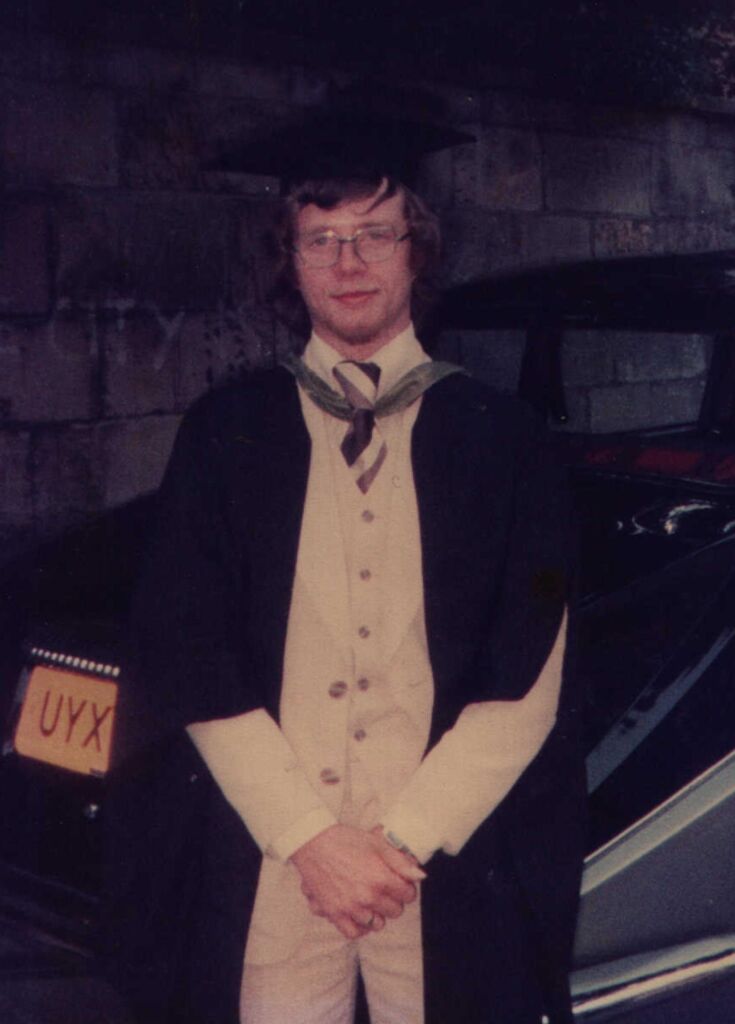
After finishing at Bath University, Dr. Ross faced that scary, common question. What now? Leaving behind the comfort of university life meant stepping into the real world, where textbook lessons get tested in ways no exam ever could. His professional journey wouldn’t be a straight line. It never is, is it? Instead, it unfolded as a series of experiences, each one quietly shaping him into the leader he would one day become.
His first job out of school was with Cadbury Schweppes. He worked as a senior food chemist. Sounds impressive, right? And honestly, it was a stable, respectable role. But pretty quickly, something felt off. The technical, structured environment didn’t light that fire inside him. He had always been someone who thrived when given room to be creative, to tinker, to try weird ideas just to see if they worked. This job? It was too rigid. Too predictable. Sure, the work was interesting on an intellectual level, but it didn’t match the future he dreamed about.
That early realization hit him hard. He didn’t want to settle for a career that felt disconnected from who he really was. The stability was tempting. Of course it was. But deep down, he knew he needed more. He needed a role that gave him space to grow, to innovate, to actually challenge himself. So he found himself at a crossroads. Stay in a secure but uninspiring job, or take a scary leap into something completely new.
Around that time, he sat down with his wife, Kathryn. She was facing her own career questions, so they talked it through honestly. During that discussion, the phone rang, and out of nowhere, he was speaking with someone he had not spoken to since his third year at University, Larry Larsen. Larry was working in the marketing function of the largest apparel company in the world, Levi Strauss. Larry has never explained how he found Ross again after so much time, but he had a job opening in the marketing department, remembered the sponsored event he had supported at Bath and wanted Dr. McGill in his team. Together, Ross and Kathryn made a decision that would change everything. He would leave Cadbury Schweppes and make a huge shift into marketing.
Note of Thanks
This biography of Dr. Ross McGill is not just a reflection of his journey but a testament to the people who have helped shape his path and supported him along the way. Throughout his career, he has been fortunate to have incredible mentors and supporters who believed in him, even when the road seemed uncertain.
First and foremost, he is deeply grateful to Larry Larsen, whose mentorship opened doors and provided opportunities that shaped his career. As a manager at Levi Strauss, Larry saw something in him and gave him a chance to grow and learn. That opportunity to work at Levi’s became a pivotal moment in Dr. McGill’s journey, and the guidance he received from Larry set him on a path of leadership and success.
Max McHardy’s influence on Dr. McGill at Budget International was just as profound. His unwavering support and invaluable advice helped Dr. McGill during some of the most challenging moments in his career. Max didn’t just provide business guidance; he offered insight into life’s broader challenges, always reminding him to stay grounded and focused on what truly mattered. His steady hand and thoughtful perspective were a constant source of strength.
And of course, Len Lipton’s support at GlobeTax cannot be overlooked. Len played an instrumental role in helping Dr. McGill navigate some of the toughest decisions he faced. Her wisdom and mentorship were not just about offering solutions but also encouraging him to think critically and make choices with integrity and purpose. He taught him that leadership wasn’t just about making decisions but about making those decisions in a way that positively impacted those around him.
To Larry Larsen, Max McHardy, and Len Lipton, Dr. McGill offers his deepest thanks. Without their belief, guidance, and support, the journey that led to this point wouldn’t have been possible. Their influence has made an indelible mark on Dr. McGill’s life, and for that, he is forever grateful.
Thanks,
– Dr. (H. C.) Ross McGill