“A person’s life is defined by their choices, not by where it starts.”
Introduction
Some stories are shaped by comfort and stability, while others are not. The life of Dr. Quante Dion Metoyer belongs to the latter. It is not a story that follows a straight path, nor one that is built on ideal beginnings. Instead, it is a journey marked by contrast, where early innocence met prolonged instability and where awareness became the most valuable tool for survival and growth.
To understand life, you must first acknowledge the weight of its beginnings. Born into circumstances that were already complicated before his first breath, his early environment carried challenges that most would only come to understand much later in life. Nevertheless, even within that, there existed a brief window of peace. The earliest years held a sense of normalcy, a feeling of presence, and a quiet connection to family. These memories, though limited in time, would later serve as a reference point, a reminder that life could hold something different from what it eventually became.
As childhood progressed, the foundation beneath him began to shift. The absence of his father due to incarceration and the emotional and physical distance created by his mother’s struggles with addiction introduced a reality that demanded early independence. The structure was unclear, support was inconsistent, and security was minimal. What replaced it was unpredictability, and with it came the need to adapt quickly.
In such an environment, childhood does not remain untouched. It changes form. It becomes something more practical, more alert, and far more self-reliant. Simple needs, which are often provided without thought in stable homes, had to be figured out independently. From finding ways to present himself appropriately to learning how to generate small amounts of money, these were not lessons taught but rather lessons discovered. Each experience added a layer of understanding, shaping a mindset that would later become one of his defining strengths.
The transition from Long Beach to Los Angeles marked another significant phase, one where external influences became even more pronounced. The environment introduced new pressures. New associations and deeper exposure to realities could easily shape the direction of a young mind. During this time, the line between positive and negative influence was not always clear. The lack of guidance made those distinctions harder to recognise, and the environment often encouraged choices that were more reactive than intentional.
Nevertheless, even in that space, something within him remained observant. There was an ability to notice patterns, to sense what aligned and what did not, even if those realisations came gradually. This quiet awareness became an internal compass, one that would later guide more conscious decisions.
“Sometimes, our earliest memories are quiet reminders of who we were before life shaped us.”
Phase 1: A Beginning Marked by Contrast
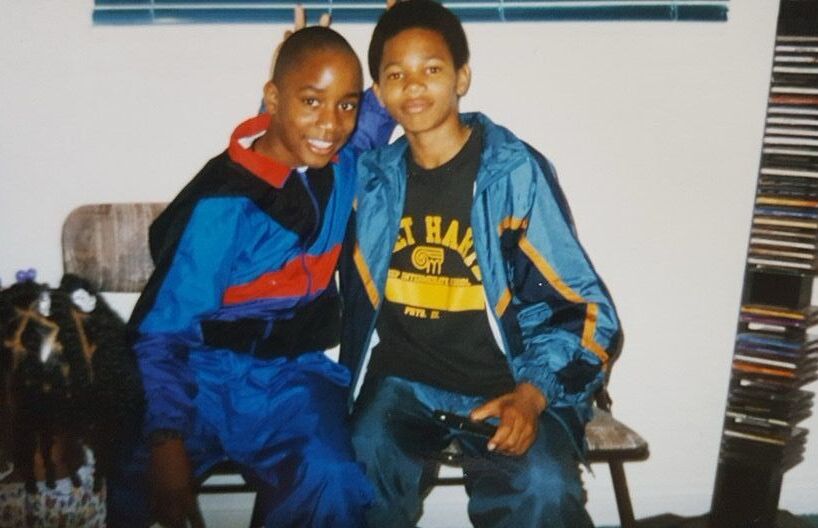
The story of Dr. Quante Dion Metoyer begins in a space that carried both simplicity and unseen complexity. The earliest years of his life, particularly between birth and the age of three, held a sense of calm that would later stand in sharp contrast to everything that followed. These were the years that felt whole, where the presence of both parents created what seemed, at least on the surface, to be a traditional and complete family environment. A child naturally takes in structure, familiarity, and a sense of belonging without even contemplating it.
What makes these early memories significant is not just their presence but also their clarity. Recalling moments from as early as two or three years old is uncommon, yet those fragments remained vivid for him. They were not defined by events of significance but by feeling. A sense of ease, of being present, and of existing without the weight of understanding what life could become. At that age, there is no awareness of struggle, no recognition of instability. There is only the experience of the moment, and in those moments, life felt free.
However, even amidst that early sense of peace, realities were unfolding that would only reveal themselves much later. At the time, he was unaware of his mother’s struggles with substance use during pregnancy. It was a truth revealed years later, around the age of twenty-two, and one that added a deeper layer of reflection to his understanding of his beginnings. To come into the world under such conditions is not something a child chooses, yet it becomes part of their story. It is a starting point that carries implications, both physical and emotional, even if they are not immediately visible.
As he grew beyond those early years, the environment around him began to change. The shift was not gradual; it was noticeable. What had once felt stable began to lose its balance. The presence of both parents, which had once defined his earliest memories, began to fade. His father’s absence due to incarceration removed a significant pillar from the household, and with that absence came a sense of disruption that could not easily be filled.
At the same time, his mother’s ongoing struggles created an atmosphere that was difficult to navigate. There was a lack of consistency, a lack of emotional warmth, and an overall sense of unpredictability. A child may not clearly understand or articulate these concepts, but they deeply feel their impact. The absence of guidance and affection does not simply leave a gap; it creates an environment where a child must begin to interpret the world on their own.
“When guidance is missing, the world becomes your teacher, and every mistake quietly becomes a lesson you carry forward.”
Phase 2 : The Weight of Environment and Early Choices
As Dr. Quante Dion Metoyer moved deeper into his childhood, the realities of his environment began to take a stronger hold on his daily life. The years between eleven and thirteen were not simply a continuation of earlier struggles; they marked a stage where external influences became more dominant, more visible, and far more difficult to ignore. What had once been a personal struggle within the household now extended into the streets, the schools, and the broader social setting around him.
The shift in atmosphere that accompanied the move from Long Beach to Los Angeles was almost immediately palpable. Los Angeles, in the areas he experienced, was not just a place of opportunity; it was also a space where survival often depended on awareness, alliances, and the ability to navigate complex social structures. For a young boy already carrying the weight of instability at home, this environment added another layer of pressure.
There was no gradual introduction to these realities. The transition was abrupt, and the expectations of the environment were unspoken yet clear. One had to learn quickly, observe closely, and understand the consequences of association. The presence of gang culture was not something distant or abstract. It was part of everyday life, influencing how people interacted, how they moved, and how they defined themselves.
During this time, the idea of choosing the right company became increasingly important, yet also incredibly difficult. The process of identifying positive influences largely relied on personal judgement due to the lack of consistent guidance from home. For someone so young, this meant learning through experience rather than instruction. Some choices led to moments of belonging, while others introduced risk and uncertainty.
School, which is often a place of structure and development, did not hold the same consistency during these years. Attendance became irregular, not because of a lack of capability, but because of the circumstances surrounding him. Truancy, skipping classes, and disengagement from formal education became part of his routine. It was not a reflection of his intellect, but rather a reflection of the environment that shaped his priorities at the time.
“Sometimes growth starts when you stop being defined by what you used to be and let yourself see life from a distance.
Phase 3 : A Change of Place, A Shift in Perspective
Dr. Quante Dion Metoyer’s move away from Los Angeles marked a turning point in his life, not because everything suddenly improved, but because something within him began to settle. When his brother offered him the chance to move to Tulsa, Oklahoma, it coincided with a time when the environment he was leaving behind had already begun to affect him. The decision to go was immediate, driven by a deep, unspoken understanding that staying would only continue the same cycle.
Arriving in Tulsa brought with it a noticeable difference. The pace of life was slower, the surroundings were less stressful, and for the first time in a long time, there was space. It was not a perfect setting, nor did it instantly provide everything he had been missing, but it offered something that had been absent for years, a break from the chaos.
That break, however, did not mean that all challenges disappeared. The internal effects of his earlier experiences did not fade simply because the location had changed. The habits, thoughts, and emotional responses that had developed over time were still present. What changed was the environment in which those patterns now existed. Without the same level of external pressure, there was more room to observe, to think, and to begin understanding himself in a different way.
During his time in Tulsa, he found himself in a position that was both unfamiliar and revealing. He was no longer surrounded by the same influences that shaped his earlier behaviour. This created a kind of silence, not in a literal sense, but in the absence of constant distraction. In that silence, there was an opportunity to reflect, even if it was not fully conscious at the time.
The presence of his brother provided a form of stability, though not in the traditional sense of structured guidance. The opportunity itself, the fact that someone had opened a door for him to step into a different life, even if only temporarily, was more significant. That gesture alone carried weight, as it introduced the idea that change was not only possible but also accessible.
Note of Thanks
This note is written with sincere appreciation for the people and moments that have quietly contributed to the journey of Dr. Quante Dion Metoyer. This story reflects personal growth, resilience, and determination, but it has never been shaped in isolation. Every phase of life has carried the presence of individuals who, in their ways, made a difference.
Gratitude is first extended to his family, whose roles, whether direct or distant, have been part of the foundation upon which his life was built. His brother, in particular, played a pivotal role by introducing a new environment at a time when change was crucial. That opportunity created space for reflection and growth, and its impact continues to hold significance.
We also extend our appreciation to those extended family members who, even briefly, provided moments of stability and normalcy. These experiences, though limited in time, offered a sense of belonging that added depth to his understanding of life beyond hardship.
There is also recognition for the settings and organisations that influenced his trajectory. Each school, each transition, and each experience contributed to his learning, not only academically but personally. These spaces, even in their inconsistencies, helped him discover his discipline and direction.
Above all, this note acknowledges the quiet strength that carried him through each phase. The ability to endure, to reflect, and to choose growth over circumstance has been the most constant presence throughout his journey.
This story not only reflects the lived experiences but also the lessons learned.
Thanks,
– Dr. Quante Dion Metoyer