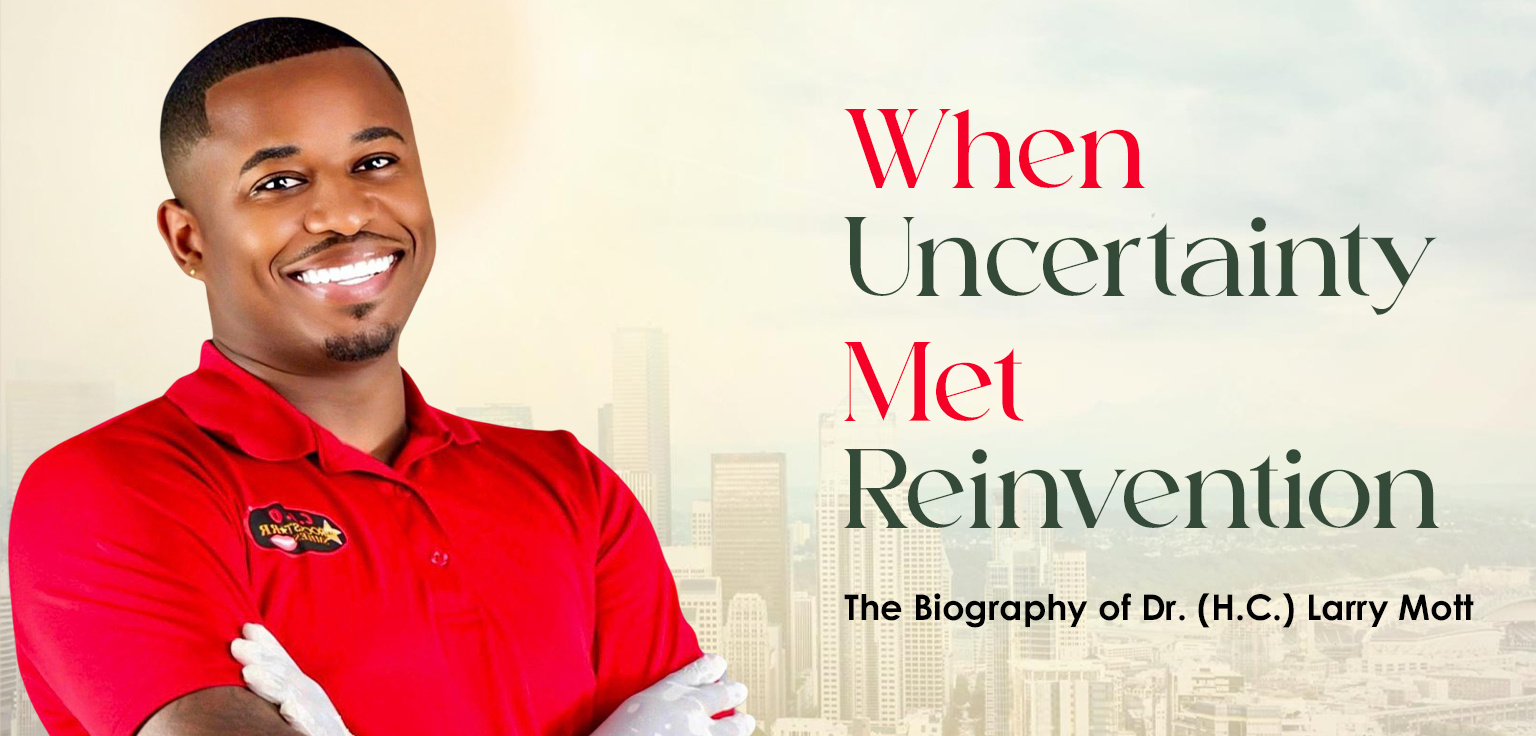
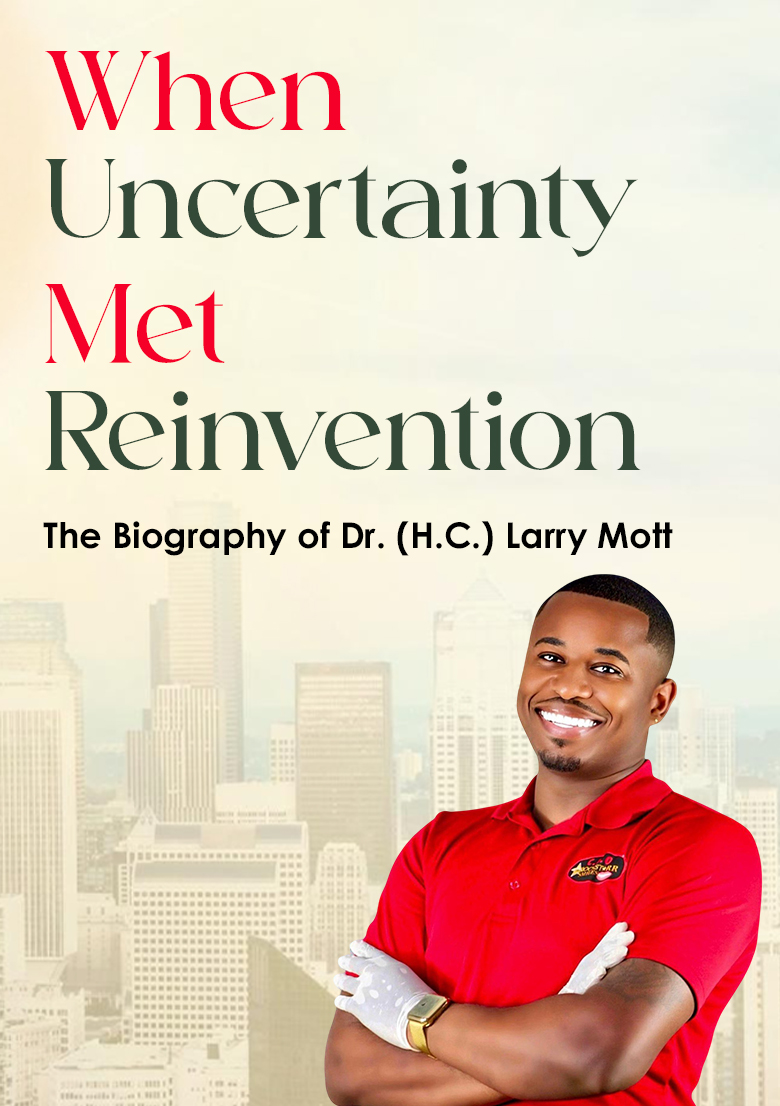
“Life never promised certainty, yet I never allowed uncertainty to define my progress.”
Introduction
Every human path is moulded by a sequence of events that subtly affect direction, perspective, and identity. While some lives follow predictable trajectories, others change as a result of resilience, adaptation, and introspection. Dr. Larry Mott’s story falls under the latter category, which is characterised by a strong will to proceed in any situation rather than by inflexible certainty.
Born on 7 August 1996 in Freeport, Grand Bahama, Bahamas, his beginnings were framed by family, environment, and the subtle shaping of early life experiences. He was born to Mario Mott and Marlins Adderley, whose presence formed the earliest backdrop of his world. Within this familial foundation, the initial dimensions of awareness and independence gradually took form. Like many childhoods, his early years were marked by simplicity and lightness, a period remembered not through dramatic events, but through a feeling of ease and joy.
Dr. Larry Mott recalls his childhood with warmth, describing it as fun and among the most cherished years of his life. Such reflections reveal a deeply human truth: the earliest stages of life often derive their meaning not from extraordinary incidents but from the absence of burdens. Youth carries a freedom uniquely its own, where responsibilities remain distant and the world feels unencumbered by obligation. These formative years established an emotional baseline of optimism and balance, quietly influencing the mindset that would later define his approach to change.
Life, however, seldom remains static. Around the age of five, he experienced a transition when his parents separated. His upbringing thereafter unfolded between both Mario Mott and Marlins Adderley, requiring adjustment to differing environments and routines. Yet this experience, rather than becoming a source of disruption, cultivated adaptability. Moving between households introduced an early familiarity with change, reinforcing resilience and emotional flexibility. Stability was not defined by permanence of circumstance but by the capacity to adjust with composure.
His educational journey began at Second Chance Preschool, an environment that introduced the earliest rhythms of structured learning. This phase of education represents more than academic preparation; it signifies the beginning of social interaction, discipline, and guided growth. From there, he continued to Martin Town Primary School, where the foundations of formal education further developed. These early years unfolded without dramatic distinction, reflecting steady progression rather than exceptional narrative.
“Long before life demanded resilience, the foundations of identity were already taking form.”
Phase 1: Birth and Origins

Dr. Larry Mott’s journey began in silence on August 7, 1996, in the Bahamas’ Grand Bahama coastal city of Freeport. Birth has a deeper meaning in the story of a life, even though it is frequently documented as a straightforward fact about time and location. It signifies the beginning of experiences, influences, and surroundings that gradually mould identity, in addition to one’s entry into the world. For him, this event was the beginning of a tale that would later demonstrate flexibility, faith in oneself, and a realistic appreciation of the changing nature of life.
He was born to Mario Mott and Marlins Adderley, whose presence formed the earliest framework of his world. Within this familial foundation, the earliest dimensions of awareness, perception, and character began to take shape. Parental influence, often subtle in its expression, contributes profoundly to the initial development of values and perspective. In the case of Dr. Larry Mott, the significance of Mario Mott and Marlins Adderley lies not merely in lineage but in their role as the first anchors of environment and experience.
Freeport, known for its distinctive blend of tranquillity and vitality, served as the geographical backdrop of his beginnings. The city’s coastal atmosphere, cultural rhythm, and sense of community formed part of the environment into which he was introduced. Early surroundings often influence perception long before individuals consciously recognise their impact. The cadence of daily life, the visual and social landscape, and the broader cultural context collectively contribute to shaping early impressions of the world.
Childhood memories associated with these early years carry a tone of simplicity and warmth. Dr. Larry Mott recalls his formative period not through dramatic anecdotes or singular defining events, but through feeling, a sense of joy and ease. His reflections describe childhood as fun, remembered as among the most cherished years of his life. Such recollections reveal a deeply human truth: the earliest stages of life often derive their meaning from the absence of complexity rather than the presence of extraordinary occurrences.
In youth, happiness frequently resides within ordinary spaces. It is shaped by the freedom of living without burdens, the lightness of days untouched by responsibility, and the natural curiosity that accompanies early life. For him, these years represented a period defined by comfort, simplicity, and emotional lightness. The world, during this time, existed not as a landscape of obligation but as a domain of experience.
“The earliest years of life often shape perspective not through grand events, but through the quiet simplicity of living, learning, and adapting.”
Phase 2 : Childhood and Early Life Experiences

For Dr. Larry Mott, childhood occupies a deeply treasured space within his life narrative, a period remembered not for complexity or defining incidents, but for its unmistakable sense of joy, lightness, and freedom. When reflecting upon these early years, his recollections reveal something profoundly human: happiness rooted in simplicity. Childhood, in his memory, was fun, a time he describes as the best years of his life.
Such a reflection carries emotional depth precisely because of its honesty. The significance of youth is rarely measured by extraordinary moments alone. Instead, it often resides within the absence of burdens, a time when responsibilities are distant, pressures minimal, and life unfolds with unguarded ease. For him, these years represented a stage untouched by the demands that later accompany adulthood. Days were defined by presence rather than obligation, by experience rather than expectation.
Growing up in Freeport, Grand Bahama, Bahamas, he experienced an environment that naturally fostered a sense of openness and balance. The rhythm of island life, with its distinctive pace and atmosphere, provided a backdrop that subtly influenced perception. Childhood unfolded within surroundings that encouraged engagement with the present, where moments were lived rather than hurried, and simplicity became a defining characteristic of daily experience.
Yet childhood, even in its lightest form, does not exist without transitions. Around the age of five, he encountered a significant familial shift when his parents, Mario Mott and Marlins Adderley, separated. Such events carry emotional implications, particularly in the life of a young child. However, his reflections upon this period remain grounded and free from dramatisation. The separation is neither framed as adversity nor as defining hardship. Instead, it represents a change, an adjustment quietly absorbed into the rhythm of his early life.
“Education does not merely shape knowledge; it quietly shapes perception, discipline, and the understanding of one’s own potential.”
Phase 3 : Early Education and the Formation of Academic Awareness

The early educational journey of Dr. Larry Mott unfolded with the natural progression that marks the lives of many young individuals: steady, unembellished, yet deeply formative. These years, though absent of dramatic milestones or defining incidents, played an essential role in shaping awareness, perspective, and the evolving relationship between effort and growth. Education, during this phase, existed not as a pursuit of distinction, but as an environment of gradual learning and adaptation.
His academic path began at Second Chance Preschool, an institution that marked his first structured engagement with the rhythms of formal learning. Preschool represents a uniquely transitional stage in human development, where the emphasis extends beyond instruction into adaptation, learning routines, interacting with peers, and developing comfort within guided environments. For Dr. Larry Mott, this phase reflected the quiet introduction to discipline and communal participation, where learning unfolded through experience rather than expectation.
In these early settings, education serves more as preparation than as performance. Preschool lays the groundwork for a child’s familiarity with social interaction, structure, and instruction. Even though particular memories of this era are still relatively obscure, the importance of these early environments is precisely in their subtle impact. They foster regularity, rhythm, and an early understanding that growth frequently occurs through supervised participation.
Following this foundational stage, he continued to Martin Town Primary School, where the framework of formal education assumed greater clarity and definition. Primary school introduces individuals to structured academic systems, fostering cognitive development alongside behavioural awareness. It is during these years that students begin forming attitudes toward learning, authority, and self-discipline, experiences that gradually influence perspective.
His elementary school experience flowed naturally and with continuity. His thoughts on these years are steady rather than erratic, and they are grounded. No one event stood out as particularly significant or revolutionary. Rather, education served as a constant in everyday life, organically woven into the cycle of development. Even though it is frequently disregarded, this steadiness is essential for creating a sense of routine and expectation.
Note of Thanks
Every journey is shaped not only by personal determination but also by the presence, encouragement, and influence of those who quietly contribute along the way. The story of Dr. Larry Mott stands as a reflection of resilience and self-belief, yet it is equally interwoven with the support and motivation received from individuals whose roles formed an enduring foundation throughout his life.
Gratitude is naturally extended toward his parents, Mario Mott and Marlins Adderley, whose presence defined the earliest framework of his experiences and identity. Their influence, expressed through environment and upbringing, became an inseparable part of the values and perspective that guided his journey.
Recognition is also due to family members whose encouragement reinforced confidence during moments of transition and self-discovery. Close relationships, especially those that provide belief and motivation, played a significant role in shaping his direction and resolve.
Appreciation is further reflected toward friends, mentors, and professional environments that contributed to growth, learning, and awareness. Each interaction, whether subtle or pronounced, became part of a collective influence supporting progress.
This biography stands, therefore, as an acknowledgement of shared presence, a tribute not only to an individual path but also to those whose support and belief became part of its unfolding.
Thanks,
– Dr. Larry Mott