“A meaningful life is not measured only by what one achieves, but by the values one carries, the people one uplifts, and the grace with which one walks through every season.”
Introduction
The story of Dr. Antony Melvin D Paul is the story of a life shaped by discipline, love, learning, responsibility, and an enduring desire to make a difference in the lives of others. It is a journey that moves through many worlds without losing its center. It begins in family, grows through education, matures through work, and deepens through experience. Across every stage, what stands out most is not only what he accomplished but also how he understood life itself.
Born on 16 February 1978 in Bangalore, and with part of his early childhood spent in Hassan because of his father’s government transfers, he grew up in an environment rich in relationships and shared living. He was raised in a joint family, surrounded by grandparents, uncles, aunts, cousins, and the warmth of a closely connected household. In such a setting, childhood was never lived in isolation. It was filled with movement, togetherness, care, and constant human presence. Yet this closeness also brought responsibility very early into his life. As the eldest grandchild, he occupied a special place in the family. He was loved deeply, but he was also expected to understand, observe, and step forward when needed. That early position in the family gave him maturity that stayed with him in later years.
His parents played a defining role in shaping the person he became. His mother, Joycee Poornima, was a high school teacher and one of the deepest influences in his life. She brought warmth, spiritual grounding, generosity, punctuality, and an instinct for service into the home. She taught by example that kindness should never be delayed, that invitations should be honored, and that one should always think of how to help others rather than what to expect from them. His father, Vincent D Paul, served in the central government and brought a different but equally powerful influence. He taught discipline, self-respect, refinement in conduct, the importance of speaking well, dressing well, and carrying oneself with dignity. From one parent came emotional depth and service. From the other came structure, presentation, and personal discipline. Together, they formed the two strong pillars on which his life was built.
Childhood for him was also deeply marked by sports. Long before professional titles and responsibilities entered his life, he was a boy who loved movement, competition, and the energy of the playing field. Cricket became his first love, and Football followed closely behind. Over time he also played Squash, Badminton, and other athletic games. Sport gave him more than enjoyment. It taught him teamwork, discipline, focus, endurance, and camaraderie. It showed him that success is never accidental, that practice matters, and that one must give fully to what one loves. These lessons stayed with him and later became visible in the way he worked, taught, mentored, and led.
His academic life did not begin as a story of effortless excellence. In fact, one of the most important parts of his journey is that he was not initially strong in studies, especially in spelling and language. This struggle, however, became one of the most powerful examples of transformation in his life. Under the guidance of his father, he developed habits that changed him steadily from within. Reading newspapers, learning new words, using a dictionary, and building discipline around language helped reshape his confidence and ability. Over time, the boy who once struggled with spelling grew into a man who would later write articles, contribute to publications, and publish two books (The three dots & Count your blessings) these are now available on Amazon. This arc of growth reveals an important truth about his life. He did not become who he was by chance. He became who he was through persistence, repeated effort, and a willingness to keep improving.
“The strongest beginnings are often the simplest ones, where love teaches gentleness, discipline teaches dignity, and home quietly prepares a child for the whole of life.”
Phase 1: Roots of Humility, Home, and First Lessons
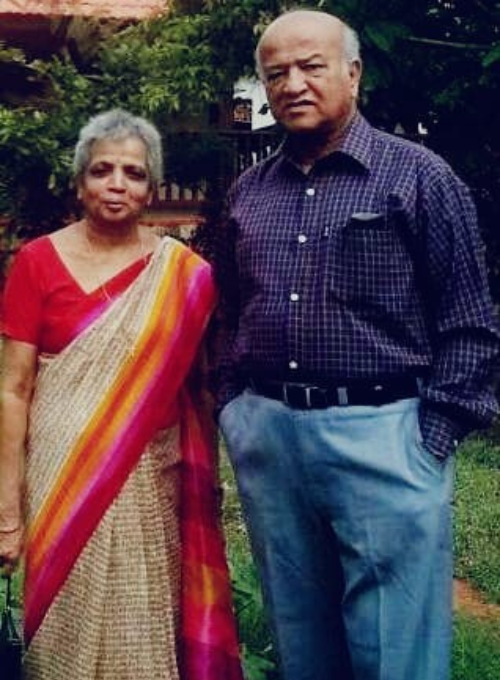
The life of Dr. Antony Melvin D Paul began in Bangalore, Karnataka, the city most closely tied to his identity and earliest formation. Although Bangalore remained the central setting of his upbringing, his childhood was not shaped in one fixed place alone. Because his father served in the central government, transfers were a natural part of family life, and some of his early years were also spent in Hassan before the family returned more fully to the rhythm of Bangalore life.
He was born into a middle-class family that believed dignity mattered more than display. That idea says much about the world in which he grew up. It was not a life of luxury, but it was rich in values, affection, order, and self-respect. It was a home where conduct carried meaning, where discipline was part of daily life, and where even ordinary habits were shaped by care. Material simplicity never meant emotional poverty. On the contrary, those early years were deeply abundant in the things that matter most.
His father, Vincent D Paul, worked with the central government and brought a strong sense of discipline into the home. He was a strict father but also a deeply loving one. The impression he left on his son was not only that of authority but also of refinement and self-respect. He taught that dressing well was not vanity but a mark of regard for oneself and for others. He taught his children how to speak properly, how to carry themselves with manners, how to respect people, and how to represent the family with dignity. These lessons did not remain confined to childhood. They later became visible in the calm confidence and polished presence his son brought into classrooms, training halls, and professional spaces.
Yet his father was not defined by strictness alone. There was music in him as well. Singing was one of his hobbies, and he would sometimes be invited to sing at hotels in the evening during his free time. That detail reveals something beautiful about the atmosphere of the family. Discipline and artistry were not opposites in that home. They existed together.
“Childhood does not always reveal greatness in a polished form. Sometimes it appears in scraped knees, misspelled words, loyal friends, and the quiet moment when a young heart begins to believe it can become more than it is today.”
Phase 2 : School Years, Sport, Friendship, and the First Signs of Growth
If the first phase of Dr. Antony Melvin D Paul’s life was shaped by home, values, and early responsibility, the second phase unfolded through school corridors, playgrounds, friendships, mistakes, laughter, and the first real signs of self-discovery. These were the years in which the child of a close family slowly began to engage the wider world. They were years of movement, play, discipline, embarrassment, courage, and change. Nothing about them was polished from the beginning, and that is precisely what makes them so important. They reveal the making of confidence in a deeply human way.
His earliest formal schooling began at St. Francis Xavier’s Girls High School. He studied there from Lower KG through Upper KG, and then through first and second standard. At that time, the school was co-educational only up to that level, which meant that boys and girls studied together in the early years, but boys had to leave afterward. He remembered that stage with humor and affection. Looking back, he joked that when boys are surrounded by girls, they naturally try to become heroes, and he laughed while recalling how much fun those early years had been. It was a lighthearted memory, but it also revealed something real about him. Even in childhood, he carried an easy social warmth and a cheerful presence.
After second standard, he moved to St. Germain’s High School, and that marked the beginning of a much larger period of growth. This was the school where his personality began to take firmer shape. It was also the place where sport, friendship, and school life came together in a way that left a lasting impression on him. He remembered St. Germain’s High School as a school strong in both academics and sports, and for someone like him, that combination mattered greatly. He was not a child who enjoyed sitting still for long. He loved movement, competition, and the energy of games. School gave him space for all of that.
By his own description, he was a boy who would play almost every sport available to him. Games did not feel like an obligation or a way to pass time. They felt natural. He said very clearly that sport came naturally to him. Among all the games he loved, Cricket became his first love, and Football came close behind. Over time, he also played Squash, Badminton, and athletics-related sports, but in these school years, Cricket and Football stood at the center of his emotional and physical world.
There was an instinctive freedom in the way he connected with sport. He did not approach it with calculation. He loved it because it made him feel alive. The field was a place of energy, expression, focus, and excitement. At an age when books still felt like a struggle, the language of sport came to him far more easily.
“Some victories are not won in applause-filled moments, but in silent hours of study, repeated effort, and the day a person finally realizes that the very struggle that once humbled him has become the source of his strength.”
Phase 3 : Science, Struggle, and the Rise of Academic Purpose
By the time he entered the later stage of his student life, something important had begun to change within Dr. Antony Melvin D Paul. The playful schoolboy who had once been more naturally drawn to games than to books was no longer moving through education casually. A shift had taken place. It was not dramatic on the outside, but it was decisive within. He had started to understand that learning was not merely a requirement imposed by teachers or parents. It could become a path, a discipline, and eventually an identity.
This phase of his life belongs to that awakening. It belongs to the period in which he moved from school into pre-university, then into graduation and post-graduation, and slowly became the serious student he had not always appeared likely to become. It was the phase in which subject interest deepened, academic confidence matured, and a direction began to emerge with clarity.
After completing his school years at St. Germain’s, he joined St. Joseph’s in Bangalore for his first and second year PUC. That move would prove to be one of the most important institutional transitions of his life. St. Joseph’s was not simply where he continued studying for a short period. It became the setting in which much of his higher education, intellectual growth, early professional identity, and even personal life would unfold. In many ways, those years created the bridge between youthful promise and adult purpose.
Science had already become his preferred world. Even when his academic confidence was still forming, there was a genuine attraction toward the scientific way of understanding life. He later said very clearly that science was always his favorite subject. At one point he had even wanted to become a medical doctor. That desire was serious enough for him to pursue admission possibilities, and he recalled that he had received a couple of seats. But the fees were too high, and that route could not be taken. It was one of those moments in life when desire meets limitation and must turn elsewhere.
Note of Thanks
Gratitude is first extended to Dr. Antony Melvin D Paul’s family, whose presence remained constant through changing phases of life. Their support was not always loud, but it was steady, and it provided a sense of balance through moments of decision, transition, and responsibility. The values learned early in life continued to guide him even as his path moved through different professional and personal directions.
With heartfelt gratitude, he wishes to specially acknowledge his dearest Mom, Joycee Poornima; his handsome Dad, Vincent D Paul; his pretty wife, Preethi Albuquerque; and his rockstar son, Adrian Nathan D Paul. He also extends his appreciation to his awesome sisters, Mary Reena and Maria Leena.
He also acknowledges his life’s true friends, Ramesh, Kavitha BK, Vinod, Saravana, Thirumurugan, and Prasad, along with the many other blessings who became part of his journey, including Kaveri, Jayshree, Andal, Gautam, Joe, Richie, Mitesh, Shashikala, Ajil, John, Sourabh, Kenuite, Anoop Mathew, Anita, Neena, Anoop D’Souza, Pascal Albuquerque, Leah, Chitra, Shashi, Johanna, and Sushma. A special mention is also made for his darling niece, Abigale Tamara Martis.
A special note of thanks is extended to Capt. Smitha and Major Dhirendra Naidu, whose support and guidance played a significant role in Dr. Paul’s journey.
Sincere thanks are also owed to the institutions and professional environments that trusted him with responsibility at different stages. Each space offered a different kind of learning, whether through teaching, corporate roles, training, or leadership. These experiences were not limited to roles or titles. They shaped perspective, discipline, and the ability to work with people across contexts.
There is also appreciation for the colleagues, teams, and individuals he worked with over the years. Every interaction, whether in classrooms, training rooms, or professional settings, added something meaningful. The opportunity to contribute to the growth of others became a defining part of his work, and those shared experiences remain an important part of his journey.
A note of thanks is extended to the readers who engage with this story. Their time and attention give this narrative its final purpose. It is hoped that the journey shared here offers a sense of connection, reflection, and encouragement.
This account stands as a reminder that no life moves forward alone. Behind every step are influences, support systems, and relationships that make the journey possible.
Thanks,
– Dr. Antony Melvin D Paul