“If there is any heartfelt desire, do not wait even one second. And tell people that you love them.”
Introduction
The life of Dr. Paweł Kwaśniewski reflects a journey shaped by learning, resilience, and a continuous search for understanding the many dimensions of healing. His path moves through different disciplines and traditions, bringing together formal academic education, traditional healing systems, and spiritual exploration. The pages that follow present a life story that grew gradually through experiences, challenges, and the influence of people who believed in service and responsibility toward others.
From his earliest years, the environment in which he grew up played an important role in shaping his outlook on life. Dr. Kwaśniewski was raised in a household where several generations lived together. His parents and grandparents formed a close family environment where helping others was a natural part of daily life. His mother, Ewa, worked as a paediatrician and dedicated her professional efforts to caring for children and families. Many of the memories from his childhood involve observing her commitment to patients who came seeking help. These moments introduced him to the idea that medicine is closely connected with compassion and responsibility.
His father, Wiesław, devoted his professional work to education and the support of children with special needs. Through his work in teaching, sensory integration, and therapeutic approaches connected with neurofeedback and autism support, he focused on helping individuals who often struggled to find their place in society. Watching this work allowed young Paweł to see how patience, dedication, and belief in human potential could make a meaningful difference in people’s lives.
Another important influence came from his grandmother, whose knowledge of traditional healing practices had a lasting impact on him. She shared stories about healing traditions from rural communities and introduced him to practices such as dowsing and cupping. One of his earliest childhood memories involves her giving him a pendulum and asking him to search for water in the backyard. This simple moment sparked a curiosity about healing traditions and natural methods that would continue to develop later in life.
Although these early influences existed, his first interests developed strongly in the arts. During his youth he studied music and performance, learning instruments and vocal expression while also becoming deeply involved in dance. He trained in dance theatre and later worked professionally as a dancer, combining artistic discipline with physical performance. These experiences cultivated dedication, focus, and a strong connection between body movement and expression.
“The first lessons of a meaningful life are often learned before we understand them. In the quiet example of those who serve, a child begins to discover what the heart may one day be called to become.”
Phase 1: Roots of Compassion and the First Seeds of Healing
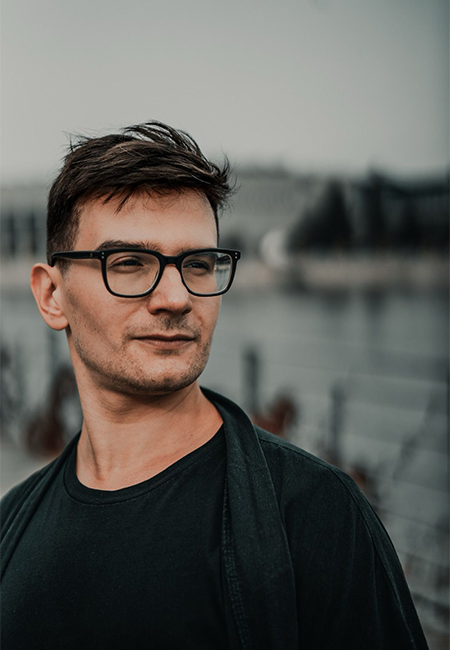
The story of Dr. Paweł Kwaśniewski begins with his birth on 13 April 1992 in Gdańsk, Poland. The earliest chapter of his life begins in a home where generations lived closely together and where care for others was part of everyday existence. His first memories are not shaped by ambition or achievement, but by atmosphere, presence, and example. He grew up in a household shared with his parents and grandparents, a setting in which family life carried a strong sense of continuity, responsibility, and closeness. Within that environment, he was introduced very early to the idea that helping others was not an occasional act. It was a way of living.
Among the strongest early influences in his life was his grandmother. She opened before him a world that was both intimate and mysterious, filled with stories, healing practices, and knowledge carried through lived experience rather than formal study. She spoke to him about the healing modalities of her childhood and shared memories from a much older world shaped by hardship, tradition, and endurance. She was Ukrainian and had lived near Lviv, and from that background she brought with her forms of understanding that connected healing with nature, intuition, and the wisdom of rural communities.
It was through her that he first encountered practices such as dowsing therapy and cupping therapies. These were not presented to him as distant cultural curiosities. They were part of the family memory, something handed down and spoken about naturally. One of the earliest moments he recalled was when she gave him a pendulum and asked him to search for water in the backyard. For a child, it may have seemed like a simple act, but for him it carried lasting meaning. It introduced him to the idea that the world could be read in more than one way, and that healing could be connected not only to what is visible and measurable, but also to sensitivity, attention, and inherited knowledge. He later reflected that the healing gift was present in the family and had been passed through the older generations.
“Before a person learns how to heal others, life often teaches them how to listen. In music, movement, and disciplined practice, the heart begins to recognise the language of effort, sensitivity, and presence.”
Phase 2 : Artistic Formation and the Search for Expression
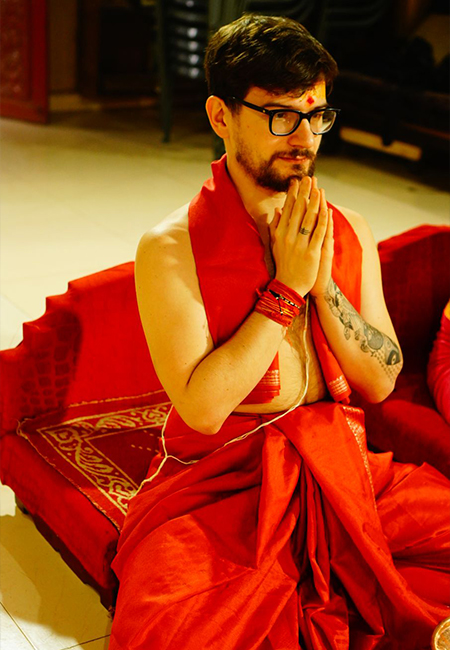
As the years of childhood gradually gave way to adolescence, the direction of life began to move into a different sphere. The atmosphere of service and healing that surrounded Dr. Paweł Kwaśniewski during his early years remained present in the background, yet his personal interests during this stage developed strongly in the field of artistic expression. Music and movement became the primary channels through which he explored discipline, creativity, and personal growth.
During his secondary school years he followed an educational path that required dedication and careful time management. Alongside his regular schooling, he was also attending a music conservatory. There he studied solo singing and piano, training in an environment where musical precision and expressive performance were equally valued. Balancing two demanding educational tracks was not easy, yet it taught him an important lesson about commitment. Progress in the arts requires consistent practice and perseverance, and these habits of discipline would later support him in many other areas of life.
Music became one of the earliest structured forms through which he learned concentration and emotional expression. Working with voice and piano demanded patience and attention to detail. Every piece of music required repeated rehearsal and refinement. Through this process he began to understand that improvement is not immediate but emerges gradually through sustained effort.
At the same time, another artistic field was developing alongside his musical training. He began studying at the dance theatre, entering an environment where movement and storytelling were combined into a powerful form of expression. Dance theatre required both technical skill and emotional interpretation. Performers were expected not only to execute movements accurately but also to convey meaning through posture, gesture, and timing.
“Sometimes the body is where life speaks most clearly. What first feels like loss can become the place where a deeper calling begins to take shape.”
Phase 3 : The Turning Point : Injury, Recovery, and the Decision to Heal
The artistic years had given Dr. Paweł Kwaśniewski discipline, expression, and a strong relationship with movement. Dance was not just an activity in his life. It had become a serious commitment and an important part of how he understood himself. He had studied, trained, performed, and taught within a world that required physical control, emotional intensity, and constant dedication. The body was central to everything. It was the source of performance, the instrument of expression, and the foundation of a path he had worked hard to build.
During his professional dance career, he suffered a serious injury that changed the course of his life. He described this moment plainly and without exaggeration. It stopped his life for a time. The interruption was not symbolic. It was physical, immediate, and deeply personal. After the injury, he found himself in a wheelchair, and he was told that he was not going to walk. For someone whose daily reality had been built through movement, rhythm, and performance, this was more than a medical crisis. It was a moment in which identity, possibility, and direction were all placed under question.
There are moments in life when a person is forced into stillness not by choice, but by circumstance. This was one of those moments. The body that had once been trained to express strength and artistry had become a place of pain, limitation, and uncertainty. Yet even in that state, something in him refused final defeat. He did not describe this period as one in which someone arrived to rescue him. In fact, when asked who guided him through that difficult time, his answer was simple. Nobody. He said that if you are sick, you have to take care, because nobody is going to help you. This was not bitterness. It was a hard-learned understanding of self-dependence. It became one of the strongest motivations of his life.
Out of that difficult reality came one of the clearest decisions he ever made. When told that he would not walk, he decided that he was going to heal himself. That statement carries enormous weight because it reveals the turning point not only in his circumstances but also in his inner direction.
Note of Thanks
The life journey of Dr. Paweł Kwaśniewski reflects not only personal effort but also the influence of people and traditions that shaped his understanding of service, discipline, and compassion. This note of gratitude recognises those whose presence helped guide and support that path.
Deep appreciation is offered to his parents, Ewa and Wiesław Kwaśniewski, whose dedication to helping others created the earliest example of service in his life. Their commitment to supporting people through their professional work left a lasting impression and quietly influenced the values that would later guide his own path in healing and education.
Gratitude is also extended to the teachers and mentors whose knowledge helped deepen his understanding of yoga and therapeutic practice. Among them, Mukunda Stiles and Chinnamasta Stiles offered meaningful inspiration through their work and teachings.
Acknowledgement is also given to the educational institutions and learning environments where he continued his studies in fields connected with psychology, trauma, and health sciences. These institutions provided the academic framework that strengthened his professional development and allowed him to integrate traditional knowledge with modern study.
Special appreciation is extended to the many students and clients who have been part of his journey. Their trust and willingness to learn created the living space where knowledge could be practised, shared, and refined through real experience.
Finally, gratitude is expressed to everyone who continues to walk alongside this work through learning, dialogue, and sincere interest in the traditions of healing and wisdom that guide his life.
Thanks,
– Dr. Paweł Kwaśniewski