“The curious paradox is that when I accept myself just as I am, then I can change.”
Introduction
The path that Dr. Anita Sunil has travelled is a tapestry that is weaved with compassion, resiliency, and an uncompromising devotion to the dignity of the human being. Her life has been a demonstration of selflessness, strength, and the courage to remain silent. She was brought up in a household that was deeply steeped in social ideals and kindness. She began her journey with the goal of becoming a physician, and she has since established herself as a well-known clinical psychologist. Her journey has been distinguished by struggle, reinvention, and vision. She is a pioneer in the fields of early intervention, inclusive education, trauma-informed care, and play and art-based therapies, and she has had a significant impact across India, Oman, and the United Arab Emirates for decades.
She was born into a family where generosity was not a choice but rather a way of life, and where she was surrounded by acts of compassion at every meal. Little Anita, who was in the third grade at the time at Mount Carmel Anglo Indian High School, Tangasseri, in the seaside town of Kollam went on a stage and spoke about Florence Nightingale, often known as the “lady with the lamp.” The bells of the convent were ringing in the background. Those words never came to an end. Simply put, it became the driving force behind her life’s work.
She was shaped by caring and commitment as a result of her upbringing in a family of providers, with a father who worked for the Indian Railways and a mother who provided education not just to children but also to grownups. Even the walls of their home had a reputation of hospitality, which attracted friends, neighbours, and teachers to the warmth of their home.
Her dream was to become a physician. However, fate, disguised as capitation fees and admission examinations, gently guided her in the direction of psychology, also leading her, without her knowledge, to the work that she was always destined to accomplish.
This biography tells the story of a woman who stood tall when the world needed someone to believe in change, healed when hope seemed lost, and listened when others went mute. Her story is an inspiring one.
“It is easier to build strong children than to repair broken men.”
Phase 1: Early Childhood – More Than Marks: The All-Rounder with compassion
The early years of Dr. Anita’s life was spent in Tangasseri, a small part of Kollam town, with rich heritage of the British Colonial area Kerala, a coastal town that is well-known for its backwaters, vibrant culture, and communities that are deeply connected to one another. She was ensconced in a domicile that was located in close proximity to the beach, and she was surrounded by the steady buzz of communal life and the rhythmic lull of the sea. Her surroundings were not just beautiful but also socially supportive, which helped her develop the capacity for empathy and adaptation that would come to define her by the time she was an adult.
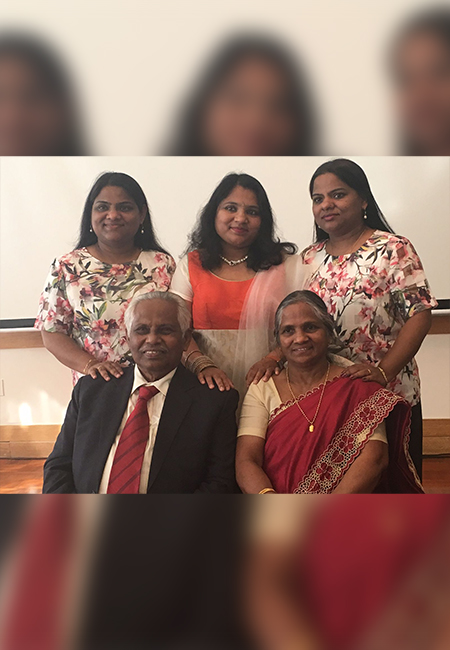
Her mother and father were a rock of support and a source of strength. Her mother, who was a teacher, contributed warmth, wisdom, and ideals that were steeped in service to the family, while her father, who worked for the Indian Railways, was noted for his dependability and discipline. The home that they constructed together was more than simply a house; it was a place where trust, kindness, and helpfulness were not only taught, but also practiced on a daily basis.
In addition to her identical twin sisters, Dr. Anita was one of three children that were born. A strong feeling of identification and belonging was instilled in her as a result of her upbringing in a family that was so loving and supportive. The fact that she was given independence and responsibility at a young age, which aided in the development of her emotional intelligence at an early age, is something that she frequently mentions.
At Mount Carmel Anglo-Indian School, which is widely regarded as one of the most prestigious educational establishments in Kollam, she started her official education. Her academic performance was constantly strong, despite the fact that she never believed herself to be among the highest-ranking students. Her comprehensive personality and her leadership abilities, however, were the things that truly set her apart from others. She was involved in almost every field, including music, acting, athletics, and public speaking, among others. Having been given the post of Blue House Prefect, which was a leadership role, she conducted herself with self-assurance and pride.
“The best way to find yourself is to lose yourself in the service of others.”
Phase 2 : Career and Achievements –A Purposeful Redirection
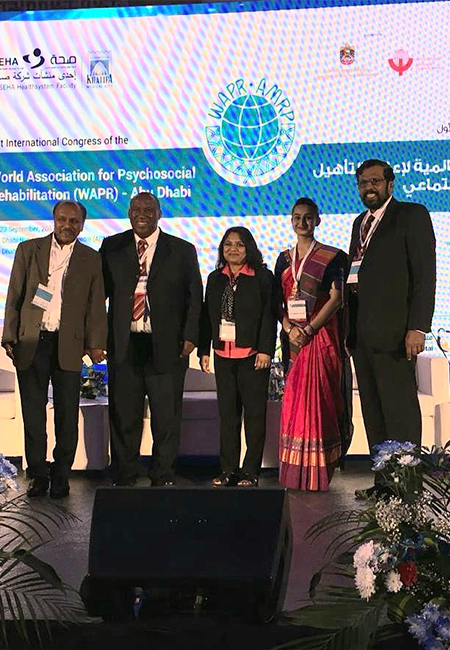
During the beginning of her professional adventure, Dr. Anita spent a large portion of her time working in a mental hospital in India. During this time, she received foundational knowledge in the field of psychiatric care. Her initial experience with clinical settings and the intricate emotional landscapes of patients who required psychiatric help was gained through this experience. These early experiences imprinted in her a remarkable sensitivity to human suffering and perseverance, and she was young but highly sensitive. Although she was young, she was deeply observant.
After that, she made the shift to working in a child development centre, which was the moment when her career took a significant turn. She received training in the Vojta Therapy Method & Montessori Method of therapy, which is quite similar to the present day Play Therapy. The therapy especially focused on Early Intervention, which is a specialist approach implemented in Germany with the purpose of identifying developmental deficits in children between the ages of zero and three. During that time period, there were only a few experts in India who had received training in this manner, and Dr. Anita was one of the pioneers in this field. The assessments that she conducted were not merely professional; rather, they were imbued with empathy, providing parents with both clarity and hope.
After that, she relocated to Oman, where she worked for a decade as the Consultant Clinical Psychologist, at the Centre for Special Education, Indian School Muscat, a well-known institution for people with special needs as well as the difficulties proved to be enormous. There was a scarcity of resources, and it was difficult to acquire formal instructional materials. She did not allow herself to be discouraged by these constraints; rather, she turned them into possibilities for innovation. Utilizing materials that were readily available in the area, she and her team developed instructional instruments that were tactile, sensory, and participatory. Her enthusiasm for making a difference became the impetus behind every decision that was made, every innovation that was made, and every breakthrough.
“Success is not the key to happiness. Happiness is the key to success. If you love what you are doing, you will be successful.”
Phase 3 : Milestones and Achievements – Building Systems, Touching Souls & Shaping Futures
Dr. Anita began her official education at Mount Carmel Anglo-Indian School in Kollam, Kerala. It was also located along the picturesque coastline. This illustrious institution was not just renowned for its rigorous academic standards, but also for its ability to cultivate well-rounded personalities.
Dr. Anita continually maintained a solid academic performance that was commendable, despite the fact that she modestly believed herself to be an average student academically. On the other hand, her actual talent was revealed in the extracurricular activities and leadership roles that she participated in. She was a Blue House Prefect, a position that represented both the faith that her classmates had in her and the promise that she possessed as a leader.
It was a lively and varied experience for her at school. She was widely recognised as one of the most renowned all-rounders at the school, and she excelled in a variety of activities, including singing, acting, and public speaking. She also enthralled audiences with her performances. With English serving as the major medium of communication, she was able to strengthen her fluency and confidence, both of which would later prove to be extremely useful in her work advocating for global causes.
The work that Dr. Anita does has brought her into the most profound emotional regions of the human experience. Licensed by the Community Development Authority as Social Therapist and Psychologist, she has provided support to those who have been victims of violence, abuse, and trauma faced in different life scenarios. The fact that she is able to maintain such emotionally taxing job is not just due to her training, but also to the profound spiritual and intellectual base she possesses.
A balance that she created over the course of years of dealing with highly vulnerable groups is what she refers to as her approach, which she characterises as a combination of detached compassion and focused mindfulness.
Final Thoughts – A Life Lived in Service
The trip that Dr. Anita has taken is not only a chronological account of her accomplishments; rather, it is a manifestation of a soul that is sincerely dedicated to restoring, comprehending, and altering the lives of other people. Every obstacle that she conquered, every constraint that she surmounted, and every individual that she helped became a part of a bigger purpose: to serve as a beacon of light for others who are navigating the darkest corners of life.
It is not only in the confines of therapy rooms or conferences that her work continues; it is also in the hearts of those whom she has empowered. Her impact has established the seeds of resilience, compassion, and hope in a wide range of individuals, from pupils who are struggling to those who have survived traumatic experiences, from family members to future professionals.
It is a tribute to what is possible when knowledge is combined with kindness, and when service becomes a way of life, that this book stands as a testament. The narrative of Dr. Anita serves as a reminder that true success is not measured by plaudits, but rather by the extent to which one elevates the lives of others and by the manner in which one leaves the world in a better state than it was found in.
Thanks,
– Dr. Anita Sunil