

“The best way to lift one’s self up is to help someone else.”
Introduction
Every meaningful journey begins with a foundation shaped by environment, learning, and a commitment to purposeful work. The life of Dr. Porandatt Narine reflects such a journey—one defined by dedication to agriculture, organisational leadership, and service to the working communities of Guyana. His professional path demonstrates how education, practical experience, and institutional responsibility can come together to create lasting contributions within both industry and public service.
Dr. Porandatt Narine was born on December 31, 1988, and grew up in Mon Repos on the East Coast of Demerara. This wasn’t a very agricultural area, but his parents were raising animals, mostly sheep. The environment it fostered around them gave him an early look at what it was like to work in agriculture and how important labour communities were for keeping the economy going. These early experiences taught him about being responsible, following rules, and how important it is to work together.
Education became an important stepping stone in his development. His academic journey began at St. Roses High School, where he completed his CXC (Caribbean Examinations Council) certification with ten subjects, including Mathematics, English A, and Agricultural Science. These studies strengthened his academic foundation while also reinforcing an early interest in agriculture and structured learning. This phase of education helped prepare him for the professional and technical training that would follow. He obtained the rest of his certifications/education in his time at GAWU.
He went to the Guyana School of Agriculture from 2007 to 2009 to get a diploma in agricultural science because he wanted to learn more about a specific subject. The training gave him both practical and theoretical knowledge of agricultural systems, which provided him the skills he needed to do well in one of the country’s most important industries.
Around this same period, he began his professional career with the Guyana Sugar Corporation Inc., where he served as a Fielda Foreman from 2007 to 2017. He was chosen to represent GAWU at the IUF Young Workers Conference in Barbados in 2019, and he was also chosen to be on the committee. In 2022, he took on an even bigger role in the organisation by becoming the First Vice-President of the IUF Young Workers Executive Committee for the Caribbean region. He was invited to the IUF Global Congress in Geneva in 2023, where he was able to speak to the congress about the important issue of climate change.
“The future depends on what you do today.”
Phase 1: Roots in Mon Repos –The Early Foundations of Dr. Porandatt Narine

Long before the wider world recognises achievements, every life of purpose begins quietly. For Dr. Porandatt Narine, those beginnings were shaped in the community of Mon Repos on the East Coast of Demerara, Guyana. The village environment, closely connected to the rhythms of agricultural life, provided the earliest context for understanding discipline, responsibility, and the importance of collective effort. This setting laid the foundations of his character.
Born on December 31, 1988, Dr. Porandatt Narine grew up in a region where agriculture played a central role in everyday life. Communities along the east coast of Demerara have long been linked to agricultural production and labour, and the realities of that environment have quietly shaped the outlook of many young individuals growing up there. For him, the surroundings of Mon Repos were not merely a place of residence but a formative landscape that influenced his understanding of work, perseverance, and community interdependence.
He saw the hard work of farmers who kept the region’s economy going from a young age. These experiences gave me a deep respect for work and for the people who spent their lives keeping industries going that helped whole communities. These observations, though subtle in the early years, would later shape his professional dedication to agricultural advancement and the welfare of workers.
The household environment in which Dr. Porandatt Narine grew up also played a vital role in shaping his values. Stability, responsibility, and respect formed the core principles that guided daily life. These values became internalised over time, nurturing a mindset that viewed personal growth as inseparable from responsibility toward society. The lessons learned during these early years would later influence the choices he made in both education and career.
When he was a young student, he showed an interest in learning and growing his mind. Slowly but surely, education became one of the most important ways for him to grow as a person and learn more about the world.
“Education is the most powerful weapon which you can use to change the world.”
Phase 2 : The Pursuit of Agricultural Knowledge
The transition from secondary education to specialised learning marked an important turning point in the life of Dr. Porandatt Narine. Having completed his academic foundation at St. Roses High School, he stood at the threshold of decisions that would determine the direction of his professional future. Early exposure to Agricultural Science during his school years had already sparked a strong interest in the field. Rather than allowing this interest to remain only theoretical, he chose to pursue formal education that would provide practical and technical understanding of agriculture.
This choice made him sign up for the Guyana School of Agriculture, which is one of the most important schools in the country for training people for jobs in agricultural development. For a young man who grew up in the farming area of Mon Repos, unique only to his family and few others, this step was both a continuation of his roots and the start of a deeper professional journey.
Between 2007 and 2009, Dr. Porandatt Narine pursued a Diploma in Agricultural Science, an academic program designed to combine classroom instruction with hands-on practical experience. The environment of the Guyana School of Agriculture provided a structured space where theoretical knowledge and field practice could work together. For students aspiring to build careers within agricultural industries, this balance was essential.
During this time, he learned about a wide range of agricultural topics that helped him understand the field better than he had in high school. To do well in agricultural education at this level, you needed to be disciplined, dedicated, and able to connect scientific ideas to real-world farming practices. The programme required both mental focus and physical involvement in farming tasks.
The academic training provided him with insights into the management of agricultural systems and the responsibilities involved in sustaining productivity within the sector. For Dr. Porandatt Narine, these years were not simply about earning a diploma. They represented a stage of intellectual and professional development in which he began to understand agriculture not only as an occupation but as a critical pillar of national development.
“The best way to find yourself is to lose yourself in the service of others.”
Phase 3 : Entering the Fields of Responsibility – Early Professional Life
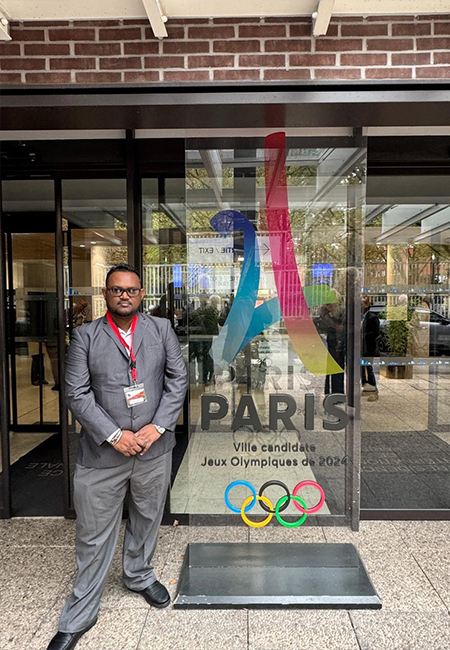
The transition from academic preparation to professional responsibility often defines the direction of a person’s life. For Dr. Porandatt Narine, the completion of his Diploma in Agricultural Science marked the beginning of a new chapter—one that moved beyond the classroom and into the demanding realities of agricultural work. Armed with both theoretical knowledge and practical training, he stepped into the workforce with a clear sense of purpose and readiness to contribute.
Guyana Sugar Corporation, Inc., was one of the most important organisations in Guyana’s agricultural and economic landscape when he started his career. The sugar industry has been important to the country’s history and growth for a long time. It has provided jobs for thousands of people and kept whole communities alive along the coasts. To work for such a company, you needed to know a lot about technology, be disciplined, responsible, and able to work well with others in changing field settings.
From 2007 to 2017, Dr. Porandatt Narine served as a Field Foreman within the organization. The position demanded a high level of accountability and practical leadership. Unlike many roles that remain confined to administrative settings, the responsibilities of a field foreman are closely tied to daily operational activities. Each day presented new challenges that required careful oversight, organization, and effective communication.
Dr Porandatt Narine was in charge of field operations in this role. He made sure that agricultural activities were done quickly and in line with established productivity standards. The sugar industry needs to carefully coordinate labour, timing, and environmental conditions in order to grow crops. The success of these operations depends a lot on how well supervisors can keep things in order, give clear directions to workers, and make sure that tasks are done correctly and consistently.
Note of Thanks
The completion of this biography would not have been possible without the experiences, institutions, and communities that have shaped the life and journey of Dr. Porandatt Narine. This work stands as a reflection of the dedication, perseverance, and sense of responsibility that have guided his path through agriculture, organisational leadership, and national service.
We extend our gratitude to the institutions that offered him opportunities for growth and service throughout his professional journey. Organizations such as the Guyana Sugar Corporation Inc. and the Guyana Agricultural and General Workers Union played an important role in shaping the environment in which his leadership and commitment to workers’ welfare were developed and strengthened.
Appreciation is also extended to the national bodies and committees that entrusted Dr. Porandatt Narine with responsibilities connected to governance and public development. These roles provided opportunities to contribute to systems that support agricultural progress, institutional accountability, and community welfare.
Most importantly, this biography honours workers, communities, and people whose dedication to agriculture and national development continues to inspire meaningful service. Their strength and dedication are what keeps institutions and industries growing.
Through their collective influence, the journey of Dr. Porandatt Narine has been shaped by shared purpose, cooperation, and a continuing dedication to strengthening the communities and institutions that sustain Guyana’s progress.
Thanks,
– Dr. Porandatt Narine