“True success is not measured by how far one rises, but by how deeply one remembers where the journey began.”
Introduction
The life journey of Dr. Faisal Gulvady is a story shaped by persistence, patience, and values that remained steady even as circumstances changed. It is not a story of privilege or instant success, but one built slowly through effort, learning, and faith. From a small village in coastal Karnataka to establishing himself as an entrepreneur in Qatar, his life reflects how determination, supported by family and guided by conscience, can transform hardship into purpose.
Dr. Faisal was born and raised in Sastan village near Udupi–Mangalore, in a middle-class Muslim family rooted in simplicity. His father, Maidu Kutty, earned a living through a scrap business and believed strongly in the importance of honest work and education, despite having very little formal schooling himself. His mother, Avvama, was a homemaker whose quiet generosity left a lasting impression on her children. She would offer tea or food to anyone passing by their home, teaching compassion not through words but through daily actions. Growing up among six siblings, Dr. Faisal learned early the values of sharing, responsibility, and understanding the needs of others.
His schooling was completed in a Kannada-medium environment, reflecting both the rural setting and the educational structure of the time. English entered his academic life later, only as a subject, not as a language of comfort or confidence. Despite these limitations, his father ensured that education remained a priority for all the children. This belief in learning shaped Dr. Faisal’s outlook and gave him the confidence to move beyond the boundaries of his village. He went on to complete his Bachelor of Commerce, gaining a foundational understanding of finance and discipline. Although he pursued an MBA and completed most of the coursework, he was unable to write the final examinations due to circumstances, choosing instead to move forward and focus on practical learning through work.
From childhood itself, Dr. Faisal showed a strong interest in business. He was naturally curious about how enterprises were built and how people managed trade and production. His uncle, a businessman, became an early influence, allowing him to observe factory operations and business decisions closely. These experiences shaped his thinking and strengthened his desire to understand business from the ground level rather than through theory alone.
His professional journey began in India while he was still young. He worked part-time at a cashew factory, handling accounting-related responsibilities, and later took up full-time accounting roles in Bangalore. After that, he moved to Mumbai, where he worked under a Chartered Accountant. These years were crucial in developing his technical skills, discipline, and understanding of financial systems. They also taught him patience and the importance of accuracy, responsibility, and consistency in professional life.
“Great journeys often begin in quiet places, where character is shaped long before destiny is revealed.”
Phase 1: Born into Simplicity, Raised with Values
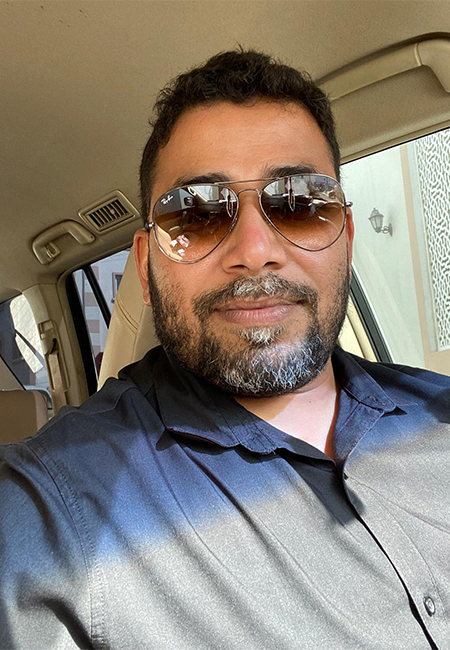
The life of Dr. Faisal Gulvady began far away from recognition, comfort, or privilege. His earliest years unfolded in Sastan village near Udupi–Mangalore, a coastal region of Karnataka where life moved at a slower, humbler pace and values mattered more than appearances. This village, surrounded by tradition, community bonds, and simplicity, became the first classroom in which his character was formed. Long before ambition found direction, it was here that discipline, empathy, and resilience quietly took root.
Born into a middle-class Muslim family, Dr. Faisal grew up witnessing the dignity of honest labor and the strength of quiet sacrifice. His father, Maidu Kutty, earned his livelihood through a scrap business. Though he had very little formal education and could barely write beyond signing his name, he carried an extraordinary clarity of thought. He understood the value of effort, integrity, and responsibility and believed deeply that education could change the destiny of his children. In an era and environment where higher education was neither common nor expected, especially within rural communities, his father’s vision stood apart. He chose to invest in his children’s learning, even when it meant personal sacrifice.
His mother, Avvama, was the emotional and moral center of the household. As a homemaker, her world revolved around caring for the family, yet her compassion extended far beyond the walls of their home. She believed in helping others instinctively, without calculation or expectation. Anyone passing by their house – a traveller, a laborer, or a stranger – was often invited in for tea or food. These gestures were simple, almost unnoticed, yet they carried a powerful lesson. For young Faisal, kindness was not something to be discussed or celebrated; it was something to be lived, naturally and consistently. This silent influence would later shape his lifelong commitment to charity and social responsibility.
“When circumstances restrict opportunity, determination learns to speak louder than comfort.”
Phase 2 : Learning Against Limitations Education, Language, and Quiet Determination
The second phase of Dr. Faisal Gulvady’s life is defined by learning under limitations and growing through discipline rather than advantage. These were the years in which education became not merely a routine, but a responsibility carried with seriousness, patience, and an inner resolve shaped by family values. While the world around him remained modest and rural, his mindset slowly began to expand, guided by effort and belief rather than ease.
Dr. Faisal’s formal education unfolded entirely within a Kannada-medium system. In the village and surrounding regions of coastal Karnataka, this was the natural path for most children of his generation. English was not the language of instruction, conversation, or confidence. It entered his life only as a subject later in school, approached academically rather than fluently. There were no English-speaking environments, no exposure to global media, and no sense of advantage attached to language. What existed instead was the expectation to study sincerely, respect teachers, and complete one’s education with integrity.
For a young student like Faisal, this environment presented both stability and challenge. Stability came from familiarity with the language, the culture, and the rhythm of village life. The challenge lay in knowing that the wider world operated differently and that progress would one day demand adaptation. Yet, at this stage, there was no pressure to compare or compete. His focus remained on learning within the means available, absorbing knowledge steadily, and fulfilling his responsibilities as a student.
At home, education was treated with quiet seriousness. His father, Maidu Kutty, despite having very little formal education himself, placed immense importance on his children’s schooling. He did not speak of ambition in grand terms, but his actions revealed his priorities. Ensuring that all his children attended school, completed their studies, and behaved responsibly mattered more to him than immediate financial comfort. For Faisal, this created a strong internal motivation not driven by fear or force, but by respect for his father’s sacrifices.
“Before ambition finds form, curiosity quietly prepares the mind for possibility.”
Phase 3 : The First Spark of Enterprise - Curiosity, Observation, and Early Direction
Phase 3 of Dr. Faisal Gulvady’s life marks the period when curiosity began to mature into clarity. These were the years when his inner interest in business, work, and enterprise moved beyond casual observation and slowly shaped his sense of direction. Nothing dramatic announced this shift. There were no grand plans or spoken ambitions. Instead, this phase unfolded quietly, through exposure, attentiveness, and a growing desire to understand how livelihoods were built.
From a young age, Faisal was different in the way he observed the world around him. While many children accepted daily routines as they were, he was drawn to the how and why behind them. He paid attention to conversations about work, trade, and responsibility. He listened carefully when elders discussed earnings, challenges, and decisions. These moments, though informal and unstructured, became an important part of his early learning.
One of the most influential figures during this phase was his uncle, a businessman whose working life offered Faisal a first-hand view of enterprise beyond the village routine. Whenever he had the opportunity, Faisal chose to spend time with him. He observed how his uncle spoke to people, handled challenges, managed operations, and made decisions. There were no formal lessons or instructions given; learning happened through watching, listening, and reflecting. For Faisal, this exposure created a sense of fascination rather than pressure. Business began to appear not just as a way to earn, but as a system of responsibility, coordination, and effort.
What stood out to him most was the discipline involved in running a business. He noticed that success did not come from chance but from consistency in showing up daily, managing people, and making careful choices. These observations slowly shaped his mindset. Even without fully understanding the complexity of business at that age, he sensed that enterprise required patience, courage, and accountability.
Note of Thanks
This life story of Dr. Faisal Gulvady is written with deep gratitude for the people whose presence, sacrifices, and belief shaped his journey at every stage. No achievement stands alone, and no path is walked without support. This note of thanks is an acknowledgment of those who gave strength when it was most needed and guidance when direction was still forming.
First and foremost, Dr. Faisal offers his heartfelt gratitude to his parents, his father, Maidu Kutty, and his mother, Avvama. From his father, he learned the value of honest work, discipline, and the importance of education, even when circumstances were limited. From his mother, he inherited compassion, generosity, and the belief that helping others is not an act of charity alone, but a way of life. Their teachings continue to guide his decisions, shaping both his personal and professional conduct.
He expresses sincere thanks to his wife, Rehana, whose unwavering support became a pillar during the most uncertain years of his journey. When challenges tested his confidence and the future appeared unclear, her belief gave him strength to continue. Her partnership, patience, and encouragement remain deeply woven into every success that followed.
Dr. Faisal also extends his gratitude to his siblings and extended family, whose shared roots and values provided belonging and stability. Their presence reinforced the importance of humility, unity, and perseverance throughout his journey.
He acknowledges his employees and team members, whom he considers an extended family. Their dedication, trust, and shared effort transformed vision into reality. He remains grateful for their loyalty and the mutual respect that continues to strengthen their collective growth.
Finally, Dr. Faisal offers thanks to every individual who walked beside him in any capacity through guidance, prayer, support, or silent belief. This journey stands as a reminder that gratitude completes success and that honoring those who contribute to our lives is the truest form of achievement.
Thanks,
– Dr. Faisal Gulvady