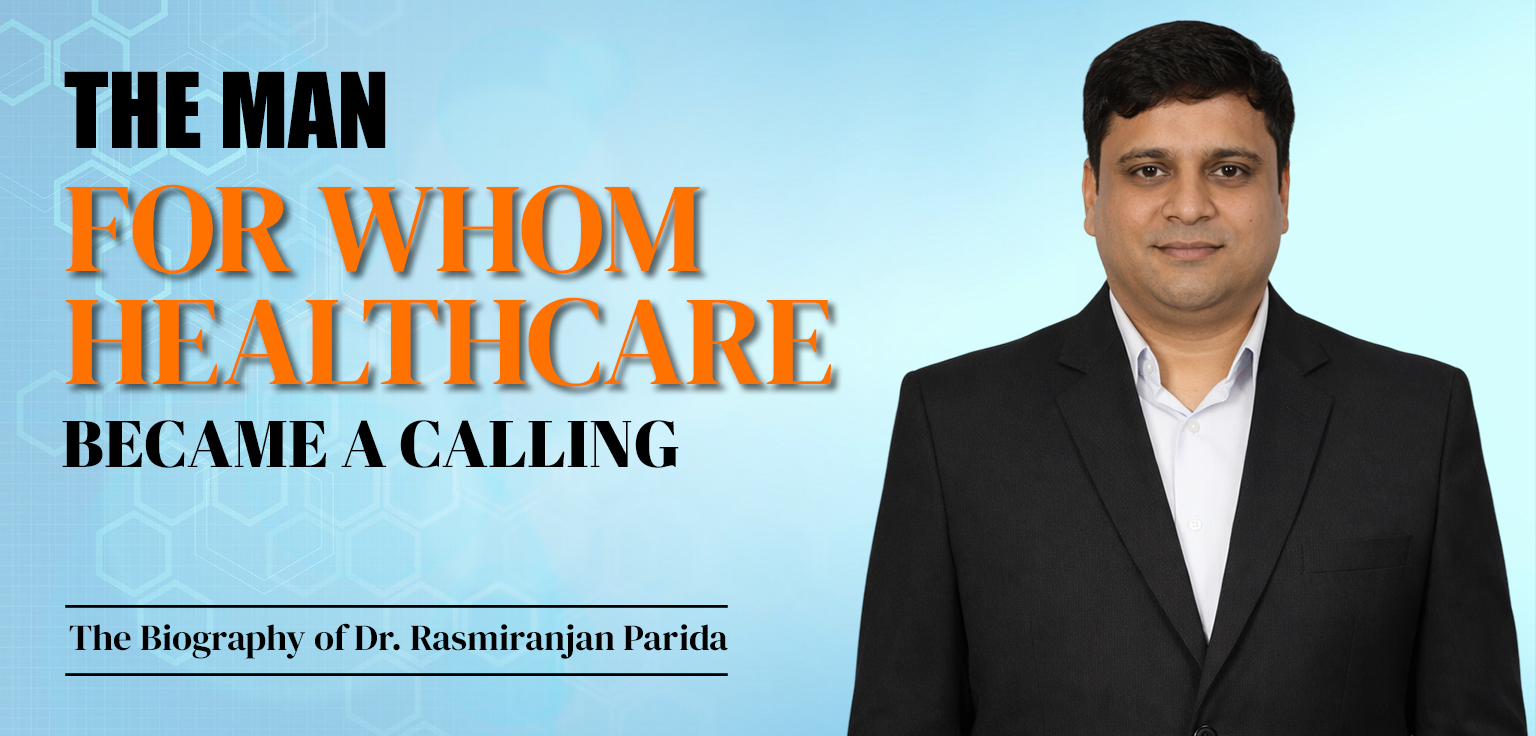
"Healthcare was never simply a profession to be pursued but a responsibility to be carried — a commitment measured not by success but by the lives entrusted to it."
Introduction
A biography, when thoughtfully told, is never simply the account of a career. It is the unfolding of choices, circumstances, risks, and convictions that quietly shape a life over time. The journey of Dr. Rasmiranjan Parida stands as a compelling illustration of how professional identity is not always predetermined but gradually formed through experience, observation, and perseverance. His story reflects not only personal progress but also the broader realities of the healthcare ecosystem, an environment where responsibility is constant, decisions carry consequences, and improvement is both a necessity and a challenge.
At its foundation, this narrative is rooted in learning and preparation. Dr. Parida’s entry into the healthcare domain began with a technical orientation through the DMLD course, a step that positioned him within the diagnostic sciences. Diagnostics, by its nature, demands accuracy, discipline, and a methodical approach to problem-solving. It is a field where clarity is essential and margins for error are minimal. This early training provided more than professional qualification; it instilled a structured way of thinking that would later influence his managerial and entrepreneurial decisions. The diagnostic environment also offered a close view of patient realities, clinical processes, and the complex relationship between medical technology and human well-being.
Yet professional journeys rarely remain static. As his exposure deepened, Dr. Parida’s career trajectory expanded beyond technical practice into organisational and strategic functions. His movement into healthcare marketing and management coincided with an important change in perspective. Rather than working solely within the clinical framework, he engaged with the operational mechanics who sustain healthcare delivery, communication, systems planning, service positioning, and institutional growth. This transition is particularly meaningful because it highlights a recurring theme in his journey: adaptability. Growth did not occur through abrupt reinvention but rather through a progressive understanding of how healthcare institutions function as both service providers and complex organisational structures.
The biography also captures the entrepreneurial dimension of his work. From diagnostic services to hospital development, Dr. Parida’s professional evolution reflects a widening scale of responsibility. Building and managing healthcare facilities requires more than expertise; it demands resilience, risk tolerance, and continuous engagement with uncertainty. Healthcare systems operate under dynamic pressures, clinical demands, infrastructure constraints, workforce coordination, regulatory considerations, and financial sustainability. Navigating such complexity is itself a form of leadership, shaped not by singular events but by persistent decision-making and long-term commitment.
One of the defining characteristics of this journey is the emphasis on capability expansion and technological alignment. The healthcare sector continually evolves, driven by medical advancements and changing patient expectations. Within this context, Dr. Parida’s focus on strengthening diagnostic and clinical services, as reflected in the transcript, signals a forward-looking orientation. Technology adoption is never a purely technical act; it is a strategic decision that affects accessibility, affordability, and quality of care. He demonstrates a practical awareness of how to balance innovation with community needs through his reflections on cost structures, patient benefit, and comparative realities across institutions.
"Before ambition ever takes shape, it is values that quietly decide the direction of a life. What we inherit in discipline and character often becomes greater than any opportunity we later pursue."
Phase 1: Roots, Responsibility, and the Making of Perspective
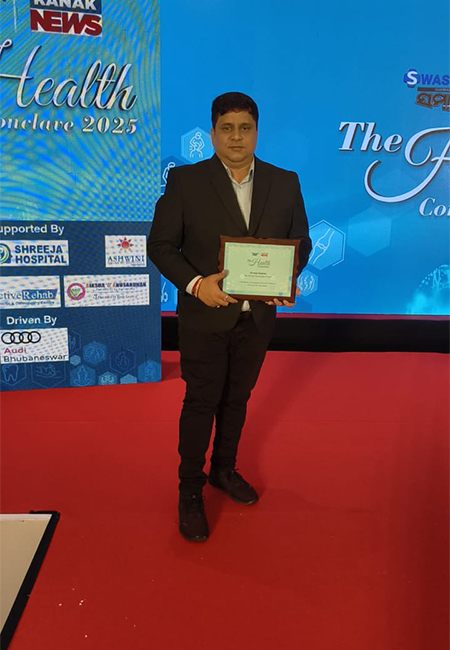
Every life story has a beginning that quietly determines the direction of everything that follows. In the case of Dr. Rasmiranjan Parida, the earliest influences did not arise from dramatic circumstances or extraordinary privilege but from a household defined by discipline, education, and deeply rooted values. His formative years were shaped within a family environment where learning was respected, effort was expected, and responsibility was understood as a natural part of daily life rather than an imposed obligation.
His father, Rajkishor Barida, was a dedicated high school teacher who was at the heart of this foundation. The teaching profession carries with it a distinctive rhythm, measured, structured, and guided by patience. In such a home, education is not merely an activity confined to classrooms; it becomes a living presence woven into conversation, habits, and expectations. Observing a parent engaged in the act of teaching often instills more than academic awareness. It nurtures an appreciation for consistency, clarity of thought, and the quiet dignity of guiding others toward understanding. These elements, subtle yet powerful, became part of the atmosphere in which Dr. Parida’s early outlook was formed.
Sanjukta Parida, his mother, had an equally significant influence, anchoring the family’s emotional framework. While professional discipline provides direction, emotional stability provides endurance. A nurturing maternal influence often becomes the unseen force that sustains confidence, resilience, and balance. Within this supportive space, challenges are approached with composure, and aspirations are encouraged with patience rather than pressure. Together, his parents cultivated an environment where learning and character evolved side by side, reinforcing the belief that growth is as much about mindset as it is about achievement.
Growing up alongside two brothers and two sisters, Dr. Parida’s early life unfolded within the dynamics of a larger family structure. These kinds of places naturally promote working together, being flexible, and understanding each other.
"Education did not merely prepare me for a profession; it reshaped the way I understood responsibility, patience, and the importance of learning beyond certainty."
Phase 2 : Education, Formation, and the Expansion of Thought

If the earliest years of life establish values, the years of formal education refine them for direction. For Dr. Rasmiranjan Parida, this stage represented more than academic progression; it became a period of intellectual formation, exposure to structured knowledge, and the gradual shaping of an independent worldview. Education, in its truest sense, does not merely transmit information. It trains the mind to question, interpret, and respond to the world with clarity and purpose. Phase 02 of his journey captures this transformation, where curiosity began aligning with discipline, and learning evolved into perspective.
The academic pathway referenced in the transcript highlights his association with Utkal University, an institution that formed a central part of his educational development. Universities often serve as environments where knowledge deepens beyond foundational schooling and individuals encounter both academic rigours and broader social realities. Within such settings, learning becomes multidimensional. It is not limited to textbooks or examinations but expands through dialogue, observation, and intellectual challenge. For Dr. Parida, this phase marked the movement from guided study toward self-driven understanding.
Education at this level typically introduces a new rhythm of responsibility. Higher education requires internal organisation, unlike earlier schooling that imposed structures externally. Students must manage time, navigate academic expectations, and develop independent problem-solving abilities. This transition quietly nurtures maturity. It teaches not only subject comprehension but also decision-making, resilience, and adaptability, qualities that later prove indispensable in professional life. The significance of this phase lies not simply in academic completion but in the habits of thought cultivated through the process.
The transcript suggests completion of key academic stages, including +2, +3, and graduation. While specific disciplines and timelines are not distinctly audible, the progression itself conveys continuity and dedication. Academic advancement requires sustained effort.
"In diagnostics, I learned a lesson that extends far beyond medicine , precision is not simply technical accuracy; it is a form of respect for human life."
Phase 3 : Entry into Healthcare – Precision, Learning, and the First Professional Identity
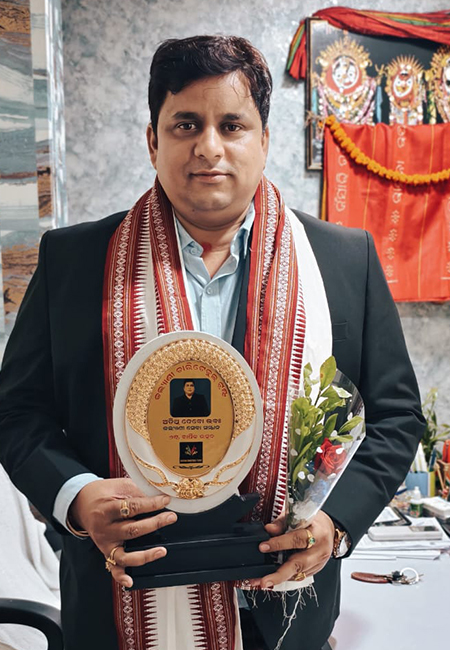
The transition from education to professional life often marks one of the most defining shifts in an individual’s journey. For Dr. Rasmiranjan Parida, this phase represented not merely the beginning of employment but the emergence of a practical identity shaped by responsibility, technical discipline, and real-world consequences. While academic environments cultivate knowledge and perspective, professional settings demand application, accuracy, and accountability. Phase 03 captures this crucial evolution, where learning began interacting directly with human realities.
His decision to take the DMLD (Diploma in Medical Laboratory Diagnostics) course, which is mentioned in the transcript next to the year 2003, was a key step in this change. This choice positioned him within the diagnostic sciences, a field that occupies a uniquely critical space within healthcare. Diagnostics functions as the foundation upon which medical decisions are often built. Behind every treatment plan, clinical interpretation, or therapeutic intervention lies the need for precise and reliable diagnostic insight. Therefore, entering such a domain is not simply a career choice but a commitment to accuracy and methodological rigour.
The diagnostic environment introduces professionals to a culture of precision. Unlike many fields where outcomes may allow for degrees of flexibility, diagnostics demands clarity, consistency, and disciplined execution. Each process, measurement, and observation carries significance. Errors are not abstract; they directly affect interpretation and decision-making. For Dr. Parida, immersion in this setting cultivated habits of careful analysis and structured thinking, qualities that later became central to his broader professional trajectory.
Equally important during this phase was the development of practical awareness. Patient care deeply intertwines with diagnostics, making it more than just a technical discipline. Laboratory data informs clinical judgement, guiding physicians toward understanding conditions that are often invisible to immediate observation.
Note of Thanks
No journey, regardless of its direction or scale, is ever built in isolation. The life and professional path of Dr. Rasmiranjan Parida stand as a reflection of collective influence, shared strength, and the quiet contributions of many individuals whose presence shaped his thinking, resilience, and purpose. This note is therefore an expression of gratitude to those whose roles, whether visible or subtle, remain inseparable from the narrative of his progress.
We extend deep respect and appreciation to his father, Rajkishor Barida, whose dedication to the teaching profession embodied discipline, patience, and intellectual integrity. His example instilled a lasting regard for consistency and responsibility. Equally heartfelt thanks are offered to his mother, Sanjukta Parida, whose unwavering encouragement and emotional grounding provided the stability needed to successfully navigate demanding professional environments. Gratitude is also owed to his siblings, whose shared experiences and enduring support formed an early framework of understanding, adaptability, and mutual strength.
Special appreciation is reserved for his wife, Bijyealhmi Laxmi, whose understanding, patience, and steadfast companionship became a vital source of balance amidst the relentless demands of healthcare leadership. Recognition is also extended to his son, Pratish Priyadarshan Parida, whose presence represents continuity, inspiration, and the personal dimension of legacy.
This note would remain incomplete without acknowledging the educators and mentors who influenced his development. Heartfelt thanks are offered to Sarah, remembered for her role in shaping early confidence and curiosity. Respectful appreciation is equally extended to Dr. Shikkandas, Professor of Neurosurgery and HOD, whose professional guidance and example reflect the enduring value of mentorship within medical and academic spheres.
Finally, sincere gratitude is expressed to colleagues, professionals, and well-wishers whose trust, cooperation, and shared commitment sustained the environments in which service and progress could flourish.
Thanks,
– Dr. Rasmiranjan Parida