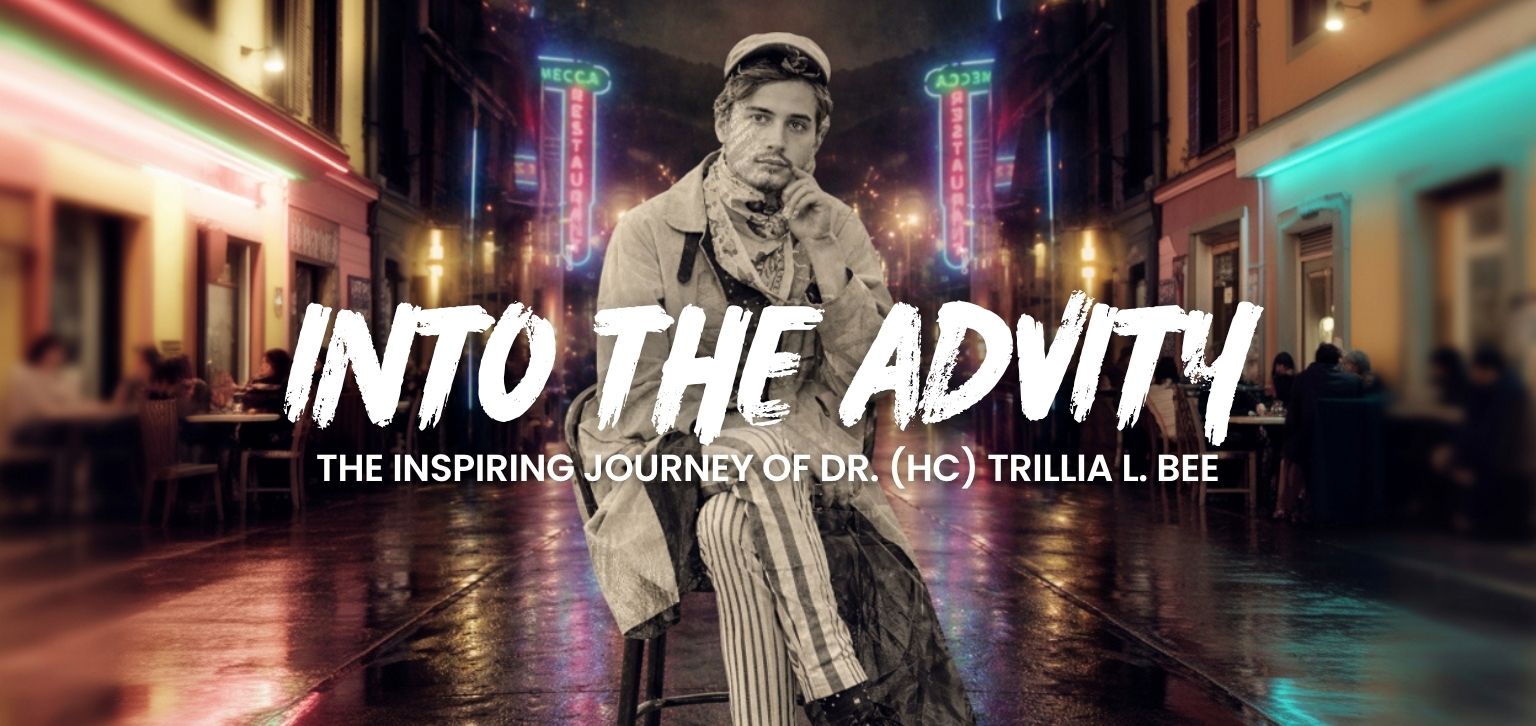
“Always believe in the part of yourself that you assumed starved away, One day, they may be the last part of yourself holding on”
Dedication
This biography is dedicated to the people who were like guiding lights in Dr. Trillia Bee’s life, shaping her transformation with their presence, love, and lessons.
To Eric Donald Beeman, whose creativity and storytelling inspired Dr. Bee to look for meaning in words, ideas, and imagination. To Lori Ann Boyle, whose strength and forgiveness taught them that letting go is often more graceful than fighting back. To Autumn, the beloved friend and spiritual guide who made every cup of coffee they shared with Dr. Bee full of comfort, wisdom, and courage, pushing him to be brave and honest. Additionally, Dr. Bee dedicates this work to Coty, whose timeless songs serve as a constant reminder that loss can serve as a bridge, a song that never ends. Dr. Bee also dedicates this biography to a wonderful trans woman, Leelah Alcorn, who has been her inspiration for activism and vocality regarding gender dynamics.
Dr. Bee also dedicates this work to Shelby Parks, whose trust rekindled the essence of connection and rediscovered hope; and to Felix, the version of themselves who burnt and rose again — the phoenix within.
This is for those who have faced uncertainty with shaky hearts and found that they can still fly when they fall and wake up when they lose.
“The soul begins to awaken not when it learns answers, but when it dares to question why it exists at all.”
Phase 1: Dreams Before Dawn
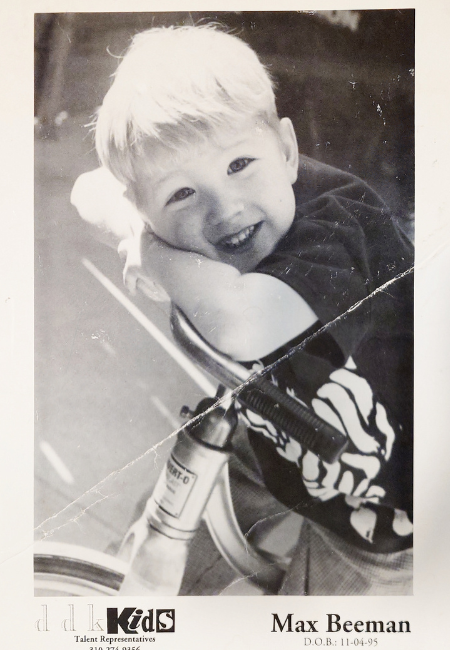
Long before the name Dr. Trillia Bee became known for being strong, thoughtful, and full of contradictions, there was a curious child whose world was made up of bits of imagination and silence. They were born in Los Angeles, California, which is a very busy place. They grew up in a family where dreams were measured by vision, not by how practical they were. Eric Donald Beeman and Lori Ann Boyle, their parents, had dreams shaped by the films of California, a place where art and ambition often walked a fine line.
Dr. Bee’s world was never the same from the start. Their earliest memories were of moving around—between homes, cities, and cultures. This constant change taught them that stability was an illusion, but curiosity could last forever. When their family moved from California to Hayward, then to Oklahoma, and finally to Taiwan, they were too young to understand geography but old enough to know what was wonderful.
The air in Taiwan seemed magical, full of whispers of languages they didn’t yet understand and colours that bled into dreams. It was there that they started to understand how perception works. Dr. Bee was interested in stillness—how the world spoke even when it was quiet—while other kids chased games. They remembered the rainy afternoons when they watched raindrops join together on the windowpane and considered each one a universe crashing into another. It was in those first observations that the seed of philosophy first took root—a gut feeling that life was more than what met the eye.
But growing up wasn’t simple. Their family first moved to Oklahoma before moving to Taiwan. Dr. Bee’s grandparents resided in Oklahoma where their grandfather passed away. Dr. Bee’s mother was quite close to him, and this adversely affected their mother. The SARS outbreak forced the family to move back to California, but by then the excitement of discovery had already started to clash with the harshness of disruption.
“To be reborn, one must first be willing to become unrecognizable to the person they once were.”
Phase 2 : Finding Felix
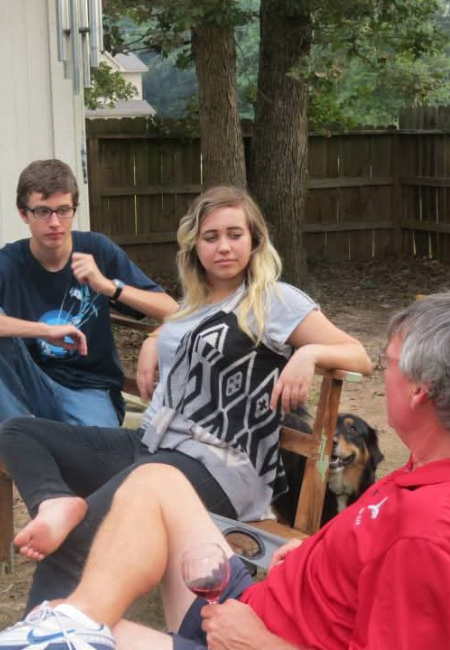
The world that Dr Trillia Bee knew didn’t fall apart all at once. The world that Dr. Trillia Bee knew unravelled gradually, marked by minor setbacks, silent heartaches, and a gradual erosion of certainty. Every seeker reaches a point in their journey when just staying alive isn’t enough, when their soul starts to hurt for truth instead of stability. That moment came for Dr. Bee like a quiet storm—unannounced but unavoidable.
When they were in their early twenties, things started to go wrong. It felt like every plan and path was disappearing. The structure of school, the rhythm of work, and the idea that things will always be the same all started to lose their meaning. What had once been a clear map of goals and expectations now looked like an abstract painting, with a lot of chaos but also a sense of life. During this time, the character “Felix” was born. It wasn’t an escape; it was a necessary change.
Felix wasn’t a mask; he was a mirror. They were everything Dr. Bee had always wanted to be but never had the courage to be. Trillia was thoughtful, careful, and self-reflective, while Felix was impulsive, brave, and unpolished. Felix was a symbol of the rebellion against everything that held them back. He said that identity could be chosen, not given.
Dr. Bee’s life had reached a breaking point before Felix showed up. The pain of being alone, the pressure of expectations, and the spiritual conflict between who they were and who they were told to be had become too much to bear. The voices of authority, whether they came from family, society, or institutions, all said the same thing: “conform.” But conforming was a slow way to die. Living in a world where labels defined worth, silence was seen as obedience, and difference was seen as defiance was suffocating.
They chose to burn it all down, not to destroy it, but to clean it up.
“The moment you start listening to silence, you realize it was speaking to you all along.”
Phase 3 : Voices in the Static

When Felix’s ashes finally settled, Dr. Trillia Bee fell into a silence so deep that it felt like the air was holding its breath. The years of travel, change, and chaos had left behind both emptiness and clarity. It wasn’t peace yet; it was the calm before something new happened. They had been through storms of identity and heartbreak, and thereafter, the static started to hum.
It started out as a faint vibration at the edge of consciousness, like a radio signal that only the heart could hear. Dr. Bee called that low pulse of static between thoughts the voice of paradox. It was both sound and silence, presence and absence—the space in between where truth hides. For most people, noise is a distraction. For Dr. Bee, they were conduits that bypass the linear transgression of reality.
They resumed their writing, saturating notebooks with fragments of ideas about consciousness, morality, and the intangible connections between dreams and waking life. These writings were not school essays; they were meditations that tried to make sense of life through symbols. “We are all radios,” they wrote, “tuned to different frequencies of the same signal.” Some people hear chaos, while others hear music. Dr. Bee believes that everyone has an equal degree of awareness, but the difference lies in altering focal points.
Therefore, Dr. Bee helps people to alter their focal points to illuminate their senses. These thoughts were what led to the idea of Paradeism.
They had been contemplating the idea for years before they gave it a name. Every contradiction in their lives—faith and doubt, self and other, creation and destruction—had been pointing to it. Paradeism was neither a religion nor a conventional philosophy. It was a way of seeing things, a way to make sense of the harmony that exists in contradiction.
Note of Thanks
Dr. Trillia Bee thanks from the bottom of their heart all the people who walked with them through every paradox, silence, and change. Mentors and friends, as well as brief encounters that revealed the truth, have shaped their journey.
They express their gratitude to Eric Donald Beeman, whose imagination first ignited their curiosity, and Lori Ann Boyle, whose unwavering strength taught them the art of forgiveness and perseverance.
They extend their gratitude to Autumn, whose warmth transformed their thoughts into meaningful conversations, and to Coty, whose music continues to echo in the quiet hours, proving that love endures even in the face of endings. They will always be thankful to every friend, co-worker, and listener who believed in the vision of Paradeism and The Advity.
They also thank the groups that gave their ideas life, like Indivisible Central Michigan, The Satanic Temple, and every activist who stands up for truth and equality with kindness.
Finally, they thank the unnamed people—the readers, thinkers, and wanderers—who find strength in contradiction and beauty in becoming. Each has been a ripple in the larger whole, reminding Dr. Bee that no voice speaks alone.
For every shared step, every moment of understanding, and every act of kindness, they convey this simple truth: being thankful is the way to be present.
Thanks,
– Dr. Trillia Bee