"Believe in yourself and have patience. If your direction is right, the results will follow."
Introduction
The journey of Dr. Bharatendu Kapoor unfolds as a story of persistence, adaptability, and purposeful growth. It is the narrative of a professional who did not rely on shortcuts or sudden leaps but instead built his path step by step through learning, discipline, and courage to accept challenges. His life reflects the quiet strength of consistency and the transformative power of exposure.
Born in Mandi, Himachal Pradesh, and brought up in Shimla, Dr. Kapoor’s childhood was shaped by modest surroundings and simple routines. Growing up in Sanjauli, he walked nearly four and a half kilometers to school each day and the same distance back. These long walks through winding hillside roads were not merely daily travel. They were early lessons in resilience, time management, and mental strength. Shimla at the time offered limited recreational spaces, so children played along hill slopes and quiet roads, creating joy in simplicity. Physical fitness became part of daily routine under supervision of Mahavir Ji & Shravan Ji. Those years nurtured independence and a strong inner drive that would later support him through professional transitions.
His childhood also got influenced by his maternal uncle Dr. K. K. Vaidya, Maternal aunt’s Pravesh & Lalita, Uncle D. N. Kapoor & great maternal uncles Jagdish Kapoor, Dr. Krishan Lal Kapoor & Mr. I. S. Kapoor, while he spent his annual vacations at Mandi Town in Himachal Pradesh.
His academic path developed gradually rather than by design. After completing his schooling in Shimla, he moved to Chandigarh for pre-engineering studies. From there, he secured admission to study Agricultural Engineering at Punjab Agricultural University, Ludhiana. At that stage, agricultural engineering was not considered a preferred branch compared to other engineering streams. Moreover, many students in his class came from farming backgrounds and were familiar with agricultural practices. Dr. Kapoor, coming from a non-farming family, had to work harder to understand crops, implements, and field applications. He faced the discomfort of learning something entirely new, yet he chose to persist.
Instead of limiting himself to academic requirements, he actively sought practical exposure. During trimester breaks, he stayed back to work on technical projects, exploring applications such as early solar energy utilization and farm mechanization tools. He underwent industrial training at the Escorts Institute of Farm Mechanization near Bangalore, deliberately choosing a learning experience beyond his immediate surroundings. These efforts reflected an early belief that growth comes from stepping into unfamiliar territory.
"The long walks of childhood do more than take you to school. They teach you that every step upward requires effort, and every effort shapes who you become."
Phase 1: Foundations in the Hills – Early Life in Mandi and Shimla
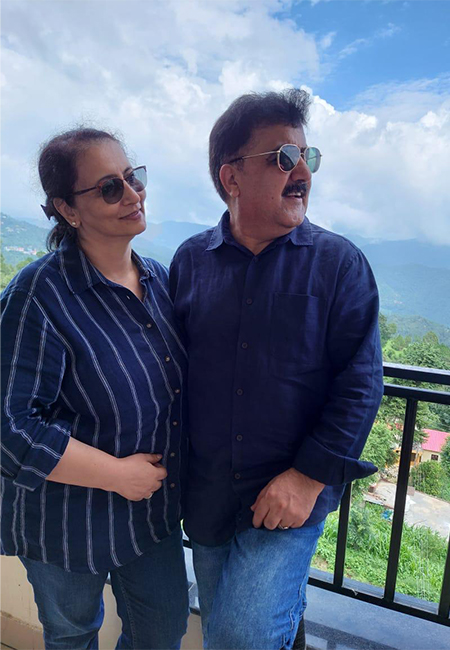
Dr. Bharatendu Kapoor was born on 19 February 1963 in Mandi, Himachal Pradesh, a town surrounded by hills, rivers, and a culture deeply rooted in simplicity. Soon after his birth, because his father served in government service, the family relocated to Shimla, where his childhood would take shape.
Shimla in the late 1960s and 1970s was very different from the commercialized destination it is today. It was a modest hill town with narrow roads, limited infrastructure, and a rhythm of life that required physical effort. Dr. Kapoor grew up in Sanjauli, a locality known for its steep slopes and winding pathways.
One of his most vivid childhood memories is the daily journey to school. His school was approximately four and a half kilometers away, and at that time vehicles were not permitted on many of Shimla’s roads. Each morning meant a long walk downhill, and each afternoon required the climb back home in company of his cousin sister Madhu. The walk took nearly one and a half hours one way. For a young student, this was not simply routine. It was training in endurance.
There were very few playgrounds in Shimla. Recreation meant adapting to nature. Children played along hillside paths, on quiet roads, and on uneven terrain. Physical strength developed naturally. Resilience was not taught in theory. It was built through movement and discipline.
His formal schooling took place at D.A.V High School, Lakkar Bazaar & Govt. Boys Higher Secondary School, Shimla. According to official records, he completed his Matriculation Examination in 1978 under the Himachal Pradesh Board of School Education. He secured a Second Division, with a total of 507 out of 900 marks including cumulative assessments.
"When you commit yourself fully to the work before you, even an unplanned choice becomes the foundation of lasting confidence."
Phase 2 : Expanding Horizons – Chandigarh and the Engineering Years at Ludhiana
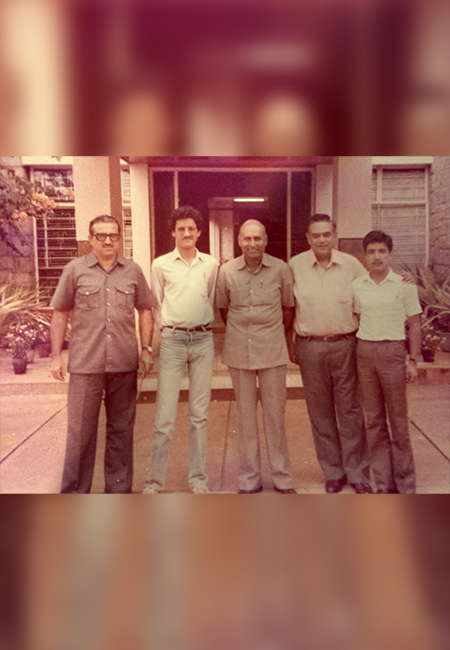
Leaving Shimla marked the first defining shift in the life of Dr. Bharatendu Kapoor. Until then, his world had been shaped by the hills, disciplined routines, and the quiet endurance of daily life in Sanjauli. By 1979, having completed his schooling at Govt. Boys Higher Secondary School in Shimla, he stepped into a wider academic landscape that demanded independence and clarity of direction.
He moved to Chandigarh for his pre-engineering studies in a government college. Chandigarh represented structure, exposure, and a competitive academic environment. Unlike the measured pace of Shimla, this setting required sharper focus and greater self-reliance. Students from diverse regions converged with one common aim of securing professional education. The transition required adjustment, but hesitation did not define him. He embraced the challenge.
After appearing for engineering entrance examinations, he secured admission in Agricultural Engineering at Punjab Agricultural University, Ludhiana. At the time, Agricultural Engineering was not among the most sought-after branches compared to mechanical or civil engineering. The decision was influenced more by opportunity than by early ambition. He has openly acknowledged that it was not his first preference.
Yet what began as acceptance gradually evolved into engagement.
Entering Punjab Agricultural University exposed him to an academic environment closely linked to rural India. Many of his classmates came from farming families and possessed practical familiarity with crops, irrigation systems, implements, and field operations. For Dr. Kapoor, who did not come from that background, the early period required additional effort. Understanding field applications and connecting theory to practice demanded patience.
Instead of resisting the unfamiliar, he chose immersion.
"The strongest foundations are built not in offices, but in the places where you listen, learn, and earn trust one conversation at a time."
Phase 3 : Entering the Field – The First Years at Mahindra
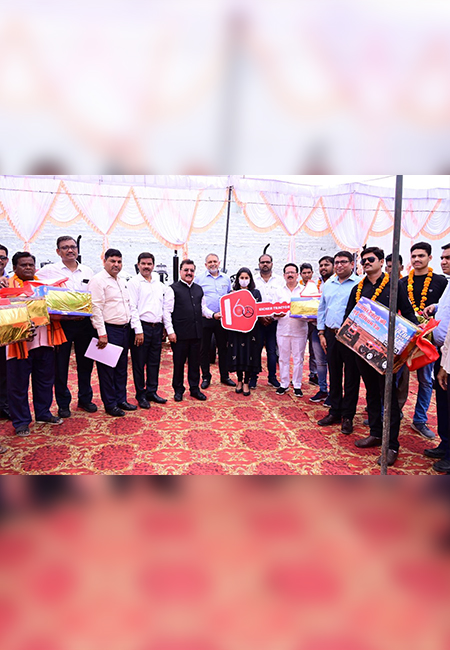
In 1985, armed with a degree in Agricultural Engineering from Punjab Agricultural University, Dr. Bharatendu Kapoor stepped into professional life. He was selected through campus placement by Mahindra and Mahindra, a moment that marked the beginning of a long and defining association with one of India’s most respected industrial groups. The transition from academic corridors to corporate reality was swift and demanding.
Like many young engineers, he initially imagined himself working within a manufacturing plant, applying technical knowledge to production systems. The reality, however, unfolded differently. His early assignments placed him directly in the field. Instead of controlled environments and structured engineering tasks, he encountered open markets, dealers, customers, and operational unpredictability.
One of his earliest assignments took him to Pune, where he was involved in practical demonstration work. He recalls standing on a wooden plank attached to a tractor, helping level a ground surface as part of field preparation. The experience was far removed from theoretical engineering diagrams. It was physical, hands on, and immediate. For a young graduate who had expected structured technical work, it was a sharp introduction to the realities of field engagement.
There were moments of uncertainty. At one point, he and a colleague even contemplated returning home. Yet circumstances and limited resources compelled them to continue. That decision to stay and adapt rather than retreat became a defining early test of resolve.
Soon after, he was assigned to regions in Uttar Pradesh, including Lucknow, Jaunpur, Ghazipur, Azamgarh and Ballia. Travel was frequent and conditions were modest. He often accompanied dealer salesmen on motorcycles, navigating rural roads to meet customers directly.
Note of Thanks
This biography reflects not only the professional journey of Dr. Bharatendu Kapoor but also the many relationships that strengthened and supported him across the years. He expresses heartfelt gratitude to his parents, whose trust and encouragement in his formative years gave him the confidence to make independent decisions and accept responsibility for his path. He also acknowledges his younger brother, Dr. Manish Kapoor, Doctorate in Pharmacy and Drug Controller in Himachal, and his younger sister, Er. Leena Vaidya, a chemical engineer based in London, for the steady support that has remained constant within the family.
His deepest appreciation is reserved for his wife, Dr. Neera Kapoor, whose clarity of thought, honesty, and unwavering presence have been a pillar of strength throughout decades of professional commitment. He is equally grateful to his sons, Dr. Arnav Kapoor and Dr. Pranav Kapoor, whose dedication to their medical careers and understanding during demanding years of travel and responsibility have brought pride and balance to his life.
He extends sincere thanks to Punjab Agricultural University, where his professional foundation was shaped, and to the organizations that entrusted him with leadership, including Mahindra and Mahindra and TAFE. He acknowledges with respect the mentors who guided him at crucial stages, including Mr. B. S. Yadav, Mr. Ganguly, Mr. Akhilesh Kupta, Mr. Sawhney, Mr. Rajesh, Mr. A.P. Chaudhuri, Mr. Arun Malhotra & Dr. Pawan Goenka.
He also expresses appreciation to colleagues and associates whose collaboration enriched his journey, including Maruti Kumar Mathur, Rakesh Kalra, Shushil Kapoor, RS Deshbande, Anil Vijj, Mukul Varshney, Kuljit Shan, Ashutosh Padi, Rajat Bhargava, Kanan Vinod Nayar, Dinesh Chaudhury, Sujay, Ram, Amit, Ramya Mohan, Kartik Manian, Bhaskar, and General V. K. Malik.
With humility, he thanks every individual who has been part of his professional and personal journey. Each interaction contributed in meaningful ways to the life reflected in these pages.
Thanks,
– Dr. Bharatendu Kapoor