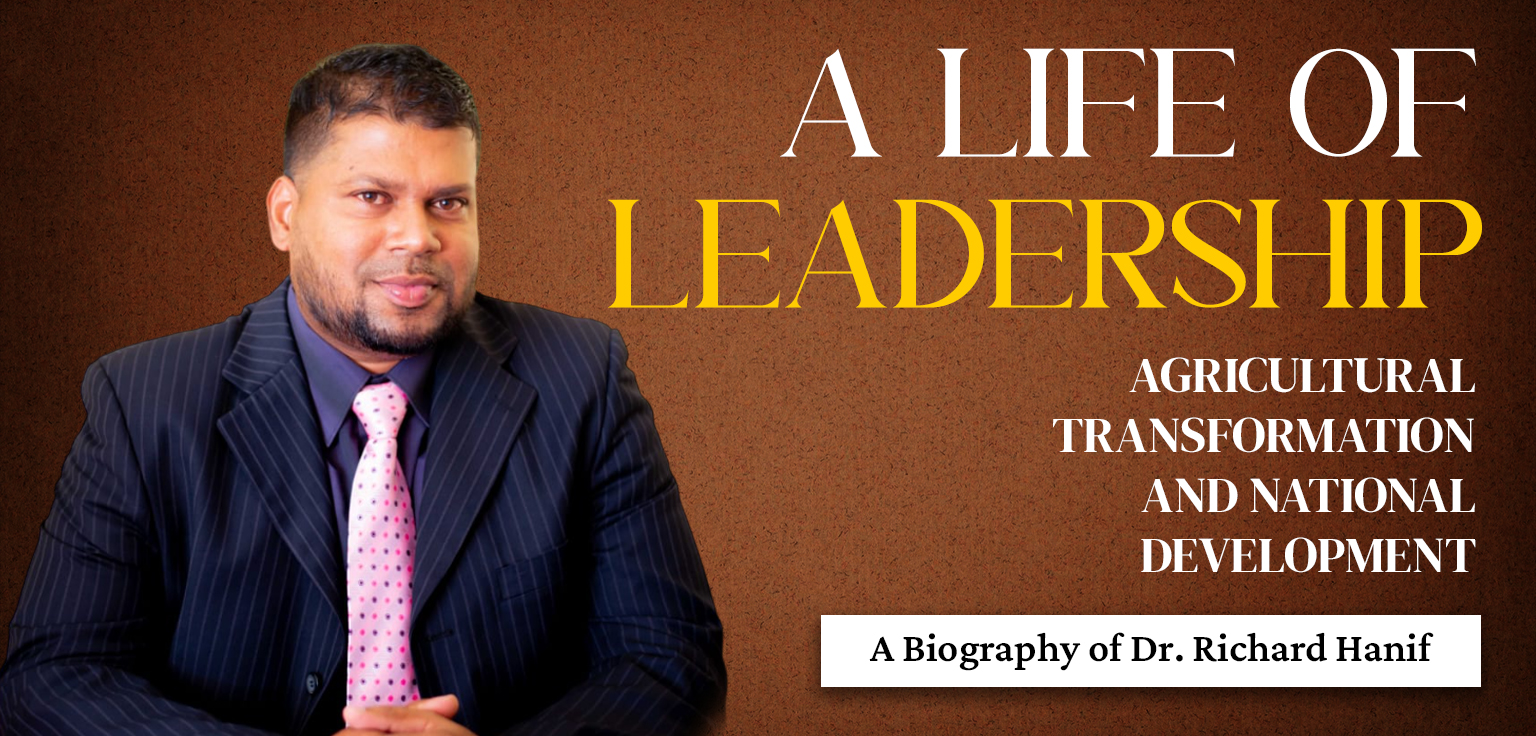
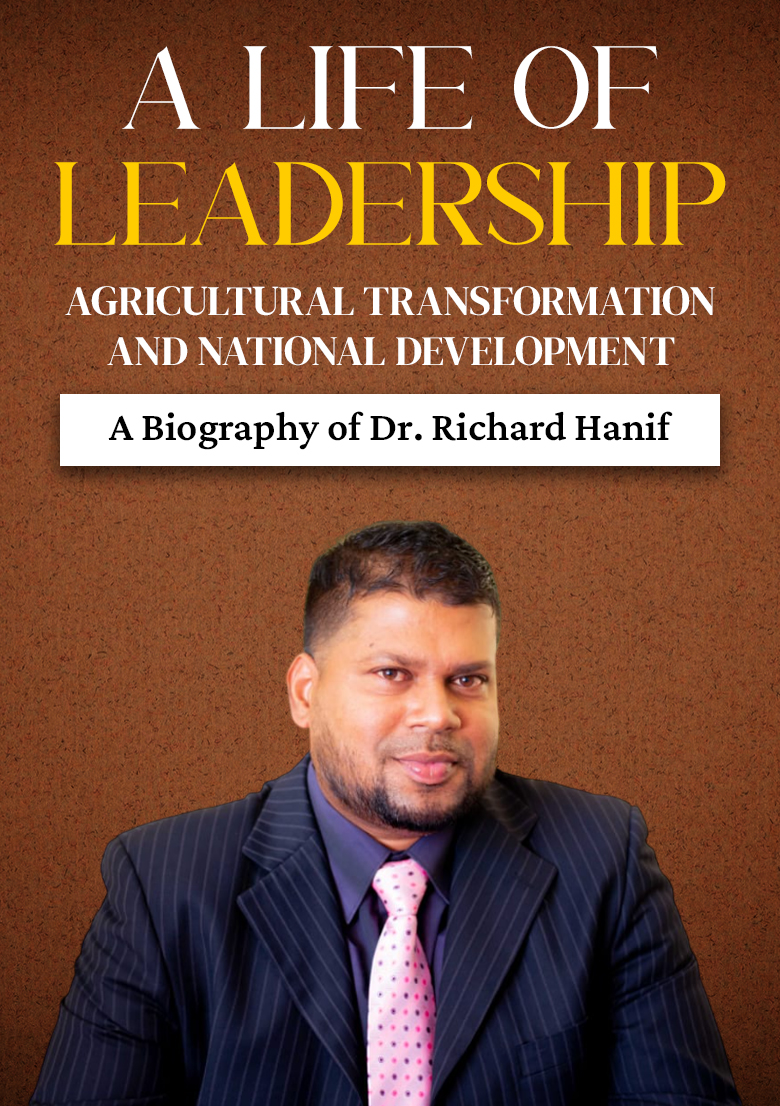
"True change happens when we empower others, build sustainable solutions, and create opportunities that last beyond ourselves."
Introduction
Dr. Richard Hanif’s journey is one of transformative leadership, rooted in the commitment to sustainable agricultural practices and global development. Over the years, he has made significant contributions to both local and global communities, leaving an indelible mark on the industries he’s been involved in. His work exemplifies the power of purposeful leadership, where a clear vision, determination, and strategic collaboration lead to lasting change.
Dr. Hanif’s impact in agriculture is especially notable. His efforts in the agricultural sector have not only led to the growth and success of the agriculture industry in Guyana, but his influence has extended across the Caribbean and globally. He has been a key advocate for sustainable farming practices, market access for smallholder farmers, and climate-resilient agriculture. Under his leadership, agricultural communities that once struggled with limited resources and poor market access began to thrive by adopting modern farming techniques, diversifying crops, and pursuing international market opportunities.
In addition to his work in agriculture, Dr. Hanif’s impact on global policy development has been profound. His ability to navigate complex global discussions and influence policies aimed at sustainable development has earned him recognition as a leader in global development circles.
Dr. Hanif’s leadership style is rooted in his belief in the importance of community empowerment, collaboration, and inclusive leadership. He believes that true change can only happen when communities are empowered to lead themselves, and he has consistently sought to create structures that allow others to grow and thrive. His approach has been holistic, recognizing that economic success is intrinsically linked to social equity, and environmental health is inseparable from sustainable development.
One of Dr. Hanif’s greatest achievements is his ability to mentor future leaders. He has worked closely with young professionals, providing them with the tools and knowledge they need to succeed in the fields of agriculture, development, and policy. Through his mentorship and guidance, he has ensured that his legacy will live on, as the next generation of leaders continues to build on the foundations he has laid. His focus on education, skills development, and leadership training has created a ripple effect that continues to impact many sectors, ensuring that his work will be carried forward.
“The best way to predict the future is to create it.”
Phase 1: Roots in the Soil
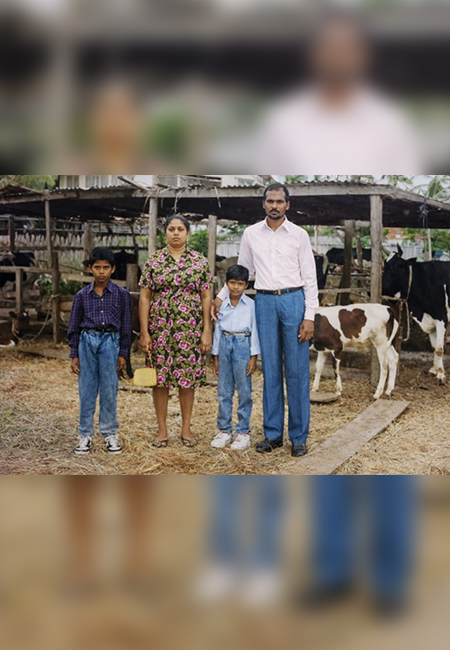
Dr. Richard Hanif’s journey began on the East Coast Demerara, Guyana, where he was born into a family that valued hard work, dedication, and community service. From a young age, Dr. Hanif was exposed to the importance of family values, education, and contributing to the well-being of the community. His parents, both actively involved in agricultural work and community initiatives, instilled in him a strong sense of responsibility and purpose.
His father, a skilled farmer and agricultural worker, and his mother, a community advocate with the church, often engaged in local projects aimed at improving the lives of their neighbors. This early exposure to community-oriented initiatives had a lasting impact on him, who learned from them the significance of collaborating with others and using one’s resources to benefit the broader community. His parents’ involvement in local development projects provided Dr. Hanif with a front-row seat to the challenges faced by rural communities, especially those engaged in agriculture.
Long before boardrooms and policy discussions, there was soil underfoot. Dr. Hanif’s earliest memories were shaped by the steady rhythm of farm life — early mornings in cattle pens, long afternoons in crop fields, and evenings where conversation centered on yields, weather, and survival. Agriculture was not abstract; it was personal, demanding, and deeply human.
Growing up within a farming household cultivated more than practical skills. It built resilience, patience, and a profound respect for rural communities. He witnessed firsthand how market access determined whether a harvest brought prosperity or hardship. These lived experiences formed the philosophical foundation of his later work: development must reach the farmer, not remain confined to paper.
As a child, Dr. Hanif was actively involved in community initiatives. He participated in youth programs, environmental projects, and agricultural fairs, all of which deepened his connection to the land and the people who relied on it for their livelihoods.
“Education is the most powerful weapon which you can use to change the world.”
Phase 2 : Academic Formation and Strategic Thinking

Dr. Richard Hanif’s academic journey began at the University of Guyana, where he pursued a Bachelor’s degree in Business Management. It was here that Dr. Hanif’s passion for agriculture and community development truly began to take shape. While many of his peers focused on more traditional career paths, Dr. Hanif was drawn to how business principles could be applied to solve the pressing challenges faced by rural communities, particularly in the agricultural sector.
During his time at the University of Guyana, Dr. Hanif not only excelled academically but also began to understand the deeper connection between economic development and agriculture. It became clear to him that sustainable agriculture could be a driving force for economic growth in Guyana, a country whose economy was deeply rooted in the agricultural industry. As he delved deeper into his coursework, he recognized that the development of effective business strategies for agricultural enterprises could empower local farmers and boost economic resilience.
Dr. Hanif’s dedication to his studies was evident in his academic performance. He quickly emerged as one of the top students in his cohort, receiving recognition from professors for his innovative thinking and commitment to applying theoretical knowledge to practical problems. His early academic success was a reflection of his deep curiosity about the world and his commitment to learning how best to address the challenges facing Guyana’s agricultural communities.
• Achieved academic excellence, emerging as one of the top students in his cohort.
• Received recognition from professors for innovative thinking and practical application of business theories.
• Focused on connecting business management principles to agriculture and community development.
“The time to repair the roof is when the sun is shining.”
Phase 3 : Corporate Discipline and Systems Mastery
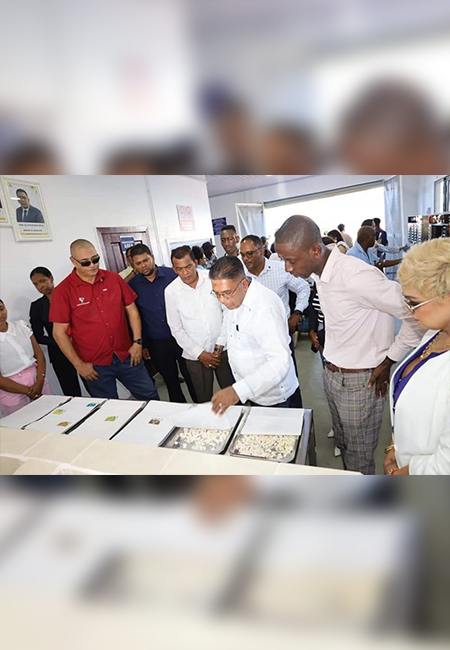
Dr. Richard Hanif’s entry into the workforce marked a pivotal shift from academic studies to professional application, laying the foundation for his future career. After completing his undergraduate degree in Business Management at the University of Guyana, Dr. Hanif sought a professional role that would allow him to apply his academic knowledge to real-world challenges. His first opportunity came when he joined Neal & Massy Guyana Ltd., one of the region’s most significant players in the business and agricultural sectors, in 2004.
Dr. Hanif’s role at Neal & Massy began as a Management Trainee, providing him with broad exposure to corporate operations, particularly in the agricultural division. During his time there, he gained firsthand experience in marketing, business strategy, and supply chain management.
At Neal & Massy, Dr. Hanif observed how products were marketed locally and internationally, and how business strategies could help bridge the gap between farmers and consumers. Through his involvement in the marketing division, he worked on initiatives aimed at increasing the marketability of various products. This experience showed Dr. Hanif that, for agriculture to thrive, it was essential to connect local producers to national and international markets.
Professional certification and corporate exposure through Neal & Massy introduced a new dimension of leadership — structure. Performance indicators, supply-chain logistics, and operational efficiency became central tools.
This phase refined his appreciation for measurable outcomes. It reinforced the importance of accountability, strategic planning, and brand credibility — lessons later transferred into national agricultural marketing institutions.
One of the significant lessons Dr. Hanif learned at Neal & Massy was the importance of market access for producers. He realized that many farmers were limited by a lack of knowledge, resources, and information about how to reach larger markets.
Note of Thanks
Dr. Richard Hanif would like to extend his heartfelt gratitude to all those who have been part of his journey and supported him throughout his career. He thanks his family Wife – Justice Priscilla Chandra Hanif, Daughter – Isabelle Hanif, Mother – Fazila Hanif and Father- Fazil Hanif for their unwavering love, strength, and encouragement, which have been a constant source of inspiration. Their belief in him, even when the path seemed uncertain, has provided him with the foundation to continue pursuing his vision.
He also expresses his deep appreciation to his mentors and colleagues, whose guidance, wisdom, and collaboration have significantly contributed to his work. To the farmers, community leaders, and individuals with whom he has had the privilege of working, Dr. Hanif acknowledges their dedication and resilience, which have been the driving force behind his efforts. It is their commitment that has inspired him every day.
Dr. Hanif is also grateful to the organizations, both local and international, that have entrusted him with leadership roles, allowing him to contribute to the growth and sustainability of the agricultural sector.
Finally, he extends his thanks to all those who have supported him in achieving his goals and helped him face obstacles along the way. Without their belief in him, none of his achievements would have been possible. Together, they have made a lasting difference, and for that, he is deeply thankful.
Thanks,
– Dr. Richard Hanif