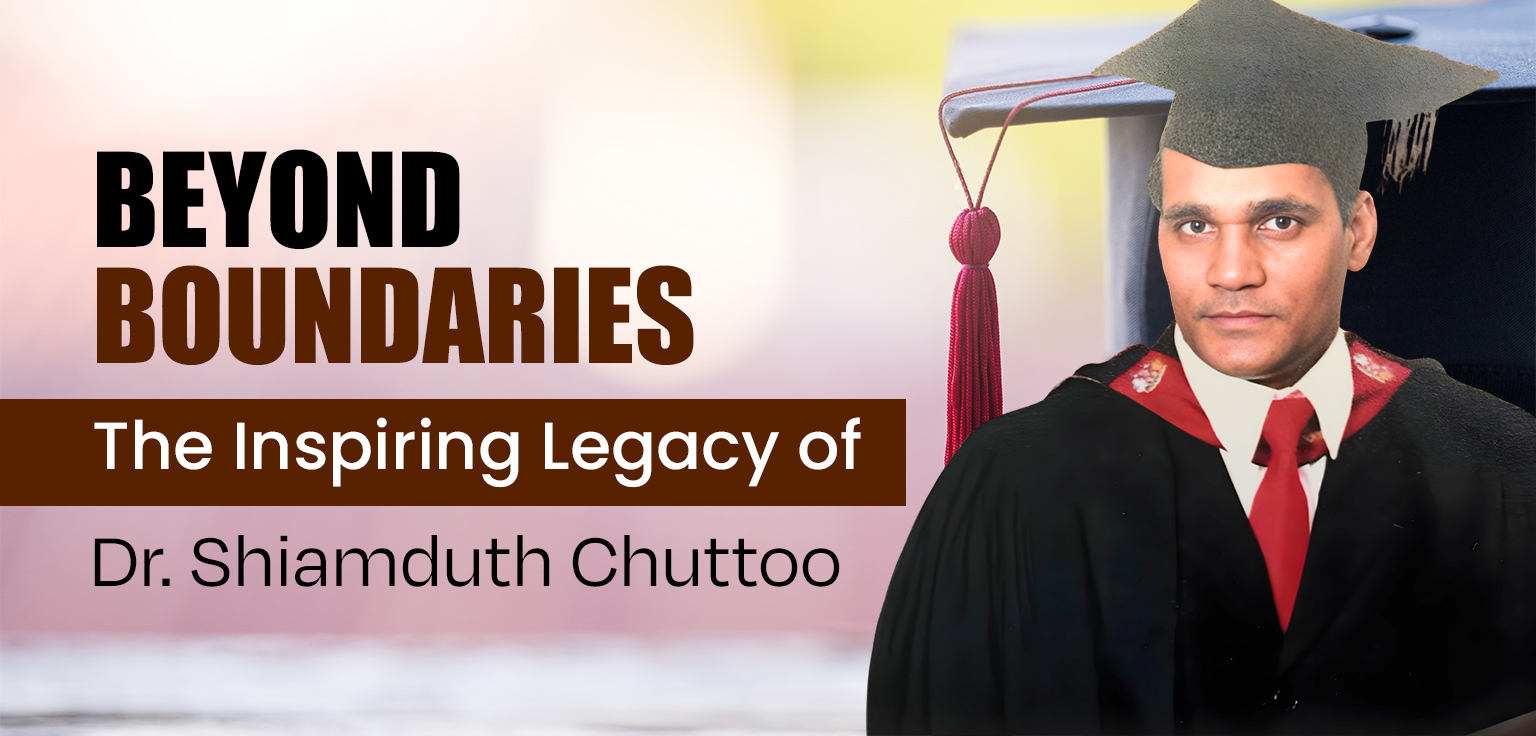
“A biography of service, lifelong learning, leadership, and cultural stewardship across healthcare, social work, and education.”
Introduction
The story of Dr. Shiamduth Chuttoo, affectionately known as Dr. Shiam, is not one of rapid ascent or carefully orchestrated ambition. It is the story of steady growth, shaped by responsibility, opportunity, and the courage to step forward when called.
Born in Mauritius and later building a distinguished professional life in the United Kingdom, his journey spans cultures, professions, and generations. Apprentice, nurse, social worker, educator, mentor, and cultural steward, each role emerged from a genuine commitment to learning and service rather than a predetermined plan.
For Dr. Chuttoo, education was never a departure from his roots; it was a way of honouring them.
His life reflects a simple but powerful belief: that true success lies not in titles, but in the difference one makes in the lives of others.
“Before any path is chosen, values are inherited. The strength of the journey began with the sacrifices and wisdom of those who came before.”
Phase 1: Roots That Shape The Journey
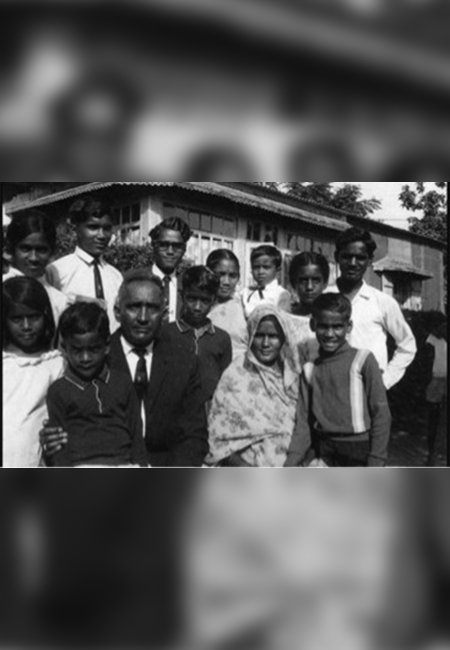
Dr. Shiamduth Chuttoo’s story begins in Mauritius, in a home filled with the movement and chatter of twelve children. As the eleventh child, he grew up in the middle of it all, not quite the youngest, not quite the eldest, but in that space where you learn to listen before you speak, to observe before you act, and to find your place through cooperation rather than noise.
Life in the Chuttoo’s family had its own rhythm. There was always someone sweeping the yard, someone helping in the kitchen, someone preparing for school, someone telling a story, someone laughing loudly, and always, somewhere in the background, the quiet, steady presence of his parents. Their expectations were simple but firm: work hard, stay humble, respect others, and remember that education is a gift, not a burden. These lessons arrived not through long speeches, but through the quiet consistency of how they lived their own lives.
Mauritius itself was a teacher. The island, warm, colourful, and endlessly diverse, shaped Dr. Shiam long before he realised it. He grew up hearing different languages, tasting different foods, celebrating different traditions, and watching people of many backgrounds live side by side. It taught him that difference is not a barrier; it is a richness. Years later, when he would work with families and communities from all walks of life in the United Kingdom, that early grounding would shape how he listened, understood, and connected with others.
In a family of twelve, responsibility wasn’t assigned, it simply existed, woven naturally into each day. There were mornings when he would wake to the smell of tea brewing and the sound of someone calling from the kitchen, and he knew the day had already begun. Helping one another wasn’t praised as something extraordinary; it was simply what you did. Through these everyday moments, he learned patience, resilience, and the quiet strength of working together.
“Leaving home teaches a profound lesson — courage is not the absence of fear, but the quiet persistence to move forward when certainty disappears.”
Phase 2 : Leaving Home, Learning Humility
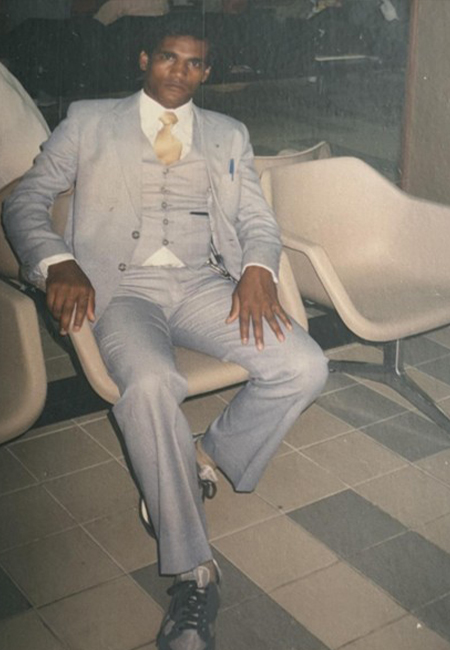
Leaving Mauritius was not a sudden decision, nor was it an easy one. It unfolded over months of thought, conversation, and quiet reflection. In the years leading up to 1988, the idea of travelling abroad felt both distant and enormous, a possibility that lingered at the edges of life rather than a defined plan. But as opportunities emerged, so too did the realisation that growth sometimes requires stepping away from what is familiar.
In the days before his departure, Dr. Shiam found himself taking in the island with new eyes, the familiar sounds of daily life, the warmth of neighbours calling to one another, the scent of spices lifting from kitchens, the way the light settled over the sugarcane fields at dusk. Ordinary moments, previously unexamined, suddenly felt precious, as though they were imprinting themselves into memory.
The night before he left, the house was quieter than usual. His siblings spoke softly. There were no dramatic farewells, no grand speeches, just the steady presence of a family whose strength had always shown itself in actions more than words. It was a moment that rested gently between endings and beginnings.
In 1988, with determination outweighing uncertainty, Dr. Shiam boarded a plane to the United Kingdom. The flight marked more than physical distance, it symbolised a transition from one life chapter to another, from the known to the uncharted. As the aircraft lifted from the runway, he felt the weight of responsibility settle on his shoulders: to honour the sacrifices made for him, to build something worthwhile, to remain grounded in the values he carried from home.
When he arrived in London, the air felt different, colder, sharper, carrying a pace and rhythm that contrasted deeply with the island life he had known. The Borough of Redbridge became his new beginning, and his first home was the nurses’ accommodation in Chadwell Heath.
“Healing does not begin with treatment alone — it begins with understanding the life, experiences, and circumstances behind the illness.”
Phase 3 : From Care To Understanding
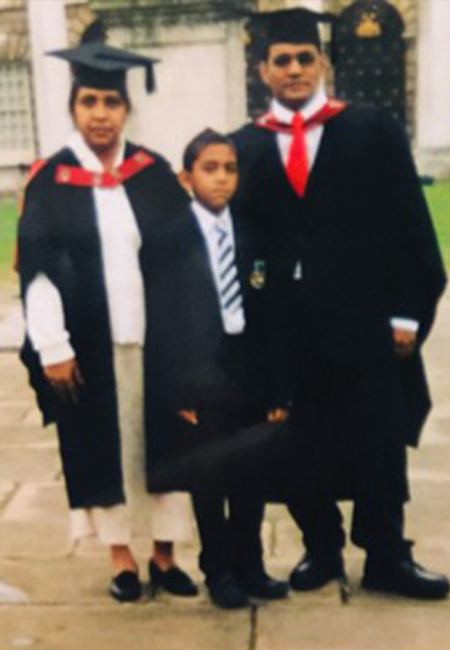
The early years of nursing shaped Dr. Shiam in ways he did not fully realise at the time. He had become confident in his clinical roles and settled into the practical rhythms of hospital life. Yet, as he moved through the wards and worked closely with patients, a deeper awareness began to take root, an awareness that care could never be confined to the four walls of a hospital or reduced to a list of symptoms.
Day after day, he met people whose lives were shaped not only by mental illness but by loneliness, family breakdown, unemployment, housing difficulties, stigma, and memories of past trauma. Their stories were often layered and complex. As he listened, he began to see a pattern emerging: people were not just struggling with diagnoses, they were struggling with circumstances.
The more he observed, the more he realised that healing began long before medication, therapy, or treatment plans. It began with a simple act: being understood.
On the ward, Dr. Shiam learned that some of the most meaningful moments did not involve clinical procedures. Instead, they happened during quiet conversations, over cups of tea, in peaceful corners of the lounge, or during routine checks when a patient chose to share a small fragment of their story.
There were moments when someone would say, “Thank you for listening,” even when he felt he had done nothing more than offer his presence. These interactions taught him that dignity could be restored through the smallest of gestures, eye contact, patience, a gentle tone, a few reassuring words. Mental health care demanded both knowledge and humanity.
As he moved from Staff Nurse to Senior Nurse, he felt his confidence grow, not from titles, but from relationships formed with the people he served. He began to recognise subtleties others sometimes missed: the pauses in conversation, the body language signalling fear, the unspoken grief behind silence.
Epilogue — Continuing The Journey
A life committed to learning and service does not reach a final destination; it evolves through new experiences and opportunities to contribute. Dr. Chuttoo’s story reminds us that meaningful impact arises from consistent effort and a willingness to grow.
Looking forward, he remains guided by values of compassion, integrity, and curiosity, embracing the future with optimism and purpose.
Closing Reflection
“Let us continue to move upward and forward, guided by purpose and inspired by the opportunity to serve.”