“At the end of the day, success is not measured by what is achieved, but by the relief felt by those whose lives were touched along the way.”
Introduction
Every life devoted to service begins with a choice—often a quiet one—to place responsibility above comfort and humanity above recognition. The life journey of Dr. Buccus Muhammad Hijaz reflects such a choice, made early and reaffirmed through years of discipline, learning, and compassionate action. His story is not defined by a single role or title, but by a consistent commitment to being present where help is most needed and remaining calm when others are overwhelmed.
From his formative years, Dr. Hijaz demonstrated an inclination toward responsibility and service. His entry into social work and emergency response was not driven by ambition, but by awareness—an understanding that communities depend on individuals who are trained, focused, and willing to act during moments of uncertainty. This awareness gradually shaped his professional direction, guiding him toward first aid, rescue operations, and leadership in emergency response. Over time, service became not merely his profession but his identity.
In 2010, his formal journey in first aid and emergency response began, marking a decisive turning point in his life. Through rigorous training, real-life interventions, and constant exposure to high-pressure environments, Dr. Hijaz developed a defining trait that would guide his work thereafter: the ability to remain calm under pressure. This quality became the foundation of his effectiveness—not only in rescue situations but also in leadership, teaching, and humanitarian engagement.
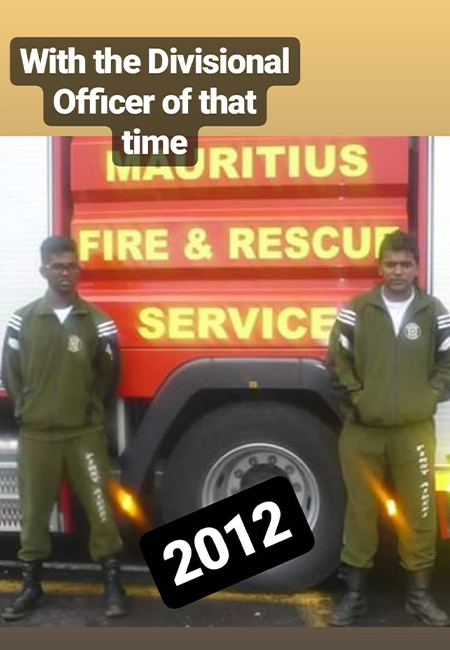
As his experience deepened, so did his responsibilities. His progression into leadership roles reflected both trust and capability. Promotions to Divisional Officer in 2015 and later to Divisional Superintendent in 2018 placed him in positions that required not only technical expertise but emotional resilience and ethical judgment. Managing teams, training large groups of students and adults, and coordinating interventions demanded clarity of thought and steadiness—qualities he consistently demonstrated.
One of the most defining moments of his career emerged during the 2013 floods in Mauritius, a tragic event that claimed multiple lives and tested the limits of emergency response. For Dr. Hijaz, this experience was deeply emotional and transformative. The responsibility of rescuing victims, including a young child in circumstances of profound loss, left a lasting imprint on his heart. These moments did not harden him; instead, they deepened his compassion and strengthened his resolve to serve with humility and care.
“Service starts long before you put on a uniform; it begins with the quiet shaping of your internal values.”
Phase 1: Foundations of Responsibility and Early Awareness
The bedrock of Dr. Buccus Muhammad Hijaz’s life wasn’t built on privilege but on a growing moral awareness. He learned early on that discipline and compassion are skills you must practice if you want to serve others. These years built the ethical groundwork for a future that would eventually demand a calm head during a crisis and a total commitment to humanity.
During his school days, Dr. Hijaz thrived in structured environments. Attending schools like Labourdonnais Government School and Islamic Cultural College taught him the power of consistency and personal effort. These weren’t years of high drama but of steady observation. He began to respect the value of preparation—a trait that later became life-saving in his emergency response career.
His time with Alliance Française also sharpened his communication skills. For him, speaking well wasn’t about showing off; it was about clarity and accountability. He realized that in a disaster, being able to explain things simply is a responsibility, as confusion can often lead to tragedy.
Even before his career started, the seeds of service were there. Dr. Hijaz developed a quiet sense of accountability, watching how his community functioned. This focus on social work wasn’t a sudden goal but a natural internal inclination.
His family played a huge role in this. While he keeps his private life quiet, it’s clear his home life reinforced practical responsibility. He grew up seeing that helping people isn’t an abstract idea—it’s a duty. This became vital when he later worked with people facing addiction and personal loss.
As he hit adulthood, his sense of purpose solidified. He didn’t want a comfortable routine; he wanted a role that required taking responsibility for others. This wasn’t about seeking recognition, but about realizing that society needs people who act when things get difficult.
“There’s a moment where you have to decide: do you want a life that is safe or a life that matters? That single choice changes everything.”
Phase 2 : Choosing Service Over Certainty

As Dr. Buccus Muhammad Hijaz transitioned into early adulthood, his internal values began looking for an outlet. Phase 2 marks the point where his awareness turned into conscious intention. He chose service over certainty and responsibility over a predictable routine. This wasn’t a loud, dramatic move; it was a quiet, steady shift toward a life of social responsibility.
College was more than just earning a degree; it was where Dr. Hijaz started self-definition. Surrounded by new ideas, he stopped asking what he could do and started asking what he should do. He wasn’t chasing a high salary or status; he was looking for a way to meaningfully contribute. He realized that a community is only as strong as the people willing to stay composed under pressure when a crisis hits.
This is when social work became his focus. To Dr. Hijaz, this wasn’t just a job title—it was a mindset. It was about looking at human vulnerability and deciding to meet it with both compassion and action. These years of exploration planted the seeds for his future in emergency response and humanitarian aid.
While observing the world around him, he noticed massive gaps in community preparedness. Most emergencies happen in everyday places like streets or schools, long before professional help arrives. This sparked a deep realization: true service means equipping people with the knowledge to stay calm and act before a crisis occurs.
Choosing this path meant giving up the comfort of a conventional life. It meant stepping into a world of emotional demands and unpredictable risks. Yet, for him, the sense of purpose outweighed the fear. He knew a life of service would require personal sacrifice, but he also knew it would offer a level of fulfillment that a “safe” job never could.
“Paths are sometimes built on intent, but they become real through responsibility. For him, service truly started when the training became action.”
Phase 3 : Entering the World of First Aid and Emergency Response
The year 2010 was a massive turning point for Dr. Buccus Muhammad Hijaz. What used to be a quiet, personal goal suddenly took a structured and demanding shape. This phase marks his official entry into emergency response, a field that would push his physical limits and completely redefine how he viewed the weight of a human life.
By this point, he had already committed to the idea of service, but first aid training turned that idea into something practical. Entering this world required a mix of discipline and humility. In the field, theory isn’t enough; you need presence of mind and the ability to make hard choices when things get chaotic. From day one, Dr. Hijaz treated this responsibility with the utmost respect.
His early journey involved a steep learning curve. He wasn’t just learning bandages and splints; he was learning situational awareness—how to read a room, spot a risk, and prioritize safety. These weren’t just classroom lessons. He trained in simulations that mimicked real-life emergencies, showing him that a decision made in seconds can be the difference between a life saved or a life lost.
One of the biggest takeaways from this time was learning to stay calm under pressure. Dr. Hijaz realized that panic spreads like a virus, but composure can steady everyone around you. Whether he was talking to an injured person or a terrified family member, emotional control became just as important as his technical skills. This trait would eventually become his trademark as a leader.
As he moved into actual interventions, he saw how unpredictable emergencies really are. No two calls were the same, and each one tested his adaptability and resilience. Instead of being shaken by the intensity, these challenges only made him more certain that he was on the right path. He felt a deepening commitment to the work.
Note of Thanks
With deep humility and sincere gratitude, Dr. Buccus Muhammad Hijaz extends his heartfelt thanks to everyone who has been part of his life journey and service-oriented path. This biography stands not as an individual achievement, but as a collective reflection of the guidance, trust, and support he has received over the years.
He expresses his deepest gratitude to his mother and father, whose values, sacrifices, and unwavering guidance formed the moral and emotional foundation of his life. Their patience, understanding, and constant encouragement provided strength during moments of challenge and responsibility, making it possible for him to serve others with focus and integrity.
He offers his sincere appreciation to his wife, Mrs. Souhaylah Didorally, for her steadfast support, understanding, and quiet resilience. Her encouragement and belief in his mission allowed him to remain committed to service, even when the demands of duty required personal sacrifice.
Dr. Hijaz is equally thankful to his mentors, seniors, and trainers, with special acknowledgment to Mr. Bashir Ahmad Oaris and Dr. Anarath M. Shakeel, whose guidance, trust, and leadership shaped his discipline and strengthened his professional journey. Their mentorship played a vital role in transforming experience into wisdom and service into purpose.
He also gratefully acknowledges his colleagues, trainees, students, and team members, whose collaboration, trust, and shared dedication made every mission, training session, and humanitarian effort meaningful. Working alongside individuals committed to service reinforced his belief in teamwork and collective responsibility.
Above all, Dr. Buccus Muhammad Hijaz offers his heartfelt thanks to the individuals and communities he has served. Their resilience, trust, and humanity remain the greatest source of inspiration behind his work. Every lesson learned and every step taken forward is rooted in the relief, dignity, and hope shared through these connections.
Thanks,
– Dr. Buccus Muhammad Hijaz