“Integrity is doing the right thing, even when no one is watching.”
Dedication
This biography is dedicated, first and foremost, to the family of Dr. K. V. V. Satyanarayana, whose unwavering love, patience, and quiet strength have been the foundation beneath every success and the shelter through every storm. They are the unseen heroes of his journey, the emotional scaffolding that held firm while he navigated professional transitions across continents and weathered crises both personal and political. Their sacrifices, especially during long stints abroad and high-risk assignments, were never headline moments, but they made his achievements possible, silently and steadfastly.
It is dedicated to his parents, Mrs. K. Tulasamma and Mr. Pattabhiranna, whose values continue to echo in every chapter of his life. Though modest in means, they were rich in wisdom. They taught him to honor integrity over convenience, to seek excellence without arrogance, and to serve with dignity and purpose. The virtues they instilled—discipline, humility, and resilience—were not taught in lectures but modeled in daily life. From the dusty lanes of Hyderabad where he grew up to the global stages he would later occupy, their influence remained constant. It is through their teachings that he learned the meaning of dedication, and it is to them that this legacy is owed.
This dedication also honors his siblings—elder sister Lakshmi, younger sister Syamala, and younger brother Sreeniva—whose love and support shaped his early life and strengthened his journey. His family stood by him during his tenure in the Indian Air Force, his foray into academia, the demanding years in industrial utilities, and the complex reform missions in Afghanistan and Nigeria. They witnessed his early mornings, late-night study sessions, military discipline and difficult decisions made under the weight of responsibility. In times of personal challenge, especially health-related trials and professional crossroads, their presence was not just comforting but catalytic. Their resilience became his strength; their grounding became his clarity.
To his spouse Mrs. Jhansi and children Praneeth and Tulasi, whose emotional intelligence and support gave him room to grow, fail, learn, and lead. In moments when duty called him far from home, it was their understanding that kept his spirit tethered. Through yoga walks and shared devotional music, they helped him restore equilibrium in a life often marked by turbulence and tension. Their encouragement of his regular PhD ambition, even though it remained unfulfilled, was a gentle reminder that his journey was always more than milestones, it was about meaning.
“Try not to become a man of success but rather try to become a man of value.”
Phase 1: Foundations in Andhra Pradesh: Early Life, Education, and Values
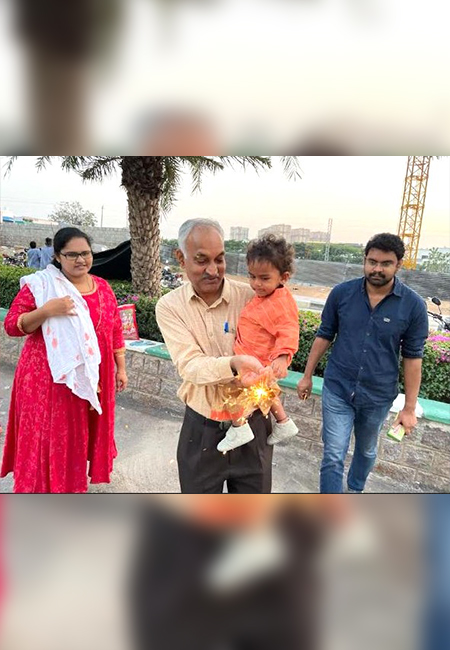
Dr. K. V. V. Satyanarayana’s story begins not in the boardrooms of consultancy firms or the corridors of academia, but amidst the quiet rhythms of his early life in rural Andhra Pradesh and later in Hyderabad. Born and raised in a middle-class household in this culturally rich city, his upbringing was grounded in values of integrity, discipline, and perseverance. These early years in Teeluck Lane shaped more than his character; they laid the bedrock for a lifelong pursuit of service, learning, and leadership.
The echoes of family conversations around hard work and personal responsibility were woven deeply into Dr. Satyanarayana’s psyche. His parents, whose own lives reflected a dedication to community and self-improvement, provided not just moral guidance but practical encouragement, cultivating in him the resilience that would define his future. Growing up in Hyderabad, an educational hub with a storied past, he found himself immersed in an environment where every street corner whispered the importance of ambition and scholastic achievement.
By the time he appeared for his Secondary School Certificate (SSC) examination in 1977, Dr. Satyanarayana had already demonstrated his academic promise. Scoring a commendable 74.8%, he emerged not only as a bright student but as someone with a keen interest in problem-solving and analytical thinking. His school years were marked by curiosity and an eagerness to challenge norms, a trait that surfaced even in routine classroom experiments where he often found unconventional ways to arrive at solutions.
Motivated by a growing fascination with electronics and power systems, he enrolled in Andhra Polytechnic, Kakinada, to pursue a Licentiate in Electrical Engineering (LEE), a diploma program that would shape the contours of his technical foundation. Graduating in 1980 with 66% marks, he exhibited a practical understanding of machinery, circuits, and power distribution far beyond classroom lectures.
“The more you sweat in peace, the less you bleed in war.”
Phase 2 : Discipline and Leadership : The Indian Air Force Crucible (1981-1994)
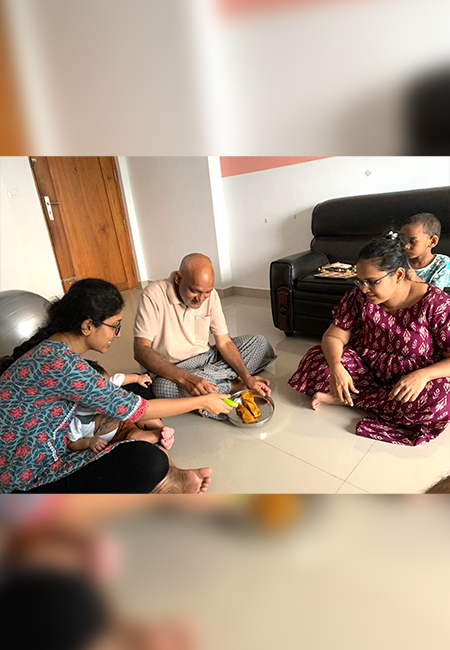
When Dr. K. V. V. Satyanarayana joined the Indian Air Force (IAF) in 1981, he didn’t merely enter a uniformed service; he stepped into a crucible of discipline, precision, and leadership. Over the next thirteen years, he would serve across four strategically vital bases—Jorhat in Assam, Bangalore in Karnataka, Delhi, and Allahabad in Uttar Pradesh—immersing himself in the operational heartbeat of India’s air defense machinery and supporting utilities. Each posting wasn’t just a geographical shift; it was a test of endurance and an opportunity to refine both his technical prowess and administrative foresight.
His early responsibilities centered around the operation and maintenance of critical electrical systems, the silent backbone supporting some of the most complex air operations in Asia. These systems weren’t just machinery; they were lifelines. From power backups for radar installations to electrical infrastructure for hangars and airfields, Dr. Satyanarayana developed an intimate understanding of high-stakes systems where a single fault could compromise mission success.
The real impact of these years lies in how they transformed knowledge into competence. He was no longer the bright-eyed diploma holder from Andhra Polytechnic Kakinada; he became a man of action with sleeves rolled up, working amid the hum of generators and control panels, often solving real-time faults under pressure. He navigated high-voltage environments and safety-critical protocols with a balance of intuition and methods. Maintenance manuals became his companions, but it was field improvisation that turned him into a seasoned engineer. The IAF didn’t just give him experience; it gave him precision.
Equally significant was the leadership grooming he received during this phase. Under commanding officers like Squadron Leader Sebastian, Dr. Satyanarayana began to internalize the ethos of planning, delegation, and supervision. Squadron Leader Sebastian, known for his strategic thinking and mentoring style, provided fertile ground for transformation.
“From boardroom blueprints to classroom chalk — My mind became a map, and reform its compass”
Phase 3 : Transition and Diversification: State Service, Academia, and Printing Press (1994-2002)
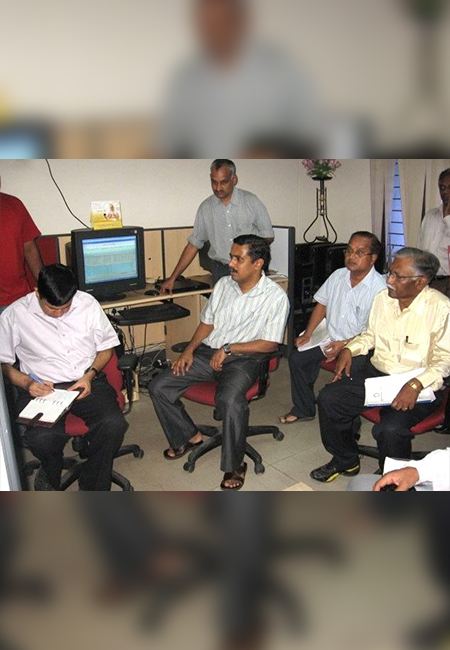
After thirteen years of distinguished service in the Indian Air Force, Dr. K. V. V. Satyanarayana stood at the crossroads of transition and reinvention. The year was 1994, marked not only by the completion of his military tenure but also by a powerful shift in priorities toward public education and technical upliftment. That year, he successfully cleared the Uttar Pradesh Public Service Commission examination and joined the Directorate of Training and Employment, a move that reflected his enduring commitment to national development through knowledge dissemination.
Assigned to the Government Industrial Training Institute (ITI) in Chamoli, nestled within the majestic Garhwal Himalayas, Dr. Satyanarayana assumed the dual responsibilities of Principal and officiating District Employment Officer. The terrain may have been remote, but the mission was far-reaching. In this role, he influenced both policy and pedagogy, designing training curricula, overseeing staffing logistics, and enhancing administrative systems to align with state mandates. His experience managing technical infrastructure in the Air Force seamlessly translated into effective oversight of vocational programs, and he championed efforts to modernize the training institutes with industry-relevant modules and accomplished breakthrough success in implementing national Apprenticeship scheme that benefited several students of his Industria Training institutes.
The educational backdrop of Chamoli required more than domain expertise; it demanded emotional resilience and adaptability. While serving in this picturesque but geographically isolated district, Dr. Satyanarayana faced profound personal challenges, his family’s health circumstances required care and proximity that his posting couldn’t accommodate. This emotional strain ultimately catalyzed a difficult yet necessary decision: to pivot toward new professional avenues that would allow balance between his familial duties and professional aspirations.
Note of Thanks
As this biography of Dr. K. V. V. Satyanarayana reaches its final page, it becomes imperative to acknowledge the constellation of people who made it possible. A project of this depth and sensitivity is never a solitary undertaking; it is the result of collaboration, trust, patience, and the shared desire to preserve a legacy with honesty and care.
Our foremost gratitude goes to Dr. Satyanarayana’s family, whose generosity with time, memories, and emotional strength served as the foundation for this work. Their willingness to revisit moments both joyful and difficult added layers of authenticity that enriched every chapter. The warmth of their recollections and the clarity of their insights helped us portray the man behind the mission—a father, husband, son, and friend whose life was anchored by love and moral conviction.
We extend heartfelt thanks to his colleagues, mentors, and protégés from across sectors—military, industrial, academic, and international development—whose testimonials offered nuanced views into his professional ethos. Their reflections brought perspective to his reform work, leadership decisions, and the subtle ways he inspired others to lead with conscience. Their words stitched together a portrait of excellence not just in achievement, but in attitude.
A special note of appreciation goes to the research and editorial team, who approached every draft with precision and respect. Their diligence in verifying facts, formatting timelines, and maintaining narrative balance made this biography both a scholarly and emotive experience. Their tireless efforts behind the scenes ensured that Dr. Satyanarayana’s story remained accurate and compelling throughout.
We thank the institutions and archives that opened access to mission reports, field documentation, and policy briefs, which allowed us to represent Dr. Satyanarayana’s contributions in full scope. These materials helped anchor the narrative in historical context, reaffirming the impact of his service across geopolitical landscapes.
To the individuals who shared personal stories and quiet moments, thank you for your vulnerability and trust. Your voices reminded us that greatness often manifests in the simplest gestures: a reassuring word, a firm decision, an act of patience. These accounts gave life to facts and transformed biography into memory.
Finally, to the readers, whose interest in this biography ensures the continuity of Dr. Satyanarayana’s legacy, thank you. May his life inspire not just admiration, but reflection—not just remembrance, but action.
Thanks,
– Dr. K. V. V. Satyanarayana