“My past was never a prison—it was the foundation on which I learned to build strength, purpose, and justice.”
Dedication
This isn’t just my story. It’s a mosaic built from the love and strength of others.
To my mother, the original superhero without a cape. Your hands, calloused from work, built the ladder I climbed. Your heart, tested by fire, taught me that love is the ultimate strategy for war.
To my grandmother, who turned our modest home into a sanctuary of wisdom. Your stories were my first law books; your kindness, my first lesson in justice.
To my wife, Melissa, my anchor and my North Star. In the chaos of my dual life—cop and lawyer, servant and student—you have been my calm, my confidante, and my greatest supporter. Your unwavering love and patience have been the quiet strength behind every public victory. This journey makes sense because I share it with you.
To my brothers, Nigel and Bobby, and my sisters, Cindy and Rachelle. You are my first friends, my lifelong allies, and my living memory. We grew up sharing dreams in that small wooden house, and we grew stronger sharing the journey. Thank you for the laughter, the support, and the unbreakable bond that has been my foundation from Congo Village to wherever life takes us next.
To the friends, colleagues, and mentors who became my chosen family—from the gritty streets as a cop to the polished halls of the courthouse. You were the chorus that sang “you can” when my own voice whispered doubt.
And most importantly, to every young dreamer staring at a mountain that seems too high to climb. This book is my message in a bottle to you: Your starting line does not define your finish. Stumble, but get up. Fall, but rise higher. The pen that writes your future is in your hand.
“Childhood is the one story that stands by itself in every soul.”
Phase 1: The Making of Grit – Where Roots Grow Deepest
Close your eyes and imagine a photograph fading at the edges. The colors aren’t vivid; they’re washed in the golden-brown hue of earth and sugarcane. This is Congo Village, South Trinidad, 1978—not a location on a map so much as a state of being. The air carried three distinct scents: the sweet, grassy perfume of crushed sugarcane, the damp earthiness of the nearby ponds, and woodsmoke from cooking fires. Sound traveled differently here—not the mechanical hum of appliances but the symphony of nature: roosters crowing at false dawn, the rustle of cane leaves in the trade winds, and the distant chatter of neighbors whose voices carried across the flat, open land.
I was born Ashley Mongroo on November 21st into this sepia-toned world. Our home was a wooden structure that seemed to breathe with us—creaking in the wind, expanding in the heat, and becoming an extra family member. There were no straight lines in that house; the floorboards sloped gently, the doorframes leaned slightly, and everything had settled into the land over time. We didn’t have running water or electricity. These weren’t deprivations; they were simply facts of life, like the sun rising in the east. Water came from the pond or river—a daily pilgrimage with buckets that taught me about weight, balance, and the preciousness of what others took for granted.
The sugarcane fields weren’t just our landscape; they were our economy, our calendar, our identity. My grandfather and father worked those fields, their lives measured in harvest cycles rather than months. The rhythm of the village pulsed with the sugar industry—the planting, the growing, the cutting, the waiting. There was a profound seasonality to everything, a connection to the earth that city children would never know.
When I was five, the foundation of my world didn’t just crack—it fundamentally rearranged itself. My parents’ marriage ended. In a small community where everyone knew everyone’s business, this wasn’t a private matter. It was a seismic event that everyone felt and commented on.
“Education is the most powerful weapon which you can use to change the world.”
Phase 2 : The Student of the Streets & The Books
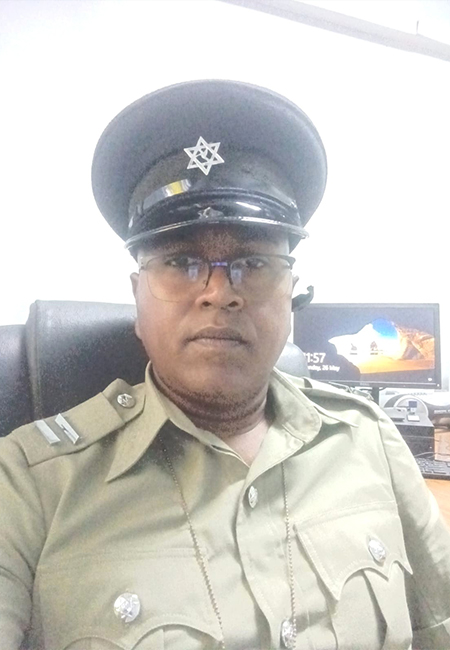
The year was 1996. I stood at the threshold of adulthood with a secondary school certificate in my hand and a profound uncertainty in my heart. Graduation from Barrackpore Senior Secondary School should have felt like a triumph—and in many ways it was—but it also felt like standing at the edge of a cliff without knowing how far the drop was or what lay at the bottom.
Our family’s financial reality hadn’t magically transformed with my academic success. University brochures might as well have been written in a foreign language for all the relevance they had to my circumstances. Tuition fees? Living expenses? Textbooks? These were abstract concepts when we were still calculating how to stretch one bag of rice through the week.
So I did what countless young people from circumstances like mine have done throughout history: I traded my school uniform for work clothes. My first job was in the construction industry, a world as far removed from the classroom as could be imagined.
The University of Hard Knocks: Construction Site Lessons
I became a laborer on construction sites across South Trinidad. The work was brutally physical—mixing concrete by hand, carrying sacks of cement that left white ghosts of dust on my skin, digging foundations under the relentless Caribbean sun. My hands, once accustomed to holding pens and footballs, became maps of blisters, calluses, and small injuries.
But here’s what they don’t tell you about manual labor: it teaches. Oh, how it teaches.
On those construction sites, I learned about structures—not just of buildings, but of teams. I watched how a skilled foreman could coordinate twenty men with different skills and temperaments to create something from nothing. I learned how the foundation determines everything that comes after—pour it wrong, and the whole building is compromised, no matter how beautiful the design.
“It does not matter how slowly you go, as long as you do not stop.”
Phase 3 : Baptism by Fire – Where Theory Meets Blood, Sweat, and Truth
The Police Training Academy had equipped me with theory, procedure, and a shiny new badge. But nothing—not the most grueling simulation, not the thickest textbook, not the most vivid warning from seasoned instructors—could have prepared me for the visceral reality of my first posting to the Criminal Investigations Department (CID) in 2003.
This was where the rubber of my education met the jagged, unforgiving road of reality. The classroom hypotheticals were gone. In their place: actual blood, actual trauma, actual lives shattered by violence. The transition was less a step and more a plunge into icy water—a shock that left me gasping, my academic confidence momentarily drowned in the cold tide of human suffering.
My first major crime scene was a burglary-turned-assault in St James. I arrived as the lead investigator, not as a Crime Scene Technician. The distinction was crucial and immediate. The air smelled of copper (blood), dust, and the sour tang of fear. A grandmother had been beaten for the few dollars in her cupboard. Her face was a mask of purple and crimson. Her eyes, when they met mine, held not just pain, but a profound humiliation—the violation of her sanctuary.
My role wasn’t to dust for prints or bag evidence myself. That was the meticulous work of the Crime Scene Investigators (CSI), who arrived in their white suits, moving with a methodical, clinical precision that contrasted sharply with the raw emotion in the room. My job was to orchestrate—to secure the perimeter, to assess the living scene (the victim’s story, the witnesses’ frozen faces, the narrative written in broken furniture and spattered walls), and to direct the forensic symphony that would capture its physical truth.
I stood back, observing, my mind racing. The gap between knowing how an investigation should run and actually running one, with a trembling victim watching and a team waiting for direction, felt like a canyon.
Note of Thanks
As I bring this telling of my journey to a close, my heart is crowded with faces and names, a chorus of voices that have guided, challenged, and sustained me. To put gratitude into words is to try to hold an ocean in my hands, but I must try.
My first and deepest thanks is to my mother, Parbatie. Mom, you were my first world. You taught me that love is not a feeling but an action—a verb demonstrated in sacrifice, in stitches sewn by lamplight, in a determined belief that echoed louder than any doubt. This story is the tree; you are the root.
To my grandmother, my first storyteller and moral compass. Your porch was my sanctuary, your parables my first law books. You taught me that the strongest force is not the fist, but a steadfast heart.
To my wife, Melissa. You are my anchor in every storm and my calm in every chaos. You saw the man behind the badge and the father behind the busyness, and you loved them both. You built a home with me in every sense of the word. For your patience, your strength, and your unwavering partnership, I am eternally grateful.
To my daughters, Ary and Mari. You are my greatest inspiration and my purest joy. You gave the word “purpose” its deepest meaning. Every step I take is to make the world a little brighter for you.
To my father. Ours was a complex path, but it taught me to find my own direction. I thank you for the lessons, even the difficult ones, that contributed to the man I became.
To my siblings, Nigel, Cindy, Rachelle, and Bobby. We shared those early rooms and those big dreams. Our shared history is the bedrock of my story. Thank you for your lifelong camaraderie.
To the heroes of the Trinidad and Tobago Police Service—the mentors like Pappy and Khan, and the countless brothers and sisters in blue. You are the steel in the spine of this nation. Thank you for teaching me that true strength is fused with honor, and that the badge is a shield we carry for others.
To my legal mentors and colleagues at the bar. You welcomed a cop into your world and showed me that the law is a living instrument for justice and order. Thank you for your guidance and for raising the standard.
To my community—from Congo Village to every neighborhood I’ve served. You are the reason. Your resilience has inspired me, your trust has humbled me, and the privilege of serving you has been the honor of my life.
To the young people I have met through the Police Youth Club and in classrooms. You are the next torchbearers. Your energy and potential are the reasons we must keep building a better, more just world.
And finally, to you, the reader, for walking this path with me. May you find in these pages not just my story, but a reflection of your own capacity for resilience, and a reminder that no matter where you begin, your grit, your integrity, and your heart will determine where you arrive.
With deepest thanks,
– Dr. Ashley Mongroo