“The important thing is not to stop questioning. Curiosity has its own reason for existing.”
Dedication
The purpose of this biography is to illustrate the concept that a meaningful life is not constructed through a series of moments of acclaim, but rather through decades of modest dedication.
This biography is dedicated to the generations that believe that knowledge comes with responsibility, that research should help people, and that progress is strongest when guided by ethics and humility. The path that Dr. Felice Corcione Esposito has taken is illustrative of the power of perseverance, which is acquired via the acquisition of values at an early age, maintained through discipline, and polished through service.
Furthermore, we dedicate this work to his family: his parents, Giuseppe and Carolina; his brothers Giacomo, Totonno, Sebastiano, Lucia, and Vincenzo; his wife, Annamaria; his children, Carola and Giuseppe; and his grandchildren, Enrica, Anna, Andrea, and Luca, whose unwavering presence serves as the hidden foundation that underpins every noteworthy accomplishment. It was because of their support, patience, and belief that Dr. Felice Corcione Esposito was able to pursue the truth via study, leadership through service, and a balance between the intellect and nature.
This biography is devoted to younger generations of scientists, engineers, and intellectuals who may discover in these pages a reminder that excellence is not something that happens overnight. Cultivating curiosity, perseverance, and bravery is essential. The accumulation of information is not the only goal of a life that is devoted to learning. Learning fosters character development, produces long-lasting effects, and shapes futures that transcend beyond one’s own lifetime.
“Character is formed in the small moments of daily life.”
Phase 1: Foundations of a Thoughtful Mind: Early Life, Family Roots, and Formative Values
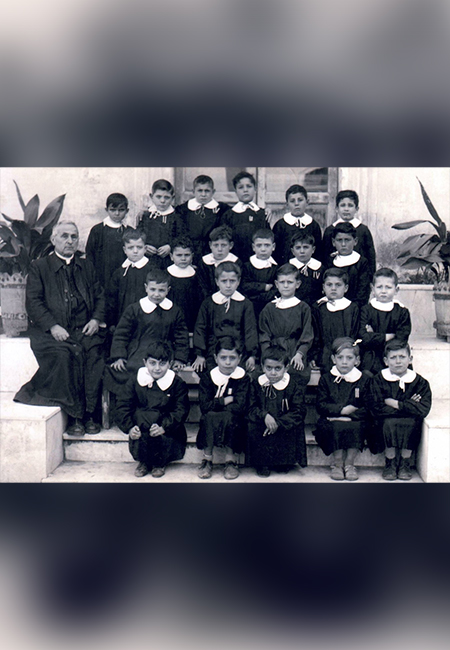
Dr. Felice Corcione Esposito begins in a place that is not associated with laboratories, conferences, or achievements. The first step is to be humble. His birth took place in 1946 in Marigliano, which is located in the province of Naples in Italy. He was brought into the world in conditions that required him to exert effort from the very beginning. Over the course of his childhood, he was brought up in a farming family that was extremely impoverished. The daily routine consisted of hard work, few resources, and an unstated expectation that every member of the household would contribute in any feasible manner.
His siblings were five brothers and one sister, and he was the youngest of the six children. Understanding his early formation requires a thorough comprehension of this particular aspect, which he himself highlights. When you are the youngest child in a large family, you do not have the allowance to indulge. To accomplish this, you will need to observe, be patient, and adjust. Dr. Felice Corcione Esposito was taught at a young age to see the importance of listening before speaking and to comprehend his position within a system that was more extensive than himself. These early lessons subtly influenced his eventual approach to questions of knowledge, responsibility, and leadership.
Living in a farming-dependent household was challenging. The seasons determined work rather than convenience, and exertion was a necessity rather than a choice. Although it was not a dramatic event, poverty was apparent in every decision that was made. Discipline was something that he learned from his surroundings long before he received formal instruction. He began to understand that being persistent is the only way to achieve outcomes and that duty, rather than entitlement, is the foundation upon which dignity is constructed.
Education had a lot of importance for the family, not because it was a guarantee of social standing but rather because it was a symbol of independence and potential. Schooling was held in high regard precisely due to the fact that it was difficult to do.
“Study without desire spoils the memory, and it retains nothing that it takes in.”
Phase 2 : Forging the Engineer: Higher Education, Discipline, and the Architecture of Thought
When Dr. Felice Corcione Esposito made the move from elementary school to higher education, it was a pivotal moment in his life that marked a turning point. What had first been a form of discipline molded by one’s family and circumstances has now developed into an intellectual commitment molded by one’s own free will. When I started attending university, it was not just a continuation of my education. Specifically, it was a declaration of intent.
Dr. Felice Corcione Esposito believed that the pursuit of higher education contained significance that went well beyond the realm of personal desire. Access to higher education was a symbol of sacrifice, duty, and expectation for someone who came from a farming family that was extremely impoverished. In addition to being considered an individual accomplishment, it was also considered a group project. With each step forward, he realized that education was not something to be thrown away or minimized.
The University of Naples Federico II, which is considered one of the most prestigious educational institutions in Italy, is where he decided to study Electrical Engineering. He entered a rigorous, disciplined, and strict academic environment, which he found to be uncompromising. An education in engineering needed a high level of precision, patience, and perseverance. A discipline that praised clarity of mind and punished approximation was one described by the author. His temperament and this environment were a perfect match.
Her time at the university presented Dr. Felice Corcione Esposito with a new level of responsibility. The passive assimilation of concepts was no longer the case. They needed to be accomplished, put to the test, and utilized. Mathematical theory, physical theory, and engineering theory all demanded unwavering concentration. When distractions occurred, there was no room for error. Not as a hardship, but as a continuation of the discipline he had previously learned in childhood, he made studying for long hours a norm over the course of his academic career.
“The real purpose of scientific method is to make sure nature hasn’t misled you into thinking you know something you actually don’t.”
Phase 3 : From Knowledge to Contribution: Entering Research and the Discipline of Responsibility
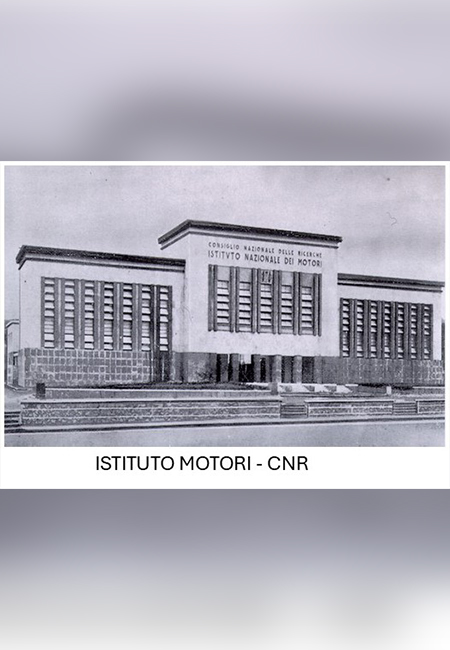
Upon entering the field of professional research, Dr. Felice Corcione Esposito did not do so in the capacity of a technician carrying out functions that were predetermined. He came in knowing that he was a thinker who was ready to face uncertainty. The years that followed his graduation from Electrical Engineering in 1973 marked the beginning of a scientific life marked by depth, patience, and methodological fortitude at every turn.
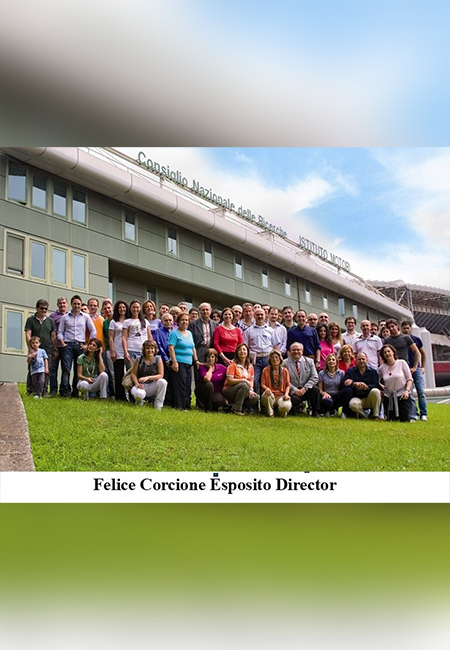
He became a member of the National Research Council of Italy (CNR) at the Istituto Motori in Naples, which is an organization that is committed to conducting cutting-edge research in the fields of transportation, combustion, and energy systems. Certainly, this was not a typical place of employment. It was an atmosphere in which scientific legitimacy was gradually acquired, experimentation required a high level of rigor, and the outcomes had regional, national, and even international significance.
Dr. Felice Corcione Esposito distinguished himself from the beginning by the way he approached the treatment of his patients. He didn’t merely utilise existing methods. Through his efforts, he tried to broaden the scope of experiences that might be viewed and comprehended by complex engine phenomena. When combustion processes were primarily inferred indirectly, he got extensively involved in the invention and deployment of optical access engines, a technology that dramatically altered experimental engine research. This development took place at a time when the inference of combustion processes was largely indirect.
Researchers were able to study combustion events immediately within the cylinder thanks to optical engines, which made what had been hidden in the past visible. The technical improvement in question was not a trivial one. The conceptual framework underwent a shift. The introduction of optical engines made it possible for scientists to move from approximation to evidence by providing visual access to flame growth, turbulence, and flow dynamics.
Note of Thanks
Throughout the course of Dr. Felice Corcione Esposito’s life and journey, a multitude of people, experiences, and moments have contributed to the formation of this biography, which serves as a collective statement of gratitude.
He would like to express his heartfelt gratitude to his family, whose presence, patience, and unflinching support served as the bedrock of his emotional foundation during every stage of his life. They gave the strength needed to adapt and endure the tough years of service.
In addition, he would like to convey his profound gratitude to his colleagues, collaborators, and students whom he has engaged with over the course of several decades of scientific work, leadership, and public service. The mutual learning and collaborative advancement that resulted from each and every conversation, discussion, and shared challenge was significant. Knowledge was never a solo pursuit throughout his life. It was constructed via the use of trust and cooperation.
We would like to express our deepest gratitude to those individuals who provided him with care, professionalism, and friendship during the years of recovery and transition. Their support reaffirmed the importance of human connection, which transcends jobs and accomplishments.
Dr. Felice Corcione Esposito concludes by expressing gratitude to newer generations who continue to enquire, learn, and look for a sense of purpose in their lived experiences. This narrative is theirs. In the event that these pages inspire a sense of responsibility, patience, and reverence for life and the natural world, then the purpose of this work has been accomplished.
Thank You
– Dr. Felice Corcione Esposito