“The measure of a life is not in what it begins with, but in what it overcomes.”
Introduction
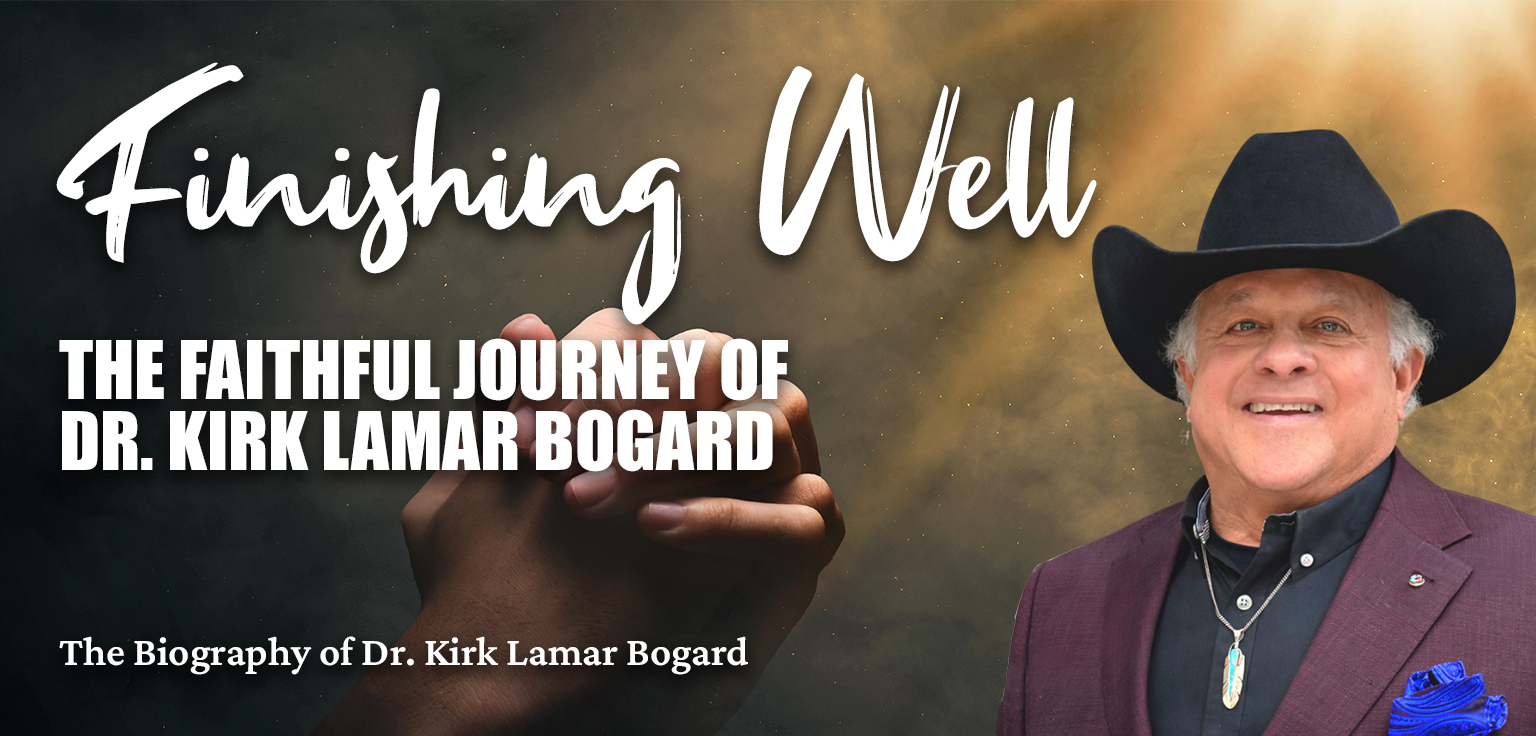
The life of Dr. Kirk Lamar Bogard is one of transformation, perseverance, and faith. Born on May 20, 1957, in Hobbs, New Mexico, Kirk entered the world under fragile circumstances. He was the firstborn of seven children, arriving a month premature and spending his earliest weeks in the hospital. His mother, Iva Marie Cathy, was a full-blooded Cherokee Indian, and through her heritage, he inherited both resilience and a deep cultural identity. His father, Delbert Raymond Bogard Sr., struggled alongside his mother with alcoholism, leaving their home environment unstable and unpredictable. In those formative years, hardship was a daily companion, and Kirk was often left to care for his younger siblings.
Yet, even in those early challenges, seeds of faith and determination were being planted. At the age of six, Kirk accepted Jesus Christ as his Savior and was baptized at Fellowship Baptist Church. While his home life lacked security, his faith provided an anchor. He not only found strength for himself but became a guide for his brothers and sisters, ensuring they attended church and received the same spiritual grounding. Today, all of them are believers, a testimony to the influence of a young boy who refused to let circumstances define the outcome of their lives.
Central to his childhood was the presence of his grandfather, Bill. A cowboy by trade, Bill stepped in when Kirk’s stepfather treated him with indifference. Under his grandfather’s care, Kirk learned more than the art of farming and ranching. He learned discipline, hard work, and the values of integrity and perseverance. Riding horses, raising cattle, and working the land became more than skills, they became lessons in manhood. His grandmother, too, left a lasting impression, often speaking in Cherokee and reminding him of the culture that would always remain a part of who he was. Kirk would later have the honor of officiating at his grandparents’ funerals, a full-circle tribute to those who had carried him in his youth.
High school in Perryton, Texas, brought both trials and triumphs. Kirk worked from the age of six and carried responsibilities that far exceeded those of most children. He also found a passion for rodeo, riding bulls and broncs, often bearing the bruises and broken bones of that daring sport. But amid the physical challenges, his true highlight came through the Future Farmers of America (FFA) program. Guided by his teacher Jack Dyer, who understood his home struggles and extended compassion, Kirk thrived. In his senior year, he won “FFA Farm Employee of the Year,” a recognition that affirmed his determination and work ethic. This was more than an award, it was proof that perseverance could carve out victories, even in the face of hardship.
“Hardship can either break a person or build them. For Kirk, it became the foundation for service.”
During this time, another pivotal moment shaped his future. In 1974, while attending church camp, he felt the call of God to preach. It was a calling that both inspired and frightened him. His natural shyness, coupled with a stutter, made the idea of public speaking overwhelming. Still, he began preaching as a junior in high school and taught Sunday school under the guidance of Pastor Frerking. Though his first attempt at Bible college was cut short due to financial strain, and he found himself working as a welder and electrician’s apprentice, the call never left his heart. For a season, he tried to run from it, convincing himself he could build a life without stepping fully into ministry. But God had other plans.
“The hardest soil often produces the strongest roots.”
Phase 1: When Struggles Shaped the Seed of Faith
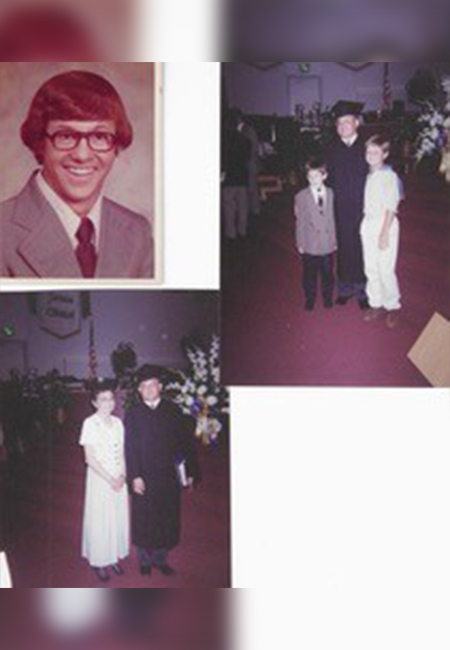
The beginning of Dr. Kirk Lamar Bogard’s life was far from easy, yet it became the ground where resilience and faith took root. Born on May 20, 1957, in the small town of Hobbs, New Mexico, Kirk entered the world under fragile circumstances. He was the firstborn of seven children, arriving one month premature. The start of his life was a battle for survival, and the tiny infant had to remain in the hospital for nearly a month before his mother could finally take him home. Those early days foreshadowed a life that would require determination and endurance, a life shaped by hardship but guided by divine purpose.
Kirk’s mother, Iva Marie Cathy, carried within her the proud heritage of a full-blooded Cherokee Indian. From her, Kirk inherited not only his lineage but also a sense of cultural identity that would later inspire him deeply. His father, Delbert Raymond Bogard Sr., carried his own struggles, and together, his parents’ lives were overshadowed by alcoholism. Their dependency cast a heavy shadow over the home, leaving Kirk and his siblings in a constant state of instability. While most children his age found comfort in the security of their parents’ presence, Kirk often found himself alone, filling the role of protector and caretaker for his younger brothers and sisters.
Growing up in this environment meant that childhood was brief and responsibility came early. Kirk quickly understood that he could not rely on his parents to provide safety or stability. Instead, he stepped into a role that demanded maturity beyond his years, making sure his siblings had what they needed and guiding them with the seriousness of someone much older. The home was filled with uncertainty, fear, and frequent disappointment, yet even within this brokenness, God was shaping him into a leader, preparing him for the compassion and strength he would later extend to others.
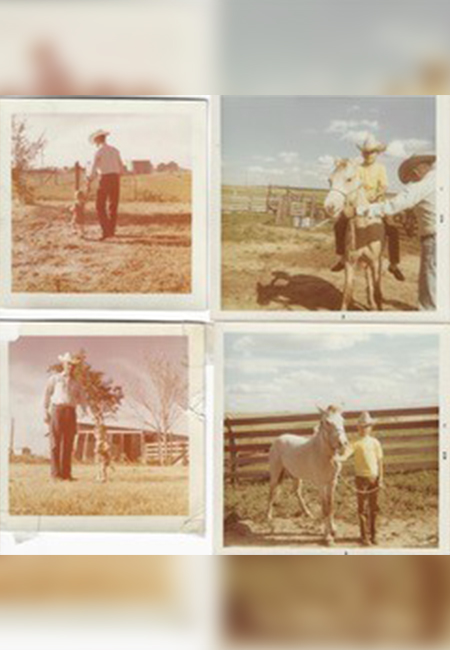
Amid this turbulence, one figure stood as a pillar of stability: his grandfather, Bill. Known simply as “Granddad Bill,” he became the anchor in Kirk’s otherwise stormy childhood. Bill was a cowboy by trade, a man of the land who raised cattle, trained horses, and tended to the work that defined rural life.
“When God plants a calling in the heart, no fear or circumstance can erase it.”
Phase 2 : A Call Whispered in Youth
As Dr. Kirk Lamar Bogard moved from childhood into his teenage years, the struggles of his early life remained, but alongside them came glimpses of purpose that began to shape his identity. The boy who had grown up carrying responsibilities far beyond his years was slowly becoming a young man with a vision planted deep in his heart. Although his environment was still defined by uncertainty and hardship, a powerful thread of faith and perseverance continued to weave its way through his story.
High school in Perryton, Texas, was not just a place of study for Kirk, it became a training ground for his resilience and character. Balancing long hours of work with academic commitments, he already carried the mindset of someone determined to survive and succeed despite the odds. The dusty plains of Perryton were unforgiving, but they taught him endurance. The cattle, the ranches, and the farming lifestyle reinforced the lessons of responsibility he had first learned from his grandfather.
In those teenage years, Kirk discovered rodeo. For him, riding bulls and broncs was more than a sport, it was another way to test courage. The bruises and broken bones he carried from the arena mirrored the challenges he faced in life. Each fall tested his grit, but each climb back onto a bull or horse taught him that fear could never define him. Rodeo was risky, but it gave him a sense of triumph, a reminder that pain was temporary, but courage could leave a lasting mark.
School also gave him moments of encouragement that stood out against the backdrop of hardship. His teacher, Jack Dyer, recognized that Kirk’s life was far from ordinary. Instead of dismissing him as another student lost to personal struggles, Dyer saw his determination and offered guidance. Through the Future Farmers of America program, Kirk not only found belonging but also discovered his potential.
“A shared journey of faith becomes the strongest foundation for a life of service.”
Phase 3 : Love, Partnership, and New Responsibilities
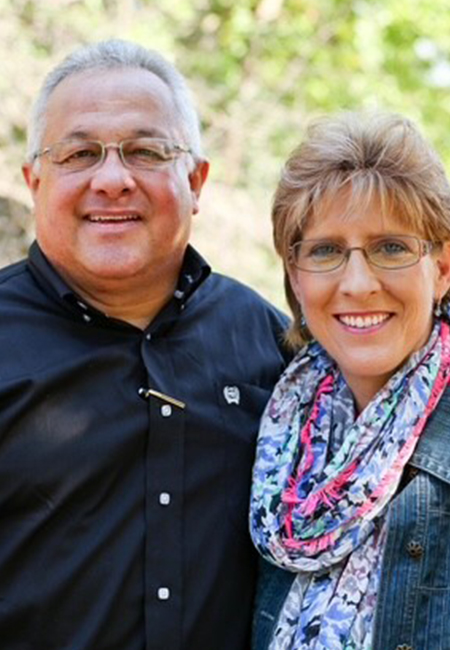
After the struggles of youth and the deep wrestlings with God’s call upon his life, the next phase of Dr. Kirk Lamar Bogard’s story unfolded in a way that forever changed his direction. It was during this season that he met the woman who would walk by his side for more than four decades, shaping not only his personal life but also his ministry. Marriage, fatherhood, and the first true steps of partnership with Kathy became the cornerstones of this period, a time when the lessons of his past blended with the responsibilities of his future.
Kirk first met Kathy through what seemed like a simple encounter arranged by circumstance. His cousin David was attending Baptist Bible College, and as fate would have it, Kirk crossed paths with a young woman who would become central to his life. Their first interaction was casual, nothing dramatic or remarkable, but it planted a seed that would later grow into a lifelong bond. Initially, Kirk was focused on other relationships, but God’s timing and plan soon brought him and Kathy together in a way neither could have predicted.
The story of their courtship reveals much about Kirk’s character. Though shy and reserved by nature, he pursued Kathy with determination. Their connection deepened over time, and in February 1982, after asking her more than once, he finally received the answer that brought joy to his heart: she agreed to marry him. On September 4, 1982, the two were united in marriage, beginning a partnership that would carry them through every trial, every ministry, and every new chapter of life.
For Kirk, marriage was not simply the fulfillment of a personal dream but the creation of a foundation that gave stability where his childhood had lacked it. Growing up in a broken and unstable home, he had longed for a family defined by love, faith, and unity. With Kathy, he found that dream realized. Their marriage became not only a companionship but also a ministry partnership, one where both carried the burdens and shared the victories of serving God together.
Note of Thanks
In reflecting upon the life and journey of Dr. Kirk Lamar Bogard, it is impossible not to recognize the many people who have shaped, supported, and strengthened his path. This biography is not simply a record of one man’s story, but a tribute to the countless hands and hearts that have walked beside him, lifted him, and believed in him when the road was steep.
First and foremost, gratitude is owed to God, who called him, sustained him, and gave him the courage to keep going when life seemed overwhelming. Every chapter of his life bears witness to divine grace and the unwavering presence of faith.
Dr. Bogard also gives thanks for the love of his wife, Kathy, whose steadfast devotion has been a constant anchor throughout decades of ministry. From the days of raising children to the years of missionary service and through seasons of hardship, she has stood as both partner and encourager. Their sons, Jarrod and Cody, also remain a source of joy and pride, embodying the blessings of family and the rewards of faithfulness.
He remembers with deep appreciation his grandparents, whose Cherokee heritage and strong values shaped his resilience and gave him an identity rooted in strength. He honors the pastors, mentors, and church families who guided him, believed in him, and gave him opportunities to grow.
Special thanks are offered to friends and supporters across the United States who stood behind his mission in Nicaragua and made it possible for churches, Bible institutes, and ministries to flourish. Their sacrifices became seeds of hope for generations to come.
This note of thanks is a reflection of the truth Dr. Bogard has lived: no journey is traveled alone. His story is not just his own—it is shared with every person who gave, prayed, encouraged, and believed.
Thank You
– Dr. Kirk Lamar Bogard