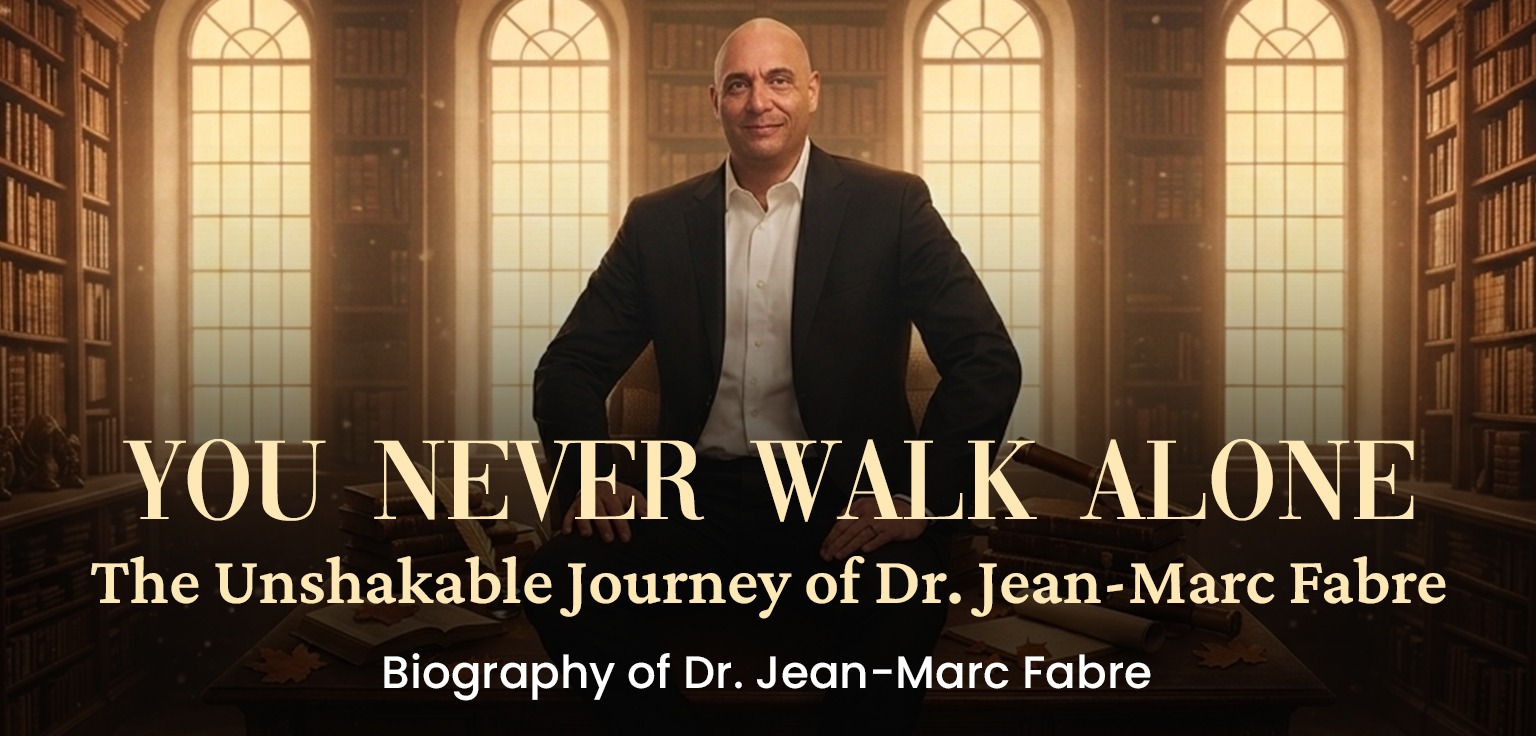
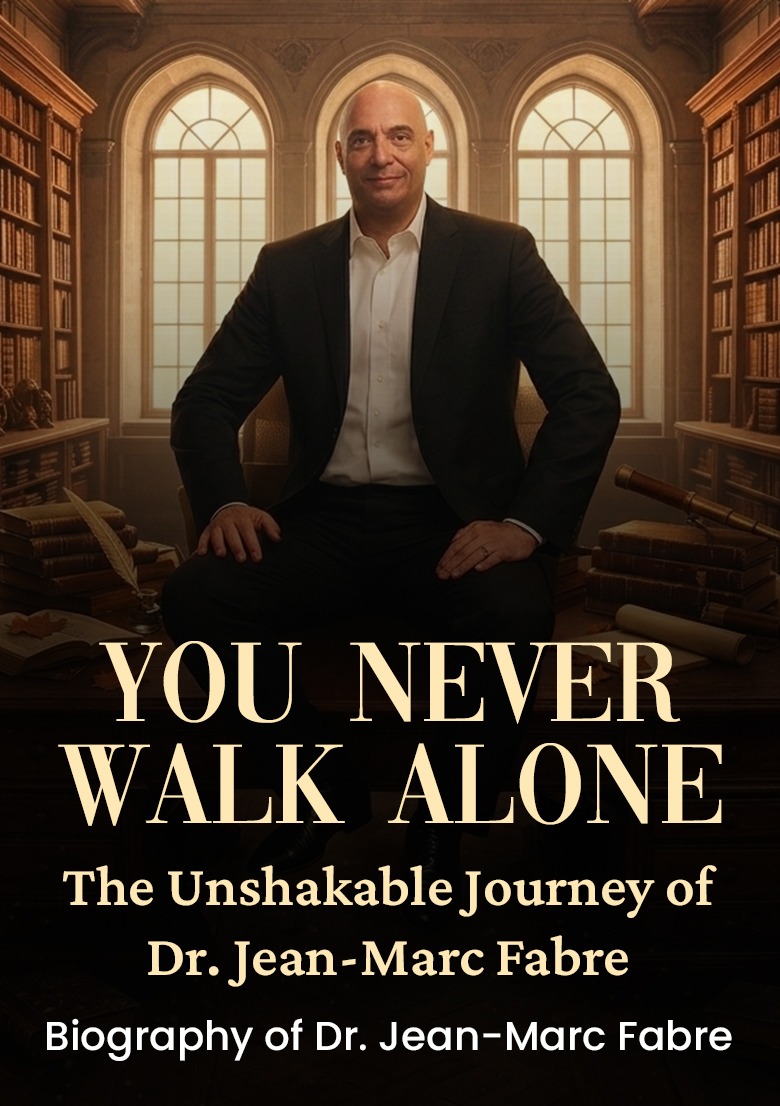
“I didn’t just move to a new country. I moved through fire—and came out faithful.”
Introduction
Born on November 17, 1968, in the heart of Mauritius, Dr. Jean Marc Fabre never imagined that his story would one day span continents, careers, and generations. His early years were marked not by extravagance, but by extraordinary values, deeply embedded by a family that believed in dignity, education, and discipline. His childhood was not one of convenience—but of constant character building, surrounded by the strength of his grandfather and the hard work of his parents.
Dr. Jean-Marc was not raised to chase glory—he was raised to chase growth. His grandfather, Mr. Frank Richard, wasn’t just an influential educator in Mauritius. He was a man of unmatched integrity who built institutions, guided thousands of students, and, in the process, quietly molded Dr. Jean-Marc’s sense of purpose. Watching his grandfather tutor university students in English literature, hearing the name Shakespeare spoken in hushed reverence in their home office, Dr. Jean-Marc learned that real education isn’t about certificates—it’s about conviction.
But as fate often does, life tested Dr. Jean-Marc early. At 20, he became a father. It was not a mistake—it was a turning point. One that would redefine the pace and path of his life. While others his age were still planning careers, Dr. Jean-Marc was already working, already raising children, already facing responsibilities far beyond his years. His adulthood began early—but so did his resilience.
Starting as an accounts clerk for a paint company, he quickly transitioned to car sales, where he built a name in a competitive market, selling vehicles for prestigious brands like BMW, Mercedes, Hyundai, and Proton. His charm wasn’t in the pitch—it was in the passion. He could sell because he believed in relationships, not tactics. But even as he succeeded in sales, Dr. Jean-Marc felt a pull towards something greater—something lasting.
That pull led him into security management in the hospitality sector, where he became Head of Security for a group of five-star hotels in Mauritius. It was a lucrative and prestigious role, but for Dr. Jean-Marc, it was never just about status. It was about stability—a way to earn enough to eventually fund a vision he had carried since childhood: to study in the United Kingdom, like his grandfather once had.
It all started from Bain Des Dames in Cassis, Port-Louis, a small village in the suburbs of the capital city-port-Louis. In September 2002, I was living in a house made of flattened iron sheets. With a close friend, we turned that structure into two rooms—one as a bedroom for my family of four, and the other as a small kitchen dining space. The bathroom was outside, roofless and makeshift.
“In the quiet corners of my grandfather’s study, I found the loudest lessons of my life.”
Phase 1: Roots in Mauritius – A Grandfather’s Legacy
Long before Dr. Jean-Marc Fabre crossed borders or held leadership titles, he was a thoughtful young boy in Mauritius—curious, grounded, and deeply observant. Born on November 17, 1968, he was raised in a household where discipline was not demanded—it was demonstrated. His story begins not with power or privilege, but with principles, nurtured by a family that honored dignity, learning, and legacy.
At the heart of his early life stood his grandfather, Mr. Frank Richard—a towering figure in Mauritius’ educational development. Known as a former Permanent Secretary of Education and the founding architect of the Mauritius Institute of Education, Mr. Richard’s name echoed in academic circles. But to Dr. Jean-Marc, he was more than a public figure—he was the quiet architect of his worldview.
From a small, book-filled study at home, Mr. Richard delivered private lessons to university students, diving deep into Shakespeare, English literature, and critical thinking. That room was more than a space—it was a sanctuary where intellect was sacred and values were shaped. As a child, Dr. Jean-Marc would quietly sit by, watching students hang onto his grandfather’s every word. The rhythm of recited verses, the wisdom in every sentence, the unwavering demand for excellence—it left a permanent imprint on the young boy’s soul.
Among the many lessons his grandfather shared, one became the mantra of his life :
“There’s no secret to success—just hard work, focus, and discipline.”
This wasn’t motivational fluff. It was a deeply lived truth. Dr. Jean Marc didn’t inherit wealth, shortcuts, or special access. But what he did inherit was far more powerful—a legacy of persistence and the belief that greatness comes from effort, not entitlement.
His parents reinforced that legacy. His mother, in particular, emerged as a quiet warrior in his narrative. Defying norms, she pursued her own education later in life, graduating from a university in the UK. In doing so, she not only uplifted herself but unknowingly carved a path her son would follow years later. Her late achievement became a symbolic prophecy of what Dr. Jean-Marc would one day chase—an international academic journey rooted in ancestral ambition.
The cultural richness of Mauritius itself shaped his moral compass. A vibrant blend of Indian, African, Chinese, and European influences, the island instilled in him a respect for diversity, harmony, and identity. But it also showed him the harsh realities of economic limitation. Opportunities weren’t handed out—they were earned, fought for, and often delayed. Yet, through it all, Dr. Jean-Marc grew up not bitter—but bold.
“I didn’t follow opportunity—I built it, one job at a time.”
Phase 2 : From Paint and Petrol to Prestige – The Early Career Shift
While some careers are carved through planned pathways and predictable milestones, Dr. Jean-Marc Fabre’s journey unfolded like a mosaic—carefully pieced together through necessity, instinct, and an unwavering belief in hard work. After the early responsibilities of fatherhood redefined his priorities, he understood that success would no longer arrive through classrooms alone. It would have to be earned in the field, in real time, through real effort.
His professional life began humbly in 1987, when he stepped into his first formal role as an Accounts Clerk for a paint company. The work was repetitive, the environment modest, but for Dr. Jean-Marc, it was a place of learning. He became a debtors’ controller, responsible for managing client accounts, reconciling payments, and overseeing the company’s credit transactions. While others saw this as clerical work, he saw it as a discipline in financial responsibility and detail management—skills that would one day become foundational in his leadership career.
But stagnation never sat well with him. Within a short span, he transitioned to something more dynamic—sales. The switch from spreadsheets to showrooms came naturally to someone with his blend of charisma and clarity. He entered the automobile industry, starting with mid-range vehicles and eventually climbing to premium brands. Over the years, he represented names like BMW, Mercedes, Hyundai, Daihatsu, Subaru, and Proton, earning a reputation as one of the most trustworthy and effective salesmen in the automotive industry in Mauritius.
What set Dr. Jean-Marc apart wasn’t aggressive salesmanship—it was empathy and honesty. He didn’t just sell cars; he understood people. Clients trusted him because he listened, advised with transparency, and never pushed a product he didn’t believe in. In a competitive industry driven by commission and pressure, he remained committed to building relationships, not just revenues.
His success did not go unnoticed. Soon, dealerships began approaching him with offers. He became a sought-after name in the island’s tight-knit auto circuit, often receiving personal referrals and repeat customers. It was in these years that he truly began to understand his strength in people management—not just in selling, but in building confidence and guiding decision-making.
“I came with a suitcase, a student visa, and just enough rent for one month. But I carried generations of hope.”
Phase 3 : A New Life in the UK – Culture, Struggle & Survival
In 2002, at the age of 33, Dr. Jean-Marc Fabre made a life-defining leap—leaving behind a steady life in Mauritius to pursue a Master’s degree in Security and Organisational Risk Management at Leicester University in the United Kingdom. It wasn’t an act of wanderlust. It was a purposeful decision, grounded in legacy, driven by the voice of his grandfather who once walked the same path. But unlike many international students with financial backing and familial safety nets, Jean-Marc Fabre arrived in the UK with a single month’s rent, no job, and a head full of determination.
From the very beginning, his journey was uphill. Leicester, though welcoming and diverse, still required cultural acclimation. But to Jean-Marc, it felt familiar. The city’s strong Indian diaspora reminded him of Mauritius, a land similarly shaped by Indian roots. The food, traditions, and community structures helped him feel a little less foreign in a foreign land.
However, comfort was short-lived. The financial reality of studying in the UK hit hard. As a student, he was legally restricted to 20 hours of work per week—barely enough to survive, let alone support tuition, housing, and basic living costs. But Dr. Jean-Marc was never one to surrender to policy or pressure. He negotiated with his university, adjusted his course schedule, and took on additional work during academic holidays, pushing every legal boundary without ever breaking a rule.
Amidst this chaos, he met the woman who would become his wife, a fellow Malawian with deep Indian heritage. They met in October 2002, married in March 2003, and by November that year, welcomed their first child together. In less than twelve months, Jean-Marc had become a husband, a father, and a full-time student living in a rented flat—miles away from home, family, and familiarity.
There was no room for romance or rest—only resilience. Jean-Marc and his wife took turns working shifts so that one of them could always be home with the baby. He worked nights while she managed days. They were a team held together not by ease, but by a shared dream and a relentless faith in one another.
Note of Thanks
As this biography closes, Dr. Jean-Marc Fabre would like to pause—not to celebrate himself, but to honor those who helped carry the weight of his journey. This story, though written in his name, belongs to many hearts, many hands, and many silent sacrifices.
To his beloved wife, who stood beside him through every sleepless night, every immigration hearing, and every uncertain morning—thank you. You didn’t just build a home with him—you built a world. Your strength became his foundation. Your belief never faltered, even when the future did. You are the quiet triumph in every chapter of this story.
To his children, all seven of them—thank you for your patience, your love, and for forgiving the nights he came home too tired, too quiet, or too burdened. Thank you for seeing past his absences and understanding the weight he carried to give you something better. You are his reason, his fuel, and his legacy.
To his eight grandchildren, thank you for bringing joy and light into his life. Every smile, every giggle, and every moment spent with you reminds him that his efforts have created not just success, but continuity.
To his stepson, thank you for walking this journey with him, for trusting his guidance, and for becoming family in the truest sense of the word.
To his sister-in-law’s, who left their own life in Malawi to help raise his children in the UK—thank you. You gave him and his wife the freedom to work, study, and build without fear. You are not just a family member—you are a pillar in the foundation of their success.
To his late grandfather, Mr. Frank Richard—your lessons shaped every moment of this story. You are the silent narrator of this book, the moral compass that still guides him. Thank you for showing him what it means to teach not with volume, but with virtue.
To his mother, who earned her own university degree later in life and showed him that it is never too late to learn, to rise, or to evolve—thank you. Your quiet example remains etched in every bold decision he made.
To his father, he expressed his gratitude for shaping the man he had become. Though wealth was not something he had received, what he gained was far more valuable. It was through his father’s quiet strength, discipline, and unwavering example that he had learned the values he now carried with pride.
You taught him that integrity is not negotiable, that a man’s word must mean something, and that dignity is found in how we live—not what we own. he watched how you treated others—with fairness, with humility, and with kindness—and those moments built the foundation of his character.
He may never have sought praise, but please know: everything he is today is rooted in what you taught him. Thank you for raising him with wisdom, for guiding him with patience, and for loving him with quiet constancy.
Your legacy lives through him—and it always will.
To mentors like Naim Rama, and every colleague, manager, or friend who offered a helping hand, a word of encouragement, or an open door—thank you. You reminded him that kindness is not a weakness, but a force, and that strangers can become family through action.
To his teams at Antalis, Sainsbury’s, and Marks & Spencer, thank you for trusting his leadership and allowing him to grow not just in position, but in principle. Every day spent with you has shaped him—not just as a professional, but as a person.
To those who rejected him, doubted him, or closed doors on him—thank you too. You gave him the fire to keep climbing, to keep proving that character is louder than credentials, and that a man’s worth cannot be measured by where he starts—but by how he carries himself.
To every reader of this biography—thank you for listening. Thank you for walking through his trials, his triumphs, and his truths. If this story has touched you, moved you, or reminded you of your own strength, then this book has already fulfilled its purpose.
And lastly, to God—the force he leaned on when nothing else made sense—thank you. Through every delayed visa, every canceled program, every sleepless night and whispered prayer, You never left his side. Everything he is, and everything he has, belongs to Your grace.
“I am not the sum of my accomplishments,” Dr. Jean-Marc says.
“I am the result of every soul who stood with me when I had nothing.”
And to each of you—this book, this life, this legacy—is his eternal thank you.
Thank You
– Dr. Jean-Marc Fabre