“A meaningful life is not built by the roles one occupies, but by the responsibility one accepts—especially when no recognition is promised.”
Introduction
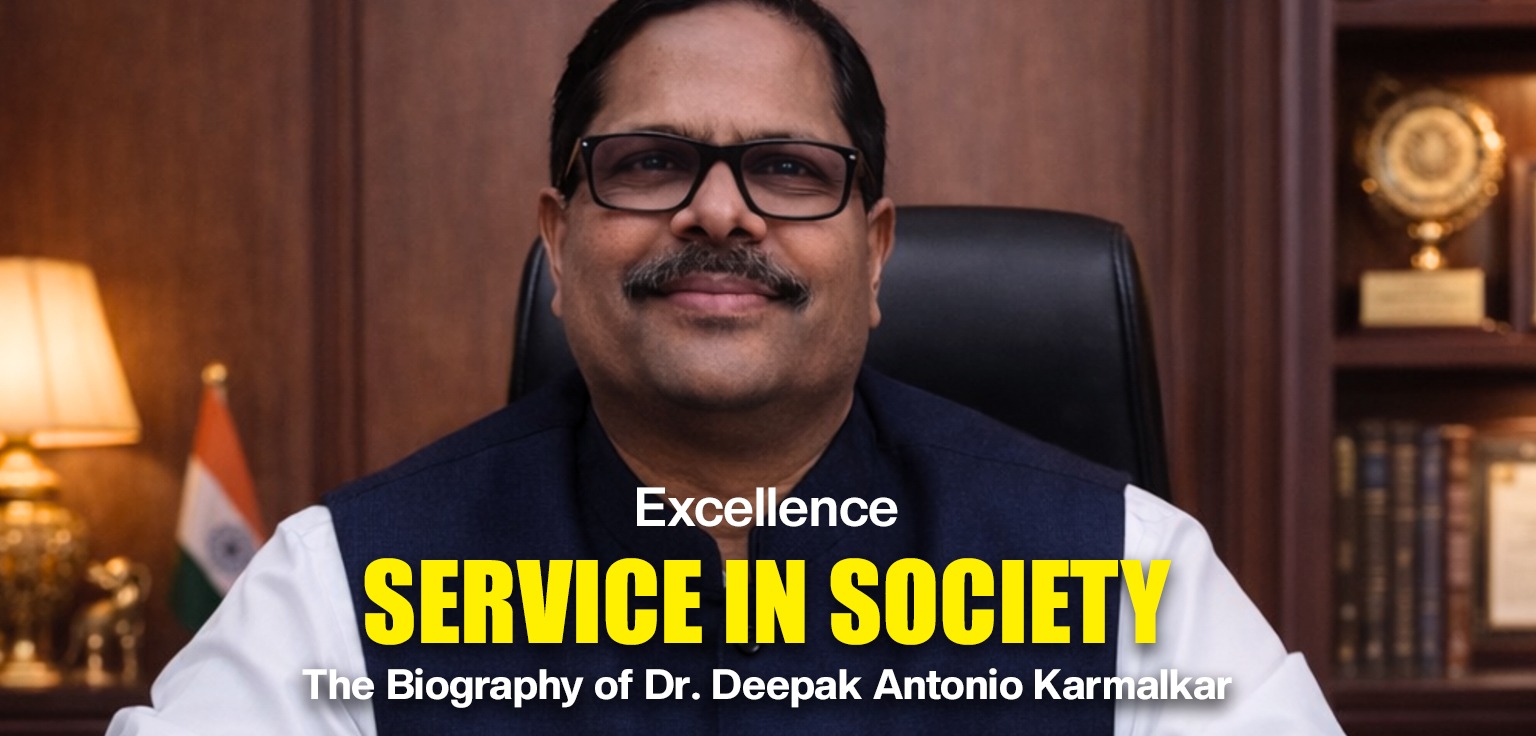
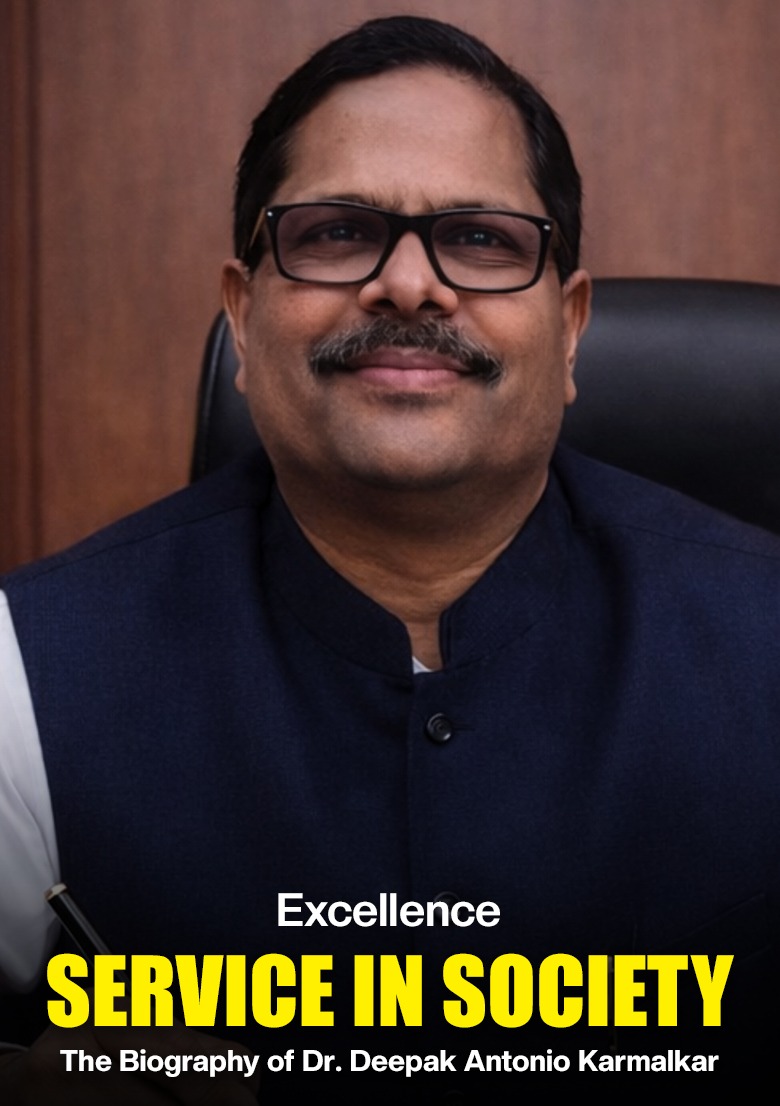
The story of Dr. Deepak Antonio Karmalkar is not one of sudden success or inherited advantage. It is the story of a life patiently built through learning, responsibility, and an unwavering commitment to justice. Spanning more than four decades, his journey reflects how education, when guided by conscience, can become a powerful instrument for social transformation. This biography seeks to present not only what Dr. Karmalkar achieved, but why his life’s work matters, particularly in a society where access, equity, and fairness often depend on who is willing to stand firm.
Born into a traditional Goan agrarian family with deep generational roots, Dr. Karmalkar grew up with an early awareness of land, labour, and community. These were not abstract ideas but lived realities. From a young age, he observed both the dignity of hard work and the vulnerabilities faced by communities lacking legal awareness or institutional protection. These formative experiences shaped his worldview long before formal education gave him the tools to articulate and address them. His upbringing instilled values of honesty, resilience, and social responsibility, values that would later define his professional and public life.
Education became the central pillar of his journey, though it was never pursued as a straightforward or effortless path. Each academic milestone was achieved alongside work, family responsibility, and social engagement. From technical education to engineering, from law to advanced studies in education and economics, Dr. Karmalkar’s academic pursuit reflects a rare determination to learn continuously, not for prestige, but for purpose. Learning, for him, was a means to overcome structural limitations and to serve others more effectively.
His long and distinguished career as an educator stands as one of the most defining chapters of his life. Over three decades in the classroom, Dr. Karmalkar shaped thousands of students, not only through academic instruction, but through discipline, ethical clarity, and personal example. Consistently strong results were not merely indicators of subject mastery; they reflected a teaching philosophy rooted in accountability, preparation, and respect for students’ potential. His role extended far beyond teaching hours, encompassing curriculum development, examination governance, faculty training, and academic administration. In each responsibility, he upheld integrity as non-negotiable.
“Before ambition finds direction, values find a home—and it is from that home that every future decision quietly emerges.”
Phase 1: Roots That Refused to Yield
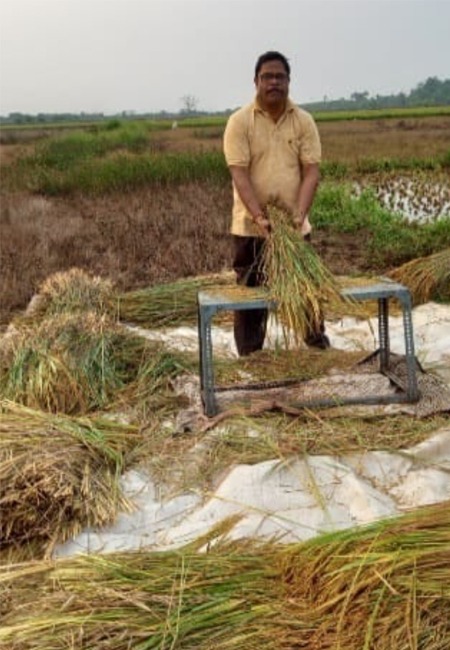
The story of Dr. Deepak Antonio Karmalkar does not begin with ambition or aspiration, but with belonging. Long before titles, classrooms, courtrooms, or commissions became part of his life, his sense of self was shaped by land, lineage, and continuity. Born into a traditional Goan agrarian family, his earliest surroundings followed the rhythm of seasons, where labor was guided by daylight and values were absorbed through lived example rather than spoken instruction. These quiet, resilient, enduring roots would later become the unseen strength behind every choice he made.
Dr. Karmalkar’s family belonged to an indigenous community whose history was deeply bound to the soil. Their connection to land was never transactional; it was ancestral. Fields, trees, and homesteads memory, dignity, and responsibility. From an early age, he understood that land was not simply property but identity itself, something to be safeguarded, respected, and passed forward. This understanding would later take on deeper meaning as he witnessed dispossession and injustice experienced by communities like his own.
Growing up in such an environment required participation. Work was not assigned by age; it was shared out of necessity. Agricultural routines, seasonal cycles, and household duties were woven into daily life. These early experiences nurtured discipline, endurance, and respect for labor. They also shaped a natural awareness that survival and dignity often rest on collective effort rather than individual comfort.
Just as influential was the moral atmosphere of his home. While formal education had been limited in earlier generations of his family, ethical literacy was always present. Honesty, restraint, generosity, and social responsibility were not taught as ideals but lived as obligations. Quiet acts of service, supporting neighbors, sharing resources, and standing with others in hardship, were normal. Over time, these values became internalized, shaping Dr. Karmalkar’s understanding of what it truly meant to live with integrity.
“When the path is blocked, persistence does not complain; it simply learns how to move forward another way.”
Phase 2 : Learning Against the Current
If Phase One shaped the moral spine of Dr. Deepak Antonio Karmalkar, Phase Two tested its endurance. These were the years when aspiration confronted limitation, when the desire to learn collided with structural barriers, and when persistence ceased to be a virtue and became a necessity. This phase was defined less by smooth progression and more by academic, social, and circumstantial resistance. Yet it was precisely within this resistance that his character began to crystallize.
After completing his secondary education in the early 1980s, Dr. Karmalkar entered technical education at a time when opportunity was tightly bound to circumstance. Coming from a modest agrarian background, his academic choices were shaped not by ideal preference but by practical feasibility. Polytechnic education offered a workable path, one that balanced learning with employability. He enrolled in a diploma program in Industrial Electronics, stepping into a system that demanded precision, discipline, and consistency. The shift from school to technical training was not merely academic; it required adjustment to an environment that prioritized output, accuracy, and sustained focus.
These years were governed by routine and restraint. Study hours extended well beyond classrooms into late evenings. Resources were scarce, and learning often relied on repetition rather than reinforcement. Still, Dr. Karmalkar approached his studies with quiet seriousness. He was driven not by competition, but by resolve. Completion itself became an achievement, earned through patience rather than privilege.
Upon completing his diploma, comfort did not follow. Employment arose from necessity. He began working as a laboratory assistant and computer instructor, balancing professional duties with the growing awareness that his educational journey remained incomplete.
“True authority is not granted by position but earned when responsibility is carried long before recognition arrives.”
Phase 3 : Authority Earned, Responsibility Expanded

Phase Three represents the stage in Dr. Deepak Antonio Karmalkar’s life when sustained effort gradually translated into influence, and learning matured into leadership. The foundations built through years of disciplined study and an uncompromising work ethic now carried him into positions where his decisions shaped institutions, not just individuals. Yet, with growing authority came an even stronger sense of responsibility. For Dr. Karmalkar, advancement never meant arrival; it always signaled a deeper obligation.
By this stage, he had firmly established himself as a senior educator in the vocational and technical stream at the higher secondary level. His classrooms evolved into spaces defined by structure and expectation. Students understood that success was not optional, but the natural outcome of preparation and consistency. Over the years, his academic results consistently surpassed high benchmarks, frequently achieving complete pass percentages. These outcomes were never the result of shortcuts or diluted standards, but of a pedagogy that blended discipline with clarity. He believed that expecting effort from students was itself a form of respect.
Teaching, however, was only one dimension of his expanding professional role. Dr. Karmalkar’s reliability and integrity led to repeated appointments within examination and academic governance bodies. He served in multiple capacities, as examiner, senior examiner, paper setter, and chief paper setter, positions that demanded not only subject mastery but also ethical precision. Assessment, in his view, was a matter of trust. Every paper prepared and evaluated carried consequences for a student’s future, and he approached this responsibility with seriousness and impartiality.
His involvement in syllabus design marked a significant evolution in his professional journey. In a period of rapid technological change, particularly within computer and vocational education, outdated curricula risked rendering learning obsolete.
Note of Thanks
Dr. Deepak Antonio Karmakar expresses his sincere gratitude to the many individuals, institutions, and organisations whose guidance, cooperation, and encouragement shaped his academic, professional, and public journey. He is deeply thankful to the Management of Dnyanprassarak Mandal and the leadership of PVS Sarojini Madhusudan Kushe Higher Secondary School and Institute of Vocational Studies, Assagao, for their unwavering support in enabling him to pursue higher education alongside service
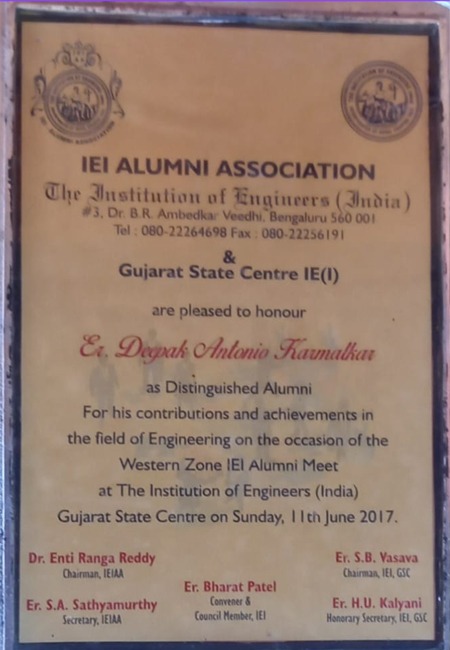
He gratefully acknowledges the guidance of senior members of the Institution of Engineers (India), academic mentors, and legal educators whose support opened new pathways of learning and professional growth. His appreciation extends to the Ministry and Directorate of Tribal Welfare, the Goa Commission for Scheduled Castes and Scheduled Tribes, the Directorate of Education, and the Goa Board of Secondary and Higher Secondary Education for their cooperation during his years of public responsibility.
Dr. Karmalkar also thanks his colleagues, vocational teachers, staff members, and social organizations for their collective commitment to education and community welfare. Above all, he offers his heartfelt thanks to his wife, Mrs. Disha Karmakar, whose quiet strength and constant support remain the foundation of his life’s work.
Thank You
– Dr. Deepak Antonio Karmalkar