
“The purpose of thinking about the future is not to predict it but to raise people’s hopes.”

Dedication

We dedicate this biography to the unassuming foundations that Dr. Sherman Rose built his life upon. These are the individuals whose presence, sacrifice, and consistent impact established his principles long before he was ever aware of their existence. The first people to whom it is dedicated are his parents, whose unwavering will in the face of adversity instilled in him a sense of dignity, tenacity, and the significance of responsibility. Their lives taught him that power is not always visible and that endurance often speaks softly.

It is dedicated to his grandparents, whose home provided him with a safe haven as well as a moral foundation, and whose discipline and care instilled in him an early awareness of respect, hard work, and belonging. Over time, their influence didn’t fade; instead, it transformed into a guide that he relied on during uncertain times.

Those individuals who stepped up when stability was fragile and offered wisdom, care, and encouragement without expecting anything in return are also honored by this commitment. These individuals remain unnamed, yet their legacy endures eternally. These individuals’ generosity reaffirmed his conviction that presence and compassion, rather than blood, determine the concept of community.

In conclusion, this work is dedicated to his siblings and relatives, for whom he assumed responsibility at a young age, as well as to the generations who will come after them. It is my hope that his path serves as a reminder that a life lived with the intention of serving others, maintaining integrity, and assisting others is never wasted.
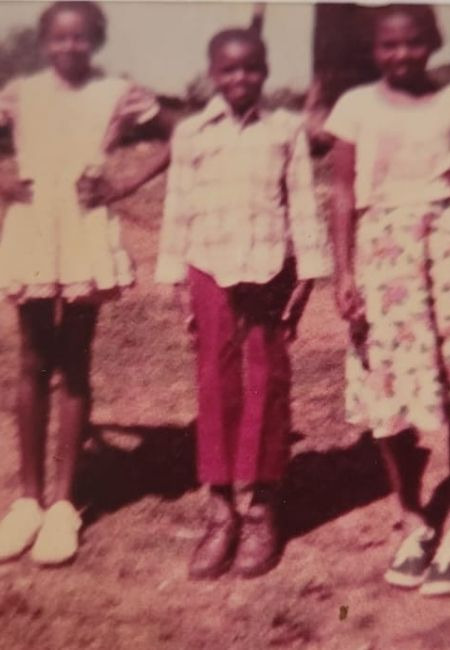

“Character is shaped long before it is recognised.”

Phase 1: Roots Formed in Quiet Ground

The first few years of Dr. Sherman Rose’s life were not characterized by unequivocal certainty but rather by the process of adjustment. He learned from a young age that life did not always provide permanency and that stability was something that needed to be built up gradually rather than something that was presumed to be present. These early experiences did not come with any significant pronouncements or dramatic occurrences; rather, they evolved in a quiet manner, through a series of transitions, limited resources, and the tacit awareness that responsibility frequently comes before readiness.

Dr. Rose’s boyhood was profoundly shaped by the rhythms of community life and the reality of economic limitation. He was born into a rural milieu in Jamaica, and his upbringing was informed by these factors. Although it provided space and a sense of familiarity, the countryside nevertheless mirrored the weaknesses of homes that were coping with scarcity. In his formative years, he was frequently transferred from one residence to another. It was necessary for him to observe new routines, obey new authority, and adjust without moaning or complaining during each transition. The ability to watch carefully, to listen more than speak, and to comprehend his place within each context before exerting himself arose as a result of these alterations, which led to the development of an early emotional discipline.

During a considerable chunk of his childhood, he was raised at the house that belonged to his grandparents. A type of grounding that was not based on comfort but rather on structure was provided by their household when they were growing up. There was a definite sense of right and wrong, as well as a feeling of regularity and expectation that guided daily life there. Work was appreciated, respect was non-negotiable, and responsibility was distributed among all parties involved. Rather than being a form of punishment, discipline evolved into a form of instruction. Instead of receiving instruction in a classroom setting, Dr. Rose learned about the need for consistency, effort, and accountability via his everyday life. Despite the fact that these ideals were not expressed in the form of principles, they became deeply ingrained in his personality.

“Education is not the filling of a pail, but the lighting of a fire.”

Phase 2 : Learning Against the Current

If the first stage of Dr. Sherman Rose’s life was responsible for shaping his personality, then the second stage put his patience to the test. These were the years in which progress did not cease, but it slowed down; it was halted on the outside by circumstances, but it persisted on the inside through self-discipline, determination, and quiet determination. This phase is best viewed not as a period of failure or pause, but rather as a prolonged season of waiting, during which learning had to endure without the assistance of stability or confidence. This is the greatest way into understanding this phase.

As Dr. Rose progressed farther into his teenage years, the educational experiences he had became increasingly influenced by factors that were beyond his control. The course of action that he had anticipated taking was altered as a result of a change in the educational system. Circumstances, not bad performance or lack of interest, caused this transition. A reevaluation was necessary for what had been perceived as a straightforward academic path in the past. This modification carried significant weight for a young guy who placed a high importance on learning and structure. Adaptation without resentment was required, and acceptance without capitulation was required simultaneously.

An emotional obstacle that was subtle but substantial was created as a result of the stoppage of structured instruction. During the time that other students were moving through predictable stages of their academic careers, Dr. Rose was forced to navigate ambiguity. Having the realization that his journey was no longer progressing at the same rate led him to exercise self-control. Despite the fact that there was dissatisfaction, it was not communicated through ways such as withdrawal or complaint. Rather than that, it was internalized and controlled in a peaceful manner. It was early in his life that he realized that if he allowed his aggravation to take control, it could become a more formidable impediment than the actual circumstances.

“The true measure of a man is what he does for someone who can do nothing for him.”

Phase 3 : Work, Sacrifice, and Carrying Others Forward

Phase Three is the time in Dr. Sherman Rose’s life when he made the decision to move forcefully out of transition and into commitment rather than transition. Aspiration was necessary to coexist with imminent duty during this time period, which was the moment in which waiting gave way to weight on the scales. The concept of work evolved from being something that was done at random intervals to becoming the organising framework of daily life. In order to survive, consistency was required, and maintaining consistency required discipline.

Construction work was his first experience with persistent labour. It was a physically demanding setting that required him to be strong, punctual, and able to endure long periods of employment. The days were particularly lengthy and demanding. Labour was evaluated based on output rather than comfort, and being present was a non-negotiable requirement. Through this job, he became aware of the fact that despite feelings of exhaustion, he must continue to exert himself on a regular basis. There was very little room for error, and there was no room for interpretation or uncertainty. The lessons that Dr. Rose gained from this experience were learning how to control his energy levels, how to respect time, and how to finish things even when he lacked the enthusiasm to do so. These were not theoretical lectures; rather, they were applied in real life.

After this, he became a participant in the H.E.A.R.T Program, which was a structured job initiative that offered him the opportunity to not only earn money but also gain experience with organised work processes. Even though the program provided a higher level of regularity compared to informal labour, it nevertheless required students to demonstrate discipline and adaptability. The expectations were crystal clear, there was frequent supervision, and performance was a significant factor. Dr. Rose took this atmosphere very seriously, and he was aware that dependability was not a desirable trait but rather an essential one. Through participation in the programme, he was able to strengthen his routines of accountability and his conviction that dignity is derived from behaviour rather than from position.

Note of Thanks

Dr. Sherman Rose would like to use this opportunity to express his gratitude and humility to all of the individuals whose presence, support, and silent encouragement have had a major impact on his journey. His life shows that no one lives alone and that perseverance, patience, and trust can lead to great power.

He would like to express his deepest gratitude to his family, whose constant support, unflinching resilience, and selfless sacrifices served as the cornerstone upon which every stage of his life began to be constructed. In times when progress appeared to be slow and outcomes were unclear, their faith in him provided them with the strength they needed, particularly during times of ambiguity and delay. It is to them that he continues to owe a tremendous deal.

He would like to express his heartfelt gratitude to the teachers, coworkers, and mentors who guided him with honesty and self-control, teaching him lessons that went well beyond the scope of official education. His conviction that education and morality are inextricably linked was strengthened as a result of their impact.

He extends additional expressions of gratitude to the communities he served and stood alongside. His knowledge of responsibility was enhanced, and his dedication to serve was strengthened as a result of their trust and the fact that they shared humanity.

In conclusion, Dr. Rose would like to convey his gratitude to everyone who has walked beside him at various times, sometimes for a short period of time and other times for years, but always with an impact. Every stride forward is made steadier with the support of others, and a life that is formed by appreciation remains open to purpose, growth, and service regardless of the circumstances. Their presence validated a truth that has endured throughout one’s entire life.

Thank You
– Dr. Sherman Rose