
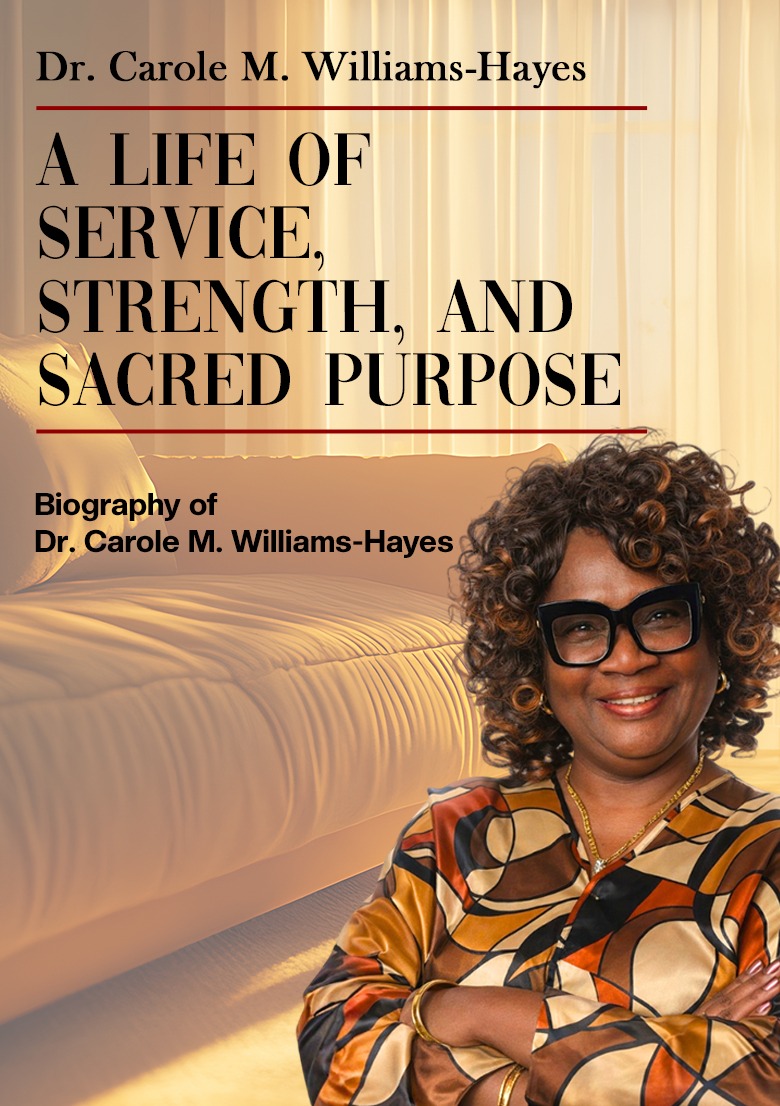

By today’s standards, Dr. Carole M. Williams-Hayes’ early years were spent in what would be considered humble or disadvantaged quarters. Dr. Carole, though, never felt that those formative years were lacking. Her formative years were shaped by the stability and love of her family, who triumphed over adversity and whose principles set the stage for the remarkable life she would achieve. In this section, we go into her childhood and how it moulded her sense of self, her outlook on life, and her later commitment to helping others, empathy, and persistence.
Being the firstborn of three siblings, Dr. Carole was in a natural position to provide both direction and duty the moment she came into this world. Even as an infant girl, she was aware that her words and deeds had consequences, that she set an example for her younger siblings, and that her tone of voice echoed throughout the house. Rather than burdening, being the eldest daughter instilled in her a sense of guardianship, enabling her to vigilantly monitor others, stand up for those she cared about, and take on leadership roles before she fully understood their significance.
Her parents, native Alabamans, raised her with a strong sense of discipline, faith, and morality. Her father, a diligent man with only an eighth-grade education, epitomised tenacity. By providing for his family and setting an example of perseverance and dedication in the face of adversity, he ensured that they could always count on him. There was spiritual stability, order, and warmth in the house because her mother was a stay home mother. Working in tandem, they established a setting where obstacles could never defeat opportunity and optimism could always triumph over adversity.
Dr. Carole frequently thought back on her formative years spent in what her neighbourhood nicknamed “the projects.” Her experience was defined by community, resilience, and togetherness, not scarcity, in a neighbourhood often associated with poverty, instability, and limited opportunities. Those were lively years in her memory, not because they were easy, but because her parents shielded her and her siblings from the burden of financial difficulties.

