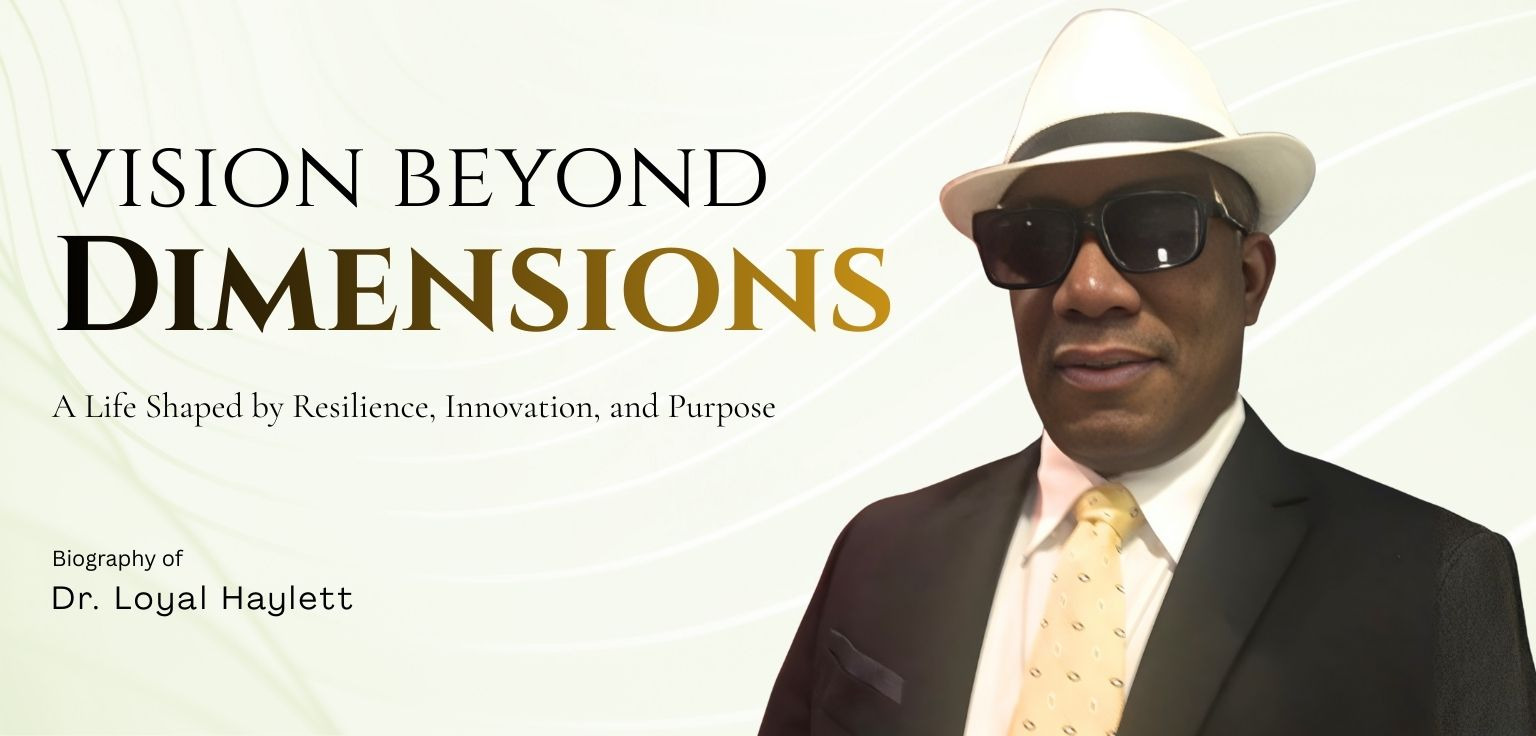
“Patience is the key. If you build something that truly benefits others, the reward will come in due time.”
Dedication
This biography is dedicated to every child who begins life without certainty, without stability, and without the comfort of belonging—yet still carries within them the quiet courage to believe in a future not yet visible. Dr. Loyal Haylett serves as a living testimony that beginnings do not define endings, and that resilience, when paired with patience, can transform uncertainty into purpose.
It is dedicated to the foster families who took him in and gave him guidance, education, and respect during his early years. Their influence did not merely provide shelter; it planted the seeds of curiosity, discipline, and lifelong learning that would later shape a global innovator.
This work is also dedicated to educators, mentors, collaborators, and visionaries across continents—those who believed in ideas before the world was ready for them. Their shared commitment to progress, whether in classrooms, laboratories, music studios, or medical technology, gave shape to innovation.
Finally, this biography is dedicated to future generations—to innovators, creators, and dreamers—who may one day find in these pages the reassurance that persistence matters, patience builds legacies, and service to humanity is the highest measure of success.
“In the depth of winter, I finally learned that within me there lay an invincible summer.”
Phase 1: ROOTS OF RESILIENCE : A Childhood Shaped By Displacement, Learning, And Quiet Strength
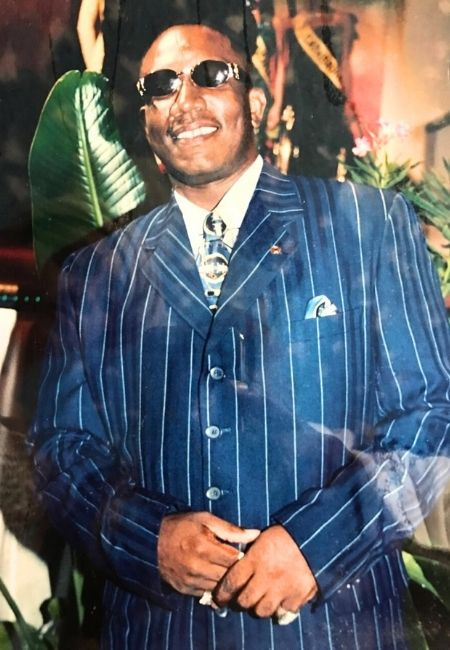
The foundation of Dr. Loyal Haylett’s life was not based on certainty, comfort, or continuity; instead, it was founded on movement, adaptation, and resilience drawn from his early experiences. His early years were marked by circumstances that required strength long before he had the language to express them. He had strength long before he had the language to express it. He was born on June 3, 1961, in Jamaica, and although being placed in foster care as a child contributed to his instability during a formative time, it also helped him develop the emotional resilience that would later quietly characterize his future. During a formative time, this experience also helped him develop the emotional resilience that would later quietly characterize his future.
His early years were marked by circumstances that required resilience, which would later quietly characterize his future. Dr. Haylett’s childhood did not follow a conventional or traditional pattern of development. Having to go through the process of being placed for adoption and then later going through foster care required an early understanding of change. At a young age, he gained the knowledge that settings may undergo abrupt changes and that security was frequently something that needed to be developed within rather than something that was presumed externally. He did not become more resolute as a result of these events; rather, they helped him develop adaptability, observation, and the capacity to learn from his surroundings rather than be resistant to them.
His first formal education was received in Jamaica, when he was enrolled in Malden Primary School, which was located inside the St. James parish. During these years, he participated in his first official schooling in a systematic manner. School evolved into a place that was more than just a place for learning; it became a place of discipline, consistency, and personal foundation. The act of learning provided him with regularity and a sense of direction, even in the midst of unpredictability at home. During this period of time, education was not yet a goal or a desire; rather, it was a safe haven.
“The world is a book, and those who do not travel read only one page.”
Phase 2 : LEARNING ACROSS BORDERS : Education, Independence, And The Formation Of A Global Mindset

The transformations that had once marked Dr. Loyal Haylett’s early years began to take on a whole new significance as he went beyond the stage of childhood. In the past, the experiences that were characterized by the process of adjustment have now transformed into conscious movements toward independence, learning, and self-direction. During the second phase of his life, he experienced a convergence of education, geography, and personal responsibility, which resulted in the formation of a global perspective that would later become an essential component of his professional identity.
The formative years that Dr. Haylett spent under the tutelage of foster parents who were academically minded provided him with a strong internal compass when he entered adolescence and early adulthood. He no longer felt compelled to educate himself; instead, he actively pursued it. His exposure to structured learning, private tutoring, and international education models had already taught him how to learn. From this point on, the challenge consisted of independently applying that discipline within environments and systems that were foreign to them.
As he continued his academic adventure, he found himself in Barbados, where he attended K-Ville University for evening classes. The economics centered studies marked a significant intellectual revolution. His study of economics introduced him to the mechanics of value, resource allocation, and systemic thinking. It provided a foundation for understanding how societies, markets, and institutions operate, which was knowledge that would later prove to be useful to him as he navigated the world of business, entrepreneurship, and technical innovation.
“Excellence is not an act, but a habit.”
Phase 3 : DISCIPLINE IN ACTION : Service, Skill-Building, And The Emergence Of Practical Leadership

During the time when Dr. Loyal Haylett was entering the third phase of his life, the foundations of resiliency and worldwide awareness had already been firmly formed. The phase that followed was one that was characterized by application; it was a time when learning was put into action in a decisive manner and when responsibility was no longer preparatory but rather urgent. This period marked the beginning of the formation of practical leadership, which was molded through service, technical training, and accountability in situations that needed precision and trust.
Due to his contractual connection with the United States Navy, he was able to make a significant leap from academic exploration to operational responsibilities. After Dr. Haylett was given the responsibility of working in Cuba, he entered a culture that was characterized by stringent protocols, high expectations, and continuous oversight. This structure entrusted him with the responsibility of managing food hygiene, preparation, and entertainment operations. He was also responsible for supervising roughly forty individuals who were responsible for the galley that served military people from the United States. Leadership that was founded on consistency, discipline, and respect for norms was necessary for this function, which required more than just the ability to handle logistics smoothly.
We developed a work rhythm that strengthened previously cultivated habits like punctuality, procedural precision, and accountability. This rhythm was introduced by operating within a military framework. The decisions that were made had immediate repercussions, and the completion of the task required coordinated effort. This event was a crucial experience for Dr. Haylett not only because of the hierarchy involved but also because it taught him how systems operate when precision is non-negotiable. He acquired the skills necessary to manage people under pressure, in addition to ensuring compliance with cleanliness and safety requirements and maintaining morale in the face of challenging conditions.
Note of Thanks
A collaborative effort shaped this biography through lived experience, thought, and shared comprehension. We present these acknowledgements with a deep sense of gratitude. First and foremost, he wants to express his gratitude to Almighty God. Above all, he offers sincere thanks to God for the countless blessings he received, for strength during uncertainty, and for guidance throughout every phase of life.
He expresses heartfelt appreciation to his brothers, Patrick Gladston Coleman, who consistently believed in him, and Matthias Fuchs, who was always present with guidance, support, and encouragement. He extends profound gratitude to the Crossley family, whose values and guidance moulded him into remaining true to himself. He especially recalls his foster mother’s enduring words—“If you’re not true to your teeth, they will be false to you”—a lesson that stayed with him as a lifelong principle.
Dr. Haylett also acknowledges his close friend and COO of IQH3D, Mr. David Rose, whose belief in the vision and unwavering support played a vital role in transforming ideas into reality. Special remembrance and thanks are offered to his beloved Aunt Winnie (Winifred Burnett, R.I.P.), whose kindness and presence left a lasting imprint, as well as to his very kind cousin Cai.
With deepest love, he thanks his daughters Latoya Haylett and Skyy, whose pride gives him strength, his son Brandon Haylett, who continues to make him proud; and his beloved Thianna Graham, whose love has brought warmth, balance, and joy to his life.
Dr. Loyal lovingly extends his gratitude to the Angus Family from Sunrise in Kingston, as they gave him a place to live and were kind to him. He is thankful to his cousin, Dave Miller, whose support and reliability played a meaningful role during important phases of his life. Heartfelt appreciation is also offered to Aunt Mertle, whose compassion and encouragement left a lasting impression and contributed to a strong sense of belonging and stability.
Dr. Haylett is equally grateful to Ms. Brown and her sons, Rico and Ricky, whose kindness and generosity provided reassurance and positivity during formative periods. He also extends sincere thanks to Peter and Yvonne Secord, whose support and goodwill served as steady and uplifting influences throughout his journey.
It is because of the instructors, mentors, and foster homes that gave him stability, knowledge, and direction during his formative years that he is grateful. They established the groundwork for a life that was motivated by curiosity and purpose by committing themselves to learning and practicing discipline. Additionally, gratitude is extended to professional collaborators from various fields, including those working in education, healthcare, music, and technology. These individuals, through their experience, teamwork, and shared vision, were able to translate ideas into outcomes that had significant value.
We owe a special debt of gratitude to our coworkers, partners, and teams that endured both times of uncertainty and times of innovation. The conviction that growth is always a journey that is shared by all those involved was strengthened by their patience, endurance, and combined work. In addition, recognition is given to the communities and institutions that supported the process of testing, learning, and service, which made it possible for ideas to develop into solutions that had a significant impact.
In conclusion, he would want to express his deepest gratitude to those who have read this work. It is his hope that his life story will not only serve as a record of the journey of a single person but also as a source of inspiration for those who continue to have faith in the power of patience, purpose, and the opportunity to create something that is beneficial to others.
Thank You
– Dr. Loyal Haylett