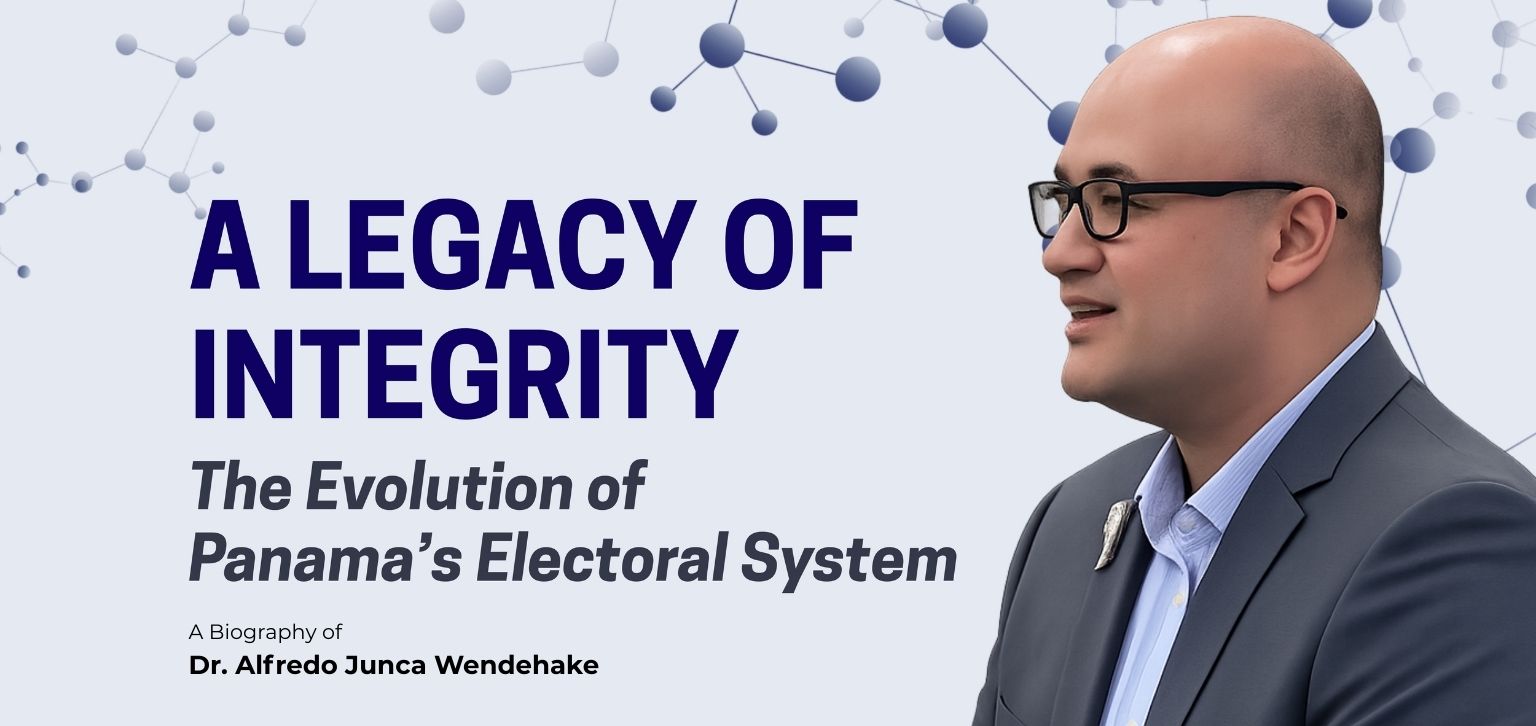
“True democracy is built on the foundations of transparency, fairness, and equal opportunity, where every citizen’s voice is heard, and every vote is respected.”
Introduction
Dr. Alfredo Juncá Wendehake is a prominent Panamanian jurist and electoral official, widely recognized for his pivotal role in upholding the integrity of Panama’s democratic processes. He serves as a magistrate of the Electoral Tribunal of Panama, the nation’s highest electoral authority, and has even held the Tribunal’s presidency. In this capacity, Juncá has been at the forefront of organizing and overseeing national elections, championing reforms and safeguards that strengthen democratic institutions. His leadership in electoral governance has been marked by a steadfast commitment to transparency, fairness, and the rule of law, which in turn has bolstered public confidence in the electoral system. Through a career dedicated to honest and effective public administration, he has emerged as a key figure in safeguarding Panama’s democracy.
Juncá’s expertize is grounded in a strong legal and academic background. He is an attorney-at-law and holds specialization in political science. Prior to joining the Electoral Tribunal, he built a distinguished public service résumé, holding various government and legislative roles. These included serving as a legal advisor to Panama’s Ministry of Government and Justice, a senior officer at the Supreme Court of Justice, and Deputy Director of Parliamentary Advisors in the National Assembly. Such roles gave Juncá firsthand experience in the workings of government and the formulation of laws. He also spent time as an educator, teaching courses on international policy and governance in the Philippines. Additionally, he worked as a trainer for the Electoral Tribunal and other institutions on constitutional and parliamentary matters, an early indication of his dedication to strengthening democratic frameworks. This blend of legal acumen, public-sector experience, and academic insight prepared Juncá for the prominent role he would later assume in Panama’s electoral system.
In January 2017, Dr. Alfredo Juncá Wendehake was elected by the National Assembly as magistrate of the Electoral Tribunal (Tribunal Electoral) for a ten-year term. He filled the seat of a retiring magistrate, joining the three-member panel responsible for administering and adjudicating Panama’s elections. Upon his selection, Juncá openly affirmed his independence and his resolve to uphold the Tribunal’s non-partisan ethos. He vowed that his appointment would bring “guaranteed” transparency, equity, and above all accountability to the electoral body. Emphasizing that he owed no favors to any political group, Juncá asserted that his sole commitment was to the country and the integrity of its electoral process. This principled stance reassured observers that he would act impartially and resist undue influence, a crucial quality for an official tasked with protecting the sanctity of elections. Indeed, Juncá’s arrival at the Electoral Tribunal came at a time when Panama was implementing a new package of electoral reforms, and he immediately engaged in reviewing and advancing those reforms to improve the electoral system.
Since taking office, Magistrate Juncá has played a central role in modernizing and defending Panama’s electoral framework. Under his leadership, the Electoral Tribunal has introduced innovative measures to enhance transparency and efficiency in elections. Notably, Juncá oversaw the launch of a new, high-security national identity card in 2023, a modernized identification card designed to strengthen voter identification and prevent fraud. This upgrade not only made Panama’s ID one of the most secure in Latin America but also leveraged cutting-edge technology to improve public services and electoral logistics.
“Family values of discipline, integrity, and public service continue to guide the work, honoring the trust placed in it.”
Phase 1: Family Origins and Personal Background of Dr. Alfredo Juncá Wendehake

The family origins of Dr. Alfredo Juncá Wendehake are inseparable from the plural historical experience of Panama itself, a nation shaped by transit, encounter, and institutional experimentation. His lineage reflects the convergence of long-established Panamanian roots with European cultural influences, particularly of Spanish origin, resulting in a family tradition that valued discipline, education, and civic responsibility. Within this environment, respect for law and institutions was not presented as an abstract ideal, but as a practical necessity for social coexistence and national development.
Family life played a decisive role in shaping his early worldview. Conversations at home frequently touch upon public affairs, ethical conduct, and the importance of professional integrity. These exchanges fostered an early awareness that public institutions are sustained not merely by legal texts, but by the character and commitment of those entrusted with their stewardship. From an early age, Juncá internalized the idea that public service is a vocation demanding rigor, discretion, and a strong moral compass.
This familial emphasis on responsibility and moderation would later manifest in his professional demeanor. Rather than cultivating ideological rigidity, his upbringing encouraged balanced judgement, openness to dialogue, and respect for institutional continuity. These values would become enduring features of his approach to law, politics, and electoral governance.
Born and raised in Panama City, Dr. Alfredo Juncá Wendehake grew up during a period marked by profound political transformation. The late twentieth century in Panama was characterized by institutional strain, followed by a gradual process of democratic reconstruction. Living through these changes during his formative years offered him a firsthand understanding of both the fragility and resilience of democratic institutions.
“In an era where information is power, the integrity of democracy depends not just on the vote but on the authenticity of the conversation that surrounds it.”
Phase 2 : Magistrate of the Electoral Tribunal of Panama
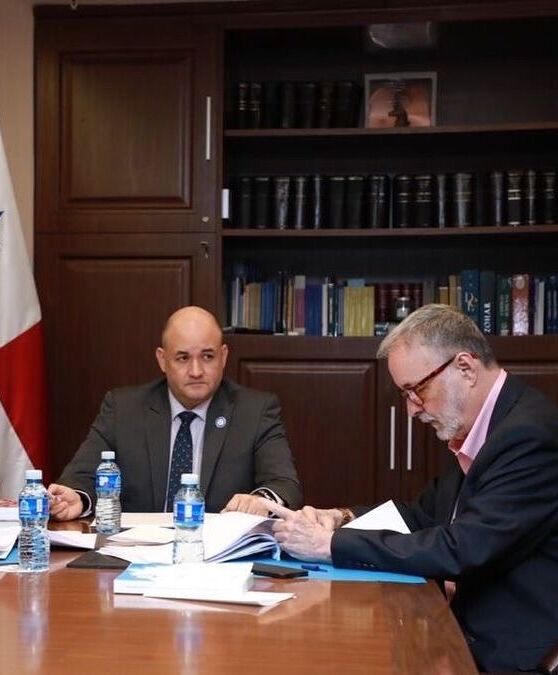
The appointment of Dr. Alfredo Juncá Wendehake as Magistrate of the Electoral Tribunal of Panama marked the culmination of a long and coherent professional trajectory dedicated to public law, parliamentary procedure, and democratic governance. Far from representing a sudden turn in his career, his arrival at the highest electoral authority of the Republic was the logical consequence of decades of work within the State, where he developed a deep understanding of institutional design, legal certainty, and the practical mechanics of democratic representation.
The Electoral Tribunal occupies a unique constitutional position in Panama. Unlike electoral authorities in many other countries, it combines administrative, jurisdictional, and regulatory functions, exercising broad autonomy and serving as the final arbiter of electoral legality. To serve as a magistrate within this institution requires not only legal acumen but also political prudence, ethical rigor, and a strong commitment to democratic values. Juncá’s professional formation and prior responsibilities placed him in an exceptional position to meet these demands.
To fully understand the significance of Juncá’s work as magistrate, it is necessary to situate it within the constitutional and legal framework of the Electoral Tribunal. Established as an autonomous constitutional body, the Tribunal is entrusted with safeguarding the integrity of the electoral system, administering elections, regulating political parties, overseeing campaign financing, and adjudicating electoral disputes.
The Panamanian model grants the Tribunal an unusually broad mandate. Its magistrates are not merely administrators of elections; they are constitutional judges with authority over electoral justice. Their decisions have binding legal force and shape the interpretation of electoral law, political rights, and democratic participation.
“In the digital age, democracy thrives when technology serves truth, respect, and transparent discourse.”
Phase 3 : The PED Digital Ethics Pact: Democratic Governance and Digital Integrity

Contemporary democracy faces a singular challenge: the speed and scale at which information circulates, is segmented, and amplified in the digital ecosystem. In this environment, freedom of expression and pluralism, pillars of every authentic election, coexist with equally real risks: coordinated disinformation, impersonation, malicious automation, hate campaigns, and algorithmic manipulation.
Juncá knew that the Tribunal, as the guarantor of the integrity of suffrage and fairness in the contest, has had to adapt its normative, technical, and pedagogical tools without undermining democratic principles. In this context, he thought about creating a tool that could tackle the challenge of digital times within the electoral world, not only for Panama but for all Latin America. Thus, the PED Digital Ethics Pact was born and little did he know that this particular creation would become his most important contribution to Democracy.
The PED Digital Ethics Pact constitutes a governance response: a public commitment that promotes the responsible use of the internet and social media during electoral processes, fostering tolerance, respect, and the debate of ideas.
In times of digital transformation, the integrity of an election is not protected only at polling stations. It is also protected in public conversation, in the traceability of paid political advertising, in the responsible administration of accounts and domains, and in the institutional capacity to respond, through due process, to conduct that harms fairness or social peace.
The PED Digital Ethics Pact does not seek to replace the law or impose prior censorship. Its contribution lies in raising the standard of behavior for digital actors and in ordering expectations: political competition must be intense but not dehumanizing; creative, but not fraudulent; persuasive, but not manipulative.
Note of Thanks
This biography would not have been possible without the invaluable support of many individuals and institutions, and Dr. Alfredo Juncá Wendehake extends his deepest gratitude to those who have been part of his remarkable journey.
First and foremost, Alfredo expresses heartfelt thanks to his family, whose love and support have shaped his character and values. The foundational influence of his parents, Alfredo Juncá Figueroa and Carmen Corina Wendehake, instilled in him the principles of honor, integrity, and service, values that have guided his entire life and career. Their belief in his potential and commitment to public service laid the groundwork for his dedication to Panama’s democratic system.
A special note of appreciation is due to Karina De Ycaza, his life partner, whose unwavering support has been both professional and personal. Together, they have raised their daughters, Analía, Anabella, and Ana Elena, teaching them the same values of integrity and service that have defined his work. Her presence in his life has been a constant source of strength and inspiration.
Alfredo also extends his gratitude to the educational institutions that contributed to his academic growth. The University of Panama, USMA, and University of Lleida provided him with the knowledge and tools necessary to navigate the complexities of electoral law and public administration.
He acknowledges the Electoral Tribunal of Panama for providing a platform where his work has impacted Panama’s electoral system, ensuring transparency and fairness in democratic processes. The collaboration of his colleagues and mentors has been vital in this process.
Finally, Alfredo thanks the readers for engaging with this biography. His hope is that it inspires future leaders to follow his example of service, transparency, and ethical leadership.
Thank You
– Dr. Alfredo Juncá Wendehake