
“Humanity does not require wealth or recognition; it only requires a willing heart and steady presence.”
Introduction
The life journey of Dr. Melvin Wilfred Pinto is shaped by lived experience, steady resilience, and a consistent commitment to social work carried out without seeking visibility. He was born in a village nearly 30 kilometers away from Mangalore, Karnataka. He grew up in a family of nine children. His father, Thomas Pinto, was a farmer, and his mother, Celine Pinto, was a housewife who also assisted his father. His early life was rooted in village surroundings, close to nature and agriculture, and marked by limitations that he remembers clearly.
His schooling began in the same local area. He completed his 7th standard from a local school and continued with 10th and 12th in the same region. During those years, he was recognized for both academics and leadership. In the 7th standard, he was a topper at the Karnataka level, and he was also known as a strong public speaker. During 11th and 12th, he served as a school union leader. Alongside studies, he was strongly drawn to the stage, including acting in dramas and writing drama content. Nature and the village environment remained important influences during his childhood.
After completing the 12th standard, he moved to Mumbai in search of work. He began his journey in the hotel industry by working as a cleaner in a hotel restaurant. While working, he joined a college course for hotel management, but he could not complete it. He left with final examinations pending, mainly due to financial crisis. During the same period, he became involved with trade unions in the early 1990s, which he says also affected his ability to focus fully on education. He continued working in the hotel field and later worked for around three years in a star hotel in a front-office cashier-type role.
After that, he moved to the Gulf countries for about ten years, working in various categories within the hotel industry. He specifically mentioned working in Bahrain as a casual laborer in a hotel linked to the Holiday Inn group, working long hours. In 2003, he returned home.
Over time, his journey moved toward social service in a structured and consistent way. He settled in Bengaluru and later began focusing on helping children, especially at the basic and primary education level. He connected this purpose directly to his childhood experience, remembering days when even buying a pencil was difficult. In 2011, he started a trust named Pinto Charitable Trust, with the work later continuing in the following years. He served as a trustee, and one of his brothers, who stays in Canada, was also a trustee. He emphasized that the trust and the work were done without showing identity and without publicity, with the intention of helping quietly.
His service also expanded through roles in the Catholic community. He stated he is a Catholic and that his work influenced many people, especially within the Catholic community. He shared he serves as a secretary in the church, supporting the priest and being present for families and their needs in a church community of around 700 to 1,000 families. He also shared that he is a treasurer of the Vincent de Paul Society, where public contributions are used for general welfare and beneficiaries are supported.
“In a village near Mangalore, scarcity and responsibility arrived early, and those beginnings stayed with him as lifelong reminders of what others may silently endure.”
Phase 1: Village Beginnings and Early Foundations
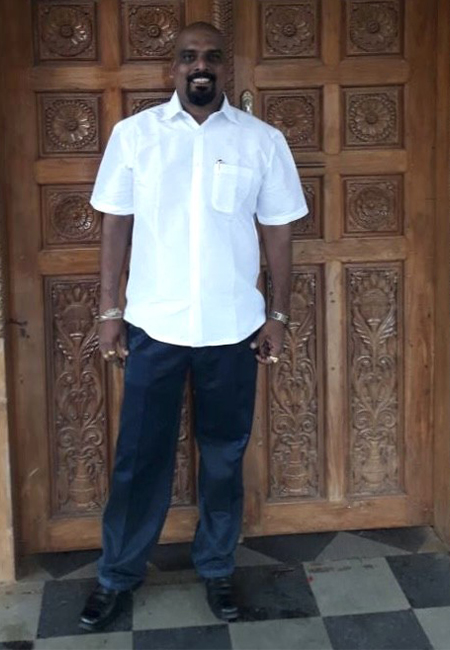
The journey of Dr. Melvin Wilfred Pinto began in a village that is nearly 30 kilometers away from Mangalore City, in Karnataka. He described his birth and early life as rooted in a dense village environment, far from the exposure of city life. This village setting shaped his earliest understanding of life, work, and responsibility, because daily living was closely tied to simple routines, local schooling, and the realities of limited resources.
He was born into a large household, a family of nine children. His father, Thomas Pinto, was a farmer. His mother, Celine Pinto, was a housewife, and, as he explained, she also assisted his father. In a family of this size, responsibilities were naturally shared, and the focus was on managing life with what was available. The family’s livelihood depended on agriculture, and the structure of village life influenced his habits and thinking from the beginning.
His early schooling took place in the same area. He completed his 7th standard from a local school. He then studied 10th standard in the same region and later completed 12th standard from the same area as well. This continuity of education within his local surroundings was part of his formative years, and it gave him a stable foundation even while life remained challenging in other ways.
During childhood and school life, he showed strong academic performance and leadership ability. He stated in the 7th standard, he was a topper at the Karnataka level. Along with academics, he was also known for communication and expression. He described himself as a good public speaker, and he carried that confidence into his student life. Later, in 11th and 12th, he was a school union leader, which reflected his early involvement in leadership and student representation.
At the same time, he spoke about how his childhood felt to him. He described it as “terrific”, and he explained that growing up in the village was intense. Alongside schooling, he had a strong attachment to the stage. He said his priority was always the stage and that he acted in many dramas.
“With little money and no certainty, he left home carrying responsibility, not expectations, and began learning life through work.”
Phase 2 : Leaving Home and Facing the Reality of Survival
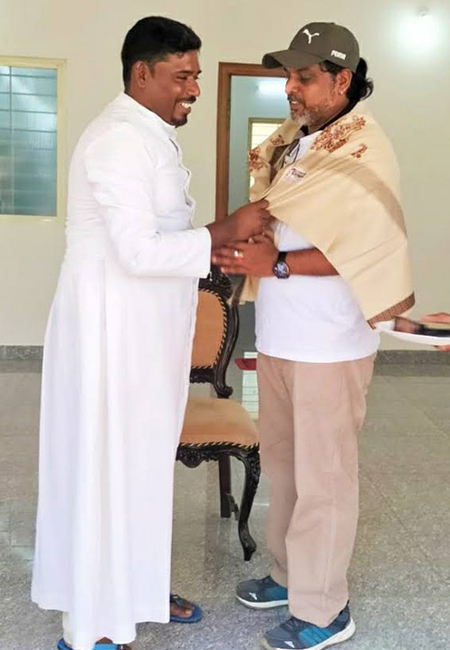
After completing his 12th standard, Dr. Melvin Wilfred Pinto reached a point where remaining in the village was no longer possible. His family was already under strain, and his father, Thomas Pinto, had been a cancer patient for several years. Medical treatment required long travel, with the nearest government hospital located about 28 kilometers away from the village. Financial pressure continued to grow, and there was very little left at home to sustain the family. These conditions became the immediate reason for his decision to leave.
In 1990, he left his village and moved to Mumbai in search of work. He has stated that he carried only ₹100 to ₹150 when he left home. Although he had relatives in Mumbai and his sister was staying there, the experience was still extremely difficult. Coming from a rural background, the city felt overwhelming. He had not seen such large buildings or such a fast-moving environment before. The journey itself was challenging, and adjusting to city life demanded constant effort.
Soon after arriving in Mumbai, survival became his primary concern. He began working as a cleaner in a hotel restaurant. This was his first step into the hospitality industry. The work was demanding and required long hours, but it gave him a means to support himself. During this period, there was no comfort or stability, only the daily need to earn and manage expenses in an unfamiliar city.
Alongside his work, Dr. Melvin Wilfred Pinto decided to continue his education. He joined a college and enrolled in a hotel management course. His intention was to study while working, believing that education combined with experience would help him move forward. For some time, he managed both responsibilities together, balancing employment with studies.
However, circumstances did not allow this balance to continue. He faced a financial crisis, which directly affected his ability to remain enrolled in the course. At the same time, during the early 1990s, particularly around 1993, he became actively involved in trade union activities.
“In the Gulf years, work was long and demanding, but it became a season of discipline, experience, and steady effort.”
Phase 3 : The Gulf Years and the Discipline of Hard Work
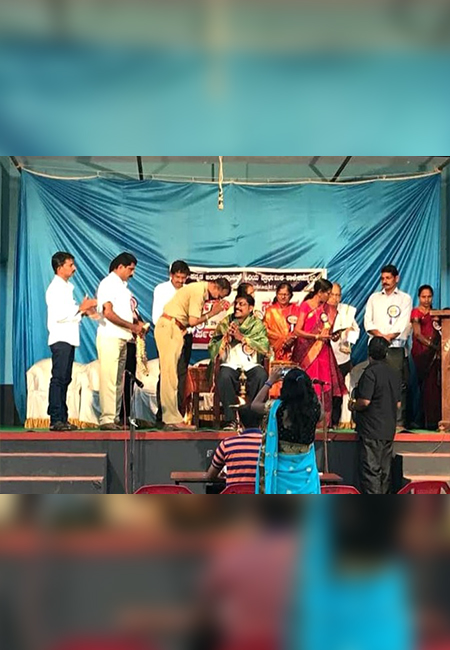
After spending time working in the hotel industry in Mumbai, Dr. Melvin Wilfred Pinto moved to the Gulf countries. He shared he lived and worked there for about ten years. During this period, he worked in various categories within the hotel industry, building experience through continuous effort and long working hours.
Among the Gulf countries he mentioned, Bahrain was specifically a place where he worked. He described himself as a casual laborer in one of the hotels in Bahrain that was connected to the Holiday Inn Group. His work schedule was demanding. He shared he worked 13 hours per day, and it was compulsory. The work was not presented as easy or comfortable. It was a strict routine that required discipline and endurance.
He also shared details about his wages during this time. He said he earned about ₹120 per hour, and because of the long hours, the daily total came to around ₹1,300 per day. He noted that, at that time, it felt like a large amount because the value of money was higher in those days. These details show that this phase involved both hard work and the practical reality of earning through long hours.
Dr. Melvin Wilfred Pinto explained that he continued with this type of work for several years. He stated he worked around four to five years in this kind of arrangement, and later he became a permanent employee somewhere else also. He described this period as “day and night”, showing that the lifestyle was heavily centered on work, routine, and effort rather than rest or comfort.
Within these ten years, he worked in “various categories” of the hotel industry. While he did not list every category in detail, he clearly stated that his experience was not limited to one role. It was a long period of working across different responsibilities within the same industry. The key feature of this phase, as he shared it, was continuity, strong work discipline, and the willingness to do demanding labor.
Note of Thanks
This biography concludes with sincere gratitude expressed through the life and values of Dr. Melvin Wilfred Pinto, whose journey has been shaped by people, experiences, and moments that guided him without seeking recognition. At the heart of this gratitude stand his parents, Thomas Pinto and Celine Pinto, whose lives formed the earliest foundation of his character. Their sacrifices, endurance, and quiet strength during years of hardship, illness, and limited resources shaped his understanding of responsibility and compassion from a young age.
He also acknowledges his wife, Catherine Pinto, whose unwavering support and shared commitment to helping others strengthened every phase of his journey. Her encouragement never depended on comfort or convenience, and her own dedication to service and work provided balance, stability, and moral clarity within the family. Her presence allowed him to continue his social responsibilities without hesitation or doubt.
Gratitude is equally extended to his daughter, Carrol Pinto, whose quiet commitment to teaching disabled children reflects the values lived within the family. Her actions, carried out without announcement or expectation, became a continuation of the same principles that shaped her father’s life. Through her choices, the legacy of service moved naturally into the next generation.
Dr. Melvin Wilfred Pinto also expresses thanks to those who stood beside him in moments of purpose and creativity, particularly Dr. Pius Pinto, whose guidance and support played an important role in encouraging his literary work and publications. This support reinforced the belief that encouragement, when given at the right time, can shape lasting contribution.
He also extends heartfelt thanks to all those who prayed for him during the toughest times of his life and to all his brothers, sisters, well-wishers, and friends who offered their support and helping hands in his social work.
Above all, this note of thanks is extended to every individual whose life crossed his path, those who trusted him in moments of illness, grief, and need, and those who quietly joined hands in service. Each interaction reaffirmed his belief that humanity, when practiced with sincerity, is the greatest expression of gratitude.
Thank You
– Dr. Melvin Wilfred Pinto