“The ultimate measure of a man is not where he stands in moments of comfort and convenience, but where he stands at times of challenge.”
Dedication
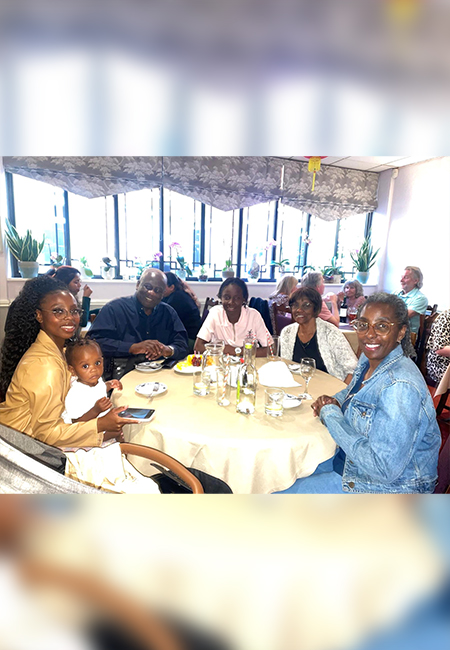
The unfaltering will of Dr. Donald Nelson, whose life exemplifies bravery, modesty, and a faith-filled soul, is honoured in this book. It is also a tribute to the many people who have helped form his beliefs throughout his life, including his parents, who instilled in him a strong work ethic, and his grandparents, who provided him with his first feeling of belonging. He dedicates this biography to his wife, Janette Nelson for her continuous support; to his daughter, Tia, for her support; and to his son, Khameron, for his support. He also extends his gratitude to our Lord Jesus Christ for his unending blessings.
It’s for every child who hears “you can’t” and every dreamer who felt unheard. The life of Dr. Donald Nelson should serve as a reminder that privilege is not the foundation for achievement, but rather, kindness, tenacity, and an unbreakable character are.
This biography also contains the tales of the many people whose lives were changed by his ministry, the students who found hope in his classes, and the individuals who regained dignity via his leadership. His stories amply illustrate his authentic legacy.
We dedicate this work to the guiding ideals of his life: faith, honesty, compassion, and service. We hope his story inspires many and that his principles guide future generations.
“We are shaped by every place we have been, every person we have loved, and every challenge we have survived.”
Phase 1: ROOTS IN JAMAICA : THE MAKING OF A QUIET STRENGTH

Before he ever set foot in a classroom or guided a community, Dr. Donald Nelson’s life has an unlikely beginning. Set on a family farm in rural Jamaica, where love and simplicity moulded his early worldview, the story opens with a peaceful, sunny embrace of nature. His grandmother, grandfather, and mother shaped his early years emotionally. Beyond being a simple place to live, the farm was the beating heart of his world. There, he learnt humility, hard work, and kindness from the ground and the people around him, as well as from the passage of the seasons. Adventure, new experiences, and the guidance of two wise adults who imparted lifelong lessons shaped his formative years.
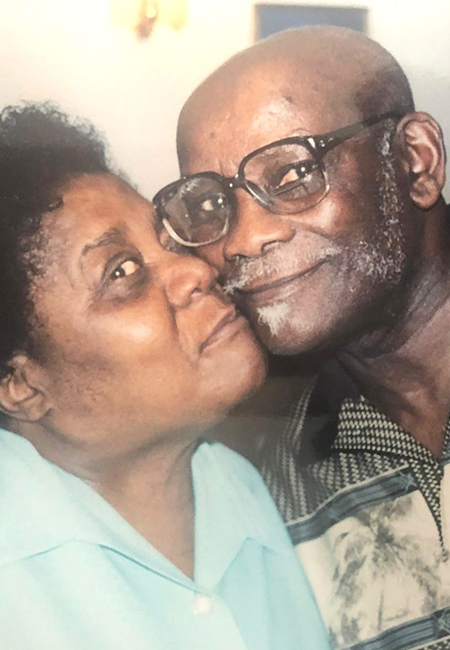
His grandfather, a man of quiet resilience and hard labour, tended the farm well. The memory of him tending to the property stuck with Dr. Donald, even at an early age. He saw his grandpa’s careful attention to detail, his deliberate steps, and the honour he showed in his honest labour. His grandpa taught him quietly that strength was not always shouting; sometimes, it was just keeping going when things got tough. On the other hand, his grandma was an embodiment of kindness and hospitality. She brought solace to the household just by being there. As a child, he could always rely on her for emotional support, as she brought stability and predictability into his life. Even before he grasped the meaning of the word, she taught him compassion. She raised him with love and wisdom. She had an unassuming but enduring impact on him, shaping his moral compass such that he would be somebody who put honesty before ease.
Growing up on a Jamaican farm gave the kid a sense of independence, which moulded his character. He relished the carefree days of youth, when play and responsibility went hand in hand, and he spent his days adventuring around the countryside. He found a sense of stability among the fields, the animals, the sunshine, and his family. Coming of age was not a priority. With the support of everyone around him, he was slowly coming into his own. However, there are times that can change the trajectory of a story, even in the most delicate phases of existence. When Dr. Donald’s grandmother passed away, this time arrived for him.
“Faith is taking the first step even when you don’t see the whole staircase.”
Phase 2 : THE FORMATION OF PURPOSE: SKILLS, STRUGGLES, AND EARLY ADULTHOOD
Dr. Donald Nelson’s life experienced a transitional period characterised by mundane, yet profoundly formative, decisions as he approached adulthood. His resilience, honed in his Jamaican upbringing and put to the strain in England’s severe climate, started to manifest as purposeful behaviour. This is when he began to take matters into his own hands, both figuratively and otherwise, to determine his course of action. The world had cast its restrictive spell over his destiny, but he was determined not to let it hold him back. He chose to walk forward in faith instead, trusting that he could rise above the doubts that others had placed on him, even if he often did not know what was ahead.
There was a delay between his graduation from university and the start of his ideal job. Instead, he stepped into the murky territory that many young adults know all too well—the place where accountability is palpable but direction is hazy. A teacher’s remark that he was “not capable” of attending university remained etched in his memory. Those were the words he had believed when he was that young. They subtly shifted his focus from architecture and the academic careers of his peers. The most mundane of circumstances held the key to a fresh path, even within those constraints.
He overheard a man doing plumbing work one day. The setting was uncomplicated. Nobody made a big deal out of anything; instead, it was the deliberate, methodical action of an expert. However, he found it very captivating. He witnessed the ingenuity needed to identify an issue, the competence required to resolve it, and the joy that accompanied the completion of a concrete task. This task piqued his interest because it was both realistic and structured, which had always been a strong suit of his. Something within him settled at that moment. It occurred to him that he could pick up this skill and use it to his advantage. That observation sparked his interest in plumbing and gas work.
When he stepped onto the pitch, he didn’t see it as a stopgap measure. He took it seriously and committed himself fully to it. He devoted himself to furthering his education in plumbing and related fields by attending university.
“Education is the most powerful weapon which you can use to change the world.”
Phase 3 : THE TEACHER, THE MENTOR, AND THE UNBROKEN MORAL COMPASS
Dr. Donald Nelson was not seeking status or fame when he stepped foot in a classroom as an educator. He arrived with f irst-hand experience of being disregarded, passed over, and told he lacked competence. He wanted to erase those recollections, but they were like scars. On the contrary, he started to use them as benchmarks. Whenever a student entered his class with a look of uncertainty, disappointment, or lowered gaze, he could feel the usual burden of doubt. His entire pedagogical approach was moulded by that acknowledgement.
One of the major colleges in the Midlands was where he started his lengthy career as a professor. Because of its size, the school welcomed thousands of students, many of whom brought unique experiences with them. Some were more naive and immature. Some were senior citizens who were beginning anew. A lot of people had felt that school was “not for them” since they had problems there. While working in the f ields of gas engineering and construction, he noticed that many students lacked self-confidence in their academic abilities. He matured into a rock-solid presence in this setting.
He poured his heart and soul into teaching for nearly three decades, giving his life to the profession. Throughout that period, he assisted more than a thousand individuals in advancing their professional careers. Jobs that seemed out of reach for many of his pupils eventually materialised. Some went on to start their own companies. Their achievements were never merely numbers to him. It was an intensely intimate delight. He frequently remarked that the joy he had seeing his students succeed in class or realise their dreams was more important to him than any official position he may have held. That humble display of relief and pride meant more to him than any accolade. Hope, work, and instruction may alter a life, and it was visible confirmation of that.
Those connections persisted even after his pupils departed from the classroom. Even after all this time had passed, many of them contacted him for guidance. On more technical difficulties, several sought his advice.
Note of Thanks
Dr. Donald Nelson would like to take this opportunity to thank everyone who has been there for him, encouraged him, and helped mould him as he thinks back on the significant parts of his life. He is incredibly grateful to his dear family, who have always been there for him and whose love and sacrifices have been his rock. Regardless of the difficulties or joys he faced, he was always encouraged by them, and it was a quiet strength that helped him succeed.
His deepest gratitude goes out to everyone who has put their faith in him as a pastor, guide, or friend, as well as to his church family. He was able to serve with humility and purpose because of their candour, respect, and common religion, which enriched his journey. He feels an immense sense of gratitude towards everyone he has ever worked with or taught, including his former students and coworkers. As a lifelong learner, he holds dear every encounter, accomplishment, and opportunity for mutual understanding.
Most importantly, he expresses gratitude to God for bestowing upon him the knowledge, fortitude, and mercy that enabled him to traverse each stage of his voyage. He recognises the benefits that influenced his journey and the affection that kept him going with a spirit of humility and thankfulness.
Thank You
– Dr. Donald Nelson