“From the quiet lanes of a village to the global halls of Halal law, his journey proves that service is not about position, but about trust carried with integrity—and returned with legacy.”
Dedication
This biography is dedicated by Dr. Abdul Rahman bin Adam to the quiet lights who shaped his path—first to his parents, whose love taught him what steadiness feels like. He remembers his father’s bicycle seat—the simple joy of riding pillion from school to home —long before life asked for heavier courage. When illness arrived, he learned devotion by doing: six unbroken years of care that became a private university of patience, gratitude, and prayer. His mother’s words—finish what you could not finish before, be the best you can be—carried him across long nights of work and study until the tassel finally turned.
He dedicates these pages to Daliah, his wife and quiet backbone, who understood the silence of research, the weight of deadlines, and the rhythm of a family built between shifts. She guarded the home so he could guard his purpose, never once mistaking stillness for inattention, letting discipline and love live side by side.
He dedicates this book to his children—Mohd. Luqman, Nurhanisah and Nursaffiyah—whose questions and courage became his fuel. A son who asked, “Why not continue now?” and a daughter who turned compassion into a profession; through them he learned that legacy is not what we leave behind, but who we lift while we are here.
He dedicates it to his community—the mosques, mentors, teachers, and colleagues—who trusted him with standards, with law and conscience, with the work of making food fit and systems just. From village lanes to lecture halls, from enforcement files to Fatwa deliberations, every mile was walked with their trust on his shoulders.
And finally, he dedicates this book to every reader carrying a private trial: may these pages remind them that tests arrive not to break us, but to prove that, with faith and effort, we can become the people we were asked to be.
“Every trial is not a stumbling block but a divine trust, a reminder that within each challenge lies the strength to rise and to serve.”
Introduction
The story of Dr. Abdul Rahman bin Adam is one of persistence, faith, and service—a life that begins in the humble surroundings of a Singapore village and rises to touch the international corridors of faith, law, and community service. His journey is not defined merely by academic qualifications or professional posts, but by the invisible threads of duty, sacrifice, and integrity that weave through his experiences. To know him is to see how trials became his teachers, how faith became his compass, and how service became his legacy.
Born on January 1970, Dr. Abdul Rahman grew up as the only son in a family with three sisters. His early childhood unfolded in a kampung, where days were filled with the simple joys of village life—cycling along unpaved roads, playing marble games with friends, and savoring the innocence of a community that knew no barriers. Yet, like many Singaporean families of that era, the government’s redevelopment program soon brought change. By the age of ten, the family had shifted from their beloved village into the rising flats of a modern city. This marked not just a change of address, but the first of many transitions in his life—teaching him that resilience is born in adaptation.
Education in those formative years was not a straight line, but a dual responsibility. Like many Malay Muslim children of his generation, he balanced secular schooling with religious education. In the mornings he might be at Kaki Bukit Primary School, learning English, Mathematics, and Science; in the afternoons he would walk nearly half an hour to attend religious classes. Sometimes the sessions would switch—secular school in the afternoon, religious classes in the morning—but the effort remained the same. These long walks under the hot sun, with books in his arms, formed the rhythm of his childhood. They were not easy days, but they planted in him the habit of perseverance.
His first milestone came at the age of twelve, when he sat for the Primary School Leaving Examination (PSLE). He excelled, earning a MENDAKI Book Award—a recognition not just of academic ability but of determination. This award became a symbol of hope, motivating him to face the challenges of secondary school. Yet, secondary education brought with it a culture shock. Suddenly, he was confronted with eight subjects, heavier workloads, and greater expectations. He struggled academically, especially in the secular curriculum, though his strength in religious studies remained unshaken. It was here that the first important lesson of his life crystallized: success is not always about excelling in every subject but about discovering where one’s true calling lies.
After secondary school, he attempted a technical path, enrolling in Mechatronics Engineering at the Japan Singapore Institute. But mathematics proved a hurdle, and after two semesters, he could not continue. What might have been a crushing setback instead became a turning point. Like every Singaporean man, he entered National Service (NS), serving in the military for two years. It was here, in the discipline of uniform and the camaraderie of service, that he discovered deeper truths about himself. National Service gave him clarity, resilience, and the courage to redefine what success meant to him.
“In the quiet rhythm of childhood, every long walk, every small triumph, and every act of faith becomes the seed of a life’s purpose.”
Phase 1: From Village Lanes to the First Milestone
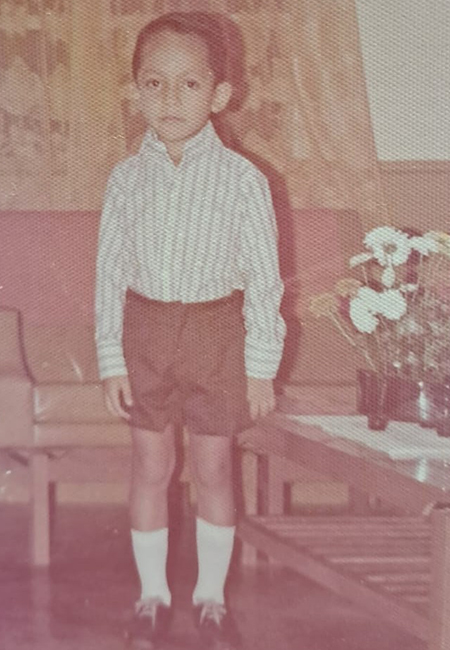
The story of Dr. Abdul Rahman bin Adam begins not in the polished spaces of boardrooms or the corridors of government offices, but in the humble heart of a Singapore village—a kampung now long gone, reclaimed by the forces of redevelopment that swept across the island nation. Born in January 1970, Abdul Rahman was the only son in a family of four children, blessed with three sisters. This singular position as the sole boy in the family placed upon him a quiet but undeniable sense of responsibility from the earliest days.
Life in the kampung was simple, sometimes harsh, but filled with the kind of joys that urban landscapes rarely allow. Childhood games were not bound by gadgets or screens, but by the earthy pleasures of playing marbles on dusty lanes, riding bicycles through the clustered wooden houses, and gathering with friends under the watchful eyes of elders who saw every child as their own. This sense of community imprinted itself on him—an unspoken understanding that life was lived not just for oneself, but for the greater whole.
By the time he was six, Abdul Rahman entered kindergarten, an initiation into the world of formal education that would soon shape his path. A year later, at age seven, he joined Kaki Bukit Primary School. The school stood not far from his home, close enough that he could walk—yet each walk was a journey of its own. With books clutched in hand, he would travel about ten minutes to his secular classes, and later, up to half an hour to his religious school. The weight of the books was nothing compared to the weight of his determination.
In those days, the school system in Singapore operated in dual sessions—morning and afternoon. If his secular classes ran in the morning, from 7:45 am to 12:45 pm, his religious classes would fill the afternoon. If the secular school ran from 1:00 pm to 6:00 pm, then the religious school would claim the morning hours, often beginning at eight and ending just before noon. There was no luxury of rest between the two; each day demanded both academic and spiritual diligence of him.
“When new burdens feel overwhelming, faith becomes the anchor, and struggle becomes the teacher.”
Phase 2 : Struggles of Adolescence and the Path of Discipline
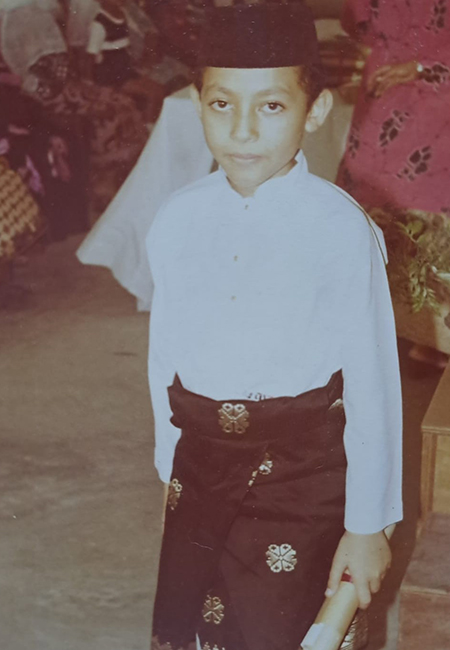
The transition from primary to secondary school is always a critical stage in a young person’s life. For Abdul Rahman bin Adam, it was no different—though the shift was particularly jarring. After his early triumphs in primary school, where he excelled academically and received recognition for his performance, he entered secondary education full of hope. Yet, what awaited him was a landscape that tested him in unexpected ways.
Secondary school introduced him to an entirely new environment, a culture where the expectations were higher, the subjects more demanding, and the competition more intense. Instead of a handful of subjects, he was suddenly responsible for mastering eight different academic disciplines. This was a shock to his system. The rigor of the curriculum, coupled with the need to keep pace with peers who seemed to adapt more easily, left him struggling. For the first time in his educational journey, Abdul Rahman felt himself faltering.
The once-celebrated student of Kaki Bukit Primary now faced the reality of grades that did not reflect his effort. His O-Level results did not shine with the same brightness as his PSLE performance. He was candid in admitting that he “did not do quite well,” and for a boy who had tasted success before, this was a bitter truth. But in hindsight, this struggle was not a defeat—it was a profound lesson in humility, perseverance, and the importance of discovering where one’s true strengths lie.
If secular education became a battlefield of uncertainty, his religious education remained a sanctuary. Through his teenage years, Abdul Rahman continued to attend daily religious classes alongside his formal schooling. Unlike the struggle he faced with secular subjects, his grasp of religious knowledge was effortless. He spoke of how he “always did well” in religious studies without needing much preparation.
“The right mentor does not simply teach skills; he opens doors to courage, trust, and the quiet confidence to grow beyond limits.”
Phase 3 : Lessons of Work, Mentorship, and Quiet Resilience
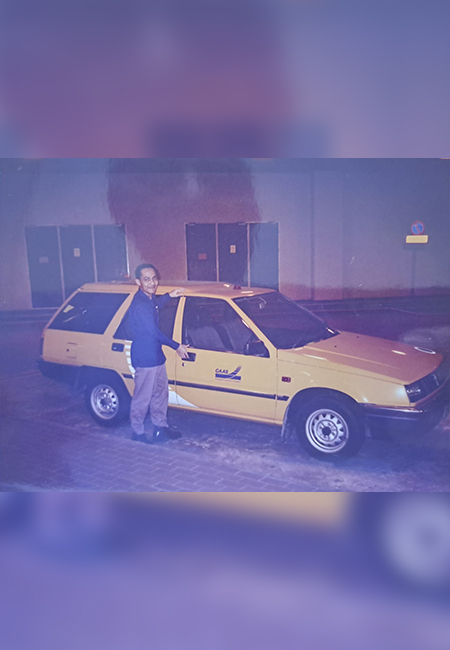
When Abdul Rahman bin Adam stepped into the world of employment after his years of study and Military Service, he was not just beginning a career—he was beginning a long apprenticeship in responsibility. His father’s illness had already shaped him into a man of duty, one who understood that work was not only about personal progress but about sustaining family and honoring trust. This mindset carried him through his earliest roles in the civil service, where he began in the Weather Forecast Department before transitioning to one of the most defining stages of his early career: his work with the Civil Aviation Authority of Singapore (CAAS) at Changi Airport.
It was in the airport’s bustling environment that Abdul Rahman began to truly discover the potential of his skills. Armed with his electronics training from ITE Tampines and the night classes he had attended while balancing caregiving duties, he became a certified industrial technician. His responsibility was not merely routine maintenance; he was tasked with ensuring the smooth operation of airport facilities and systems—no small responsibility in one of the busiest airports in the world.
At Changi, Abdul Rahman encountered one of the most influential figures in his professional life: Mr. Chan Chee Kong, his supervisor. Unlike many managers who simply allocate tasks, Mr. Chan had an eye for potential. He recognized in Abdul Rahman not only a diligent worker but also a man capable of carrying heavier responsibilities. He placed trust in him, assigning duties that stretched far beyond the standard scope of a technician.
It was through this trust that Abdul Rahman learned some of the most important lessons of his career. He was given the responsibility of handling contractor payments, an unusual duty for someone in his role. He learned to read and prepare tender documents, manage schedules of rates, and oversee the administrative side of technical projects.
Note of Thanks
In reflecting upon the life and journey of Dr. Abdul Rahman bin Adam, gratitude emerges as the thread that binds together his story of trials, service, and legacy. From the kampung days of his childhood to the halls of international recognition, he has never stood alone. Every step was supported, every trial softened, every success shaped by the love, guidance, and trust of those around him.
He extends his deepest thanks first to his parents, whose lessons of love, humility, and resilience formed the foundation of his character. His late father’s simple gestures of kindness remain etched in his memory, and his late mother’s unwavering encouragement—to complete what was left unfinished—was the light that guided him back to education and achievement. Though both are no longer here, their spirit continues to live in every milestone he has reached.
To his wife, Daliah, he owes a lifetime of gratitude. She has been the silent strength behind his endeavors, the one who understood when silence was needed for study, who managed the home when duties pressed heavily on his shoulders, and who shared in every struggle with grace and patience. Her presence has been the pillar upon which his service and scholarship stood firm.
His children, Mohd. Luqman and Nurhanisah, have not only given him joy but also inspired him with their own lives of service. Their careers, rooted in compassion and responsibility, are reflections of the values he sought to live by, and he thanks them for carrying forward the family’s legacy of integrity and faith.
Finally, he offers thanks to his community, colleagues, and mentors, whose trust gave meaning to his work. Their faith in him was never taken lightly. For Abdul Rahman, gratitude is not merely spoken—it is lived, through service, integrity, and remembrance.
Thank You
– Dr. Abdul Rahman bin Adam