“The more hopeless the situation, the more he laughs.”
Introduction
Born in Augsburg, a German town with over 2.000 years of history, Christian Wiblishauser never set out to be a conventional success story. He didn’t chase titles, fame, or accolades. Instead, he followed something deeper — an inner rhythm, a curiosity about how things work, and a relentless commitment to understanding systems, both technological and human. These values, inherited from his parents — a meticulous accountant mother and a hard-working, creative floor tiler father — would guide him through every twist in his journey.
From the start, he was both an analyst and an empath — a rare blend. His academic path led him through mechanical engineering, with a strong technical foundation laid at TU München and deepening in IT in Augsburg. But even then, it was clear that his learning would never be confined to textbooks. He worked in parallel roles in the United Kingdom, tutoring in mathematics and control engineering at the university and even at the recycling company of his uncle, constantly absorbing, applying, evolving. His early thesis, examining the digitization of paper-based systems from an economic perspective, would foreshadow the work he would do years later at a global scale.
But education was just the ignition. His professional engine started revving in 1997, when he entered the consulting world through the demanding gates of Accenture. Here, he honed his skills in project management, business strategy, IT transformation, and change management. His impact was immediate — and it was global. Over the years, Christian worked in Germany, France, Luxembourg, Switzerland, Romania, Austria, the UAE, India, Japan, and beyond. He navigated the evolving industries of automotive, healthcare, petrochemicals, IT services, finance, and public sector transformation with precision and compassion.
He did not just deliver projects. He led people. At times managing over 300 professionals across borders, Christian became known for his ability to bridge logic and leadership. Whether it was restructuring international procurement in the oil and gas sector, integrating IT service architecture across continents, or leading the post-merger technology transition of entire corporations, he showed up — not with arrogance, but with clarity, humility, and the ability to truly listen.
And yet, life was never a straight line for him. Just when his career was entering new summits, a chronic autoimmune condition disrupted everything. While many would slow down, Christian did not retreat — he reinvented. In 2016, he launched alpha-scorpii GmbH, a company built not just on technical expertise, but on a new philosophy — one that centered on allowing young talents to realize themselves, more mentoring than leading, next to agile thinking, and long term strategic partnerships. He shifted his own focus towards mentoring, lecturing at DHBW Mannheim, and advising students and startups at the University of Hohenheim. His consulting became more than a business — it became a platform for personal development.
The strongest characters are often found in the quietest stories.”
Phase 1: Foundations in Augsburg — A Childhood of Quiet Strength

Every extraordinary journey begins in an ordinary place. For Christian Wiblishauser, that place was Augsburg — a city steeped in history, known for its Roman roots and Renaissance architecture, but for Christian, it was more than a map marker. It was a cradle of values, a canvas of childhood memories, and the backdrop to the early formation of the person he would become.
Nestled in the southern region of Germany, Augsburg is a city that embraces contradiction — tranquil but industrious, traditional but modern, grounded yet quietly ambitious. Much like the city, Christian’s early personality mirrored this duality. He was a child of deep observation and quiet thought, never the loudest in the room, sometimes the most humorous, but mostly the most attentive. His world was not dictated by noise, but by nuance.
Born into a modest, hard-working family, Christian was raised by parents whose values were etched not into speeches but into daily life. His mother, Elfriede Wiblishauser, worked as an accountant — a role that demanded precision, trust, and consistency. She brought those same qualities home each day. The way she managed their household, the way she tracked every expense, and the way she remained calm in uncertainty — all of it shaped young Christian’s understanding of structure and responsibility.
His father, Fritz Wiblishauser, was a floor tiler — a man whose hands bore the story of quiet craftsmanship. With each tile he laid, there was a lesson: that every foundation requires patience, and every detail matters. Watching him work, Christian learned that dignity wasn’t about profession — it was about how you carried yourself, how you finished what you started, and how you treated people along the way.
Their home wasn’t extravagant, but it was filled with something more valuable — stability. Christian grew up knowing the meaning of enough. Enough food on the table. Enough warmth in the winter. Enough love in the unspoken gestures.
“The function of education is to teach one to think intensively and to think critically. Intelligence plus character — that is the goal of true education.”
Phase 2 : Engineering the Future — Academic Rigor and Early Career Aspirations
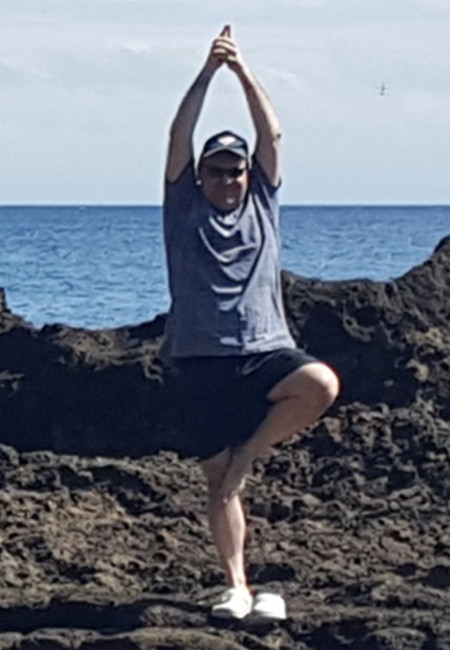
The pursuit of knowledge is often romanticized as a linear path — a steady march from classroom to career, from youthful promise to professional performance. But for Christian Wiblishauser, the academic years were not a mere prelude to professional life. They were a crucible — a place where ideals were tested, curiosity was refined, and the foundations of a lifelong philosophy were quietly being laid.
Following his formative years in Augsburg, where introspection and quiet observation defined his temperament, Christian found himself drawn towards systems — not just the mechanical kind, but systems of thought, structure, and transformation. While many around him contemplated traditional careers, Christian was already charting a different course — one that required intellectual rigor, global awareness, and an unapologetic embrace of complexity.
His decision to pursue a degree in Mechanical Engineering specialized in IT, starting at TU München and later graduating in Augsburg, was a natural outgrowth of his early interests. The discipline spoke to his dual nature: on one hand, a desire for precision, and on the other, a passion for understanding how things truly function. Mechanical engineering wasn’t just about nuts and bolts for him. It was a living language, a way to interpret the world, a world of numbers and algorithms.
The university years were marked by intense academic engagement. Courses in thermodynamics, control engineering, fluid mechanics, and system design were not merely hurdles to pass but landscapes to explore. While many of his peers followed the curriculum to reach the finish line, Christian lingered — analyzing deeper, questioning harder, seeking the underlying why behind every equation and every design principle. This was not ambition for its own sake. It was curiosity in its purest form. To satisfy this curiosity he also enjoyed courses in Islamic Sciences and Spanish besides his core curriculum at the same time.
“Education is not the filling of a pail, but the lighting of a fire.”
Phase 3 : Entering the Arena — Accenture, Global Exposure, and the Consultant’s Calling
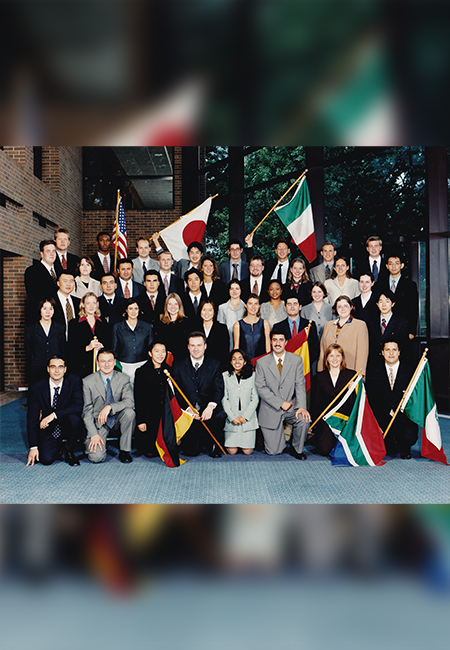
The world of management consulting is often portrayed as fast-paced, unforgiving, and ruthless. But for Christian Wiblishauser, stepping into this arena in 1997 was less about prestige and more about purpose. Joining Andersen Consulting, which later evolved into Accenture, wasn’t just a career move — it was a launchpad into a life of solving complex problems across geographies, sectors, and cultures — and also finding a home.
In his first assignments, Christian quickly distinguished himself as more than just an engineer with a clipboard. He was a thinker who could listen, adapt, and empathize — rare traits in high-pressure client environments. It wasn’t long before he became a trusted advisor on large-scale IT architecture and integration projects. Whether overseeing configuration management in IT services or testing cargo core applications in railway logistics, he approached each challenge with the same formula: structured thinking, transparent communication, and relentless commitment to delivery.
During this period, he worked extensively across Europe — Germany, France, Luxembourg, Switzerland, and the UK — gaining exposure to a variety of client ecosystems and operational philosophies. But what truly set him apart was his capacity to bridge technical depth with interpersonal fluency. He didn’t just deliver systems. He delivered solutions that worked for people.
His peers began to notice that he brought more than methods and metrics into the room. He brought clarity — not just in execution, but in vision. His client engagements grew in complexity and scope. He led infrastructure rollouts for major railway networks, handled data quality management and regulatory compliance for banking clients, and began managing teams that crossed borders and time zones. With each assignment, his role expanded, and with it, his understanding of what leadership really meant.
Note of Thanks
Gratitude often reveals itself most clearly when one has walked through both light and shadow — and the life of Christian Wiblishauser has known both in abundance. This biography, though written in his name, is not his alone. It is stitched together by the quiet, unwavering presence of those who stood by him when he needed it most.
First and foremost, he extends his deepest thanks to his mother, Elfriede Wiblishauser, whose quiet strength and unwavering belief laid the very foundation of his resilience. From his earliest steps in Augsburg to the most uncertain moments of his recovery, her integrity and discipline have remained with him as both compass and comfort.
To his father, Fritz Wiblishauser, whose hands shaped floors but whose influence built far more — thank you for showing that dignity lies not in title, but in honest labor. That lesson echoes through every project Christian has ever led.
To the mother of his children, Dr. Afiandem Fossung-Wiblishauser, whose care, compassion, and support have created a safe and steady space for their daughters to grow — your presence has been instrumental, both during the triumphs and the trials.
To his two daughters, who have unknowingly been his greatest motivation — your laughter, questions, and courage gave him reasons to fight, to heal, and to continue striving even on the hardest days. Every recovery step, every new chapter in his life, is dedicated to the future he dreams of with you in it.
To Peter, his lifelong friend and steadfast companion through decades of change — thank you for being the kind of friend who stays when things fall apart, and who believes even when belief feels hard to hold.
A special thank you also goes to Jack Ramsay, a mentor whose words, “Welcome home,” provided reassurance at a moment when professional disillusionment could have taken hold. Your leadership reminded him that human decency and corporate excellence can — and must — coexist.
To the team at alpha-scorpii GmbH, in the past until today, thank you for sharing the vision, even when its path was uncertain. Your trust and collaboration are the reason the firm not only survived, but thrived.
Thank You
– Dr. Christian Wiblishauser