“The meaning of life is to find your gift. The purpose of life is to give it away.”
Introduction
There are lives that shimmer briefly in the spotlight, and then there are lives that shine eternally in the hearts of those they touch. The life of Dr. Philip Tate belongs to the latter. This biography is more than a chronology of accomplishments; it is an invitation into the soul of a man who chose service over status, integrity over ease, and purpose over popularity.
Born on April 23, 1950, in the American South—Atlanta, Georgia, to be precise—Dr. Tate came into the world in an era marked by segregation, struggle, and social limitations. But within him, even as a child, burned a quiet fire. That fire was curiosity, faith, and an almost prophetic sense that his life would be defined not by what he was born into, but by what he would rise into.
From the classroom to the Navy, from the courtroom to community centers, Dr. Tate wove a life of conviction, courage, and compassion. Raised in a family that had little but gave much in spirit, he learned early that character is forged in fire—and that adversity is not a dead end, but a doorway.
This introduction is not simply about preparing you for the facts of his life—it is about preparing your heart for the depth of it. Because Dr. Tate’s journey cannot be measured only in academic timelines or legal victories. It must be understood in the quiet sacrifices, the midnight prayers, the late-night studying while others slept, and the countless ways he showed up for those around him—not because he had to, but because he was called to.
His journey through Marion High School (1964–1968) was one of quiet ambition. At a time when society set low ceilings for young Black men in America, Philip kept looking up. And not just for himself—he looked up for his peers, his family, and all those who didn’t yet know they were allowed to dream.
He took his aspirations with him to the University of North Carolina (1968–1972), where he studied under pressure—not just academic, but social, emotional, and historical. Even while facing the turbulent currents of the late 1960s, he stood taller by enlisting as a U.S. Navy Midshipman under contract with the Secretary of the Navy, learning to lead, to endure, and to serve.
In 1973, a scholarship to Oberlin College in Ohio reaffirmed something the world had tried to silence in him: that he belonged—in every room, every space, every conversation. Oberlin was more than a college; it was a sanctuary for his ideas, a launchpad for his principles, and a home for his emerging voice as a man of purpose.
“It is not in the stars to hold our destiny but in ourselves.”
Phase 1: Roots of Resolve (1950–1964)
In the early light of a spring morning, on April 23, 1950, in Atlanta, Georgia, a city brimming with contradiction—progress and prejudice, promise and pain—a child named Philip Tate was born into a world already woven with tension and hope. The South in the 1950s was a landscape defined not only by magnolia trees and gospel choirs, but by the hard-edged realities of segregation and systemic injustice. It was a time when dreams were often deferred, yet never entirely extinguished.
Dr. Philip came into this world not with privilege, but with purpose. His earliest home was modest—walls that were worn, floors that creaked with time, but a space rich in dignity, devotion, and deep familial love. His family did not have much in terms of material wealth, but they possessed something far more enduring: a moral compass, a spiritual backbone, and a deep sense of community responsibility. His parents worked long hours—his father in physical labor, his mother in domestic work and child-rearing—yet they returned home each evening with heads held high and hearts open wide.
They taught Dr. Philip that richness was not in the pocket, but in the spirit. That kindness was a currency more valuable than gold. That honor, humility, and honesty would carry a man further than any inheritance ever could. These weren’t lessons given in lectures—they were lived daily, woven into the fabric of each family meal, each bowed head in prayer, each moment of shared struggle.
As a young Black boy growing up in the segregated South, Dr. Philip was forced to make sense of two Americas—the one he lived in, and the one he dreamed of. He walked past signs that told him where he couldn’t sit, watched neighbors endure indignities with grace, and learned to navigate the quiet hostility of racism with dignity far beyond his years. But he also saw something else—something more powerful than hatred: the strength of his community, the resilience in their songs, and the defiance in their joy.
“The future belongs to those who believe in the beauty of their dreams.”
Phase 2 : A Young Flame at Marion High (1964 –1968)
The autumn of 1964 ushered in a new chapter for young Philip Tate as he stepped into the brick halls of Marion High School, full of apprehension yet brimming with quiet fire. At just 14 years old, he already bore the steady weight of a life where nothing came easy. The civil rights movement swelled in the background of his Southern town, and within that climate of change, so too began Dr. Philip’s transformation—from a boy shaped by circumstance to a young man driven by conviction.
Marion High was not a school of wealth or prestige. Its classrooms were modest, its books often worn and outdated. But within its walls lived a spirit of resilience, and it was there that Dr. Philip found space to explore who he might become. He wasn’t the loudest voice in the room, nor the most assertive, but he possessed something rarer—a focused mind, a listening heart, and a presence that carried purpose.
Dr. Philip stood apart not through flamboyance, but by consistency. He was the kind of student who never missed an assignment, who arrived early and stayed late, who treated every opportunity—whether in the classroom or on the field—as a stepping stone to something greater. His teachers noticed this early on.
They’d often find him at the front of the library before school, thumbing through historical biographies or wrestling with advanced math, even when no one else was watching.He joined student clubs—not out of obligation, but out of curiosity. He was drawn to debate, social studies, and history, always trying to understand the forces that shaped society. Though he didn’t speak often in large groups, when he did, his words carried clarity and conviction beyond his years. Peers admired him quietly, looking to him for steadiness and direction even when he didn’t realize it.
Though academics were his priority, Dr. Philip also found joy—and discipline—on the athletic field. He joined the school’s track team and participated in team sports, where his endurance and quiet leadership shone through. Coaches praised him for his determination and coachability.
“A smooth sea never made a skilled sailor.”
Phase 3 : Navigating the Unknown (1968–1972)
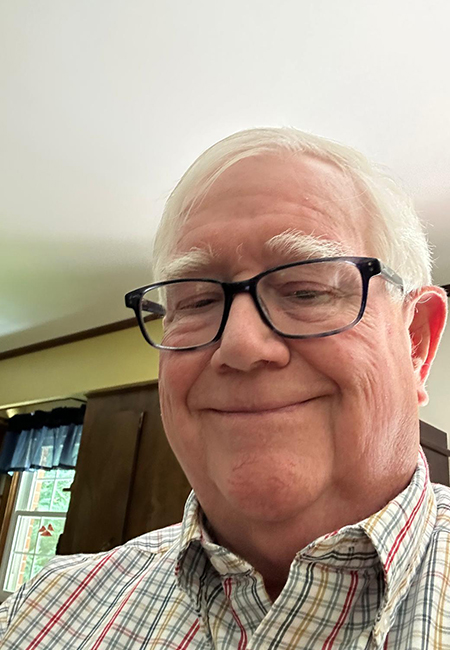
In 1968, the winds of change were blowing through America—and through the life of a young man who dared to dream beyond his zip code. Dr. Philip Tate, just 18, stood at the threshold of a new beginning. His acceptance into the University of North Carolina was more than an academic victory—it was a powerful statement of hope for his family and community. A Black student from humble beginnings stepping into the halls of higher education during one of the most volatile decades in American history? It was an act of courage.
Yet from the moment he stepped onto campus, it was clear: this would be no easy voyage.
The late 1960s were a storm. Across the country, the Vietnam War raged on, anti-war protests intensified, and the civil rights movement wrestled with the cost of progress. College campuses were not sanctuaries—they were battlegrounds of ideology, identity, and resistance. For Dr. Philip, the classroom was just one of many places he was expected to learn. He had to navigate the racial tensions of the South, the economic strains of being a first-generation college student, and the emotional solitude of being one of the few from his background in a sea of unfamiliarity.
Where others had safety nets, Dr. Philip had self-reliance.
Amid the mounting responsibilities, an opportunity emerged that would change the course of his life: a contract with the U.S. Navy, as a Midshipman under the Secretary of the Navy (1968–1969). The uniform didn’t just offer him structure—it offered him a sense of identity, purpose, and stability in a world full of questions.
Training in the Navy was grueling—mentally, physically, emotionally. But for Dr. Philip, it became a proving ground. Here, amid salutes and drills, he refined the qualities that would define his leadership: discipline, focus, and accountability.
Note of Thanks
As we bring to light the extraordinary life of Dr. Philip Tate, we are reminded that even the brightest stars are made more radiant by the constellations of love, guidance, and support surrounding them. This biography is not merely the tale of one man—it is the testimony of a community, a lineage, and a lifetime of those who helped shape, support, and share in his remarkable journey.
First and foremost, we thank the Tate family, whose roots gave rise to such towering strength. To the parents who instilled discipline, faith, and integrity in their young son despite the hardships of life in Atlanta during turbulent times—your love laid the first bricks in a legacy that now stands tall and proud.
To his siblings, extended family, and early mentors, thank you for recognizing his spark before the world did. Your encouragement in those formative years was more than just kind—it was transformational.
To the educators at Marion High School, the University of North Carolina, Oberlin College, and Campbell University, we offer deep gratitude. You nurtured not only his intellect but his courage to challenge norms and break boundaries. Thank you for opening doors that many tried to keep closed, and for standing as champions of the underdog.
To the U.S. Navy, thank you for shaping in him the virtues of discipline, duty, and resilience. The military did not just refine his character; it gave him the tools to stand in the face of adversity, and the strength to carry others through it.
To his colleagues in the legal profession, fellow community leaders, and countless clients and students—thank you. You were not just witnesses to his mission, but participants in his purpose. To every young person he mentored, every client he defended, and every soul he inspired: your stories became part of his story, and your victories became part of his legacy.
To his friends—the quiet confidants, prayer partners, and coffee-table philosophers—thank you for holding space when the world demanded so much of him. Your presence sustained him during the long hours, tough decisions, and silent burdens no one else could see.
To the faith communities he cherished—thank you for giving him spiritual grounding, for reminding him that service to man is service to God, and for teaching him that justice, at its highest form, is love in action.
To the many readers, historians, and contributors who helped bring this biography to life—thank you for your patience, dedication, and insight. Capturing a life as layered and profound as Dr. Tate’s is no small task. Your words, research, and reflections ensure that his voice continues to speak, even in his absence.
And most of all, to every person who ever believed in him, even when the world didn’t—thank you. You didn’t just believe in a man. You believed in a mission. And today, we see the fruit of that belief in every life Dr. Philip Tate touched.
“Gratitude turns what we have into enough, and more.” — Melody Beattie
Dr. Philip Tate never claimed perfection, only purpose. And in that purpose, he found people who walked beside him, fought with him, prayed for him, and celebrated him. This note is for each of you. Thank you—for being part of this magnificent, meaningful, and enduring journey.
May his life continue to inspire us.
May his legacy continue to guide us.
And may we each strive to be, in someone’s life, what he was in ours—a source of strength, light, and unshakable hope.
Thank You
– Dr. Philip Tate