
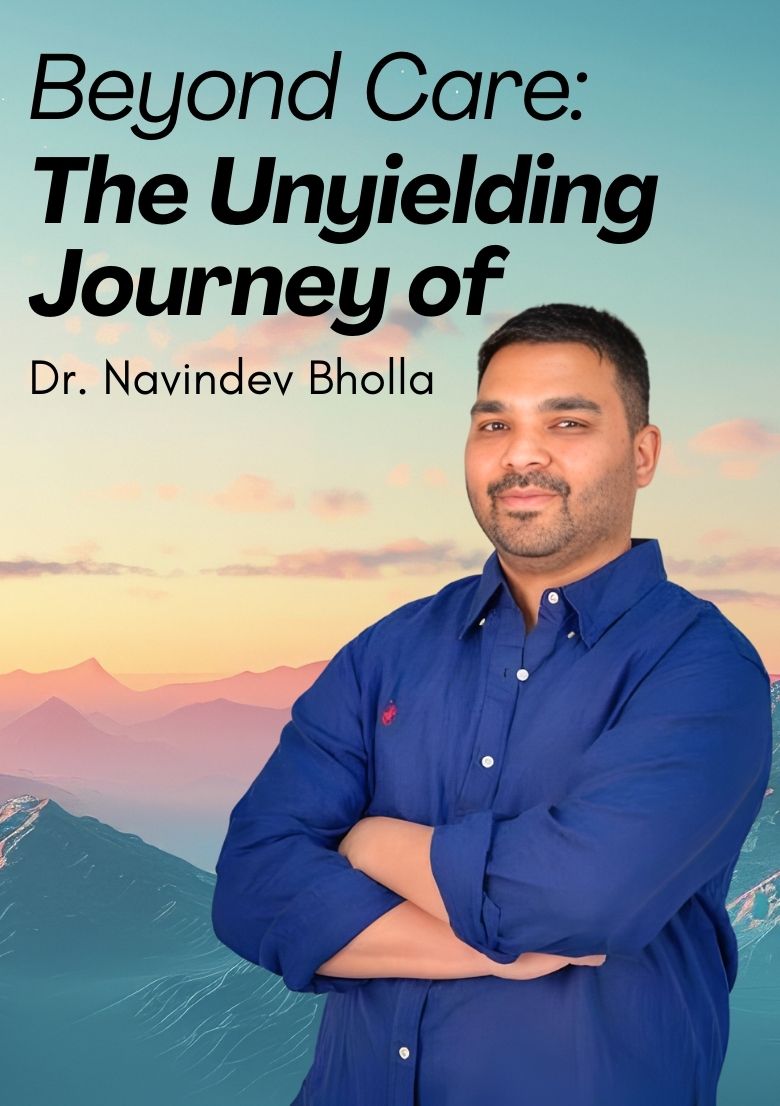
“Every journey begins with a single step, but its direction is determined by the heart that takes it.”
Introduction
The story of Dr. Navindev Bholla is one of deliberate steps taken with quiet conviction. His life and work in the healthcare and social care sectors are defined not by grand gestures or fleeting recognition, but by the steady accumulation of moments in which he chose to show up—fully, attentively, and with empathy. In the landscape of modern care, where demands are high and resources often strained, he stands as a reminder that compassion and competence can—and must—coexist.
Born into an environment where respect for others was a living value rather than an abstract lesson, Dr. Bholla carried forward principles instilled in him from an early age: service before self, respect for all, and dignity in every interaction. These principles did not arrive suddenly, nor were they the product of formal instruction alone. They emerged from observation, from listening to those around him, and from quietly recognizing that the worth of a life is measured by the difference it makes to others.
The early chapters of his life offered their share of challenges. Resources were not abundant, and opportunities were not handed over without effort. Yet even in those conditions, Dr. Bholla learned to see obstacles not as barriers but as invitations to adapt, persist, and find creative ways forward. This adaptive mindset became a cornerstone of his professional philosophy, later enabling him to move fluidly between roles, workplaces, and responsibilities.
His first forays into healthcare were as much about human connection as they were about learning technical skills. Working as a Healthcare Assistant, he discovered that patients and residents often responded as much to tone of voice and patience as to any clinical intervention. The smallest gestures—a hand on a shoulder, a willingness to listen without rushing—often made the largest impact. These insights would stay with him across the span of his career.
Over the next seventeen years, Dr. Navindev Bholla built an impressive and diverse portfolio. From nursing homes to residential care and community-based environments, he served in positions that demanded not only clinical competence but also emotional intelligence, crisis management, and team leadership. He progressed through roles such as Senior Carer, Care Team Leader, Recruitment Care Manager, and ultimately Team Lead – Residential Care. Each position added layers to his expertise and broadened his understanding of the care ecosystem.
Yet advancement never distanced him from the ground-level realities of care work. Even when managing staff, coordinating recruitment, or liaising with families, Dr. Bholla remained connected to the lived experiences of both patients and team members. He knew the strain of long shifts, the urgency of medical needs, and the quiet victories that come from seeing a patient regain confidence or comfort.
“The seeds of who we become are often planted long before we know their name.”
Phase 1: Roots of Compassion

Before Dr. Navindev Bholla ever wore a uniform, signed a care plan, or led a team, his life was already being shaped by a quiet but powerful set of forces. They were not grand events or dramatic interventions, but rather the steady, formative rhythms of family, community, and early personal experience. In those early years, the principles that would one day define his leadership and care philosophy were already taking root—patience, empathy, responsibility, and a deep respect for human dignity.
From a young age, Dr. Bholla observed that life’s most meaningful work often happens far from applause. In his household, tasks were not divided into “important” or “menial” in the way the outside world sometimes judged them. Every contribution—whether it was preparing a meal, helping a neighbor, or ensuring a younger family member was ready for school—was part of the collective effort to keep the home and community thriving. This environment nurtured in him a belief that no role is beneath anyone if it serves the wellbeing of others.
His parents instilled in him a strong moral compass, teaching by example rather than lecture. They showed him that kindness could coexist with firmness, that strength could be expressed in gentleness, and that true respect is given to everyone, regardless of status or circumstance. In their home, respect was not transactional; it was the default posture toward others. This early model of dignity in everyday life would later become the hallmark of his professional interactions in the healthcare sector.
The neighborhood where Dr. Bholla grew up further reinforced these values. It was a place where people still knew their neighbors, where greetings were exchanged in the street, and where a sense of shared responsibility bound the community together. If a family was struggling, others stepped in without being asked. If an elder needed help, it was offered before it was requested. In this environment, Dr. Bholla absorbed the unspoken rule that being part of a community means showing up for others.
“Every skill can be taught, but the heart to care must already be there.”
Phase 2: The First Steps into Care
When Dr. Navindev Bholla took his first formal steps into the world of healthcare, he did so with a foundation that had already been carefully laid in the years before. The values of compassion, respect, and reliability—rooted deeply in his upbringing—were now about to be tested in a professional environment. What had once been quiet acts of service within family and community would now need to withstand the pace, pressure, and emotional demands of the care industry.
His earliest professional role was as a Healthcare Assistant, and it was here that Dr. Bholla began to see the full breadth of what it meant to provide care—not in theory, but in practice. The work demanded more than just completing tasks; it required a blend of technical competence and emotional presence that could only come from genuine commitment. Each day brought a mixture of predictable routines and unexpected challenges, and in both, he found opportunities to deepen his understanding of people.
The role was hands-on in every sense. From assisting residents with daily living activities to monitoring their wellbeing, he quickly learned that trust was the currency of care. Patients and residents—often facing illness, aging, or disability—were being asked to allow strangers into their most personal spaces. Winning that trust required patience, gentleness, and a consistent demonstration of respect. For Dr. Bholla, these were not new concepts, but applying them professionally meant learning how to balance empathy with efficiency.
One of the early lessons he learned was that small details could carry great significance. A resident’s preference for a certain cup at breakfast, the way someone liked their pillows arranged, or the importance of listening to the same story for the hundredth time—these might seem minor, but they could transform a person’s day. He began to understand that while medical procedures and physical care were essential, emotional care was just as critical.
His time as a Healthcare Assistant also taught him the value of teamwork in a care setting. The work could be physically demanding and emotionally draining, and no one could manage it alone. Supporting colleagues, sharing responsibilities, and stepping in without being asked became second nature to him. He learned that effective care was the product of collective effort—of teams working seamlessly together, each member valuing and relying on the other.
“To serve well, you must first learn to listen to what is not being said.”
Phase 3 : Learning the Language of Service
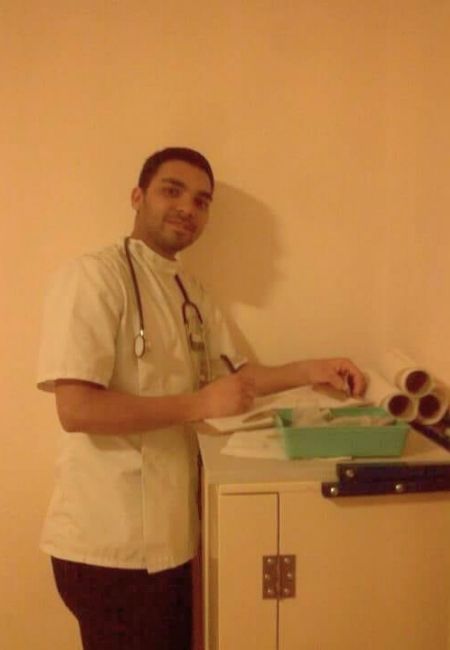
By the time Dr. Navindev Bholla entered the next stage of his career, he had already proven himself as a capable and dependable caregiver. But this phase was about more than competence—it was about mastering the subtle, unspoken elements of care that transform good service into exceptional service. It was here that he learned to interpret the silent language of needs, fears, and hopes that often speak louder than words.
In his earlier roles, Dr. Bholla had focused on performing his duties with precision—assisting residents with daily activities, monitoring health conditions, and maintaining accurate records. Now, with more experience under his belt, he began to notice the layers of communication that existed beyond formal interactions. A resident’s pause before answering a question, the way someone avoided eye contact, or a sudden change in tone—these became cues that told him far more than any chart could.
He recognized that effective service in healthcare was not only about doing what was required, but also about anticipating needs before they were voiced. This required patience, observation, and the willingness to slow down in a profession often driven by urgency. For Dr. Bholla, this skill was not about efficiency alone; it was about dignity. Anticipating someone’s needs communicated that they were seen, valued, and understood without having to ask.
His work now placed him in varied environments—nursing homes, residential facilities, and community-based care settings—each with its own culture and challenges. Adapting to these different contexts meant quickly learning the preferred ways of working, while still holding fast to his own principles of respect and compassion. His fluency in English and French continued to be an asset, bridging gaps with residents and families from diverse backgrounds. But beyond language, it was his ability to connect through empathy that truly broke down barriers.
Note of Thanks
I would like to thank all the people who have been part of my journey, both personally and professionally. My life and work have been shaped by the people I have met, the teams I have worked with, and those I have supported.
To my family, thank you for being there from the beginning and for your encouragement. Your belief in me has been important in helping me move forward in life and in my work.
To my colleagues and team members over the years, I am grateful for the way we have worked together to support people. In this work, no one can do it alone, and I appreciate every person who has shared the responsibilities and stood with me during busy or challenging times.
I also want to thank the people I have supported—those who have trusted me to be part of their daily lives. Working with you has taught me patience, understanding, and the importance of listening. Whether it was helping with medication, supporting independence, or being there in difficult moments, each of you has contributed to my experience and shaped the way I approach care.
To the organizations and managers who gave me opportunities to grow, thank you for trusting me with more responsibility and allowing me to develop my skills. These chances to learn and lead have been an important part of my progress.
Finally, I would like to thank everyone who has influenced or guided me at different points in my journey. From the people who trained me to those who shared advice or showed me better ways of working, your input has made a lasting difference.
This work is about people—helping them, understanding them, and being there for them. I am thankful for every person who has been part of my path.
Thank You
– Dr. Navindev Bholla