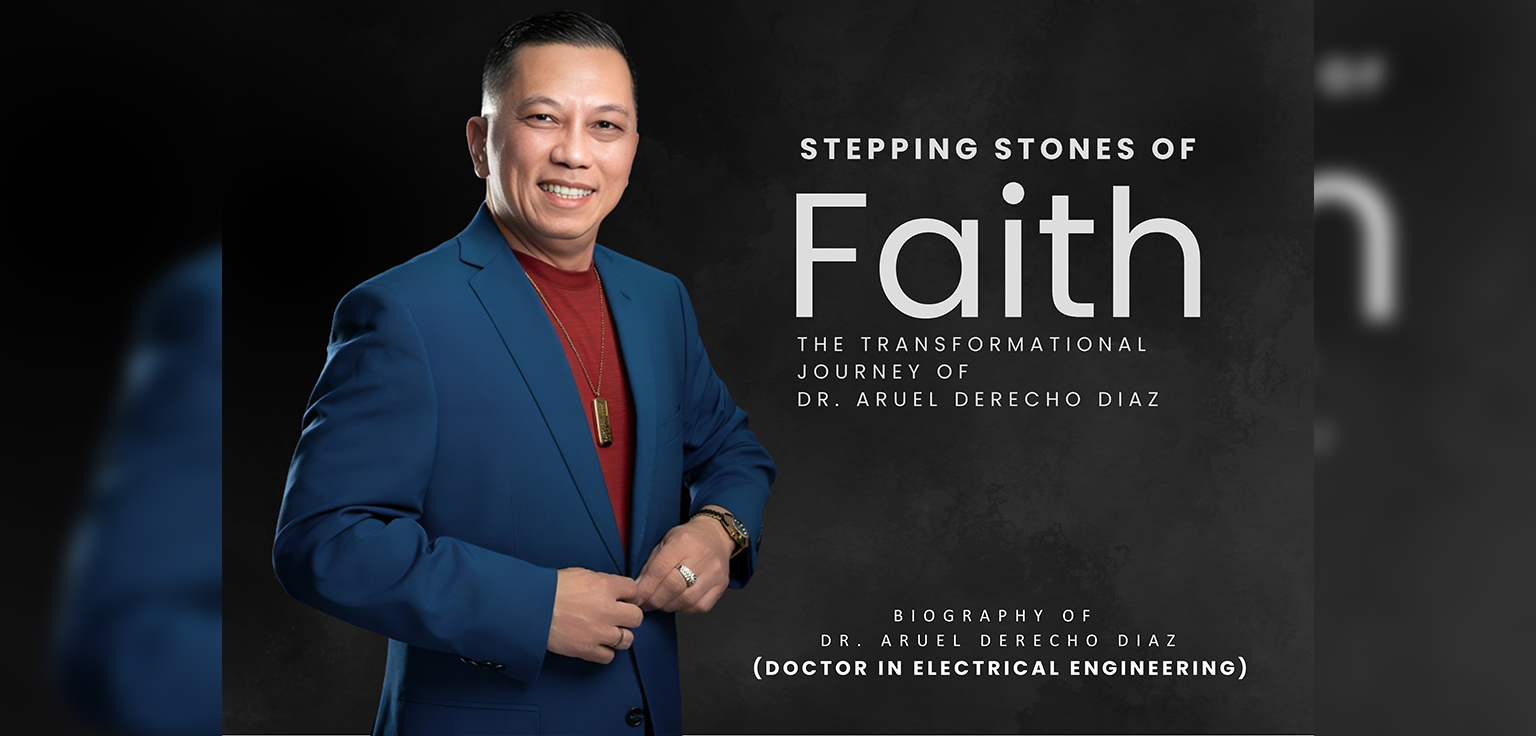
“I was born with nothing but dreams, and it was those dreams that carried me through hunger, hardship, and loss. If my story means anything, let it be this— that no struggle is wasted when it is carried with faith, and no dream is too far when you refuse to let go.”
Introduction
There are lives that unfold quietly, without grandeur or privilege, yet leave behind a light so steady that it becomes a guide for others. The story of Dr. Aruel Derecho Diaz is one such life. His journey begins not in the halls of power or wealth but in the simplicity of a small farming family in the Philippines. Born on 28 December 1969, he grew up in a world that demanded resilience before he even had the language to name it. His biography is not only a record of professional achievements; it is the chronicle of endurance, faith, and the unwavering belief that education and perseverance can transform even the humblest beginnings into a legacy of service and leadership.
From his earliest days, hardship shaped his character. At the age of six, he lost his mother, a loss compounded by the passing of two younger siblings within the same year. Such tragedies could have broken a spirit so young, but instead, they planted in him a seed of survival and fortitude. Alongside his father and remaining siblings, Aruel experienced the instability of displacement, often living apart from his family and relying on the care of aunts and relatives. It was a childhood fractured by grief, yet held together by the quiet determination to endure.
In Manila, he found himself working almost as soon as he could walk to market. At just seven years old, when most children were beginning the rhythm of school life, Aruel was selling newspapers, bread, and whatever could bring a few coins. His mornings began before dawn, scavenging or setting up to sell goods; his evenings ended with exhaustion. His was the story of a child who shouldered responsibility far too early, but it is also the story of a child who, even in hardship, noticed the one thing he lacked: schooling.
That awareness became his turning point. While his cousins and neighborhood children walked to school, he walked the other way—to markets, dump sites, and street corners. Yet he could not ignore the difference. In his heart, he felt the gap between his labor and their learning. So, in a decision that reveals his remarkable inner strength, he approached a local elementary school and asked to be enrolled. Without parents to speak on his behalf, he presented himself honestly. A compassionate principal recognized in him not only need but potential, and she opened a door that would change everything.
Entering school late, older than his classmates, Aruel faced yet another challenge: catching up. But where others might have felt shame or resentment, he discovered a source of quiet strength. His maturity, born from hardship, became his advantage. He studied with seriousness, pushing himself not only to meet but to excel. He soon rose to the ranks of honor students, proving that determination could outrun circumstance. Still, the balance between survival and education remained delicate. He would sell bread at dawn, rush to class, and then return to odd jobs in the afternoon. For years, this rhythm became his life—a ceaseless cycle of work and study, all to keep the dream of a better future alive.
“I was a boy with empty pockets, but hope was the one treasure I refused to lose. Even in the darkest days, I believed there had to be a brighter morning ahead.”
Phase 1: From Shadows to First Light
The story of Dr. Aruel Derecho Diaz begins on 28 December 1969, in the Philippines, within the simple boundaries of a farming household. There were no riches to inherit, no wide doors of opportunity waiting to be opened, only the soil underfoot and the strength of a family whose survival depended on hard labour and faith. Yet from these modest beginnings, a boy would emerge whose determination and courage would one day carry him beyond the borders of his homeland, into roles of global significance and respect.
But in his earliest years, the world did not give him comfort; it gave him trials. At the tender age of six, Aruel faced the deepest wound a child can know—the death of his mother. Her passing was not only a personal loss but also the breaking of the family’s centre of warmth and stability. As if fate had not dealt enough pain, within the same year, two of his younger siblings also died, one just an infant and another barely old enough to walk. For a child, grief of this magnitude could have planted despair, yet in Aruel, it instead sowed a seed of resilience. The tragedies etched into his memory became the first lessons in perseverance: life would not always give, but it would always demand strength in return.
His father, overwhelmed by the crushing weight of sorrow and poverty, struggled to hold the remaining family together. In desperation, he moved from province to province, leaving the children in the care of relatives. For young Aruel, this meant separation from his siblings and growing up in the homes of aunts and uncles. The bonds of family were stretched thin, and the warmth of living together was replaced by the necessity of survival. He was not treated cruelly, but his place was often that of a helper—serving in households, doing chores, and learning early that his worth would often be tied to what he could contribute. Childhood, for him, was never carefree; it was shaped by responsibility before he even fully understood the word.
“I had no wealth to inherit, only the courage to ask for a seat in the classroom. That simple step—choosing to learn—became the spark that turned survival into hope.”
Phase 2: When Dreams Begin to Speak
Childhood had tested him with grief, separation, and survival. By the time most children were just learning to spell their names neatly in school notebooks, Aruel Derecho Diaz had already learned how to sell newspapers in the streets of Manila, how to wake before dawn to carry bread baskets, and how to swallow the sting of hunger without complaint. His earliest years were not painted with the colors of ease but with the grays of hardship. Yet, those difficult shades did not darken his spirit; instead, they became the canvas upon which he would sketch the outlines of an extraordinary dream: the dream of becoming an engineer.
This phase of his life marks the moment when the idea of education transformed from a vague curiosity into a burning conviction. This was the stage when he realized that books could become ladders out of poverty, and that classrooms could offer a door into a future brighter than anything the squatter settlements of Manila could show him.
The turning point came in a simple but profound realization: while he worked in the streets, his cousins and friends went to school. He noticed the difference not only in their routines but in their outlook. They rushed in the mornings with purpose, wearing uniforms, carrying notebooks, while he carried scraps and bread. At night, they studied, while he counted coins. Something stirred in him, a question that would not leave: Why not me?
Despite having no parent to guide him, no financial means to pay for fees, and no one to encourage him, he walked bravely into a nearby public elementary school. Standing before the principal, he explained his situation: no mother, a father far away, and guardians who could not invest in his education. All he had was a desire to learn. For many, this would have been an end to the conversation. But for Aruel, it was a new beginning. The principal, recognizing the raw determination in this boy’s voice, chose to open the door for him. It was, as he would later say, a gift from God delivered through human kindness.
“When the world told me I was finished, I chose to believe otherwise. One exam, one chance, one step of faith—and the doors of my future opened wide.”
Phase 3 : The Leap That Changed Everything
Life has a way of bringing a person to the edge of despair before opening a door of unexpected hope. For Aruel Derecho Diaz, that door appeared in the form of a government exam—one that would alter the course of his destiny and prove that even when circumstances close one path, perseverance can carve out another.
By the time he reached his early teens, Aruel had already lived through more loss, hardship, and struggle than many experience in a lifetime. He had buried his mother and siblings, lived separated from his family, and worked in Manila’s streets just to survive. He had proven himself in elementary school, balancing bread baskets and books with honour-roll distinction. But when high school demanded not only effort but also money for transportation and daily survival, he could not keep up. His attendance faltered, his grades slipped, and he finally had to let go of school.
For weeks, perhaps months, he carried the crushing belief that his dream to become an engineer had ended. He continued to work, still waking before dawn to sell goods or scavenge what he could, but there was an emptiness inside him. The future seemed to have shut its door.
Yet destiny, as it so often does, had other plans.
One day, a guidance counsellor from his former high school appeared at his doorstep. Her name, long etched into his memory, became a symbol of hope. She had remembered him—not as the boy who failed, but as the boy who had once shown brilliance, perseverance, and potential. She had not forgotten his determination, and she refused to let poverty silence his promise.
She told him about the Philippine Educational Placement Test (PEPT), a government initiative designed to help students who had dropped out of school. The exam was not easy—it tested knowledge across subjects like English, Filipino, mathematics, and science. But if passed, it could accelerate a student’s placement, even allowing them to skip years of traditional schooling.
Note of Thanks
In reflecting on the extraordinary journey of Dr. Aruel Derecho Diaz, it becomes clear that no achievement in his life was reached by his efforts alone. Every milestone, every recognition, and every triumph carries with it the contributions of countless individuals and the unyielding grace of God.
Dr. Diaz first and foremost offers his deepest gratitude to God Almighty, whose guidance and strength carried him through loss, hardship, and moments of uncertainty. He believes that every obstacle was not a barrier but a stepping stone, shaping him for the greater purposes ahead.
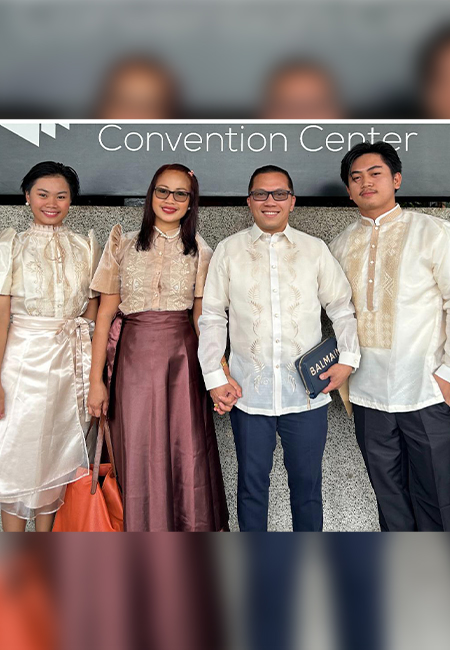
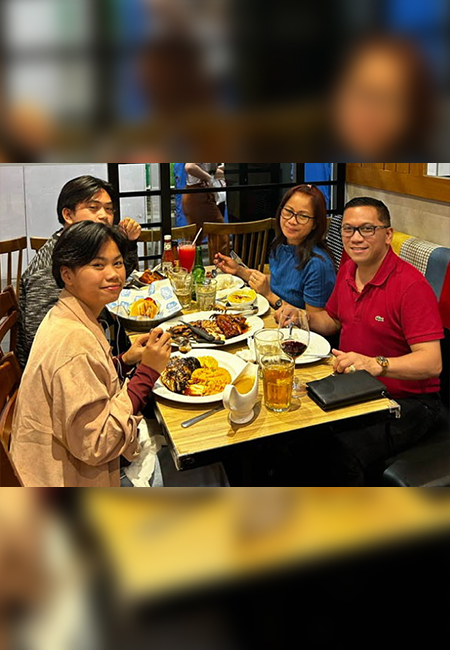
He extends heartfelt thanks to his family, especially his wife and children, who stood as his constant source of strength. Their patience and sacrifice gave meaning to his years of work abroad, and their love became the foundation upon which his dreams were built. To them, he dedicates every success and every page of this story.
To his mentors, teachers, colleagues, and friends across the Philippines, Saudi Arabia, Afghanistan, Papua New Guinea, and the United Arab Emirates, Dr. Diaz is forever grateful. Their trust, encouragement, and companionship moulded him into the leader and professional he is today.
He also acknowledges the organisations and communities he has served throughout his career, recognising that they gave him the privilege of turning knowledge into service and responsibility into legacy.
Finally, Dr. Diaz extends his thanks to every reader of this biography, whose time and attention honour the story of his life. It is his hope that these pages serve not just as a record of one man’s journey but as an inspiration—that struggles can be transformed into stepping stones, and that with faith and perseverance, even the humblest beginnings can lead to a legacy of hope.
Thank You
– Dr. Aruel Derecho Diaz