“True education is not just the art of learning; it is the courage to speak truth, the strength to fight injustice, and the heart to lift others as you rise.”
Introduction
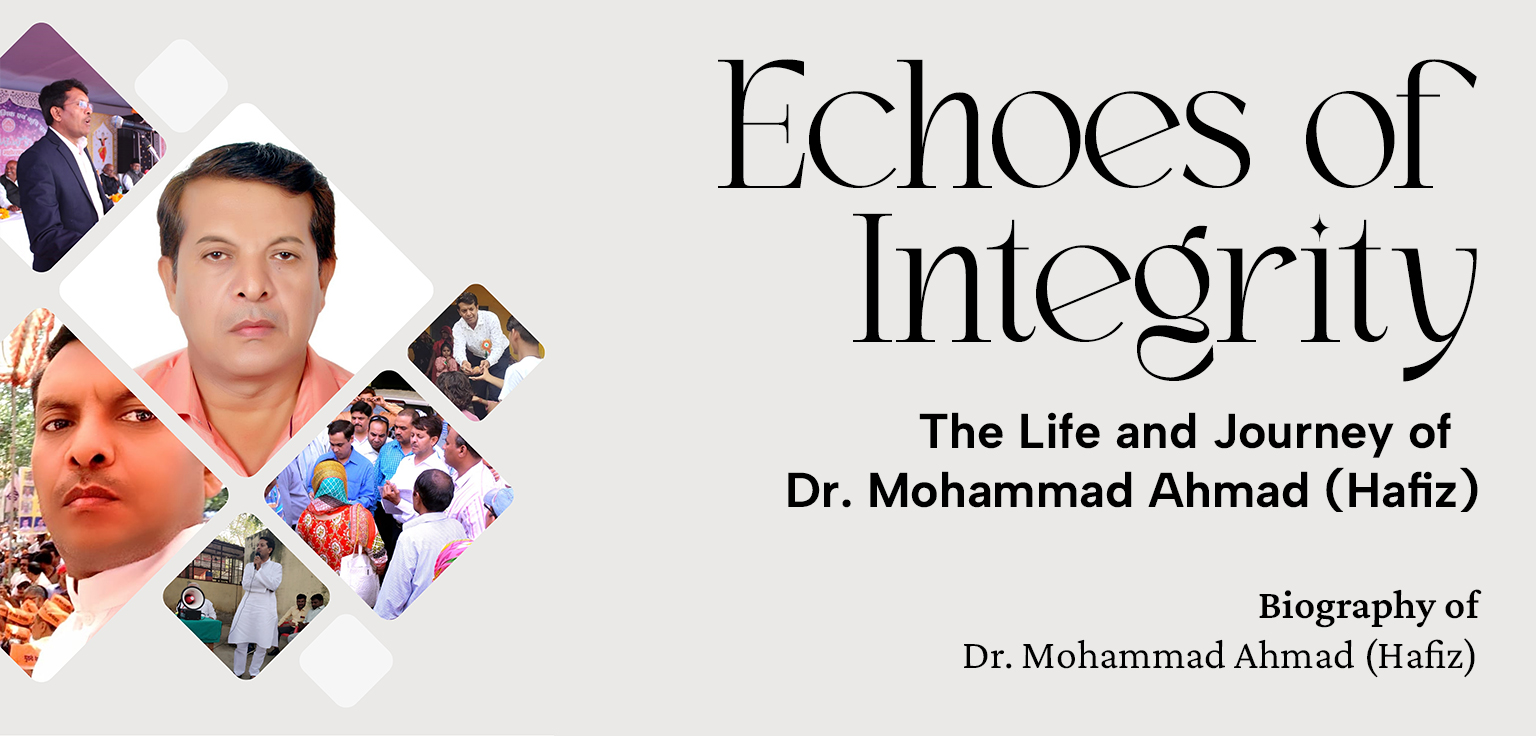
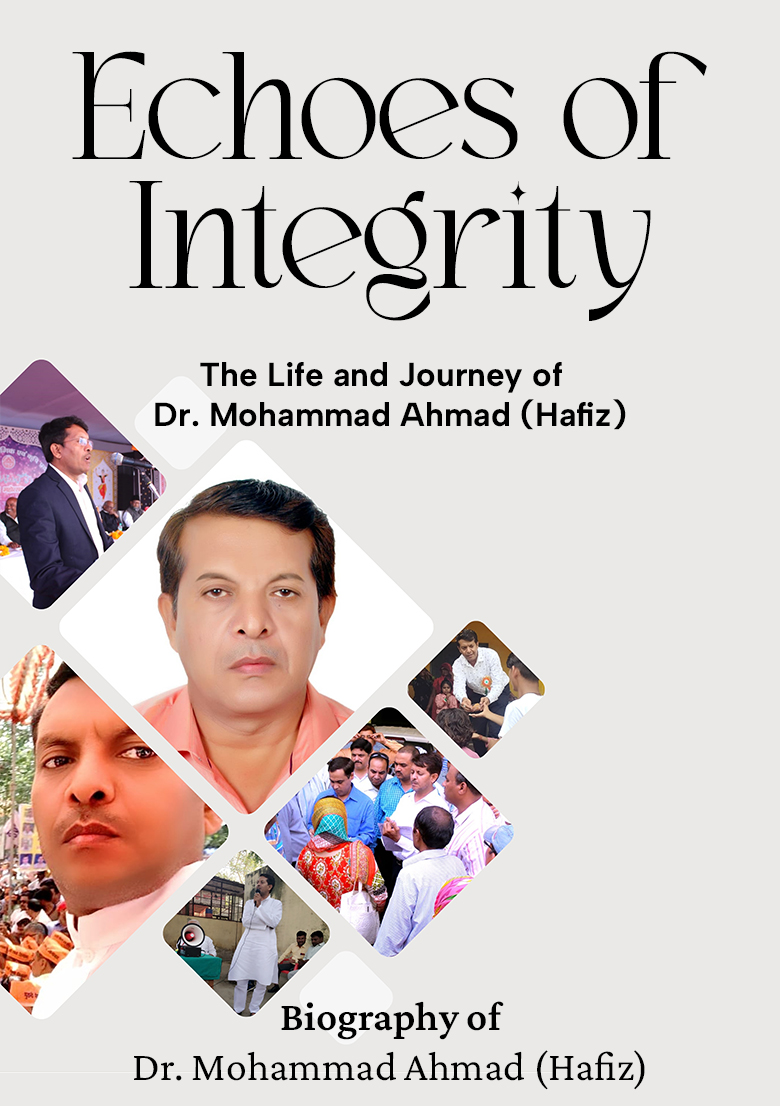
Every life is a story, but not every story becomes a source of light for others. The biography of Dr. Mohammad Ahmad (Hafiz) is one such light—a chronicle of faith, resilience, and an unyielding pursuit of justice through education and service. His journey, from a child immersed in the sacred verses of the Qur’an to a teacher, leader, and reformer who continues to fight against corruption and inequality, is not simply a personal narrative; it is the voice of a generation that believes education can rebuild societies and heal wounds left by neglect, injustice, and poverty.
The roots of Dr. Ahmad’s story stretch back to his earliest childhood. At the tender age of six, guided by his parents’ devotion to Islamic education, he was enrolled in a madrasa. It was here that he undertook the sacred responsibility of memorizing the Holy Qur’an. Completing this monumental task at such a young age did not just grant him the title of “Hafiz”; it instilled in him a lifelong discipline, a respect for knowledge, and a deep moral grounding that would shape every decision of his future.
But his life was not confined within religious education alone. After his family returned from Iraq, where his father served, he re-entered mainstream schooling in the sixth grade. From that moment, his mind began to expand beyond memorization—seeking strength in willpower, aspiring to become an outstanding speaker, and yearning to use his voice for change.
His teachers recognized his passion early. They encouraged him to participate in debates and public speaking, giving him opportunities to test his voice against audiences larger than his fears. One defining moment was a school debate where, despite his nervousness, he had to argue against the motion that “education is necessary for girls.” Speaking before an auditorium largely filled with women, he wrestled with anxiety but turned it into an opportunity. His argument, though framed within the rules of debate, showed his ability to think critically, present with conviction, and challenge even uncomfortable ideas. That day, his group emerged as winners, and Dr. Ahmad realized that his voice could shape opinions and carry weight. What began as a school exercise grew into a lifelong belief that truth, when spoken boldly, could stand against power and corruption.
His academic path continued steadily—completing high school, intermediate studies, and pursuing medical education. Alongside studies, he engaged in part-time work, tutoring students and helping others with academic needs. This balance between personal progress and helping others revealed a pattern that would define his life: he would never walk forward without bringing others along.
Yet destiny had its turns. During his medical college years, he sought employment to support himself and reduce his dependence on his parents. At Aligarh Muslim University, he applied for the position of a barring in-charge. Despite coming third in the merit list, he displayed extraordinary honesty during his interview, pointing out unfair advantages taken by other candidates. His courage impressed the panel, and he was selected. This early experience taught him a lesson that would guide his life: integrity often carries more weight than mere ranking.
“The strength of a tree lies hidden in the roots it nurtures in silence; so too, a life built on faith and discipline stands unshaken through every storm.”
Phase 1: The Sacred Beginning : A Childhood Rooted in Faith
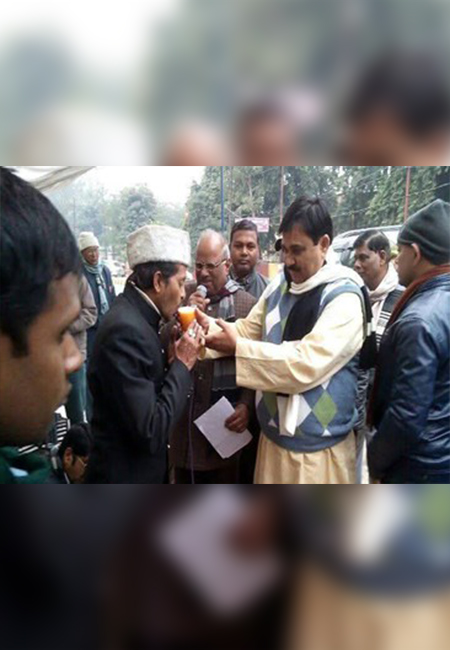
The story of Dr. Mohammad Ahmad (Hafiz) does not begin with privilege or the easy paths of life. It begins with faith—a faith carefully instilled by parents who understood the timeless value of spiritual grounding. Born into a family where devotion and discipline were cornerstones of daily life, young Mohammad Ahmad was not left to wander aimlessly in his formative years. At just six years of age, his parents, with hearts full of care and foresight, admitted him to a madrasa so that his first lessons would be those of the Qur’an—the eternal book that has guided millions of lives.
For a child so young, the walls of the madrasa might have seemed tall, its corridors intimidating, and its lessons difficult. Yet, beneath the tender innocence of a boy barely old enough to understand the vastness of the world, there grew a flame—a determination to carry forward what his parents had entrusted him with.
Unlike ordinary schooling, memorizing the Qur’an is a task that requires relentless discipline, hours of recitation, and an unbreakable bond between memory and spirit. For little Ahmad, it was not simply about repeating verses; it was about engraving divine words into his heart.
By the time he was only ten years old, this young boy had accomplished something most people cannot imagine: he had become a Hafiz-e-Qur’an, someone who memorized the entire Holy Qur’an without seeing it. This achievement, rare and sacred, became not only a source of pride for his parents but also the very identity that would accompany him throughout life—Hafiz Ahmad.
To become a Hafiz at such a young age was not merely an academic milestone. It demanded patience beyond years, an unyielding routine, and a resilience that would later define his character. The madrasa taught him more than memorization—it taught him discipline, humility, and above all, the belief that knowledge is not just for oneself but for serving others.
“A trembling voice that dares to speak the truth grows into a roar that inspires others to rise.”
Phase 2: The Voice of Courage: Finding Strength in Words
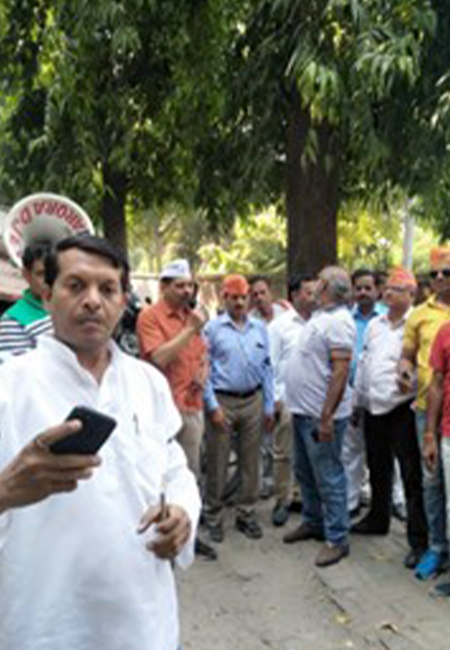
Childhood faith and discipline gave Dr. Mohammad Ahmad (Hafiz) a foundation, but it was in the corridors of school that another gift quietly began to take shape—the power of his voice. For many, standing before a crowd with a microphone is a moment of fear, a test of nerves, a trembling of hands and heart. For young Ahmad, it was no different in the beginning. His palms would sweat, his heartbeat would race, and the thought of facing an audience seemed heavier than any burden. Yet, deep within him, there was a yearning—to speak, to be heard, to shape thought through words.
It was here that destiny introduced him to a teacher who would change the trajectory of his confidence. Aftab Alam Khan, his mentor at A. B. K. Union School, Aligarh, was not just a teacher of lessons but a builder of courage. He saw in Ahmad a spark that even the boy himself did not fully recognize. Instead of allowing him to hide behind silence, he urged him toward the stage, toward the microphone, toward the test of expression. “Remember,” his teacher would remind him, “the audience is not there to frighten you. They are there to listen, and if you speak from your heart, they will not just hear you—they will feel you.”
One of the most defining moments came during a debate competition in which Ahmad was asked to speak against the motion that girls’ education was essential. The topic itself made him uneasy. Raised with respect for knowledge, he felt conflicted about arguing that girls did not need education. Yet, the structure of debate required him to embrace the opposing stance. To make matters more daunting, the auditorium was filled largely with young women students. The very thought of standing before them and delivering such a perspective filled him with fear.
But courage is often born in uncomfortable places. Taking a deep breath, Ahmad walked up to the microphone. His voice trembled at first, but then his teacher’s encouragement echoed in his mind. He began, weaving his argument not with hostility, but with logic, eventually anchoring it in examples like that of Indira Gandhi, who rose to lead the nation despite limited formal schooling.
“True success is not in the job we hold, but in the courage to walk away from it when it compromises our self-respect.”
Phase 3: The Crossroads of Integrity: Choosing Dignity Over Comfort
Every journey of growth eventually reaches a crossroad where youthful dreams must meet the demands of reality. For Dr. Mohammad Ahmad (Hafiz), this turning point arrived as he transitioned from high school into higher studies, stepping into the larger world of responsibilities. If Phase 1 was about the foundation of faith, and Phase 2 about the discovery of his voice, then Phase 3 was about resilience—how to balance education with life’s growing obligations.
After completing his high school and intermediate education, Ahmad sought to pursue higher knowledge in the medical field. He enrolled in a medical college, a dream for many and a challenge for all. The environment was rigorous, the syllabus demanding, and the competition fierce. Yet, instead of being intimidated, he approached it with determination, reminding himself of the discipline instilled in him since childhood.
But unlike many of his peers, Ahmad’s path was not one of privilege or ease. While others could focus exclusively on studies, he also had to think of supporting himself and helping his family. His father’s sacrifices as a worker in Iraq had always remained in his heart, and Ahmad felt a deep responsibility to lighten the weight carried by his family.
To meet these challenges, Ahmad began working alongside his studies. He offered tutoring to younger students, guiding them through school subjects and helping them build confidence. What began as a necessity to support himself became another extension of his gift—the ability to teach, to inspire, and to nurture young minds.
He found joy in these sessions. When a struggling child grasped a concept, Ahmad felt the satisfaction of having contributed to someone’s growth. This balance between being a student and a teacher deepened his perspective. Education was no longer a solitary pursuit; it was a shared journey, a cycle of giving and receiving.
Note of Thanks
As this biography of Dr. Mohammad Ahmad (Hafiz) takes its complete form, it becomes clear that no life of service, courage, and dedication is built alone. Behind every chapter of his journey stand people whose faith, encouragement, and sacrifices made the impossible possible.
First and foremost, heartfelt gratitude is owed to his late father, Dr. Mohammad Ishaque, whose guidance and vision planted the seeds of discipline and knowledge in him. His unwavering commitment to education and integrity became the first light that directed his son’s path. To his beloved daughter, Rida Fatima, who has been both a source of joy and motivation, Dr. Ahmad owes endless love and appreciation—her presence reminds him daily of why creating a better world matters. And to his earliest mentor, Aftab Alam Khan, the teacher who placed the microphone in his young hands and taught him to conquer fear with words, this book stands as a tribute to that unforgettable gift of confidence.
Special thanks are also extended to his colleagues, fellow teachers, and members of various associations who stood beside him during countless struggles for justice and fairness in education. Their trust gave strength to his voice, and their solidarity turned battles into victories.
Finally, immense appreciation goes to every student whose curious eyes and eager minds inspired him to serve beyond the boundaries of a classroom. It is in their growth and resilience that his life’s mission finds meaning.
This biography is not just Dr. Ahmad’s story—it is a story of all who walked with him, believed in him, and reminded him that one life dedicated to truth can uplift thousands. For that, he remains forever grateful.
Thank You
Dr Mohammad Ahmad (Hafiz)